To avoid these ads, REGISTER NOW!

Check your outlets??!!!!!

3rdgendslmech

Well-known member
Joined
Mar 12, 2017
Messages
499
Location
Maryland
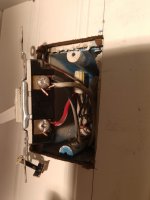
I'll post the picture later but here's the back story:
A few months back, wife called me while I was at work and said the whole main level of the house acted like it tripped the breaker. She checked the panel, and all the breakers we're good. So just to be safe until I got home I had her turn off all the breakers for the main level until I got home.
Get home and find out that somewhere I had lost a neutral ( white wire had voltage) started pulling outlets and thought I had it traced to a ceiling mounted pull cord light in our BR closet. Month later I was painting the nursery and noticed that a few outlets had the wires installed with the hook of the wire counterclockwise. In the process of of turning them all to the right, some of the screws felt like the should have been tighter. (Basically I could wiggle the wire with a little effort.) None looked like they had been arcing or gotten hot etc.
Fast forward to 2 days ago. Just get home from the hospital with our 2 day old baby boy. Bring a swing into OUR bedroom and I go to plug it in and it wouldn't go in the top duplex plug so I put it in the bottom and I could hear arcing. So I quickly unplugged it ran down and killed our bedroom and the main floor.
What I found next made me sick to stomach. I had found the root cause of the lost neutral saga I went through months back. Outlet melted on the neutral side. Box charred and melted. Wire on counter clockwise and loose! All of that didn't happen from plugging in the swing. Everything that was burnt, was cold.
Put in a new outlet that night but didn't use it only because he was fussy and didn't want to be swaddled in a rocker.
Needless to say this weekend I'm pulling every outlet, switch and fixture down that I haven't touched yet and making sure everything is 100%
Not what I wanted to find hours after coming home with a newborn!
 
To avoid these ads, REGISTER NOW!

gfullman

New member
Joined
Jul 13, 2017
Messages
4
I went through something similar (though considerably less concerning) replacing a bunch of outlets in my house recently. I had wanted to replace these outlets for years since some of the receptacles were so loose, plugs would barely stay in. With the birth of my son in September, I finally ordered some tamper-resistant outlets to do the replacement.

What I found was pretty eye-opening (nothing like what you found though). All outlets installed with wires in backstab holes, some of them loose. One outlet in particular had some charring on one side (likely happened before we bought the house). I found a few outlets that had a bunch of silicone caulk injected into the box, I have no idea why.

The previous owners of our house didn't seem very handy, so either they had paid an electrician to do this work or they had attempted to do it themselves. Either way, seeing that amount of shoddy work on something as simple as outlets didn't make me feel great about letting anyone other than myself do electrical work on my house.
 

mikegt4

Well-known member
Joined
Sep 12, 2005
Messages
3,263
Location
sw ohio
Congrats on the newborn and solving the electrical problem.
I know about those hidden problems, I found plenty in my then house that I mostly rewired. I pulled #4 armored cable out of a couple of walls, carefully trimmed to fit under receptacle screwheads. I later found out that the original builder (1952 DIY) of the house worked for the local electric utility and used cut off wire ends for his house project. The Electrical Inspector was pretty surprised when I showed him the pile of wires that I had replaced.
 

ddawg16

Well-known member
Joined
Jul 11, 2008
Messages
21,005
Location
S. California
If you are going to pull every outlet and check it, may I suggest converting them to pigtails?

I'm betting all of your outlets are wired so the incoming wires go to one set of terminals and the outgoing to the other set. Hence, it's using the outlet as a junction.

A better way is to wirenut the incoming and outgoing together....with 3 more wires about 4-5" long that get connected to the actual outlet. You then take the wirenutted bundle and push it to the back of the box. After that, the only wires moving is your pigtail.

Also....do not use backstab. I know a lot of guys say it's fine....maybe it is. I don't care to test it. I prefer the outlets with a plate the wire goes behind. If yo don't get those then use a wrap around the screw. Always wrap it clockwise. That way, as you tighten the screw it pulls the wire in instead of trying to push it out.

Lastly, a good way to verify you have good connections is to do a load test at each outlet.

1. Plug a voltmeter into one of the outlets (top or bottom)
2. Plug your clothes iron into the other outlet (make sure the iron is off)
3. Record the AC voltage with the iron off.
4. Turn on the iron and measure the new voltage. Depending on the wattage of your iron and the distance from the load center, your drop should only be 1-5 volts...give or take a couple of volts.

For 12 Awg wire (which it should be), every 100' of wire will have about 1.6 volts of drop at 10 amps. So a 1200W iron will pull 'about' 10 amps. If the outlet is on the opposite side of the house, you could easily have about 100' of wire. So your voltage drop should be less than 2 Volts. If it's a lot more, start working your way back on that ckt to see where the big change is.

This is also a good reason to have all your outlets mapped out. It's not hard to figure out which way the wire is going....contractors are cheap...they want to use as little wire as possible.
 

walta

Well-known member
Joined
Jan 13, 2017
Messages
2,308
Location
Dutzow Missouri
It is a long shot but let me ask. Was the house built in 60s or 70s if so you may have aluminum wire?

Do your wires look to be copper?

Walt
 

alfredeneuman

Well-known member
Joined
Mar 3, 2011
Messages
4,580
Location
Fullerton, CA
I'm betting all of your outlets are wired so the incoming wires go to one set of terminals and the outgoing to the other set. Hence, it's using the outlet as a junction.

All 15Amp outlets have 20Amp pass-through ratings.
They're every bit effective/secure as a wire nut if the screws are tightened.
 
OP
3

3rdgendslmech

Well-known member
Joined
Mar 12, 2017
Messages
499
Location
Maryland
How old is this house? when was it remodeled? sounds like a handyman had his way with it

Yeah I'm not sure what to think about it Wylie, either a half assed electrician, bottom dollar contractor, or a piss poor handyman.
House was built in 86, I bought it in 2012. The panel itself passed inspection after I had to undo a double tapped hot wire. Also, when I ran power to my barn in June I noticed some neutrals were doubled on the neutral buss. Why I don't know because at that point the panel was damn near full and there were spots for them.
 

ddawg16

Well-known member
Joined
Jul 11, 2008
Messages
21,005
Location
S. California
Yeah I'm not sure what to think about it Wylie, either a half assed electrician, bottom dollar contractor, or a piss poor handyman.
House was built in 86, I bought it in 2012. The panel itself passed inspection after I had to undo a double tapped hot wire. Also, when I ran power to my barn in June I noticed some neutrals were doubled on the neutral buss. Why I don't know because at that point the panel was damn near full and there were spots for them.

You can double up grounds to free up some space for neutrals.
 

ddawg16

Well-known member
Joined
Jul 11, 2008
Messages
21,005
Location
S. California
All 15Amp outlets have 20Amp pass-through ratings.
They're every bit effective/secure as a wire nut if the screws are tightened.

I know that............but...........it means you have to push and pull on 2 sets of wires....vs 1 set if you use a pigtail. Also, using a pig tail reduces the chances of breaking one of the wires.
 

RAYJAY

Well-known member
Joined
May 29, 2006
Messages
2,638
Location
UNION DALE PA
If you are going to pull every outlet and check it, may I suggest converting them to pigtails?

I'm betting all of your outlets are wired so the incoming wires go to one set of terminals and the outgoing to the other set. Hence, it's using the outlet as a junction.

A better way is to wirenut the incoming and outgoing together....with 3 more wires about 4-5" long that get connected to the actual outlet. You then take the wirenutted bundle and push it to the back of the box. After that, the only wires moving is your pigtail.

Also....do not use backstab. I know a lot of guys say it's fine....maybe it is. I don't care to test it. I prefer the outlets with a plate the wire goes behind. If yo don't get those then use a wrap around the screw. Always wrap it clockwise. That way, as you tighten the screw it pulls the wire in instead of trying to push it out.

Lastly, a good way to verify you have good connections is to do a load test at each outlet.

1. Plug a voltmeter into one of the outlets (top or bottom)
2. Plug your clothes iron into the other outlet (make sure the iron is off)
3. Record the AC voltage with the iron off.
4. Turn on the iron and measure the new voltage. Depending on the wattage of your iron and the distance from the load center, your drop should only be 1-5 volts...give or take a couple of volts.

For 12 Awg wire (which it should be), every 100' of wire will have about 1.6 volts of drop at 10 amps. So a 1200W iron will pull 'about' 10 amps. If the outlet is on the opposite side of the house, you could easily have about 100' of wire. So your voltage drop should be less than 2 Volts. If it's a lot more, start working your way back on that ckt to see where the big change is.

This is also a good reason to have all your outlets mapped out. It's not hard to figure out which way the wire is going....contractors are cheap...they want to use as little wire as possible.


the only problem i have with pig tailing in older home is the box are not deep enuf the 1960"s and 70's homes are pia with the old style metal boxes and plaster walls, in to the 80's and you get the great fiber board box's till we got the blue Carlton boxes that we have now the latest one's are a blue hard fiber-est type really strong, even the first blue box's were not that great really flimsy....
 
OP
3

3rdgendslmech

Well-known member
Joined
Mar 12, 2017
Messages
499
Location
Maryland
the only problem i have with pig tailing in older home is the box are not deep enuf the 1960"s and 70's homes are pia with the old style metal boxes and plaster walls, in to the 80's and you get the great fiber board box's till we got the blue Carlton boxes that we have now the latest one's are a blue hard fiber-est type really strong, even the first blue box's were not that great really flimsy....
It's def got the blue boxes, not sure if it's carlon or not but I'll post a couple pics later. Baby went down for a nap and I'm going to do the same.
 

RoadBeater

Well-known member
Joined
Feb 16, 2009
Messages
435
Location
South Central, Ohio
The light switch in our master bedroom was getting where we had to flip it part way up to get it to turn the light on. I got a new switch to replace it, found that the original switch had the wire just backstabbed in, and had broken out. No idea if it was when installed or what, but after 19 years, I can't say either way. The switch I replaced it with, I put in the wires under the screws. I'll report back in another 19 years....
 

ddawg16

Well-known member
Joined
Jul 11, 2008
Messages
21,005
Location
S. California
the only problem i have with pig tailing in older home is the box are not deep enuf the 1960"s and 70's homes are pia with the old style metal boxes and plaster walls, in to the 80's and you get the great fiber board box's till we got the blue Carlton boxes that we have now the latest one's are a blue hard fiber-est type really strong, even the first blue box's were not that great really flimsy....

My house was built in 52.....my boxes are big enough
 

egdede

ALLIANCE MEMBER
Joined
Dec 20, 2009
Messages
2,063
ddawg16 is exactly right. Way above when he discusses need for pigtails. This keeps the neutral wire intact. A broken neutral connection makes 2 line wires associated with the shared neutral carry 220 volts downstream of the neutral break.

It is illegal to run neutrals through a outlet for 20 years now. Pig-tailed neutrals are required in in MWBC. There is a thread about flickering lights caused by the main neutral connection coming off the poles having a break. Bad news when that happens!

And of course if you use a pig-tail you decrease the chance of breaking the other wires. And the when a wire has been gorilla tightened around a screw a few times over the years, it will be made weaker.
 
Last edited:

alfredeneuman

Well-known member
Joined
Mar 3, 2011
Messages
4,580
Location
Fullerton, CA
A broken neutral connection makes 2 line wires associated with the shared neutral carry 220 volts downstream of the neutral break.
It is illegal to run neutrals through a outlet for 20 years now

Only with MWBCs does this rule apply
Single circuits losing the neutral will just cause the downstream devices to not work.

The MWBC neutral is dependent on the loads applied to the circuits. It won't cause 240V (not 220) to flow unless 1 circuit has a load and the other has 0 amps.
 
Last edited:
To avoid these ads, REGISTER NOW!

red

Well-known member
Joined
Feb 20, 2009
Messages
719
Location
Hudson Valley, NY
My parents house had a issue with losing power to half the living room.
One of the outlets had the stab connection back out. Plenty of arcing involved too, and it was copper wire, not al.

Since then I've made the point of using ddawg16 suggestion-
"is to wirenut the incoming and outgoing together....with 3 more wires about 4-5" long that get connected to the actual outlet. You then take the wirenutted bundle and push it to the back of the box"
 

egdede

ALLIANCE MEMBER
Joined
Dec 20, 2009
Messages
2,063
Only with MWBCs does this rule apply
Single circuits losing the neutral will just cause the downstream devices to not work.

The MWBC neutral is dependent on the loads applied to the circuits. It won't cause 240V (not 220) to flow unless 1 circuit has a load and the other has 0 amps.

I know. 'Shared neutral' is another way to say MWBC.
 

rharman

Well-known member
Joined
Apr 22, 2012
Messages
8,734
Location
SoCal
So, I have a question on the pigtails. Do people use solid (same as the existing) or can/should you use stranded so it's even easier to push back in?
 
OP
3

3rdgendslmech

Well-known member
Joined
Mar 12, 2017
Messages
499
Location
Maryland
I'm not an electrician but I've yet to see stranded wire in outlet and switch boxes. The only time I see stranded wires are on some device ends...small motors, lights etc or if it requires a crimp fitting.
As for shared neutrals in outlet boxes, the one I just changed was hooked up to the bottom posts of a duplex outlet. I put it back that way because it was late. But now I think I'm going to undo the ones I find and use pigtails. Gonna try to post the pictures later tonight.
 

ddawg16

Well-known member
Joined
Jul 11, 2008
Messages
21,005
Location
S. California
So, I have a question on the pigtails. Do people use solid (same as the existing) or can/should you use stranded so it's even easier to push back in?

Either one is fine. I've used stranded....but stranded works a lot better if you have outlets with the plate vs just the screw. It's hard to wrap a stranded 12g around the screw unless you tin the exposed area.

One trick I do with the pigtail (solid wire) is after the wires are hooked up, I give the outlet a 360 deg turn. This twists the 3 wires and when you push it back in, the are not bending in one spot. They are kinda twisting.

Anyone who has wired control panels knows what I'm talking about...especially the wires going to the door.
 

Reborn

Well-known member
Joined
Dec 31, 2017
Messages
113
Location
SoCal
Either one is fine. I've used stranded....but stranded works a lot better if you have outlets with the plate vs just the screw. It's hard to wrap a stranded 12g around the screw unless you tin the exposed area.

One trick I do with the pigtail (solid wire) is after the wires are hooked up, I give the outlet a 360 deg turn. This twists the 3 wires and when you push it back in, the are not bending in one spot. They are kinda twisting.

Anyone who has wired control panels knows what I'm talking about...especially the wires going to the door.

Great tip on the 360degree rotation prior to push in. I am planning to go through my house and replace all outlets for a safety check after finding questionable things in my own house plus reading these types of horror stories, and also to install tamper resistant outlets and get rid of the ugly TR covers I have on many outlets.

I have a couple of assertions I'd like validated (or corrected):

1.) Assuming I don't already have pigtails, I should use THHN (rather than insulated NM) for my pigtails, and, other than cost, there is no reason not to install 12G wiring for my pigtails. I figure the minor cost savings isn't worth the headache of checking each outlet for wire gauge (in the event that a circuit happened to have been run with 12g wire).

2.) I've read many threads on GJ with people saying these cheap outlets (residential-example) are no good, and it's better to pay double for commercial grade outlets (commercial-example. I'm thinking this is not really necessary for joe homeowner (me), and as long as I install it correctly, residential should be perfectly adequate. At the same time, I'm not really concerned about the price difference because I don't have all that many outlets. Curious to get some input on this.

Thanks.
 

ddawg16

Well-known member
Joined
Jul 11, 2008
Messages
21,005
Location
S. California
Great tip on the 360degree rotation prior to push in. I am planning to go through my house and replace all outlets for a safety check after finding questionable things in my own house plus reading these types of horror stories, and also to install tamper resistant outlets and get rid of the ugly TR covers I have on many outlets.

I have a couple of assertions I'd like validated (or corrected):

1.) Assuming I don't already have pigtails, I should use THHN (rather than insulated NM) for my pigtails, and, other than cost, there is no reason not to install 12G wiring for my pigtails. I figure the minor cost savings isn't worth the headache of checking each outlet for wire gauge (in the event that a circuit happened to have been run with 12g wire).

2.) I've read many threads on GJ with people saying these cheap outlets (residential-example) are no good, and it's better to pay double for commercial grade outlets (commercial-example. I'm thinking this is not really necessary for joe homeowner (me), and as long as I install it correctly, residential should be perfectly adequate. At the same time, I'm not really concerned about the price difference because I don't have all that many outlets. Curious to get some input on this.

Thanks.

1. I always just just 3 wires from the NM.....You still have to strip back the jacket to pull the wires apart....so, no reason to keep the yellow jacket. And, yes, stay with 12g wire.

2. If you are going to use stranded, then pay a little extra for outlets that have the square plate under the screw. If you are using solid, the $1.95 ones are fine. If the outlet is going to see a lot of use....upgrade....they will last longer
 

Showkey

"MEMBER EMERITUS"
Joined
Aug 9, 2014
Messages
8,638
Location
Wausau WI
Not to minimize the chance of an electrical fire:
I know this the GJ and we check everything and worry about everything else...........but..........there are 127.59 million households in the US. How many do think check their outlets ? Then if they did check what percentage actually know what they a looking at ? My guess less than 1%.......
 
Last edited:

Reborn

Well-known member
Joined
Dec 31, 2017
Messages
113
Location
SoCal
1. I always just just 3 wires from the NM.....You still have to strip back the jacket to pull the wires apart....so, no reason to keep the yellow jacket. And, yes, stay with 12g wire.

2. If you are going to use stranded, then pay a little extra for outlets that have the square plate under the screw. If you are using solid, the $1.95 ones are fine. If the outlet is going to see a lot of use....upgrade....they will last longer

Thanks. I'll stick to solid wires.

Not to minimize the chance of an electrical fire:
I know this the GJ and we check everything and worry about everything else...........but..........there are 127.59 million households in the US. How many do think check their outlets ? Then if they did check what percentage actually know what they a looking at ? My guess less than 1%.......

This is very true, and I do agree - reading up on these boards can make one paranoid and spend effort on silly things. But I would counter by saying that the fact that 99% of homeowners are clueless doesn't mean one should follow suit.
 

checkthisout

Well-known member
Joined
Sep 5, 2008
Messages
5,232
Thanks. I'll stick to solid wires.


This is very true, and I do agree - reading up on these boards can make one paranoid and spend effort on silly things. But I would counter by saying that the fact that 99% of homeowners are clueless doesn't mean one should follow suit.

Install arc-fault circuit breakers or an outlet for better piece of mind.
 

ddawg16

Well-known member
Joined
Jul 11, 2008
Messages
21,005
Location
S. California
Install arc-fault circuit breakers or an outlet for better piece of mind.

People ***** about them.....but....I have never had a false trip.

When I was doing my 2-story addition, I ran just about all my plug in power tools off a AFCI ckt.....including my miter saw and skill saw.....

But it did catch a broken wire. I had one outside box I was installing a GFCI in which was on one of the AFCI ckts. I kept getting intermittent trips. Replaced the GFCI. No difference. I ended up finding a broken wire in the back of the box. The insulation made it look ok....but even just the GFCI was enough to cause a small arc and trip it.
 
OP
3

3rdgendslmech

Well-known member
Joined
Mar 12, 2017
Messages
499
Location
Maryland
House has the original Bryant panel in it, I know you can get AFCI breakers but I havent found then in tandem which is what all of my 120V circuits are.
Here's a picture of some of the handy work in the nursery I uncovered when I was putting up panel board. The outlet below this switch also had wires turned the wrong way and were only "snug". Panel picture....15 amp tandem, second one up from the bottom, double tapped. Taken when I first bought the house

bad wiring on switch.jpg
electric panel.jpg
 

jdieter

Well-known member
Joined
Nov 17, 2007
Messages
320
Location
Northern Indiana
A trick to using stranded wire under a screw is reverse the twist of the strands on stripped part, they want to follow the screw better.
 

tonyciambrone

Well-known member
Joined
Nov 4, 2015
Messages
1,152
Location
Northern Illinois
A trick to using stranded wire under a screw is reverse the twist of the strands on stripped part, they want to follow the screw better.

This is true. Personally I crimp spade terminals on all stranded wire for receptacles and switches. It is an extra step and expense, but once that crimp is made you can remove the receptacle or switch however many times you want without worrying about damaging the wire/ needing to strip more back.

I used to prefer solid wire, but learned quickly that stranded is my favorite. Solid is great for pushing through conduit on short runs, but thats about it for me.
 

alfredeneuman

Well-known member
Joined
Mar 3, 2011
Messages
4,580
Location
Fullerton, CA
A trick that can be used for stranded wire on screw terminals, in addition to twisting is to strip about 1-1/2" of insulation, but leave the last 1/4" of stripped insulation on the ends to keep the strands together. The excess can wire and insulation can be cut off with diagonal cutters after the terminals screws are tightened.
 

rharman

Well-known member
Joined
Apr 22, 2012
Messages
8,734
Location
SoCal
I definitely prefer the outlets with the square plate. I feel much more confident about the connection.
 
To avoid these ads, REGISTER NOW!
Top Bottom