To avoid these ads, REGISTER NOW!

Circuit wiring question

GarageGuy89

Well-known member
Joined
Jul 12, 2016
Messages
367
Location
Olalla, WA
Getting ready to wire a 220v outlet for my toys that need it, but I'm having a hard time understanding the relationship between breaker/circuit sizing and the appliance/cord sizing. Nothing is longer then 15' (basically right next to the panel).

My plan is to wire a 50 amp 220V outlet, which my research shows that it needs a minimum of the following from breaker to receptacle:
  • 6/2 Romex NM-B
  • Double pole (or pull) 50/50 amp breaker
  • 6-50 Receptacle

Now from the receptacle (outlet) is where I get confused. Do I size the appliance's cord for the machine or the circuit? The only thing going to this new 220v outlet right now is a 22 amp 5hp motor. Thus my thinking is that a 10/2 SOOW wired to a 6-50P plug would be acceptable for this application. Anything pulling more amps would require a new beefier cord. Or does it need to be sized for the 50 amp load, requiring 6/2 SOOW?
 
To avoid these ads, REGISTER NOW!

pattenp

Well-known member
Joined
Jun 4, 2008
Messages
10,175
Location
Virginia - USA
Technically a 5HP motor should not be on cord and plug. Should be hardwire to be to NEC compliant. The issue is the plug is only rated to 3HP as a disconnect.
 

wyliesdiesels

Well-known member
Joined
Aug 14, 2012
Messages
20,016
Location
Modesto, CA
Getting ready to wire a 220v outlet for my toys that need it, but I'm having a hard time understanding the relationship between breaker/circuit sizing and the appliance/cord sizing. Nothing is longer then 15' (basically right next to the panel).

My plan is to wire a 50 amp 220V outlet, which my research shows that it needs a minimum of the following from breaker to receptacle:
  • 6/2 Romex NM-B
  • Double pole (or pull) 50/50 amp breaker
  • 6-50 Receptacle

Now from the receptacle (outlet) is where I get confused. Do I size the appliance's cord for the machine or the circuit? The only thing going to this new 220v outlet right now is a 22 amp 5hp motor. Thus my thinking is that a 10/2 SOOW wired to a 6-50P plug would be acceptable for this application. Anything pulling more amps would require a new beefier cord. Or does it need to be sized for the 50 amp load, requiring 6/2 SOOW?

Cord would be sized for the machine.

However as Pattenp pointed out above, a 5HP motor should be hardwired NOT plugged into an outlet.

What is this motor on? An air compressor?

What other 240v equipment will u be using?
 

Mr. T

Well-known member
Joined
Sep 4, 2013
Messages
636
Location
Central PA
Technically a 5HP motor should not be on cord and plug. Should be hardwire to be to NEC compliant. The issue is the plug is only rated to 3HP as a disconnect.


Use a plug and receptacle rated for it and there isn't a problem.

Although be aware that 60amp pin and sleeve connectors are not cheap.
 
OP
G

GarageGuy89

Well-known member
Joined
Jul 12, 2016
Messages
367
Location
Olalla, WA
Cord would be sized for the machine.

However as Pattenp pointed out above, a 5HP motor should be hardwired NOT plugged into an outlet.

What is this motor on? An air compressor?

What other 240v equipment will u be using?

Correct, an air compressor. However, I want to be able to move the thing when ever I get to cleaning the garage, thus the need for a plug. I have a smaller welder, table saw, and dust collector that run off 220v. All of which I only use at one time and would be plugged into this outlet.

Does anyone have a link to the NEC code? I can't find one.

Can someone explain the max 3hp plug rating? When looking at the plug specs it says the 6-50 is rated at 50 amps? What does it have to do with horsepower?

And what does 60amp pin and sleeve connectors have to do with this?

Sorry, new to this, so bare with me.
 

sberry

Banned
Joined
Jun 18, 2005
Messages
35,747
Location
Brethren, Michigan
Wire 2 circuits here, one just for the comp and leave enough cord on it you can move it a little and put in a welder circuit using a 19 wire/30 breaker if you are going to use tools other than the welder on it. The small welders run on 30A. Buzzers and 250 migs need 50A breakers.
Get a chunk of 8 for the comp to be legal but I don't lose sleep over the millions of smaller "5hp" on 10/30's either. In fact a welder plug doesn't cause me a great deal of concern on them either but they aint sposed to be. My steamer had 5 hp motor and comes factory 30A plug.
 
Last edited:

Mr. T

Well-known member
Joined
Sep 4, 2013
Messages
636
Location
Central PA
Can someone explain the max 3hp plug rating? When looking at the plug specs it says the 6-50 is rated at 50 amps? What does it have to do with horsepower?


And what does 60amp pin and sleeve connectors have to do with this?


If you are using a plug for a motor it generally needs to be able to be safely pulled away from the receptacle. Motors are inductive/reactive loads. This provides more energy on a disconnect than a purely resistive load. So, as to not create an arc between contacts, on a higher HP motor, the plug/receptacle combo needs to have a more robust design. That design is usually of the pin and sleeve type.

In short (no pun intended and over simplifying the science), motors not only use energy ("electricity") but they also "create" or release it. And for safety reasons the plugs/receptacles used to connect them must be able to safely handle this added load when abruptly disconnected.
 
Last edited:
OP
G

GarageGuy89

Well-known member
Joined
Jul 12, 2016
Messages
367
Location
Olalla, WA
So, If I am running two receptacles then would the smart thing here be to just run a smaller 30 amp breaker for the 22 amp compressor motor and hard wire it with 10/2 so it meets code?

Would you run the 10 gauge NM-B cable to a gang box, then tie that into a SJOOW flexable cord to the motor?
 

pattenp

Well-known member
Joined
Jun 4, 2008
Messages
10,175
Location
Virginia - USA
So, If I am running two receptacles then would the smart thing here be to just run a smaller 30 amp breaker for the 22 amp compressor motor and hard wire it with 10/2 so it meets code?

Would you run the 10 gauge NM-B cable to a gang box, then tie that into a SJOOW flexable cord to the motor?

To meet NEC requirements for motor operated equipment you need to use NEC table 430.248 to determine amperage by the listed HP on the motor data plate. It the motor data plate is showing 5HP then the amperage to use is 28A. To calculate wire size you multiply 28A X 1.25% to get 35A. At 35A you need to hardwire it using either #8 NM or #10 THHN and can use a 40A DP breaker.

Edit:
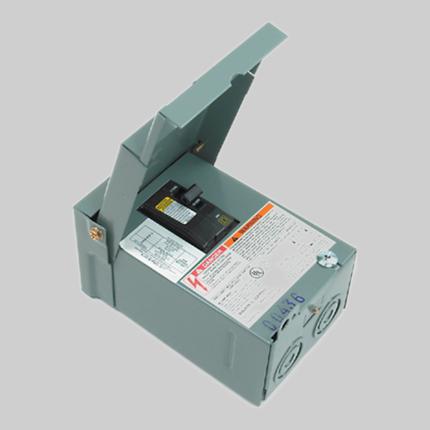
I used NM in wall from panel to a 60A A/C disconnect and used a #10 THHN A/C whip from disconnect to compressor.
View media item 16457
 
Last edited:
OP
G

GarageGuy89

Well-known member
Joined
Jul 12, 2016
Messages
367
Location
Olalla, WA
To meet NEC requirements for motor operated equipment you need to use NEC table 430.248 to determine amperage by the listed HP on the motor data plate. It the motor data plate is showing 5HP then the amperage to use is 28A. To calculate wire size you multiply 28A X 1.25% to get 35A. At 35A you need to hardwire it using either #8 NM or #10 THHN and can use a 40A DP breaker.

Edit:
I used NM in wall from panel to a 60A A/C disconnect and used a #10 THHN A/C whip from disconnect to compressor.

Where can I get the NEC Code?
 
OP
G

GarageGuy89

Well-known member
Joined
Jul 12, 2016
Messages
367
Location
Olalla, WA
So 40 amp breaker > running 8 gauge > to 40 amp disconnect > running 8 gauge > to compressor?

This would meet code for a 22 amp 5 hp rated motor?
 

marklc

Well-known member
Joined
Nov 24, 2015
Messages
82
Not sure why a disconnect is needed sounds like your panel is less than 25' and within sight. I'd just run it to a surface mount box and liquidtite/sealtite to your compressor. JMO
 

pattenp

Well-known member
Joined
Jun 4, 2008
Messages
10,175
Location
Virginia - USA
Disconnect is not needed if panel is in sight of compressor. I used the disconnect because it makes it easy to transition to the A/C whip because it has lugs to make connections plus it gives me a switch right at the compressor to disconnect without having to go 30+ feet across the garage winding through stuff to do so if needed. The A/C disconnect was about $15.
 

pattenp

Well-known member
Joined
Jun 4, 2008
Messages
10,175
Location
Virginia - USA
If you do use a disconnect make sure it's rated for at least 5HP. I know the Square D QO200TR like I used is 10HP rated.
 
OP
G

GarageGuy89

Well-known member
Joined
Jul 12, 2016
Messages
367
Location
Olalla, WA
Yes. Compressor would be about 5' from panel, well withing reach/access.

So, looks like I have two options:

1. Run 40 amp DP switch from panel > 8guage > gang box > flex 8gauge > motor
2. Run 40 amp DP switch from panel > 8guage > 40amp dissconnect > flex 8gauge > motor

Did I understand that correctly?
 

Mr. T

Well-known member
Joined
Sep 4, 2013
Messages
636
Location
Central PA
Did I understand that correctly?


Depends what you mean by "flex."

SJOOW or SOOW cannot be used for a permanent installation. You would need to use some type of conduit (Sealtite/LFMC) and most likely THHN. That's the combo I would use at least.
 
OP
G

GarageGuy89

Well-known member
Joined
Jul 12, 2016
Messages
367
Location
Olalla, WA
Now I'm getting confused. So SJOOW would be okay? Not sure why conduit would be needed in a closed, heated, slab on grade detached garage?

Do you go 10-2 SJOOW to the 6-2 NM on the 50 amp breaker? Connected in a gang box?
 
To avoid these ads, REGISTER NOW!

pattenp

Well-known member
Joined
Jun 4, 2008
Messages
10,175
Location
Virginia - USA
The SJOOW is fine to use as the short whip from compressor to wall box. Going on 5HP the dedicated circuit needs to be at least 35A using #8 NM and #8 SJOOW cord. The connection of the SJOOW cord to the NM is to be hardwired, no plug and socket. You can use a surface mounted box and need to use proper stress relief connectors for the cord where entering the box. To use SJOOW as the whip it is not to be in a location where it is subject to damage. I suggest using a #10 AC whip instead of the #8 SJOOW cord because the #10 wire in the A/C whip is easier to hook to the compressor and plus the A/C whip is more rugged than the cord. The THHN in the A/C whip has a higher amp capacity than the same size NM or SJOOW so it can be #10 as where the SJOOW needs to be #8 just as the NM needs to be #8 for 35A. Since 35A is not a standard breaker size the next size up can be used which is a 40A. If you want the dedicated circuit to be 50A then up size the wires to #6 NM and #8 THHN or #6 SJOOW for the whip. Motor circuits can have breakers of higher amperage than the circuit it protects but we don't want to go there because it will just cause more confusion so it's best to just stick with sizing the breaker to the circuit as if it was a normal use circuit. I hope I have not made things more confusing for you.
 

sberry

Banned
Joined
Jun 18, 2005
Messages
35,747
Location
Brethren, Michigan
I am not saying you should do this but,,, before everyone was real uptight about it I must have put a dozen of these on 10 cable 30 breakers and never had one trip a breaker.
 

pattenp

Well-known member
Joined
Jun 4, 2008
Messages
10,175
Location
Virginia - USA
Just curious as to your thoughts but I don't read 400.7 as applying in this case.

NEC 400.7 Uses permitted (A) (7) Prevention of the transmission of noise or vibration.

Prevention of vibration to connections is the primary reason to use flexible wiring. Same reason to also use flexible air line to the compressor.
 
Last edited:

Mr. T

Well-known member
Joined
Sep 4, 2013
Messages
636
Location
Central PA
I suppose you could argue that in this situation. It seems that there are other approved wiring methods that accomplish the same thing though without getting into interpreting an exemption or "special case."

It also might be cheaper to run the LFMC and THHN anyhow. Big cord isn't cheap.
 
Last edited:

pattenp

Well-known member
Joined
Jun 4, 2008
Messages
10,175
Location
Virginia - USA
I suppose you could argue that in this situation. It seems that there are other approved wiring methods that accomplish the same thing though without getting into interpreting an exemption or "special case."

It also might be cheaper to run the LFMC and THHN anyhow. Big cord isn't cheap.

I can't argue your point and I suggested using an A/C whip for this case. The NEC just doesn't explicitly forbid the use of flexible cord for this purpose.
 
OP
G

GarageGuy89

Well-known member
Joined
Jul 12, 2016
Messages
367
Location
Olalla, WA
I am not saying you should do this but,,, before everyone was real uptight about it I must have put a dozen of these on 10 cable 30 breakers and never had one trip a breaker.

So I've read...So the down side to running 10 wire on 30 amp breaker would be that it flips the breaker constantly and you'd be displeasing the code gods? Is this causing a fire hazard or a dangerous situation? And if it doesn't flip the breaker....all is fine and dandy in the electrical world?

I know how codes can be, but everything I am hearing just sounds way overkill. Went to the store today and its hard to even find wire that size because they don't stock it. Not to mention the existing wiring inside the mag starter and everything downstream of the starter is all 10 wire.

I just don't see the logic in having a 40 amp circuit on 8 wire when all the parts on this thing come wired from the factory with #10 and the motor says 22 amps (22*1.25 < 30)

How can the big box stores sell their "7.5 HP" models when they come pre-wired in the box with plugs?
 

pattenp

Well-known member
Joined
Jun 4, 2008
Messages
10,175
Location
Virginia - USA
How can the big box stores sell their "7.5 HP" models when they come pre-wired in the box with plugs?

I've never seen a full size upright compressor with a 7.5HP motor come wired with a cord and plug. If you are talking about small compressors with 7.5HP on a sticker slapped on the side of the tank, that 7.5HP is bogus in regards to true motor HP output. Code aside I wouldn't loose any sleep putting your compressor on a 30A circuit.
 

wyliesdiesels

Well-known member
Joined
Aug 14, 2012
Messages
20,016
Location
Modesto, CA
So I've read...So the down side to running 10 wire on 30 amp breaker would be that it flips the breaker constantly and you'd be displeasing the code gods? Is this causing a fire hazard or a dangerous situation? And if it doesn't flip the breaker....all is fine and dandy in the electrical world?

I know how codes can be, but everything I am hearing just sounds way overkill. Went to the store today and its hard to even find wire that size because they don't stock it. Not to mention the existing wiring inside the mag starter and everything downstream of the starter is all 10 wire.

I just don't see the logic in having a 40 amp circuit on 8 wire when all the parts on this thing come wired from the factory with #10 and the motor says 22 amps (22*1.25 < 30)

How can the big box stores sell their "7.5 HP" models when they come pre-wired in the box with plugs?

When it comes to wire on apliances, equipment and building wire youre not comparing apples to apples.

A lot of times wire on appliances and equipment has a higher temperature rating than building wire such as 105* c. Building wire is 90* c max but is sized at 75* c ampacity unless derating is involved.

And as pattenp pointed out, HP ratings are grossly over rated.

What is the FLA on that 7.5HP comp u mentioned? 15a? Then its about 3HP NOT 7.5...
 
OP
G

GarageGuy89

Well-known member
Joined
Jul 12, 2016
Messages
367
Location
Olalla, WA
When it comes to wire on apliances, equipment and building wire youre not comparing apples to apples.

A lot of times wire on appliances and equipment has a higher temperature rating than building wire such as 105* c. Building wire is 90* c max but is sized at 75* c ampacity unless derating is involved.

And as pattenp pointed out, HP ratings are grossly over rated.

What is the FLA on that 7.5HP comp u mentioned? 15a? Then its about 3HP NOT 7.5...

Is there a physical difference in the building wire that does not allow it to be rated at higher temps? I'm asking because I don't know, curious as to weather it is purely a safety factor, or if the actual wire/shielding is different?

When I mentioned the 7.5hp, yes it is the one's with the sticker slapped on the side but are only putting out 15 amps. I've seen them wired from the factory with plugs.

Went with the 40 amp breaker and 8/2 wire. 15-50 amp breakers are all the same price, and 8 wire is a dollar or two more then 10, so might as well do it right and go with 40 with a #10 AC whip.

As for the surface mount box. Is this the correct type I should be using? http://www.homedepot.com/p/Bell-1-G...1-2-in-or-3-4-in-Outlets-PSB37550GY/202284546

Could a single throw switch be puts in the j-box's place? Having a hard time finding one for less then 100$...
 
OP
G

GarageGuy89

Well-known member
Joined
Jul 12, 2016
Messages
367
Location
Olalla, WA
Remember the 60A A/C disconnect I showed. It's a switch. Cost about $15.

Yes. So the plastic piece that you pull out can be treated as a switch for turning the machine on/off? I thought that was more for limited use, like maintenance?

I can't find a 40 amp one. Why would 60 amp be used and not 40 amp?
 

pattenp

Well-known member
Joined
Jun 4, 2008
Messages
10,175
Location
Virginia - USA
It's just a switch, not a pull out disconnect. It's rated up to a 60A load and 10HP and is nonfused.

http://www.homedepot.com/p/Square-D...e-Over-Current-Protection-QO200TRCP/202353314

Q0200TR.jpg
 
Last edited:
OP
G

GarageGuy89

Well-known member
Joined
Jul 12, 2016
Messages
367
Location
Olalla, WA
Got it. Was looking at those blade pull out versions. Looks like those are about 5$. I like this over the pull out and $100 external throw switches!

I think I understand and got the layout down now! Thanks for all the help.
 
OP
G

GarageGuy89

Well-known member
Joined
Jul 12, 2016
Messages
367
Location
Olalla, WA
Got everything ready up to the panel, but want to make sure this breaker is compatible with the box?

Here are pictures of the existing breaker box...


Below, is a picture of what I think is a matching breaker. They appear to be both type CH breakers. The one from homedepot is made by eaton, and the existing breakers don't appear to have any brand name on them, that I can tell at least.


sberry

Banned
Joined
Jun 18, 2005
Messages
35,747
Location
Brethren, Michigan
I have seen those comps run on 20s and not trip. My Bud ran one a size larger on 30 for 30 years. BTW, right breaker. I would run it on a 30 first. You can breaker it up but don't have to. The buds ran for 10 yrs and tripped a couple times, problem with a start circuit, fixed it and never another issue.
A problem with mine would have probably tripped a 40 but it was ok by me to come home to no air, tripped breaker, broke cap, worked like it should. My backup is a size bigger on 30 and never tripped.
 
Last edited:
OP
G

GarageGuy89

Well-known member
Joined
Jul 12, 2016
Messages
367
Location
Olalla, WA
I have seen those comps run on 20s and not trip. My Bud ran one a size larger on 30 for 30 years. BTW, right breaker. I would run it on a 30 first. You can breaker it up but don't have to. The buds ran for 10 yrs and tripped a couple times, problem with a start circuit, fixed it and never another issue.
A problem with mine would have probably tripped a 40 but it was ok by me to come home to no air, tripped breaker, broke cap, worked like it should. My backup is a size bigger on 30 and never tripped.

I am asking this because I don't know, so, what would the positive be to running a 30 amp vs 40 amp here? I understand that a 30 amp is probably fine, but does it really matter at that point?
 
To avoid these ads, REGISTER NOW!
Top Bottom