To avoid these ads, REGISTER NOW!

Clamp meters and leads for parasitic draw testing

CerzevaMan

New member
Joined
Oct 7, 2025
Messages
1
I've become curious about testing for parasitic draw so I'm looking for an inexpensive clamp meter that measures DC current. Pine Hollow Auto Diagnostics on YouTube recommends the AstroAI CM4KOR but I see on some older posts that a lot of you recommend the UNI-T UT210E. Any opinion on which current clamp meter is best for my purpose? BTW, I'm not a mechanic and will probably only use a clamp meter occasionally.

Does Amazon have any decent test leads or should I look elsewhere? Again, I'm not a mechanic so won't use them often.
 
To avoid these ads, REGISTER NOW!

signcrafter

Well-known member
Joined
May 9, 2012
Messages
12,493
I have a fluke 87 I use in the shop along with amp clamps. I wanted something a little more portable and versatile to carry with me, I do a lot of remodeling and also need to go to a car repair sometimes. Forum members recommended the UT210E so I picked one up and have really liked it the last couple years. It's small but does a lot. Use it a lot more then I thought I would. Well worth the price. For parasitic drain I usually use some battery terminal adapters I made up a while back using battery quick disconnects. This allows you to hook your meter up and disconnect the battery without losing power and waking modules up. Same thing as this but I made my own for around 10 dollars, no way I'd pay 75 dollars for the OTC version, https://www.amazon.com/OTC-7645-Parasitic-Draw-Tester/dp/B000RT81XW/?tag=atomicindus08-20. I also have the lisle drain tester leads but have never used them to be honest. I bought them when napa had a sale on them, https://www.amazon.com/Lisle-64970-Parasitic-Drain-Tester/dp/B00RGN5UAY/?tag=atomicindus08-20. Should probably try them out sometime.


As far as test leads I bought a kit that comes with a bunch of adapters to get into harness plug terminals and backprobes and alligator clips and all that stuff. Mine is similar to this one, amazon.com/Automotive-Multimeter-Electrical-Connector-Alligator/dp/B0CMTJKQJT/ref=sr_1_1_sspa?crid=EHAKNP1V9785&dib=eyJ2IjoiMSJ9.iILG3X7aIPY5TkYz2NlImodMcspeVJCEKgSuh8OawE-wvVMyAtX-tctxJZ25xLR8Zwgiu4noCuLE3VIDhwKHTNqySmrmcMlKm-VToQL21cCOp53sjsZZE5CqrYlxfmGxRI9gXn6R7-niGsts8WRxLL-wCalj2AP89qYz8JclOps3lPctpKgCIlxE4oPkCCm43pqT2BsmMnxEaPNSDDUnJinu-DY59tBXeTLq1a725tw.-8LU4nrqoQMiuI01HQ4izeuuFJUGwuoO2AeqVxSL2XY&dib_tag=se&keywords=test+lead+kit&qid=1759839034&sprefix=test+lead+ki%2Caps%2C292&sr=8-1-spons&sp_csd=d2lkZ2V0TmFtZT1zcF9hdGY&psc=1
 

Hakeem

Well-known member
Joined
Jan 22, 2024
Messages
1,278
Location
Chicago
You don’t need an amp clamp for parasitic draw tests. Set your multimeter to the larger amp setting (eg 20a), Disconnect the negative cable and hook your multimeter in series between the negative battery post and the cable end. Wait for your vehicle to “fall asleep” and then start to look for draw

Once you have a baseline reading youll likely have to go to milliamp setting, but don’t start there and blow the fuse.

Save the money you’d spend on an amp clamp and treat yourself to some nice fluke/pomona leads :cool:
 

zmotorsports

ALLIANCE MEMBER
Joined
Oct 20, 2009
Messages
21,454
Location
Northern Utah
I cannot comment on the specific Astro brand/model that you inquired about as I have no personal experience with it.


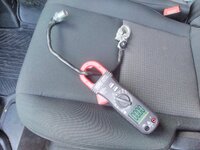
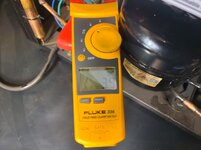
I do have a Fluke 336 that I use for high current testing which works great.
ampclamp1.jpg

But for low current testing such as parasitic drain, I purchased a Snap-on low current amp clamp and love it. They can be spendy if bought new, but I found a used one at a local pawn shop that was in like new condition. Several coworkers have also purchased these slightly used. My guess it people buy them but find they don't use them as much as they thought they would so the quickly sell them. It may be beneficial to keep your eyes open for a nice used low current amp clamp. amp3.jpg

Without an amp clamp, you can read the voltage drop across fuses and use a chart to see what the amperage draw is as well. But the amp clamp has so many uses, I think they are great to have in your arsenal of diagnostic tools.
 

Skyman

Well-known member
Joined
Nov 9, 2021
Messages
1,223
Location
Central Maryland
You don’t need an amp clamp for parasitic draw tests. Set your multimeter to the larger amp setting (eg 20a), Disconnect the negative cable and hook your multimeter in series between the negative battery post and the cable end. Wait for your vehicle to “fall asleep” and then start to look for draw

Once you have a baseline reading youll likely have to go to milliamp setting, but don’t start there and blow the fuse.

Save the money you’d spend on an amp clamp and treat yourself to some nice fluke/pomona leads :cool:

I built a rig that permits me to monitor on high-current setting until the vehicle goes to sleep, then temporarily switch in a hard-wired shunt while I change from high-current mode to low-current mode on my meter. I've found that in many cases, I can see enough in high-current mode to permit me to isolate the parasitic drain, but this rig has come in handy a few times.

1759845027400.jpeg
 

signcrafter

Well-known member
Joined
May 9, 2012
Messages
12,493
2ndGearRubber is the guy to talk to about specialty leads for mechanic work.
He hasn't visited GJ since September 13th. We would PM each other all the time and I had sent him a PM and didn't get a response for a few days so checked and he just up and left. Not sure what happened but he was an active member and disappeared almost a month ago now. Hoping he just got tired of the **** on here and nothing bad happened to him. He is very knowledgeable and was always willing to help everyone out and answer questions. Wish I knew his name or something to see if he's alright.
 

tak1313

Well-known member
Joined
Feb 4, 2018
Messages
658
Lisle makes this one for $38


I also have a UNI-T AC/DC clamp meter that can measure down to 0.01A, which is sufficiently sensitive for parasitic draws, but once you get that sensitive, they start to get really finicky - almost like changes in the earth's magnetic field triggers a reading or something.

Edit - out of curiosity (because I never used it for that purpose before), I checked back at the specs. At the more sensitive setting (6000mA (6A)), it has a resolution of 1mA - the 0.01A is for the 60A setting.

 
Last edited:

richfinn

Well-known member
Joined
Jan 29, 2011
Messages
4,817
Location
Leeds, Yorkshire, England
He hasn't visited GJ since September 13th. We would PM each other all the time and I had sent him a PM and didn't get a response for a few days so checked and he just up and left. Not sure what happened but he was an active member and disappeared almost a month ago now. Hoping he just got tired of the **** on here and nothing bad happened to him. He is very knowledgeable and was always willing to help everyone out and answer questions. Wish I knew his name or something to see if he's alright.

Hopefully he is just taking a break, a knowledgeable intelligent guy 👍
 

Oregon Dave

Well-known member
Joined
Sep 16, 2023
Messages
298
I've become curious about testing for parasitic draw so I'm looking for an inexpensive clamp meter that measures DC current. Pine Hollow Auto Diagnostics on YouTube recommends the AstroAI CM4KOR but I see on some older posts that a lot of you recommend the UNI-T UT210E. Any opinion on which current clamp meter is best for my purpose? BTW, I'm not a mechanic and will probably only use a clamp meter occasionally.

Does Amazon have any decent test leads or should I look elsewhere? Again, I'm not a mechanic so won't use them often.
The simplest is removing the negative cable and measuring the amps that will flow when you connect a multimeter, set to measure amps (start at the higher scale and work down to milliamps) between the removed cable and the negative battery terminal. If you are doing this rather frequently and this method is cumbersome and if you are crafty enough to install a safety cut-off switch you can not only save money buying a rarely used tool (as mentioned up thread), but also provide a measure of theft protection for your rig. When installed, turn it off and measure amps across the terminals with a standard meter you undoubtedly already have - not that I have anything personal against acquiring more tools.
 
Last edited:

jimindm

Well-known member
Joined
Oct 29, 2011
Messages
2,398
Location
Des Moines, Iowa
Most any charging tester will have an amp clamp that will show a draw.

Getting into fixing the draw, I would go with the voltage drop test across the fuses. It takes a while to get used to, but once you figure it out it works fast.

Of coarse there are a few things that are not fused and then you have to do something else.

The fuse method works the best, because you are not pulling them and waking a module up, that has to go to sleep again.

As one poster said there is no one size fits all and you will need different tools for different jobs.
 

zendriver

Well-known member
Joined
Dec 10, 2014
Messages
30,146
Location
Indiana
I haven’t tried it yet, but presumably you can use an IR Thermo camera to look for parasitic draw if you can let the vehicle sit until it’s completely cold.

We all have one, right? :D
 

zmotorsports

ALLIANCE MEMBER
Joined
Oct 20, 2009
Messages
21,454
Location
Northern Utah
He hasn't visited GJ since September 13th. We would PM each other all the time and I had sent him a PM and didn't get a response for a few days so checked and he just up and left. Not sure what happened but he was an active member and disappeared almost a month ago now. Hoping he just got tired of the **** on here and nothing bad happened to him. He is very knowledgeable and was always willing to help everyone out and answer questions. Wish I knew his name or something to see if he's alright.

That *****. I enjoy reading his posts as he has a wealth of knowledge that he openly shares with the forum.

I can understand getting frustrated and needing a break, but I hope he comes back.
 

richfinn

Well-known member
Joined
Jan 29, 2011
Messages
4,817
Location
Leeds, Yorkshire, England
The simplest is removing the negative cable and measuring the amps that will flow when you connect a multimeter, set to measure amps (start at the higher scale and work down to milliamps) between the removed cable and the negative battery terminal. If you are doing this rather frequently and this method is cumbersome and if you are crafty enough to install a safety cut-off switch you can not only save money buying a rarely used tool (as mentioned up thread), but also provide a measure of theft protection for your rig. When installed, turn it off and measure amps across the terminals with a standard meter you undoubtedly already have - not that I have anything personal against acquiring more tools.

Ahh, but a DC current clamp meter would only be a rarely used tool until you figure out just how useful they actually are for a mechanic, and how much of a time saver they can be, "non intrusive testing", what's not to like??

Alternator Current
Starter Current
Glow Plug Current
Fuel Pump Current
Electric Window lift Motors/Wiper Motors/Cooling Fans
And of course parasitic drains if you have one with the correct resolution

I would say it's an essential tool if you work on modern vehicles and very useful on older vehicles
 
To avoid these ads, REGISTER NOW!

dscheidt

Well-known member
Joined
Apr 26, 2017
Messages
2,909
You don’t need an amp clamp for parasitic draw tests.

You don't need one, but they're vastly easier to use, faster, and, extremely importantly, do not require disturbing the wiring of what you're measuring. For the $50 or so the uni-t costs, it's well worth it. If you're in a shop, it will pay for itself very quickly in improved efficiency. If you're a shade tree mechanic, the convenience is probably worth it, but depends on what your tool budget is. I have to wonder if the people suggesting work arounds have ever used one, because all of them (except voltage drop across fuses when your can measure that) is such a pain.
 

Mr_B

Well-known member
Joined
Nov 21, 2016
Messages
5,378
Location
Reading
If you got a DMM already just buy a decent amp clamp that plugs into the meter and uses the milliamp volt range to display current, they tend be more accurate .
The UT210E is not bad (i got one) but they can be hit and miss on accuracy of the clamp with some drifting so much they next to useless for fine milliamp work .
Quite a good clamp meter although not good at very low milliamp readings is the FNIRSI DMC100, quite a useful tool with good stable reading, good interface and can be had for 30 bucks or under if hunt for deal and coupon .
Reality is you need quility and pretty pricey clamp meter if want milliamp readings that constantly creditable .
inline amp meter is generally best way go unless buy good to half decent clamp meter equipment and test it to learn it and the accuracy .
 

tak1313

Well-known member
Joined
Feb 4, 2018
Messages
658
EEVblog post about the 210E. They seem to like it overall, and these guys REALLY know/test their stuff.


Edit - now that I think about it, I believe mine is the 210E as well - not the 211 (haven't touched it in awhile) because I'm too much of a tight@ss to shovel out the additional $$$ for the 211. I'll have to check on it when I get home.
 

richfinn

Well-known member
Joined
Jan 29, 2011
Messages
4,817
Location
Leeds, Yorkshire, England
The Brymen BM037 is very good value for a jobbing mechanic that is looking for stability and accuracy (which you are) at under $100 in my opinion

It has a useable DC Amp range from 10mA up to 600A (and it doesn't drift like the UNI-T 210E when parasitic draw testing)

It features Crest/MIN/MAX/AVG so it will actually record values (good whilst you go press the start button or you are looking for a fuel pump dropping out)

It has NCV detection that can pick up if an ignition coil is switching (not it's original intended use, it's a free tip of the trade) 👍

It has a nice crisp display and a good backlight

The Jaws are very nicely sized and great for awkward spots

The build quality is very good (Taiwan) including the supplied test leads for voltage measurements

The UNI-T 210e is a really good budget choice at around $50 but it Maxes out at 100A which rules out Starter Motor Draw Tests (which are useful for quickly identifying seized up engines/alternators/belt tensioners/bad starters etc). and you will need to zero it at regular intervals because of the drift in low Amp setting

I would also say, I prefer having both my Clamp Meter to monitor the Amp draw and a regular multimeter to measure volt drop across the fuses at the same time (because if the vehicle suddenly shuts down the drain you won't know if you are volt dropping the fuses with the clamp meter (please don't ask me how I found this out) 😂😂

 
Last edited:

Hakeem

Well-known member
Joined
Jan 22, 2024
Messages
1,278
Location
Chicago
You don't need one, but they're vastly easier to use, faster, and, extremely importantly, do not require disturbing the wiring of what you're measuring. For the $50 or so the uni-t costs, it's well worth it. If you're in a shop, it will pay for itself very quickly in improved efficiency. If you're a shade tree mechanic, the convenience is probably worth it, but depends on what your tool budget is. I have to wonder if the people suggesting work arounds have ever used one, because all of them (except voltage drop across fuses when your can measure that) is such a pain.
i dont think it’s that much of a hassle, but opinions may vary. The chief piece of info is this:

BTW, I'm not a mechanic and will probably only use a clamp meter occasionally.

For a guy who’s just curious about parasitic draw, I think the “hard way” is perfectly appropriate. Sounds like he’s just going to do it once. Completely different for a pro or even a serious hobbyist.

It has NCV detection that can pick up if an ignition coil is switching (not it's original intended use, it's a free tip of the trade) 👍
Great post but I have to inquire about this part - I thought the NCV detection only worked on AC current, no?
 

richfinn

Well-known member
Joined
Jan 29, 2011
Messages
4,817
Location
Leeds, Yorkshire, England
i dont think it’s that much of a hassle, but opinions may vary. The chief piece of info is this:


For a guy who’s just curious about parasitic draw, I think the “hard way” is perfectly appropriate. Sounds like he’s just going to do it once. Completely different for a pro or even a serious hobbyist.


Great post but I have to inquire about this part - I thought the NCV detection only worked on AC current, no?

That's correct that is the intended use for NCV detection on 120v/240v A/C power

However if you hold it close to a pencil style ignition coil with the motor running it will trigger and tell you if the coil is firing (if the coil is indeed switching and capable of producing a spark) in most cases (some coils are better insulated and a magnetic field detector works better on those).

The Brymens generally have two levels of sensitivity on NCV detection, so you might need to experiment a little.

Magnetic Field detectors are way cheaper though and I can recommend the Extech MD10 or it's clone from Triplett the ET30 (also useful for automotive relay testing or any kind of solenoid like fuel injectors)
 
Last edited:

Buckaroo5

Well-known member
Joined
Oct 18, 2012
Messages
825
Location
Central Ohio
I have the Lisle 64970 and with my Fluke 88V does a good job. I would buy a clamp on but difficult to fit on a lot of the vehicles I see.
 

zendriver

Well-known member
Joined
Dec 10, 2014
Messages
30,146
Location
Indiana
Ordered this one - literally for the hell of it, because i was curious how many DC amps the Ford Backhoe starter does draw.

I did overpay for it buying off Temu for $25, but it was free shipping.


The OP did state inexpensive. :dunno:
 

WildBill

ALLIANCE MEMBER
Joined
Aug 20, 2021
Messages
2,030
Location
PNW
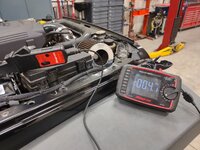
I just saw that power probe makes a unit for parasitic draw yesterday.
That's pretty cool, I don't think I've seen a OBD2 scanner that measures parasitic draw before. But I guess I never thought about doing it that way, so I never looked. Seems like you could build a single function device to just do that or an adaptor cable with OBD2 to test leads. We measure down to the 1uA (one millionth of an amp) level on our products at work. I have access to some tiny standalone amperage measuring circuit boards we put in our product testing stations, I think I will try and make something that plugs into the port and has a small wired remote screen. Or maybe sends it over Bluetooth, we also do some of that so it would be pretty straightforward.
 

SuzukiGS750EZ

Well-known member
Joined
Apr 26, 2012
Messages
3,273
That's pretty cool, I don't think I've seen a OBD2 scanner that measures parasitic draw before. But I guess I never thought about doing it that way, so I never looked. Seems like you could build a single function device to just do that or an adaptor cable with OBD2 to test leads. We measure down to the 1uA (one millionth of an amp) level on our products at work. I have access to some tiny standalone amperage measuring circuit boards we put in our product testing stations, I think I will try and make something that plugs into the port and has a small wired remote screen. Or maybe sends it over Bluetooth, we also do some of that so it would be pretty straightforward.
Report back!
 

Wrench97

Well-known member
Joined
Jun 23, 2018
Messages
12,155
Location
Southeastern Pa
That's pretty cool, I don't think I've seen a OBD2 scanner that measures parasitic draw before. But I guess I never thought about doing it that way, so I never looked. Seems like you could build a single function device to just do that or an adaptor cable with OBD2 to test leads. We measure down to the 1uA (one millionth of an amp) level on our products at work. I have access to some tiny standalone amperage measuring circuit boards we put in our product testing stations, I think I will try and make something that plugs into the port and has a small wired remote screen. Or maybe sends it over Bluetooth, we also do some of that so it would be pretty straightforward.
That is not a scan tool, it plugs into the OBD2 port and supplies voltage/current to the system through the +(pin 16) and - (pin 4).
It's main purpose was to plug in quickly when disconnecting the battery to keep alive the memory functions in todays cars, Radio, dash settings, seat settings, etc, Older Hondas for example would require you to enter a code in the radio if the battery was disconnected most owners have no idea what the code is and that forces us to have to call Honda with the vin and retrieve the code.
As a side function this tool can also measure how much amperage it is outputting while plugged in and is capable of graphing the current output over night, but you do have to disconnect the battery(s) in the car so that it is the sole source of power.
 

WildBill

ALLIANCE MEMBER
Joined
Aug 20, 2021
Messages
2,030
Location
PNW
That is not a scan tool, it plugs into the OBD2 port and supplies voltage/current to the system through the +(pin 16) and - (pin 4).
It's main purpose was to plug in quickly when disconnecting the battery to keep alive the memory functions in todays cars, Radio, dash settings, seat settings, etc, Older Hondas for example would require you to enter a code in the radio if the battery was disconnected most owners have no idea what the code is and that forces us to have to call Honda with the vin and retrieve the code.
As a side function this tool can also measure how much amperage it is outputting while plugged in and is capable of graphing the current output over night, but you do have to disconnect the battery(s) in the car so that it is the sole source of power.
Sorry, just glanced at it and thought it did all that and had a regular scanner in it. Either way its cool and got me thinking.
 

N8sToolz

Well-known member
Joined
Oct 27, 2022
Messages
97
Look up using a shunt resistor for parasitic draw. You can use a 1 ohm resistor in series at the battery. And by measuring the voltage drop across it will show your current flow. I add a automotive fuse holder to it too. It's the same method that your multimeter uses internally. Very accurate for a poor man's current clamp.
 
To avoid these ads, REGISTER NOW!
Top Bottom