

You are using an out of date browser. It may not display this or other websites correctly.
You should upgrade or use an alternative browser.
You should upgrade or use an alternative browser.
Clamp Question
- Thread starter BJ42LX
- Start date
454ragtop
Well-known member
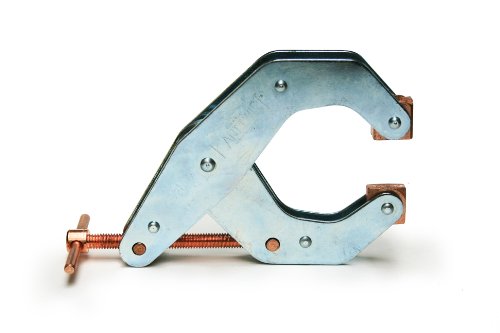
The self aligning blocks that do the clamping.
george4
Well-known member
Also no rotational force applied to the clamping pad, clamping handle is 90 degrees from a C clamp position and pad has v cuts for round material.
The difference in direction of the clamping screw is a big help sometimes because it often gets the clamp out of the way. This type of clamp also gets smaller in the clamping direction depending on the size of what you're clamping. A C-clamp frame always stays the same size.
sberry
Banned
WhoWhatNow
Well-known member
My understanding is that they do not twist like normal c clamps during tightening. Hence the name Kant Twist. A normal c clamp puts rotational forces on the work as you tighten it. Sometimes the c clamp or your work will move as you tighten.
I haven't tried them yet but I would like to.
I haven't tried them yet but I would like to.
rippered
Well-known member
I just got some a few weeks ago, i love them. Made in the USA too
tshetter
Well-known member
So....Who makes them?
rippered
Well-known member
Iron-Iceberg
Well-known member
I hate c clamps. I love Kant twist.
Doug Arthurs
Well-known member
Great on the milling machine for oddball set ups
cyato
Well-known member
My understanding is that they do not twist like normal c clamps during tightening. Hence the name Kant Twist. A normal c clamp puts rotational forces on the work as you tighten it. Sometimes the c clamp or your work will move as you tighten.
I haven't tried them yet but I would like to.
Exactly. Very strong clamping force that is controllable and doesn't try to move the workpiece too much. Allows for easy and fine adjustment when necessary.
Sent from my iPhone using Tapatalk
Cannonball55
Well-known member
- Joined
- Sep 24, 2011
- Messages
- 56
I understand that they handle stretching better too. We used them after our c-clamps would open up (bend out) after repeated uses in the oven.
Sent from Tapatalk using my iPhone.
Sent from Tapatalk using my iPhone.