To avoid these ads, REGISTER NOW!

Clay soil is killing my trees

White Shadow

Well-known member
Joined
Jan 26, 2014
Messages
985
Not sure where to put this because it doesn't really fit into any subforum, but I think some of you guys may be able to give an opinion on this issue.

Anyway, my house is 3 years old now and I had a bunch of landscaping done two summers ago, including about 7 or 8 trees of about 10' height. All but one are either dying or dead and replaced more than once. The only true survivor is a River Birch tree that is growing like crazy. And of course a River birch loves a lot of water.

I dug out some of my dead trees and what I found was that the root balls were sitting in standing water. There is so much clay that the water just doesn't drain well and it's killing my trees. Does anyone have a good solution for this? I've asked a bunch of local people and I've gotten all kinds of opinions, but nobody had a real solution. Maybe the best idea that I've heard so far is to grab a post hole digger at the site of the tree and dig down until I get through the clay. Then insert a 4" PVC pipe into the hole and fill it with pea gravel to make a drain under the tree's root ball. Will that even work? Or is it a crazy idea and a waste of time?

Anyone have any experience with a problem like this?
 
To avoid these ads, REGISTER NOW!

bczygan

Well-known member
Joined
Nov 4, 2009
Messages
22,002
Location
DETROIT! Arsenal of Scrappers
Drainage!

Dig a hole 3 times the size of the root ball.

Plant them high! Root junction out of the soil.

Spread out the root ball.

Do NOT amend the soil!

Keep mulch away from trunk.

Get it done under warranty if landscaper did the design and installation.

Bill
 
Last edited:

matt_i

Well-known member
Joined
Mar 14, 2008
Messages
10,728
Location
SE Michigan
Create underground features that funnel the water toward the birch. Hopefully with its increasing size it will continue to pump out the water.

Clay does weird stuff to pine trees. They live thru it but you can see the stress.
 

SGKent

Banned
Joined
Feb 12, 2010
Messages
1,959
Location
Citrus Heights CA
you have to create drainage. Clay soil comes in many different ways. Also the question of how they are being watered will play into it.

Tree roots are pretty smart. They know that in order to live they have to have access to oxygen in the soil. Microbes use that oxygen to break down organic materials into nutrients. So, in a heavy clay soil the roots will grow on the surface if there is not enough oxygen getting into the clay. Where I am going with this is that the next question you will ask in 5 years is how do I stop the tree roots from surfacing and causing my mower to run into them.

The first questions I would ask is where do you live. Is there hardpan under the clay? Is the water from irrigation, a high water table, or heavy rainfall. Have you driven around to see what trees do well locally to you? Have you dug any small test holes to see if the water is from a high water table or other? Did you send any soil tests to the lab to see what the minerals looked like? I use Waypoint-A&L labs in Memphis for my tests*. Be aware that with heavy clay like that you can lose trees to a windstorm if you cannot get the trees to root deep enough. Last thing you will want is a 70' Walnut on your house in a storm.

We have clay here so I do have some experience dealing with these things. But we also have layers of hardpan so I put in some trench drains which drained my lot and the whole housing tract above me over a couple year period. Lots of hired labor to break up areas trees were going, and amendments added to balance the soil. No tree except maybe Cypress, Mangrove etc will thrive in standing water. Planning for trees is a big part of landscaping them. I had 3 redwoods that were beautiful that we took out last spring. They were 21 years old and the roots were at that point of becoming destructive even though they were 30' from the house. But I planned for that when I planted them many years ago. Now we have two crape myrtles that will become 25' tall in that area.

To answer your questions more information is needed.

*If anyone grows things whether a lawn or other you really want to do some soil tests before putting any fertilizer down. The basic test I get is a S3M with Nitrate-N @ $20 each. Usually I do 5 to 7 tests every two years covering the different areas things are grown - lawns, trees, garden, etc.. They e-mail if back to you about 24 - 48 hours after the sample arrives there. We send the samples in a small flat rate priority from the west coast to Memphis. It is less costly doing it than west coast labs.
 
Last edited:

Higgins

Well-known member
Joined
Dec 25, 2009
Messages
1,934
Location
Shepheardsville, KY
Had the same problem down in MO.

We had to dig a larger hole, like 4-5 times the size of the ball, placed small gravel on the bottom of the hole and back filled with good top soil!
 

machsnell

Well-known member
Joined
Jun 12, 2010
Messages
942
Location
Northern Virginia
The key in clay soil is to make sure the dirt around the root ball is well compacted. When it isnt water gets in and wont drain out.

And you get root rot. It is a pain to compact back properly but very important. Not just a little but really compact soil

Also it could be where your grows are from. Lots of growers in NC have sandy soils.

I learned that sandy root ball tree planted clay will do the se thing...root rot.

Sent from my SM-G960U using Tapatalk
 

jives

Well-known member
Joined
Jan 4, 2013
Messages
2,807
Location
Central NY
Plant trees that thrive in clay and poor drainage.

We've had the same problem and after planting about 250 trees on our property, finally came to the conclusion that matching the plant to the environment is essential.

For example:

Weeping cherry. Died
Some conifers. Stunted
Other conifers. Thriving
Black Alder. ugly tree but cannot stop it from growing.
Pin oak, Several maple varieties. slow and steady, but roots appearing near the surface and need to adjust mowing
Black locust. Thriving.
Honey locust. Okay.
Pears/Apples. Mixed varieties, mixed results
Hybrid Poplars. Thriving.
Osage Orange. Marginal
 

My Old Tools

Well-known member
Joined
Jun 4, 2014
Messages
5,438
Location
Hamrick Lake, TX
Plant smaller trees. Seedlings grow faster than larger transplanted trees. They also have their roots in the native clay to begin with. No hole full of mulch or potting soil to hold water. Even better is to start seeds where you want them.
 

58Yeoman

Well-known member
Joined
Oct 1, 2010
Messages
8,999
Location
Central IL
Please don't plant locust trees. We took down about a dozen a couple years ago, and little sprouts are popping up everywhere off the roots. Can't get rid of them. Here, they grow like weeds with thorns. They are also very dirty trees.
 

dw1

Well-known member
Joined
Jan 26, 2015
Messages
1,335
Location
Ky
After finishing my house, I ended up with some drainage issues on the side of my barn (Other side of my property!!), it was affecting a few of my Green Giant Arborvitae ran down my fence row, I ended up trenching and added gravel and corrugated pipe, I put 2 catch basins in line and 2 Tee's, I used the corrugated pipe sock on part of it, it did take care of my drainage issues. It was staying so wet, I was getting my Zero Turn hung up when I cut grass, also 3 of my arborvitae stopped growing, hopefully they will catch up with the other 10 of them soon. I have a sump pump that cycles every day, it has been in the mid ninety's here and has'nt rained in over a week
 

Higgins

Well-known member
Joined
Dec 25, 2009
Messages
1,934
Location
Shepheardsville, KY
DW1We've have the same problem down in TN. We have a very heavy clay soil and we have has sooooo much rail that trees are loosing there leaves early, and many,many trees in the woods are dyeing from too much rain between last yr. and this yr.

As for residential property, the most one can due is make sue you dont have standing water on the property. The only options are to install swales to direct water away from the property,Install some type of drainage system to remove water from around the house, or plant trees in raised beds or berm them. Other than that, all one can do is cross one's fingers and hope!
 

dw1

Well-known member
Joined
Jan 26, 2015
Messages
1,335
Location
Ky
DW1We've have the same problem down in TN. We have a very heavy clay soil and we have has sooooo much rail that trees are loosing there leaves early, and many,many trees in the woods are dyeing from too much rain between last yr. and this yr.

As for residential property, the most one can due is make sue you dont have standing water on the property. The only options are to install swales to direct water away from the property,Install some type of drainage system to remove water from around the house, or plant trees in raised beds or berm them. Other than that, all one can do is cross one's fingers and hope!

I agree, when I bought my property, I did bring some dirt in, we dug some swales to divert the water down to the creek, my neighbors property angled down to mine and all his drainage was coming my way, I have all the surface water taken care of, I am sitting on a spring, we hit rock at 10' when I dug my basement, my sump pump runs a lot, even on dry weeks
 

MushCreek

Well-known member
Joined
Jan 14, 2015
Messages
9,780
Location
Upstate South Carolina
We have the same problem here in SC. Proper planting of tolerant species is the key, as others have pointed out. We killed a number of shrubs by planting them too deep in an improper hole. Around here, pines, oaks, poplars, and sweet gum seem to be happy. I hate sweet gum, but I swear it would grow in gasoline-soaked concrete.

The tricky part is the first couple years. Once established, most trees do OK.
 

ScottsGT

Well-known member
Joined
Jan 1, 2014
Messages
4,883
Location
Lake Wateree, SC
My area of SC is the exact opposite. I’m in the Sandhills region NE of Columbia. This use to be beachfront property. Darn it, only missed it by a few million years. But around here it is nothing but sand. Water the yard, and it soaks through faster than the roots can catch it.
 

pcmeiners

Well-known member
Joined
Aug 13, 2009
Messages
7,906
Location
In the only town in Pennsylvania, Bloomsburg.
cLay soil....

Does not fit either of these definitions:

"the upper layer of earth in which plants grow, a black or dark brown material typically consisting of a mixture of organic remains, clay, and rock particles."

": the upper layer of earth that may be dug or plowed and in which plants grow"

Sure as hell nothing grows on clay, you can't dig it, except with a jack hammer. Doubt you can plow it with a normal plow.

"I've heard so far is to grab a post hole digger at the site of the tree and dig down until I get through the clay. "

The clay could be 100ft down, do not even try.
 
Last edited:

38Chevy454

Well-known member
Joined
Dec 26, 2006
Messages
4,036
Location
Cincinnati, OH
I have heavy clay and the same problem. Solution is plant the trees higher than the ground, with tapered flow away from the trunk. Also agree, make a big hole and fill back with good dirt, so the roots have somewhere to start out besides the dense clay. Water will backfill a hole in the clay soil, so the gravel is just making it worse if you put that around the bottom of the hole. I plant the tree approx 1/3 out of the ground. Hole approx double the diam of the tree. So far it's working OK this year, the one the builder planted last year died in the first few months.
 
To avoid these ads, REGISTER NOW!
OP
W

White Shadow

Well-known member
Joined
Jan 26, 2014
Messages
985
Thanks for the all the advice. I failed to mention this earlier, but I'm currently living in South NJ, just outside of Philadelphia.

So far I've had several trees that didn't survive. Autumn Blaze Maple, several ornamental pear trees, Red Bud (landscapers replaced one three times and it's also dying). Someone told me this weekend to put gypsum on my soil because it will convert clay soil to a more friendly soil for trees. Never heard that before, but I looked it up online and it seems to be valid.

Part of my problem is that some of my trees (but not all) are in the path of the irrigation sprinkler heads, so they are getting watered daily whether they need it or not. But I think the bigger issue is that the clay soil just doesn't drain well at all. I have no standing water anywhere on my property, but that's mainly due to the fact that my entire yard is pitched slightly away from the house in all directions. I think my house sits about 10' above the street, so everything is downhill from the house.
 

jives

Well-known member
Joined
Jan 4, 2013
Messages
2,807
Location
Central NY
Please don't plant locust trees. We took down about a dozen a couple years ago, and little sprouts are popping up everywhere off the roots. Can't get rid of them. Here, they grow like weeds with thorns. They are also very dirty trees.

Not to derail the thread, but the planting of locust can be a plus or minus. The aggressive growing nature in an urban setting is bad, but as an agroforestry product, good. In some countries (e.g., Hungary) black locust is a major cultivated agricultural product. We are growing as a personal experiment to check growth rate and then determine productivity for posts and firewood.
 

ScottsGT

Well-known member
Joined
Jan 1, 2014
Messages
4,883
Location
Lake Wateree, SC

I always heard they were "developed" for tree farmers to put in between actual planted trees to be harvested for pulp/lumber. (pines) Somehow they kept the pines from sprouting off smaller under growth and cause them to grow taller much quicker. Then they became ornamental trees. I know they are all over this town. Every island between roadways in downtown Columbia is slam full of the Bradfords.
Red tips are a "tree" around here that morphed into a shrub. My back yard still has 4 or 5 trees that survived the red tip blight we had about 10 years ago. They are the reason I bought my Milwaukee M18 chainsaw.

Another is the Crepe Myrtle. It's actually a beautiful tree if left alone to grow properly. A few year back up in Charlotte the city hired an arborist and he went around fining businesses and homeowners that were committing Crepe Murder. :lol_hitti
 

brownbagg

Well-known member
Joined
Mar 20, 2006
Messages
5,208
we always just hand auger about ten feet below the ball and fill up with top soil, the tap root will find the topsoil
 

SGKent

Banned
Joined
Feb 12, 2010
Messages
1,959
Location
Citrus Heights CA
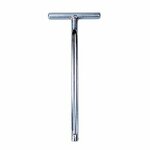
the description of downhill to street does not agree with the trees dying. Turn the irrigation off, dig a small hole a foot deep and see if it stays dry. If it does then you may be watering too much. One way of telling is get a soil probe like this and take a couple cores. See how far the wet goes down. Consider sending a soil sample off to a lab like Waypoint/A&L in Memphis like I mentioned. You'll get back a report.

Generally gypsum only works to loosen some clays. Many clays are not helped one bit by gypsum. It all depends on the chemistry. In some clays the calcium in the gypsum will bind to the clay molecule and free it. In others that isn't the problem. If you are finding that the roots are water logged, it kinda sounds like the hole is too small and the tree planted too deep. Around here in clay soils the hole should be 3 to 4 times as wide as the root ball, and you leave a small clay pedestal under the tree ball to hold it up with like a deeper area wider out so the water drains away. All that said, if you overwater almost any plant it will die. Last - plant your trees in the fall, never right before the hot season. Give them a chance to root a little.

_Sampler_Model_HA_xlarge__04335.1341367718.800.800.jpg

Here are soil tests. They show what you need to add. The first test is the lawn and front trees in 2006. Then the next one is 2019 after two heavy winters of rain. The ones in between are better but you can see where certain minerals are depleted. Likewise the pH has changed too which changes what minerals are available. The last one is for some redwood trees. They are gone now due to roots becoming invasive but you can see how soils on the same property vary.

LAST you say NJ. Are you in an area that Sandy soaked with salt water?

View media item 97194
View media item 97195
View media item 97196
 
Last edited:

Viper98912

Well-known member
Joined
Oct 20, 2012
Messages
1,130
Location
GA
Same here last year!

Planted an 8' tree, dug a huge hole, put it in the ground, and it was dead a few months later. We pulled it up, and the root ball was in a puddle. We were shocked.

We have so much solid clay (gray) in the area that just like you, the water didn't drain. So we built a planter on top of the ground and planted the tree literally on top of the ground. The planter landscaping blocks allow water to barely "seep through" if it gets too much water over time. You don't physically see water dripping out, but you know it does seep.

In the end, the tree is still very "loose", and will need to stay on the stakes & wires for at least another year. In the end, I'm hoping the roots will eventually start to dig down into the soil/clay and will probably break the landscaping blocks apart. Once it does that, I hope it's old enough and spread out enough and deep enough where it'll hold itself up, even though it started on top of the ground.
 

My Old Tools

Well-known member
Joined
Jun 4, 2014
Messages
5,438
Location
Hamrick Lake, TX
Always put native soil back into the hole. If you put clay back in, it won't hold any more water than the surrounding clay soil. If you put potting soil in, you have created a pot without a hole to drain. The tree has to live in that clay soil eventually. Any reasonable sized tree will never be able to live in potting soil long term.
 
OP
W

White Shadow

Well-known member
Joined
Jan 26, 2014
Messages
985

Thanks for the link, but that's not the type of ornamental pear trees I have in my yard. Mine do not have white flowers. In fact, I don't recall mine flowering at all. They have really dark red (almost black) leaves that stay that way all year, even in the fall season. I don't know what variety they are, but they are most certainly not Bradfords.
 
OP
W

White Shadow

Well-known member
Joined
Jan 26, 2014
Messages
985
the description of downhill to street does not agree with the trees dying. Turn the irrigation off, dig a small hole a foot deep and see if it stays dry.

Did that already. I left the hole opened up where the old tree was and the water stayed in that hole for about a week before it finally evaporated. I don't think it drained into the soil much at all, I think it was totally evaporation that eventually made it disappear. But when it rains, the hole stays filled again for several days. I also dug a separate test hole a few feet away from the original hole and got the same results. I'm 100% sure that the clay is so heavy that it won't allow the water to drain into the ground.

And to answer your other question, no my area was not impacted by Sandy. I'm about 60 miles away from Jersey shore.
 
OP
W

White Shadow

Well-known member
Joined
Jan 26, 2014
Messages
985
the description of downhill to street does not agree with the trees dying. Turn the irrigation off, dig a small hole a foot deep and see if it stays dry.

Did that already. I left the hole opened up where the old tree was and the water stayed in that hole for about a week before it finally evaporated. I don't think it drained into the soil much at all, I think it was totally evaporation that eventually made it disappear. But when it rains, the hole stays filled again for several days. I also dug a separate test hole a few feet away from the original hole and got the same results. I'm 100% sure that the clay is so heavy that it won't allow the water to drain into the ground.

And to answer your other question, no my area was not impacted by Sandy. I'm about 60 miles away from Jersey shore.
 

pcmeiners

Well-known member
Joined
Aug 13, 2009
Messages
7,906
Location
In the only town in Pennsylvania, Bloomsburg.
You really want trees?

Dig large (wide) holes. Hire a guy with a telephone pole auger, have him sink the auger down >12 feet for each tree in the center of the hole you dug, remove all the pulled up clay. back fill the hole with suggested materials and any live/dead bodies you have. Post hole digger will not do it.
 
OP
W

White Shadow

Well-known member
Joined
Jan 26, 2014
Messages
985
You really want trees?

Dig large (wide) holes. Hire a guy with a telephone pole auger, have him sink the auger down >12 feet for each tree in the center of the hole you dug, remove all the pulled up clay. back fill the hole with suggested materials and any live/dead bodies you have. Post hole digger will not do it.

What if my clay is only 3 feet deep? I can easily get past 3 feet of clay with a post hole digger.
 

SGKent

Banned
Joined
Feb 12, 2010
Messages
1,959
Location
Citrus Heights CA
If you have 3' clay only then auger many holes thru the yard to let the water drain thru, or find a way to slope the yard to drain excess water off to any gutters, ditches or towards the creeks nearby. You can't drain the water onto someone else's property without their consent and if so get it in writing. Draining directly to a creek may be a state fish and game or New Jersey EPA issue, but I think you can drain to a lower part of your property nearer a creek. Usually lots should be sloped about a quarter bubble away from the house to drain surface water off. What you are describing with standing water after a rain will kill most plants. I'd try to figure a way to put wide lower areas into the landscape to drain surplus water off, and auger thru, both will help with the issue. I am wondering if the builder brought in 3' of clay to build up the lots and compacted it.
 

dutchgray

Well-known member
Joined
Sep 28, 2014
Messages
6,467
Location
Dorset. England.
Plant smaller trees. Seedlings grow faster than larger transplanted trees. They also have their roots in the native clay to begin with. No hole full of mulch or potting soil to hold water. Even better is to start seeds where you want them.

This, plant whips, cheaper and they tend to overtake a larger tree as they almost always get stunted when they are planted, but they have to be a tree that can live on the clay.
 

pcmeiners

Well-known member
Joined
Aug 13, 2009
Messages
7,906
Location
In the only town in Pennsylvania, Bloomsburg.
"What if my clay is only 3 feet deep? I can easily get past 3 feet of clay with a post hole digger"

If it is red clay like I have around here it might take >1/2 a day to dig 3 feet, I would not call that easy .
Good luck, take care of the blisters you will get.

"but they have to be a tree that can live on the clay."

Pray tell, what tree thrives in clay?; if you have 40-50 years to produce a small tree, you have a chance.
 

Jack84

Well-known member
Joined
Jul 30, 2016
Messages
516
Location
Netherlands
"What if my clay is only 3 feet deep? I can easily get past 3 feet of clay with a post hole digger"


If it is red clay like I have around here it might take >1/2 a day to dig 3 feet, I would not call that easy .

Good luck, take care of the blisters you will get.


"but they have to be a tree that can live on the clay."


Pray tell, what tree thrives in clay?; if you have 40-50 years to produce a small tree, you have a chance.


We have plenty of trees and crops that thrive on clay around here.
 

pcmeiners

Well-known member
Joined
Aug 13, 2009
Messages
7,906
Location
In the only town in Pennsylvania, Bloomsburg.
"We have plenty of trees and crops that thrive on clay around here. "

You must have some extremely special clay. Stuff around here has 0% organic material, no nitrogen and requires a jack hammer to dig with; have to admit very good bricks are made of it. Here it takes 20 years of weed growth before enough soil is produced to grow stunted trees, hell, even worms have a hard time.
Care to supply a picture of just one of your thriving crops.
 
To avoid these ads, REGISTER NOW!
Top Bottom