To avoid these ads, REGISTER NOW!

Cleaning incra rules

Billybaldwin3

Member
Joined
Dec 7, 2020
Messages
13
Location
MI
I recently inherited a decent amount of tools from my grandfather.
2 of which are a 12" Incra T-rule, and a regular Incra 12" rule.

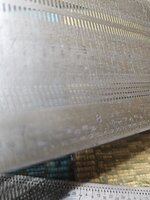
The both seem to be a bit tarnished or something.
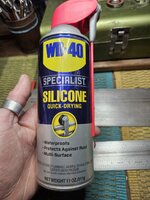
Tried wd 40.
Didn't help.

Anyone ever needed to clean these up?

If so, how did you do it?
And would using 220/400/600 sandpaper by hand mess them up or screw with the etchings?

It's just kinda hard to read em, and these are way too awesome to end being a tool I don't use.

Can't really get a good pic of what they look like, but I tried and attached anyway.

20230611_214518.jpg20230611_214526.jpg20230611_215129.jpg20230611_215145.jpg20230611_214648.jpg
 
To avoid these ads, REGISTER NOW!

neophyte

Well-known member
Joined
Apr 23, 2012
Messages
9,644
Location
Pennsylvannia
I wouldn’t sand the rules.
Nevr-Dull sometimes works for gently cleaning steel surfaces, although I’m not really sure it’s intended for steel.
Otherwise, if you want to use an abrasive, maybe fine (000, 0000 ?) stainless steel wool.
 

Firebrick43

Well-known member
Joined
May 12, 2015
Messages
14,033
Location
West central Indiana
I disagree with neophyte. Steel wool or never dull is going to get down into the etchings.

I would spray glue 2500 grit wet dry to the face of a block of mdf(super flat) and tack the ruler itself down to another piece of mdf very lightly. Lubricate with a very light oil or kerosene (pb blaster)and go in a straight back and forth motion. Do not go in circles or differing directions unless you want it to look like ****.

This is how clean old squares and rulers although incra rulers are thinner which is why I recommend tacking them down to mdf.
 
Last edited:

BTL-A4

Well-known member
Joined
Feb 28, 2018
Messages
1,252
Location
Santa Clarita
I would start with something gentle and work my way up:
-mild soap and water with a cotton rag
-diluted Simple Green with a cotton rag
-regular WD-40 with a cotton rag
-vinegar with a cotton rag

-I would try a non-scratching Scotch pad with all of the above solvents, then maybe go to a mildly abrasive one. My fear with any sort of abrasive pad is that it will scratch the surface. neophyte has the right idea: use something very fine to start.

See what those do first. It's hard to tell what is causing the discoloration, so it's hard to recommend something.
 

RTM

Well-known member
Joined
May 13, 2019
Messages
13,149
Location
SF Bay Area
Like Firebrick, I would treat it like a vintage saw where I want to preserve the etching. A hard block, and very fine (150+) sandpaper, going in the direction of the grain. Steel wool, wire wheel, scotchbrite, and sandpaper with a rubber backing will all dull the edges of the etching, ruining the look. Lubricant of your choice, the gentler the better.

And if you plan on using these for woodworking, don't use anything silicone, you could be ruining your future finishing attempts.
 

RTM

Well-known member
Joined
May 13, 2019
Messages
13,149
Location
SF Bay Area
Rubber impregnated with abrasive. I use then for cleaning crud off vintage tools. I fear they would flex into the grooves, like steel wool.
 
To avoid these ads, REGISTER NOW!

Zeus36

Well-known member
Joined
Oct 1, 2016
Messages
814
Location
Ventura, California
The both seem to be a bit tarnished or something.
Tried wd 40.
Didn't help.

Anyone ever needed to clean these up?

If so, how did you do it?
And would using 220/400/600 sandpaper by hand mess them up or screw with the etchings?

It's just kinda hard to read em, and these are way too awesome to end being a tool I don't use.

Can't really get a good pic of what they look like, but I tried and attached anyway.
20230611_214648.jpg

You used WD-40 specialist silicon. That is not regular WD-40. Use regular WD-40 as a lubricant with one of the methods mentioned by RTM above. I'd start with 320 or 400 grit wet or dry sanding paper over a hard wood block and WD.
 

neophyte

Well-known member
Joined
Apr 23, 2012
Messages
9,644
Location
Pennsylvannia
400 grit is way too coarse.
ScotchBrite likely us as well.
Some sort of ultra fine abrasive, or polishing compound rubbed onto the surface with a block of mdf while supporting the rule on another block of mdf as Firebrick43 mentioned might be the best place to start.
Simply rubbing the surface with plain mdf without polishing or abrasive compound to start may be best, since mdf is inherently abrasive to a degree.
I mentioned Nevr-Dull because it’s fairy gently, and ultra fine stainless steel wool (make sure it’s stainless) because it does not have hard abrasive particles like ScotchBrite.
 

4xdog

Well-known member
Joined
Aug 18, 2012
Messages
5,611
Location
Santa Fe, NM
...Tried wd 40.
Didn't help...

20230611_214648.jpg

Silicone! Ugh. Forget that stuff. For almost everything, IMO, but especially for trying to remove light corrosion. Silicones get everywhere -- much beyond where you first put them -- and they interfere with adhesion by contaminating surfaces.

Try some motor oil, or "regular" petroleum based WD-40, on an old rag. Give it some elbow grease but nothing more abrasive than that yet.

You can always bring out more aggressive options, in a gentle progression as needed, if the simplest, softest techniques don't work.

And perhaps wipe everything down with isopropyl alcohol to remove some of the d*mned silicone before starting! :)
 

RTM

Well-known member
Joined
May 13, 2019
Messages
13,149
Location
SF Bay Area
“Silicone fluid is highly soluble in hydrocarbon solvents such as toluene, xylene, ligroin, and mineral spirits as well as in chlorinated hydrocarbons. However, it is insoluble in ethanol, methanol, and water.”

Above From somewhere in:


We tell our folks it is assumed to be infinitely spreadable, one drop can be wiped around and cover everything and make it slippery. We have lots of IPA available.
 

PBCampbell

Well-known member
Joined
Feb 2, 2009
Messages
871
Location
WV
White vinegar would be my first step. I sure would not be using sandpaper or any of the abrasives that have been mentioned. Polishing compound, brasso, never-dull, etc. would be my next step. They do make Scotch-brite type pads that do not have any abrasive. they are usually white, but may not be economical as they are usually sold in quantity. I'd probably get pot scrubbers like copper if I thought something more aggressive was needed and use light pressure.
 
OP
B

Billybaldwin3

Member
Joined
Dec 7, 2020
Messages
13
Location
MI
Silicone! Ugh. Forget that stuff. For almost everything, IMO, but especially for trying to remove light corrosion. Silicones get everywhere -- much beyond where you first put them -- and they interfere with adhesion by contaminating surfaces.

Try some motor oil, or "regular" petroleum based WD-40, on an old rag. Give it some elbow grease but nothing more abrasive than that yet.

You can always bring out more aggressive options, in a gentle progression as needed, if the simplest, softest techniques don't work.

And perhaps wipe everything down with isopropyl alcohol to remove some of the d*mned silicone before starting! :)
 

strutaeng

Well-known member
Joined
Dec 12, 2011
Messages
2,269
Location
Dallas, TX
Not sure what to recommend on the tarnish. I recently bought one of those little rules with the slots. I haven't used it yet.

I will say that the silicone spray is a bad idea on those. Silicone is a contaminant and will cause fish eyes when you are applying the finish to your woodworking project.

On automotive finishing, there's many horrible stories about fisheye contamination. My buddy that does this for a living has several sad stories related to this.
 

larry_g

Well-known member
Joined
Apr 28, 2007
Messages
16,879
Location
oregon
When cleaning and restoring old machinist tools my goto is Hoppe's #9 gun cleaning solution and WHITE Scotchbrite . The white is has no alox in it and uses the nylon as the abrasive.

lg
no neat sig line
 
To avoid these ads, REGISTER NOW!
Top Bottom