To avoid these ads, REGISTER NOW!

cleaning up cadmium wrenches without killing myself

Duct Tape Man

Well-known member
Joined
Jul 13, 2013
Messages
994
Location
Shenandoah Valley, VA
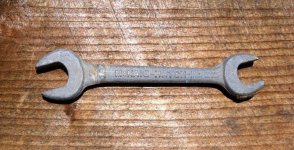
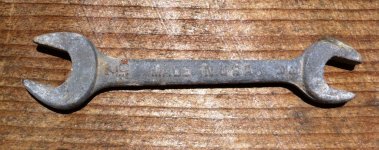
Okay, I know all about cadmium wrenches and how you're not supposed to wire brush them or otherwise make cadmium dust, very VERY bad. So that being said, how do you guys recommend cleaning up cadmium wrenches with lots of dirt and grime, would a light brass or nylon brush be okay under running water? Soak in Simple Green? I've heard people say you could get cancer just looking at these things sideways, not sure how cautious I should be. :)
 
To avoid these ads, REGISTER NOW!

Shiftless

Well-known member
Joined
Mar 9, 2014
Messages
14,553
Location
East Bay SFO
So how do we recognize CADMIUM wrenches?
Not just the ordinary chrome plating we see on some tools right?
 
Last edited:

Provincial

Well-known member
Joined
Sep 21, 2011
Messages
6,871
Location
Near Salem, OR
50 years ago I restored a Model A Ford. I cleaned up the rusty bolts with a wire wheel on a bench grinder. All those fasteners were cadmium plated. I didn't use any protection from dust, and I got a lot of debris in my respritory system. I'm still here and have no ill effects.

Cleaning a few wrenches, while wearing a good respirator and gloves should pose no threat to your health. Just don't sweep up the debris and swallow it!
 

Sam'sAutoParts

Well-known member
Joined
Aug 27, 2013
Messages
2,075
Location
Northeast PA
I have seen wet sanding with wd40 recommended.

Gloves are a must, you absorb toxins through your skin faster then breathing them in.
 

tym

Well-known member
Joined
Mar 5, 2016
Messages
2,437
Location
MA
So how do we recognize CADMIUM wrenches?
Not just the ordinary chrome plating we see on some tools right?
Correct me if I'm wrong, but I believe the cad plating will have a duller grayish appearance vs the familiar lighter and brighter chrome shininess.
 

pendragon1998

Well-known member
Joined
Mar 24, 2012
Messages
3,733
Location
NE Georgia
If, for some reason you end up with Cd dust all over you, think twice before you bring those clothes in your home and expose your wife and kids.
 
Last edited:

Roberts210

Well-known member
Joined
Dec 21, 2015
Messages
3,177
Location
Missouri
The lawyers and the Media have done an excellent job of making everybody fearful. Ditto what Provincial says.
 
To avoid these ads, REGISTER NOW!

Gear Wolf

Well-known member
Joined
Feb 25, 2015
Messages
567
I'm a little surprised how lackadaisical some seem to be about personal safety and/or potentially exposing others to cadmium (Cd).

Cadmium is a bio-accumulator, where it's effects are cumulative based on acuity of exposure and its duration. Combine this complication with the body's challenge to remove it from your system, cadmium is certainly something you should have a level of respect for.

Be smart and wear your PPE, unless you enjoy cognitive or neuro-endocrine problems. Cells literally commit apoptosis (cell suicide) with exposure.

Consider this free advice. ^_^
 

Gear Wolf

Well-known member
Joined
Feb 25, 2015
Messages
567
Okay, I know all about cadmium wrenches and how you're not supposed to wire brush them or otherwise make cadmium dust, very VERY bad. So that being said, how do you guys recommend cleaning up cadmium wrenches with lots of dirt and grime, would a light brass or nylon brush be okay under running water? Soak in Simple Green? I've heard people say you could get cancer just looking at these things sideways, not sure how cautious I should be. :)

Avoid creating dust. If you have to brush your piece, do it while submerged in a solvent. I would recommend wearing gloves.

Remember to WASH your hands after general handling!
 

Private Lugnutz

Well-known member
Joined
Mar 30, 2012
Messages
30,605
Location
The Authentic Jersey Shore
DTM,

As a WWII collector, I collect a bunch of cadmium-plated tools. (Most collectors don't realize that cadmium-plating was used regularly on economy line tools well before the war.) I don't get near cad with anything but WD-40 and a fine grade (0000) steel wool. I don't handle it like acid (gloves, mask, goggles, etc), but I definitely wouldn't scrub it with any kind of wire brush. As someone mentioned, it's very soft.

So how do we recognize CADMIUM wrenches?
Not just the ordinary chrome plating we see on some tools right?

Correct me if I'm wrong, but I believe the cad plating will have a duller grayish appearance vs the familiar lighter and brighter chrome shininess.
That is correct. Also, it's not nearly as smooth as chrome. It's not dusty or furry like chemical treatments (zinc or phosphorous), but it's not smooth.

I've attached a photo of three sockets with different finishes. From left to right, the sockets are Walden-Worcester polished natural steel finish, Walden-Worcester cadmium-plated finish, and PENENS chrome-plated finish. (Would've been perfect if I had a WW chrome socket, but I don't collect much chrome. :) )
 

Attachments

  • Steel-Cad-Chrome.jpg
    Steel-Cad-Chrome.jpg
    125.6 KB · Views: 796

Al Borland

Well-known member
Joined
Jan 20, 2016
Messages
1,598
Clean up Cad-plated tools with soapy water. If you are going to scrub with steel wool or scotch-brite pads, do it in the soapy water. When you finish, wash your hands. When you are done washing, wash again. Water can go down the drain, just don't water the tomatoes with it.
For most cleaning, solvent is unnecessary, and likely a bigger hazard than casual contact with the Cadmium. Also wear gloves with solvents, as they will absorb thru your skin, and will carry the Cadmium with it when absorbed.
Same basic thing for BeCu, or Lead.
Oh, and once the tools are clean and dry, don't lick them...
 

Plombob

Well-known member
Joined
Oct 19, 2008
Messages
4,133
Location
Tennessee
Sometimes I have trouble identifying Cad tools. I wonder if there is a simple test, like streak plate tests done with minerals.

Don't use Evaporust. It will remove Cad plating. I learned this after soaking tools that were plated.
 

Al Borland

Well-known member
Joined
Jan 20, 2016
Messages
1,598
Cad plating resembles galvanizing, kinda silvery-grey.
Again, DON"T use solvents. Soapy water.
Don't soak them long-term.
Cad plating is not very durable.
OR, soak in the Evapo-rust until all the cad is off, and then wax or oil them and never worry about Cad plating again.
 

DetailSeeker

Well-known member
Joined
Dec 8, 2024
Messages
179
Location
South-eastern Ontario
I'd say "wish I'd gone properly looking for this thread before I putting the cadmium-plated wrenches in the citric acid" but honestly I didn't even think to look for cadmium plating. It's been a bit.

Generally speaking[1], if a tool's old plating or old paint is in a condition where it is flaking off at a fingernail touch, are there any options besides
  1. clean off the rest of the finish before using it (by scrubbing under liquid), or
  2. give it a light coat of oil or wax and set it aside for display?
If I wanted/needed to file down or saw a piece of such a tool, would it be okay to do it by hand if the spot was e.g. soaked in (or submerged in?) water or mineral oil to prevent airborne dust?

Are there any reasons to use solvents for the liquid--e.g. will they trap dust particles more effectively than soapy water? (I understand that using them would require using PPE and doing it properly.)

[1] To be clear: we live with a cat that primarily understands the world through what he can fit in his mouth. He has a penchant for consuming glues, oils, water, lotion, string, blood, cheese, plastic, the occasional pill, anything with carbs, and anything sweet. I am genuinely glad for anyone who didn't suffer ill effects from exposure to purportedly toxic substances, but since I am managing risk for a thing with a brain the size of a large walnut, I would prefer to not give him the chance to inflict vet bills.
 
To avoid these ads, REGISTER NOW!
Top Bottom