

I've been considering CNC machining 'tight fit' 6 point sockets in the more common sizes to bridge the tolerance gap found between the socket and bolt ISO standards.
I consider material displacement to be the major factors behind why bolts strip. This is particularly evident when comparing 6 point to 12 points wrenches/sockets.
Notice the open space between the bolt on the 12 point; as the bolt rounds, it 'mushes' into those voids. If the bolt has nowhere to displace, its much less likely to round; and that's why 6 point > 12 point on rusted or questionable bolts.
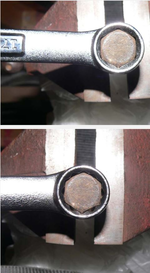
The torque test channel actually ran a comparison here validating:
For an average 13mm socket, between the two ISO tolerances, there is a minimum of 0.04mm and a maximum of 0.57mm between bolt and socket.
In practice this falls somewhere in the middle; most bolts average ~12.92mm and most sockets will measure ~13.18mm; a ~0.26mm gap.
Flank drive is a mitigation to this gap because with an excess gap the first thing that interact are the corners. If the fit was exceptional, the void made by rounding the corner is best eliminated.
Another problem is that the bevel on the edge of the socket that aids in quicker socket to bolt mounting loses 36% of the engagement (approx. 1.8mm of the 5mm height of the bolt head).
All to say these sockets would not be for daily use; because their tight fit, and lack of bevel would require extra fiddling to mount.
Where it would be useful is on those very questionable bolts that are likely to round or are corroded heavily (rust belt).
Thinking about making two levels; eg. 13mm +0 - 0.02mm and another that is 12.9 + 0.02mm - 0 to get the tightest fit possible.
Sockets: ISO 691:2005
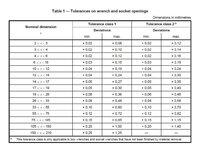
Bolts: ISO 4759


I consider material displacement to be the major factors behind why bolts strip. This is particularly evident when comparing 6 point to 12 points wrenches/sockets.
Notice the open space between the bolt on the 12 point; as the bolt rounds, it 'mushes' into those voids. If the bolt has nowhere to displace, its much less likely to round; and that's why 6 point > 12 point on rusted or questionable bolts.
The torque test channel actually ran a comparison here validating:
For an average 13mm socket, between the two ISO tolerances, there is a minimum of 0.04mm and a maximum of 0.57mm between bolt and socket.
In practice this falls somewhere in the middle; most bolts average ~12.92mm and most sockets will measure ~13.18mm; a ~0.26mm gap.
Flank drive is a mitigation to this gap because with an excess gap the first thing that interact are the corners. If the fit was exceptional, the void made by rounding the corner is best eliminated.
Another problem is that the bevel on the edge of the socket that aids in quicker socket to bolt mounting loses 36% of the engagement (approx. 1.8mm of the 5mm height of the bolt head).
All to say these sockets would not be for daily use; because their tight fit, and lack of bevel would require extra fiddling to mount.
Where it would be useful is on those very questionable bolts that are likely to round or are corroded heavily (rust belt).
Thinking about making two levels; eg. 13mm +0 - 0.02mm and another that is 12.9 + 0.02mm - 0 to get the tightest fit possible.
Sockets: ISO 691:2005
Bolts: ISO 4759


