To avoid these ads, REGISTER NOW!

Commandeering Dryer 220 Line for Garage use

Tedison

Active member
Joined
Oct 24, 2015
Messages
33
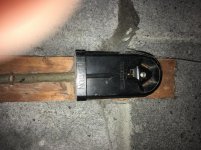
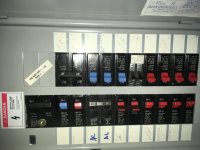
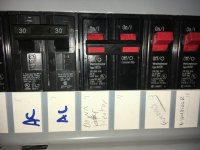
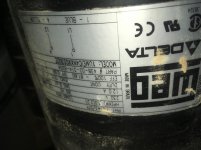
I need to run at 220 V circuit to the garage as I have moved up to a bigger table saw. I have a 30 amp unused circuit running to the dryer in the basement which was switched over to natural gas many years ago. This leaves this circuit as unused. The house is from the 50's, and the wire and outlet by dryer may be original, I don't know. I do a lot of electrical if I understand what I am doing and can stay away from the house panel. So what I want to do is take that wire that runs to the dryer, inspect it and if it looks nice and flexible, move it closer to the garage, make a junction box and just run new wire from the junction box up to the garage. Any thoughts on this approach? If this is not tripping any red flags yet, here is my next question. The Unisaw that I bought needs 220 volt 12 amps plus some leeway. I normally would only run one tool at a time although I may want to switch my dust collector over to 220 and that would run at same time. My current dust collector is small and would only be 5.5 amps if I switched it to 220. My question is, what size wire would I use from the junction to the garage, can a 30 amp run support more than 1 220 tool at a time if the total amperage between the tools in use was less than some number? Would I be better off running a whole new line from the house panel (which is pretty full) to the garage? I definitely want to place the 220 outlets in multiple places in the garage (probably two as it seems that 220 cords are reasonably long and it is only a single car garage.

One other note is that I also have an unused electrical heater in the basement that may be 220 - it has a double pull 20 amp breaker. I don't use it but thought about keeping it in case the furnace died during a real cold snap. It may be enough to keep the pipes from freezing - although I am a little afraid to turn it on as it is old! I could reuse this circuit if needed.

Thanks in advance for feedback.
 

Attachments

  • IMG_0540.jpg
    IMG_0540.jpg
    132.6 KB · Views: 33
  • IMG_0541.jpg
    IMG_0541.jpg
    148.2 KB · Views: 46
  • IMG_0542.jpg
    IMG_0542.jpg
    136.4 KB · Views: 39
  • IMG_0543.jpg
    IMG_0543.jpg
    128.2 KB · Views: 34
  • IMG_0544.jpg
    IMG_0544.jpg
    141.7 KB · Views: 35
  • IMG_0545.jpg
    IMG_0545.jpg
    140.7 KB · Views: 31
To avoid these ads, REGISTER NOW!

aandpdan

Well-known member
Joined
Nov 12, 2009
Messages
849
Location
In between MA and PA
Is the garage attached or detached from the house?

A 30 amp circuit can supply multiple circuits - as long as the total draw is less than 30 amps.
 

matt_i

Well-known member
Joined
Mar 14, 2008
Messages
10,726
Location
SE Michigan
Were it me, I would wire nut, label, and "abandon in-place" the circuit going to the dryer. In other words, leave it inside the enclosure of the main panel, unterminated, capped, and labeled as to function.

Next I would run a new wire for a 50-60A capacity sub panel in your garage using #6awg NM wire as the feeder.

Now you have capacity for future.
 

Cruzan80

Well-known member
Joined
Jul 22, 2015
Messages
4,204
Location
Denver, CO
Why? He mentioned needing two things, both of which add up to less than 20A, and you want a 60A subpanel? No need based on what he is saying. I understand planning for the future, but IMO, people are too likely to jump in and suggest a bunch of new breakers, when the standard homeowner shop has maybe max 4 things running at one time (heater, compressor, tool, dust collector). And the last two he just said run under 30A combined.

OP, yes, you can do what you are suggesting. The only "issue" is that 220V outlets don't have a pass-thru connection like a standard 15/20A 120V outlet. So you have to run the wire into the outlet box, wire nut together a 6" piece of wire to connect to the outlet, and the out-line in one nut.
 

PCustoms

Well-known member
Joined
Jul 23, 2011
Messages
22,799
Location
VT
I do a lot of electrical if I understand what I am doing and can stay away from the house panel. So what I want to do is take that wire that runs to the dryer, inspect it and if it looks nice and flexible, move it closer to the garage, make a junction box and just run new wire from the junction box up to the garage.

Honestly I wouldn't try to move that wire, the odds are pretty good it gets damaged as you pull staples, move it etc.

One other note is that I also have an unused electrical heater in the basement that may be 220 - it has a double pull 20 amp breaker.

The two bolded statements have me worried. Honestly the best way to do this is to run some new 10/2 to the garage of your 30A breaker, but you aren't comfortable in the panel. Your statement regarding the heater also shows that you aren't very confident with 240V. Might be best to call in a pro.

If you do, the suggestion to run a subpanel in the garage is not a bad one, as then you can kill the entire panel using the breaker in the house panel and do as much work as you need to quit safely.
 
To avoid these ads, REGISTER NOW!

PCustoms

Well-known member
Joined
Jul 23, 2011
Messages
22,799
Location
VT
Also:

  1. Garage is attached, correct? (You cannot have multiple feeds going to a detached structure)
  2. is this the only panel in your house? Is there a breaker at your electrical meter?
 
OP
T

Tedison

Active member
Joined
Oct 24, 2015
Messages
33
1) the garage is attached
2) There are some panels and breakers associated with the Solar Panel install, but I don't think you are asking about that. THere is one main panel. A separate fused cutoff for the AC compressor outside, but again, no subfeed for garage
 
Last edited:

Norcal

Well-known member
Joined
Mar 16, 2008
Messages
13,754
That old SE cable is best left alone, it most likely has rubber insulated conductors & monkeying w/ them is not helpful. run a new 240V feed.
 
To avoid these ads, REGISTER NOW!
Top Bottom