To avoid these ads, REGISTER NOW!

Compressor air lines

Bruhntune

Active member
Joined
Jul 27, 2013
Messages
34
Location
Alabama
I have been away awhile, life happens. I have a 40 by 84 pole barn ready to permanently install air lines.I have decided I like the rapid air style air lines. I'm wandering 3/4 or 1/2 leaning towards the 1/2 ,thinking it would be nice to start 3/4 for the main run and branch off with 1/2. Looking at Amazon lots of brands choose from,
Please help with some insight. Thanks
 
To avoid these ads, REGISTER NOW!
OP
B

Bruhntune

Active member
Joined
Jul 27, 2013
Messages
34
Location
Alabama
You are correct,I mostly working on motorcycles,shop is divided with auto stuff on one end about 50 feet of the shop air compressor is going in the far back corner.
Motorcycle area on the other end air-conditioning an lower ceiling about 30 x 30
Thinking need higher pressure on the auto side , motorcycle end mostly small stuff.
 

PCustoms

Well-known member
Joined
Jul 23, 2011
Messages
22,228
Location
VT
I have been away awhile, life happens. I have a 40 by 84 pole barn ready to permanently install air lines.I have decided I like the rapid air style air lines. I'm wandering 3/4 or 1/2 leaning towards the 1/2 ,thinking it would be nice to start 3/4 for the main run and branch off with 1/2. Looking at Amazon lots of brands choose from,
Please help with some insight. Thanks

What sort of tools are you going to consistently run?

How many high-end battery versions can you get with what your spend on the air system?
 
OP
B

Bruhntune

Active member
Joined
Jul 27, 2013
Messages
34
Location
Alabama
Lol,I have every dewalt tool known to man.
Have to have air for tire machine and. Motorcycle lift ,hardly use most of my air tools.
That is a thought.also need air to clean air filters
 
Last edited:

whateg01

Well-known member
Joined
Mar 13, 2006
Messages
11,187
Location
doo dah, kansas, usa
Do tire machines and motorcycle lifts use a lot of air?
A tire machine can benefit from that large burst capacity when breaking or seating beads. My machines have all had 1/4 or 3/8 lines internally for most functions.

I don't think I would expect a big difference in performance. They can operate from a lower pressure, albeit more slowly. But as the airflow drops, the pressure increases so ultimately, they still have the same lift capacity.
 
OP
B

Bruhntune

Active member
Joined
Jul 27, 2013
Messages
34
Location
Alabama
Looks like not a large difference a big difference in manufacture looks like most companies are from China,about $20 to $40 difference between 1/2 to 3/4 the China brands for 200 feet.all are around $200.
Rapid brand is 1/2 is around $200 for 100 ft
My tire machine has a tank built in the machine most do.
I'm think 1/2 will work my concerns are China made I don't want to have problems with air leaking.
The lift has to lift a golding about 900 lbs ,not a lot of air
 

OccupantRJ

Well-known member
Joined
May 15, 2009
Messages
10,918
Location
Eastern North Carolina
If you ever plan to have an abrasive blast cabinet, use 3/4”at least to that location. Otherwise 1/2” works well for general use. Your hoses will likely be 3/8” ID anyway. The side benefit of 3/4 is that the extra volume and flow can act somewhat as a surge tank for short powerful bursts.
 
OP
B

Bruhntune

Active member
Joined
Jul 27, 2013
Messages
34
Location
Alabama
You know I forgot I do have a blast cabinet at my old shop.
You guys have got me thinking an so much to think about in my plan .
Once again I know why I enjoy spending time with you guys
Thanks
 

ericm

Well-known member
Joined
Apr 17, 2016
Messages
1,963
Location
Southern Oregon
The RapidAir kit with the nylon line and plastic pres on fittings is measured by OD not ID. The 1/2" is more like 3/8" ID. I could tell a difference with my 5 cfm compressor when I replaced the PVC that the house's previous owner did with that stuff. It leaks too.

Maxline and rapidpipe are measured by ID.
 

pcmeiners

Well-known member
Joined
Aug 13, 2009
Messages
7,825
Location
In the only town in Pennsylvania, Bloomsburg.
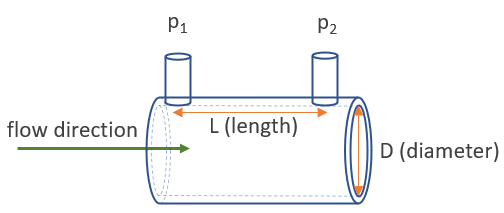
Rough volume calculator for the difference between ½” vs ¾” pipe at free flow with a sand blaster. If anyone has more knowledge please correct.


1750082927766.png


With ½” pipe=83.364918 cubic foot per second, theoretical possible volume

With ¾” pipe=422.034896 cubic foot per second, theoretical possible volume

Given ........................


Pressure at end, figuring psi at opening of sand blaster nozzle or large impact tool (rough guess)

Pipe length total from beginning of garage to end maximum

Dynamic viscosity of air .018

Density of air .079

So 3/4" makes a big difference when using tools which need a lot air, plus the compressor uses less power with 3/4"
 

Pontiac787

Well-known member
Joined
May 31, 2016
Messages
797
Location
New Hampshire
I like the 3/4” Maxline kit I installed in my garage. They have the kits pretty dialed in and you can customize for your needs.
 

Roert42

Well-known member
Joined
Jan 25, 2023
Messages
190
Location
NE Penn
If you use a 3/4” for most of it, you’ll get extra supply air. The air line sat essentially an extension of your compressor tank.


This is good and bad. Can run that air nailer/ impact longer without having to stop and wait for a refill.


But.


Refill takes longer to get back up to pressure.
 

ericm

Well-known member
Joined
Apr 17, 2016
Messages
1,963
Location
Southern Oregon
With ½” pipe=83.364918 cubic foot per second, theoretical possible volume

With ¾” pipe=422.034896 cubic foot per second, theoretical possible volume

No one's arguing that 3/4 doesn't flow more air than 1/2". The argument I'm making is that 1/2" is probably enough for typical home shops. A decent 5hp compressor puts out about 16 cfm. That is about 1/300th of 83 cubic feet per second.
 

908Jim

Well-known member
Joined
Aug 1, 2013
Messages
555
No one's arguing that 3/4 doesn't flow more air than 1/2". The argument I'm making is that 1/2" is probably enough for typical home shops. A decent 5hp compressor puts out about 16 cfm. That is about 1/300th of 83 cubic feet per second.
While I agree 1/2 for short runs is probably fine, keep in mind your 16 cfm figure is what the pump sustains, not what the tank can actually deliver. Even small 120v compressors will deliver around 20cfm through a 1/4 quick connect, albeit for a very short blip in time.
 
OP
B

Bruhntune

Active member
Joined
Jul 27, 2013
Messages
34
Location
Alabama
I'm leaning hard towards 3/4 just haven't pulled the trigger. I like the idea of 3/4 as a main line 1/2 to the drops. Might be simpler just to go 3/4 all the Way.
 
To avoid these ads, REGISTER NOW!

908Jim

Well-known member
Joined
Aug 1, 2013
Messages
555
I'm leaning hard towards 3/4 just haven't pulled the trigger. I like the idea of 3/4 as a main line 1/2 to the drops. Might be simpler just to go 3/4 all the Way.

If you're already buying rolls of 3/4 just stay with 3/4. If you were going Copper, I'd say there's a $2/ft price difference for Tyle L between 1/2 and 3/4 that might give you pause on a shop your size.
 

NUTTSGT

Super Moderator
Staff member
Joined
Sep 14, 2009
Messages
50,855
Location
Northern Central Ohio
I'm leaning hard towards 3/4 just haven't pulled the trigger. I like the idea of 3/4 as a main line 1/2 to the drops. Might be simpler just to go 3/4 all the Way.
Yeah and nah.

How much do you want to spend ?

Every drop I put in has a drain. So that means a ball valve... 3/4" ball valves can get pricey over a 1/2" version.


Don't just look at the cost of a 10' stick of pipe, add up everything in the project. However, you may not care about the cost.
 

The Metric System

Well-known member
Joined
Apr 28, 2025
Messages
268
When I was making a similar decision for my shop I could find no scenario where 3/4" would give me any practical advantage, so went with 1/2" partially because it was less expensive but mostly because it is more flexible and easier to run. Even operating a high-consumption air tool at the far end of the building was well within what 1/2" could support.

I encourage you to math it out and buy the one that your application requires vs paying more for capacity you won't use.

I would absolutely not mix and match tubing sizes, when you do that you're introducing a whole new set of fittings and can't use the spare/drop material from one part of the system on the other part of the system.
 

NUTTSGT

Super Moderator
Staff member
Joined
Sep 14, 2009
Messages
50,855
Location
Northern Central Ohio
for a drain, couldn't you use a reducer fitting and then drop down to a 1/2" or even 3/8" ball valve?
Still an added cost. .. . If I remember, this morning I did a price check. It was $3 difference between a 1/2" and 3/4" ball valve at my local Menards. Not much but when you start adding stuff up, for some people it becomes a little too much $$$.
 

vrstcv

Active member
Joined
Dec 3, 2020
Messages
31
Location
ne
Many good ideas . Use 3/4 all the way reduse the drains as needed. best idea is rapid air kit . How many feet are needed
 

Wiz02

Well-known member
Joined
Jul 13, 2007
Messages
2,399
Location
Southeastern PA
When I've used hvac calculators to size AC requirements, I haven’t been happy with the results even though the "professionals" came to the same conclusion. When I went one size larger, the house (actually 2 different homes) were comfortable with no high humidity issues and the ac didn't run constantly.

I applied the same thought process to sizing air lines. Calculations say that 1/2" is plenty for a one man shop. So in true GJ fashion, I went with 3/4" and whatever the price increase was is long since forgotten. I have no complaints on my smaller air tools but haven't gotten a blast cabinet yet.
 

pcmeiners

Well-known member
Joined
Aug 13, 2009
Messages
7,825
Location
In the only town in Pennsylvania, Bloomsburg.
No one's arguing that 3/4 doesn't flow more air than 1/2". The argument I'm making is that 1/2" is probably enough for typical home shops.
Agree for a typical home owner. If a sand blaster, tire changing equipment or two people using air, now or in the possible future a larger pipe size is beneficial. Price difference in material cost between 1/2" and 3/4" is not that great considering the effort in installing either size. effort being planning, shopping, shipping, tooling up, installation.
 

FTG-05

Well-known member
Joined
Oct 11, 2012
Messages
1,517
Location
TN
Using the Northern Tools site, Rapidair's 1/2"x100' kit is $130 vs. 3/4"x100' kit is $240; $110 difference. https://www.northerntool.com/categories/compressed-air-piping-kits?f=Brand:RapidAir&orderBy=4

Perhaps a considerable difference. I chose the 3/4" airline simply because I didn't want to leave any performance on the table. I forget how much I paid for it 10 years ago. Worth every penny IMO.

As far as ease of installation, it took my son and I about 10 minutes to roll out and install ~75' of airline. It then took me about an hour to install all the fittings and connect everything up. Very easy work.
 

Pontiac787

Well-known member
Joined
May 31, 2016
Messages
797
Location
New Hampshire
If you want to save money on the RapidAir kit and aren’t in a rush, TP Tools does $60 off $200+ a couple times a year. That’s where I got mine. Free shipping as well.
 

NUTTSGT

Super Moderator
Staff member
Joined
Sep 14, 2009
Messages
50,855
Location
Northern Central Ohio
If you're concerned about air use of a blast cabinet or other large air consumer, I'd be more worried about the compressor feeding the system.
 
OP
B

Bruhntune

Active member
Joined
Jul 27, 2013
Messages
34
Location
Alabama
Think you guys lots of good advice
I think you have talked me into 3/4 I need to measure and figure out how many drops ,thanks again for your advice you have thought about several things to help in making a plan. As someone mentioned bigger is better I will always wonder if I use 1/2.
Lol Thanks
 

tulowd

Well-known member
Joined
Jan 24, 2013
Messages
83
Location
Toronto Canada
Starting to plan out a 41 x 25 ft 3 bay garage renovation, thus currently lurking around several air line threads; this one got me interested enough to comment.

The 1/2" vs. 3/4" line diameter (ID) conversation (run length influenced) is as common as the debate about choice of materials in virtually every thread.

My own meagre 13x20 ft 'shop' (and another 10 ft run outside) are 1/2" black iron pipe (all premade lengths/fittings) for several reasons:
1) welding and grinding on occasion and don't want to risk bursting a permanent pipe, it's bad enough having the flexible/accordion hoses
2) iron pipe will cool the compressed air and has 5 drops that act as water traps with ball valves
3) have found that inexpensive tools (like $10 die grinders) and the stand up HF blasting cabinet are all huge air hogs, along with the IR and Blue Point 1/2" impact guns. Thus sending the most air volume at the lowest pressure differential (lots of Tee's and elbows) calls for the largest practical diameter. And, err on the side of overbuilding instead of underbuilding........

Have a 60 gall 5 hp comp cobbled together with a HF two cyl pump that specs at app 15 cfm @ 90 psi, relief valve set to 145 psi.
Have around a 50 ft run outside to feed the car shelter and driveway beyond, mostly for tire inflation using a Goodyear 3/8" rubber hose.

For the 3 bay project, thinking of 3/4" feed from the compressor (remote location likely) to individual 1/2" drops or a central 3/4" distribution manifold /multi branch setup terminating into 1/2" drops. Each bay and each work surface (probably 3 or 4) will receive one coiled overhead line (likely 1/4") as well as several wall mount quick disconnects for 3/8 rubber hoses. For sure there will be one or two primary (3/4") water drains, as well as additional ones, likely on each drop.

Wrestling with the in wall vs on wall issue since the ceiling still needs to be insulated, there is a bit of electrical, HVAC, plumbing, etc. work to still be done prior to drywall/sheet rock enclosing everything. This is going to require some more planning and decision making.

I like the iron pipe also because it's easy to neck up/down with standard reducers and the union style fittings in the appropriate places allow for easy servicing / section removal in case of system change etc. My controller/pressure switch at the compressor is plumbed this way in case it or the tank/pump ever need to be pulled out.

Will likely start a separate thread on this project once we get some of the big decisions made. Acquired a big pipe threader setup a while ago, will need to investigate if it works and that the proper dies are included, that would allow for the 14" HF metal chop saw to get a work out while saving some $$ and time to make the install nice and tidy.
 

Dig Doug

Well-known member
Joined
Apr 16, 2018
Messages
1,083
I would go 3/4 loop and drop down 1/2


There are a lot of images on line for ideas to reduce moisture in the air line

like
slope the the main loop to a low point
when you tee off the main loop tee up over then drop down ( instead of just dropping down )

see pic
IMG_2930.jpeg
 

finn

Well-known member
Joined
Mar 27, 2005
Messages
16,180
Location
The UP, God's country
What sort of tools are you going to consistently run?

How many high-end battery versions can you get with what your spend on the air system?

None.

I bought an Amazon kit last fall. $69 for a 100’ kit with three drops. 3/4” tubing. The drops are 3/4” also. No need to go to 1/2” drops either. That would unnecessarily complicate the installation, as everything is set up for 3/4”. I guess you could buy a 1/2” kit, but at less than $100 for the 3/4” kit, you’d be adding complexity for no benefit.

I think the price increased since then because of…. Well, you know why. Last I checked the 100’ kits were still less than $100, though.

Beside that, nobody is making a battery powered media blast cabinet yet, and I’m not holding my breath.
 
Last edited:

u2slow

Well-known member
Joined
Nov 20, 2011
Messages
3,583
Location
BC
Wrestling with the in wall vs on wall issue since the ceiling still needs to be insulated, there is a bit of electrical, HVAC, plumbing, etc. work to still be done prior to drywall/sheet rock enclosing everything. This is going to require some more planning and decision making.
I couldn't decide any of that and just got on with insulating and boarding. Ceiling is still open.

Took several years of trying benches, shelving, and equipment in different places. Also let me get a mezzanine built. Now that things have settled, I can run surface-electrical and air-lines to exactly where i need them. They're easy to change again if needed.
 

tulowd

Well-known member
Joined
Jan 24, 2013
Messages
83
Location
Toronto Canada
I would go 3/4 loop and drop down 1/2


There are a lot of images on line for ideas to reduce moisture in the air line

like
slope the the main loop to a low point
when you tee off the main loop tee up over then drop down ( instead of just dropping down )

see pic
IMG_2930.jpeg
Thank you for the info. The garage has low point/angle runs on the main lines. The drops each incorporate a ball valve at the bottom for moisture release and a tee about 4 ft above the floor for the lines instead of the top loop, due to less than 7 ft ceiling height.
 
To avoid these ads, REGISTER NOW!
Top Bottom