To avoid these ads, REGISTER NOW!

Compressor - to drain or not drain?

For infrequent use... Purge empty and leave open OR keep filled and auto drain?


  • Total voters
    42
  • Poll closed .

Irondrgntp

Member
Joined
Jan 29, 2024
Messages
7
Hello everyone! I love this forum and everything about GJ. We have an incredible community. I'm a new poster, but long time lurker. I hope to become more active and contribute as well.

So, almost everyone, can mostly agree that purging the air from the compressor at the end of the day if you don't plan on using it for a little while is not a bad idea. However, many of us that don't own a shop and use the compressor here and there for maybe an hour or two at a time per day, a few days a week... Would you leave it charged/filled with an auto drain or empty and valve open? I notice when I'm done with the compressor for the day... And then go to start it the next day or something.. a bunch of water pours out. Obviously even airtight containers WILL accumulate some amount of moisture. The problem is it sits at the bottom somewhere (in the horizontal ball valve pipe extension hopefully) and has no pressure to be purged. I'm assuming it's NOT in the tank and just in the pipe....

For reference.... I have an Eaton (Polar Air) Dual stage, 80 gallon, 7.5HP vertical piston compressor with the whisper silencer system. Wow, that was a mouthful huh?

I do tend to use it a few times a week, but not every day. If I'm working on a project, I'll have it charged for a few hours. At the end of the day I drain it and leave the ball valve open. Currently I DO NOT have an auto drain. I DO, however... have two flat silicone heater pads running 24/7, underneath the crankcase, to keep it warm and not allow (to a minimum) excess moisture to build up during colder days when I need to run it. It's always hot and ready. The question is... Should somebody leave a compressor charged and blow off automatically or empty it and that's it when done?


Thank you to everyone who gives their input, knowledge and opinions.
 

Attachments

  • 7-5-HP-Single-Phase-80-Gallon-Air-Compressor.jpg
    7-5-HP-Single-Phase-80-Gallon-Air-Compressor.jpg
    118.8 KB · Views: 16
To avoid these ads, REGISTER NOW!

MileHighRover

Well-known member
Joined
Mar 13, 2018
Messages
1,120
Can't speak to everyone else, and you're going to have a lot of varying opinions on this but I leave my 80 gallon 2-stage vertical compressor off, but charged, usually around 75-100 psi. I rarely leave it charged at full pressure. I have a 1/4 turn ball valve on an extension for my drain to make opening and closing it with my foot a two second affair. Every time I walk over to the compressor, I'll kick it open. I never have more than a quick spurt of water come out.
 

darkzero

Well-known member
Joined
Oct 20, 2011
Messages
3,320
Location
SoCal
I have a cheap 60 gal air compressor with a 17 gal tank piggy backed to it in my home garage. I leave it full of air. I'm meticulous about air leaks & sort them out sooner than later when they arise. I don't have a complicated run so it's not hard to pin point. If/when a small leak does appear, I'll still leave the tanks filled but I'll shutoff the main ball valve I have at the tank until I have time to resolve the leak.

I'll purge the moisture out (manually, I have a ball valve with extension & tubing at the drain) at least once a week... or more depending on how much I use it and/or the weather. I'm surprised it's last me this long already (close to 15 yrs I think) and I got it used & it was cheap. I barely get any moisture out it when purging as often as I do & still absolutely no signs of rusty water.

The 20 gal Craftsman/Devilbiss that it replaced would always drain out rusty water. I never left that thing charged for more than a day or 2 when needed.
 
OP
I

Irondrgntp

Member
Joined
Jan 29, 2024
Messages
7
Can't speak to everyone else, and you're going to have a lot of varying opinions on this but I leave my 80 gallon 2-stage vertical compressor off, but charged, usually around 75-100 psi. I rarely leave it charged at full pressure. I have a 1/4 turn ball valve on an extension for my drain to make opening and closing it with my foot a two second affair. Every time I walk over to the compressor, I'll kick it open. I never have more than a quick spurt of water come out
Fair enough. So you don't use an auto drain at all? How much do you use your compressor? Or, how often you kicking that valve open per day or week? I'm thinking if it's not charged at all, then how will it be able to spurt out any moisture, right? I believe it's going to accumulate regardless of being on or not presumably.
 
OP
I

Irondrgntp

Member
Joined
Jan 29, 2024
Messages
7
I seldom purge the air from any compressor I own.
some have slow leaks and naturally lose pressure. others hold air for long periods .
I don't think there is a right or wrong approach .
Interesting! So, you're not concerned with the possibility of it rusting on the inside from condensation sitting? Unless you live in the desert. Lol. I wonder if the water that comes out when I start it the next day again, is from it decompressing and cooling.... Or just it sitting overnight naturally accumulating.
 
OP
I

Irondrgntp

Member
Joined
Jan 29, 2024
Messages
7
I always purge the compressor when I am done with it. I open the valve and let it run until moisture stops coming out the drain. Rust is the enemy of compressors.
Currently, I purge it all the way after I shut it off and then I leave it as is. There's no moisture that I can see coming out anyways. Is there any benefit to keep it running while purging versus just leaving the valve open and walking away?
 
OP
I

Irondrgntp

Member
Joined
Jan 29, 2024
Messages
7
I have a cheap 60 gal air compressor with a 17 gal tank piggy backed to it in my home garage. I leave it full of air. I'm meticulous about air leaks & sort them out sooner than later when they arise. I don't have a complicated run so it's not hard to pin point. If/when a small leak does appear, I'll still leave the tanks filled but I'll shutoff the main ball valve I have at the tank until I have time to resolve the leak.

I'll purge the moisture out (manually, I have a ball valve with extension & tubing at the drain) at least once a week... or more depending on how much I use it and/or the weather. I'm surprised it's last me this long already (close to 15 yrs I think) and I got it used & it was cheap. I barely get any moisture out it when purging as often as I do & still absolutely no signs of rusty water.

The 20 gal Craftsman/Devilbiss that it replaced would always drain out rusty water. I never left that thing charged for more than a day or 2 when needed.
The scary thing is... I've only used this maybe 10 times so far max and I saw brown water splurge out the other day. This is with me running it for a few hours and then when I was done.. I purged it. However, then I turned it on for about 10 seconds out of curiosity to see if anything would come out.. and there it was. This is why I'm wondering if just leaving it full and then auto draining or manually here and there is better since it can actually push any existing moisture out since it's charged... What do you think?


The only other thought is that maybe it had that moisture because I left it purge and walked away but maybe should have come back an hour later when everything cooled down and settled...? What do you think?
It's brand new since I've replaced it with a little 33 gallon oil free Craftsman.
 

demarpaint

Well-known member
Joined
Sep 17, 2010
Messages
1,237
Location
Long Island
I have two compressors a 60 gallon and a 15 gallon? [I have to check]. The 60 gallon stays charged about 7-8 months out of the year, during which time I drain water from the tank 2-3 times a week. Very little comes out, and with no rust, it is about 8 years old now.. During the cold months I use the small compressor which is about 40 years old now to fill tires, or small odd jobs that don't require the bigger compressor. During the winter the drain remains open on the big compressor. We're considering moving to a warmer place and I'll be moving the compressor, I'll probably leave it full all year there, and purge it more often depending on how much water comes out.
 

chevy.stroker

Well-known member
Joined
Dec 31, 2010
Messages
389
Location
Waco, TX
Think of this:

You compress the air and store it in the tank. During this process you release water vapor and form water. If you drain that little water the rest is fairly dry.

If you purge it then it is dry, except for condensation, but next time you pressurize the tank to use it you have the same ammount of water as the paragraph above.

So, your choice, but not purging seems like less work for the same outcome.
 

Ing3018

Well-known member
Joined
Sep 3, 2009
Messages
185
Location
Michigan, USA
I leave my tank under pressure and do a manual drain of collected condensation the next day after use.
I ran it continuously yesterday for a couple hours, running 150 lbs of media through the pressure pot. I expect there will be some moisture in the tank today, even though I have a water separator between the tank and aftercooler. If I check it again in a few days without any use in-between, I may get a little water mist, but pretty negligible.
 

jblnut

ALLIANCE MEMBER
Joined
Jan 17, 2015
Messages
6,989
Location
In the Middle of MN
I have an auto drain that blows out through my lean to when it pops. It scares the birds away and keeps things dryish. The compressor stays “on” all the time but is on a relay activated by a motion sensor on the ceiling in the center of the shop so it’s only actually powered on when there is motion and for roughly 15 min after I leave.
 

Rinspeed

Well-known member
Joined
Apr 26, 2020
Messages
1,819
Location
NY
Mine is always full and with the valve turned off. I always have to remind the boys to turn the valve off and the breaker. Not fun getting woken up at 3 am by the compressor.
 

garfieldzzz

Well-known member
Joined
Jun 30, 2014
Messages
305
Location
BY
Keep it under pressure and ideally leak free is what a technical inspector likes.

The reason is, load cycles (not sure if this is the correct term) the tank is designed for. The full drain of the pressure causes higher deltas of loads when pressurising.

so keep it under pressure and purge the moisture out is the best practice.
 

VolvoRyan

Well-known member
Joined
Dec 29, 2019
Messages
1,339
Location
Kentuckiana, USA
With cordless tools getting good, my compressor doesn't get as much use.

I just drain it. A good slug of water comes out. Consumer grade compressors ain't what they used to be. I had a 30 gallon Craftsman from 2008, when I didn't drain that, the water started coming out rusty.

-Ryan
 

American Locomotive

Well-known member
Joined
Jan 8, 2017
Messages
10,946
Location
Rhode Island
Most people I know leave their compressor pressurized, and simply drain some water out of the tank every couple of weeks (or more frequently if under heavy use).

Completely draining all of the air out of the tank every time will actually cause you to introduce more moisture into the system over time. Once the tank is full and the air in the tank cools down, most of the moisture will condense and drop out to the bottom of the tank. So the air in the tank will be relatively dry. If you're constantly pumping the tank up, you're constantly introducing new, moist air.

Secondly, leaving the drain valve open makes things worse, as the tank will "breath". As the tank heats up in the day, it will expel air. As it cools down at night (with the shop), it will draw in fresh cool moist air that might condense on the walls.

The silicone heating pads on the compressor crankcase will only keep moisture out of the compressor oil. I don't think it will have any impact at all on the moisture on the tank. I also think the crankcase heaters are probably largely unnecessary unless you're using your compressor in a near-freezing garage frequently?
 

danielbuck

Well-known member
Joined
Apr 15, 2014
Messages
919
Neither option but a combination of both.

□ Keep charged and manually drain.
same here. I have an electrically operated valve on the bottom of my tank, and have it wired to a switch on the wall next to the switch to turn the compressor on and off. As I open up the garage to start working, I turn on the overhead lights, turn on the compressor on and flip the drain switch to purge for a few seconds. Then as I'm closing up the garage when I'm done, I turn off the lights, turn off the compressor and purge a few seconds once more.

I leave the tank compressed, but turn off the compressor just incase there's ever a leak or something bursts, the compressor won't run and melt down. haha! Having the compressor and purge switches right next to the light switch means I never forget to do this, I had to make it convenient for myself to turn the compressor on and off and purge, otherwise I wouldn't do it regularly. Even if I'm going into the garage just to grab something quick, if I turn on/off the lights, I also hit the purge switch. So even if I only use the air a few times out of the week, the purge switch gets hit alot more often.

I run an after-cooler on my compressor/tank setup, before then I would always have a blast of water shoot out the tank. But now with the cooler setup, there's no blast of water, just air. I assume there's some water vapor in there, but it's certainly not a pool of water at the bottom like it used to be.

I do most of my garage work on the weekends, though I do tinker on project in the garage in the evenings fairly often after work. So on average I imagine I use the compressor 3-4 days out of the week.


I've not had problems with leaving the entire system compressed when not in use, I don't have any leaks (or none that I can detect). If I did have problems, I would probably put an electric valve inbetween the tank and the rest of the system, so when I turn on the compressor in the morning the entire system gets pressurized, and at the end of the day when I turn off the compressor the system is cut off from the tank. But so far after a few years of this setup, I don't see a need for it.
 
Last edited:
To avoid these ads, REGISTER NOW!

Rinspeed

Well-known member
Joined
Apr 26, 2020
Messages
1,819
Location
NY
With cordless tools getting good, my compressor doesn't get as much use.

I just drain it. A good slug of water comes out. Consumer grade compressors ain't what they used to be. I had a 30 gallon Craftsman from 2008, when I didn't drain that, the water started coming out rusty.

-Ryan


As I've opined here several times I'm just not a huge fan of cordless tools even know I own several. They are just so disposable. I own corded tools made 30-40 years ago, both electrical and pneumatic, that work just fine. I've thrown several cordless tools in the dumpster in that time. Maybe I'm just cheap. :)
 
Last edited:

darkzero

Well-known member
Joined
Oct 20, 2011
Messages
3,320
Location
SoCal
As I've opined here several times I'm just a huge fan of cordless tools even know I own several. They are just so disposable. I own corded tools made 30-40 years ago, both electrical and pneumatic, that work just fine. I've thrown several cordless tools in the dumpster in that time. Maybe I'm just cheap. :)
Sounds like you meant to say "not a fan of"?

I was not not a big fan of cordless tools back in the nicad days or any nicad powered tools. My 1st real name brand drill was a Dewalt XRP. It was still more convenient to use than a 3/8 pneumatic drill or corded drill working at an auto shop. The XRP served me well until the batteries crapped out. By then li-ion batteries had came out so instead of buying 2 expensive replacement XRP nicad batteries, it made more send to just buy a new li-ion powered drill (& impact driver in a combo).

Those got stolen at work during a break in which I was reimbursed for replacements. So I went with Milwaukee M18. That was in 2015. The 2nd gen Fuel hammer drill I still use till this day at work & is still working perfectly fine. The 2nd gen Fuel impact driver that I got in the combo is also still working fine. Although I replaced it with a 4th gen my I let my team mate use the 2nd gen and agin nothing wrong with it. The 4 M18 batteries I got with the combo kit deal in 2015 are still working fine which I'm still using.

Perhaps I don't use my cordless tools as hard as a professional contractor would but they haven't let me down yet. I still have the Dewalt XRP which I bought a M18 battery adapter for $11. It still works but by today's standards it's too bulky & heavy and underpowered, I also have a new gen4 M18 drill at home so I have absolutely no reason to use that old XRP.
 

ybnormal

Well-known member
Joined
Jan 3, 2016
Messages
5,002
I have a cheap 60 gal air compressor with a 17 gal tank piggy backed to it in my home garage. I leave it full of air. I'm meticulous about air leaks & sort them out sooner than later when they arise. I don't have a complicated run so it's not hard to pin point. If/when a small leak does appear, I'll still leave the tanks filled but I'll shutoff the main ball valve I have at the tank until I have time to resolve the leak.

I'll purge the moisture out (manually, I have a ball valve with extension & tubing at the drain) at least once a week... or more depending on how much I use it and/or the weather. I'm surprised it's last me this long already (close to 15 yrs I think) and I got it used & it was cheap. I barely get any moisture out it when purging as often as I do & still absolutely no signs of rusty water.

The 20 gal Craftsman/Devilbiss that it replaced would always drain out rusty water. I never left that thing charged for more than a day or 2 when needed.

this brings up a related question. how would you inspect a tank, especially an older? I've got an electric Coleman in my garage I bought used about 17 yrs ago. it's always been garaged and prior owner seemed to take good care of it, but I haven't run it more than a handful of times since buying it, and certainly not in the last 3-5 yrs. thought I'd be using it a lot more than I really have. should I have it gone thru or just sell it? is there a checklist somewhere for going through compressor in this situation to make sure it ain't dangerous?
 

VolvoRyan

Well-known member
Joined
Dec 29, 2019
Messages
1,339
Location
Kentuckiana, USA
As I've opined here several times I'm just not a huge fan of cordless tools even know I own several. They are just so disposable. I own corded tools made 30-40 years ago, both electrical and pneumatic, that work just fine. I've thrown several cordless tools in the dumpster in that time. Maybe I'm just cheap. :)


I was a long holdout with air tools. I didn't believe in cordless..... they just found their way into my life.... and then I started using my compressor less... and less. I felt guilty using the cordless impact over my trusty ol' air guns. My inner curmudgeon still grumbles.

I still really like air tools. I'd much rather hold my IR pneumatic gun over my head than the M18 high torque.

-Ryan
 

MileHighRover

Well-known member
Joined
Mar 13, 2018
Messages
1,120
Fair enough. So you don't use an auto drain at all? How much do you use your compressor? Or, how often you kicking that valve open per day or week? I'm thinking if it's not charged at all, then how will it be able to spurt out any moisture, right? I believe it's going to accumulate regardless of being on or not presumably.
I've never had an auto drain. I use my compressor very frequently, pretty much every time I'm in the shop. That equates to multiple times a week, sometimes multiple times a day for days on end. Just depends on what I'm doing.

Today I was in the shop for a few hours doing various things. I used the compressor quite a bit. I kicked the valve open twice. Since it's pretty much effortless, often times I'll kick it open when I walk by the compressor even when I haven't used it.
 

Plombob

Well-known member
Joined
Oct 19, 2008
Messages
4,120
Location
Tennessee
Currently, I purge it all the way after I shut it off and then I leave it as is. There's no moisture that I can see coming out anyways. Is there any benefit to keep it running while purging versus just leaving the valve open and walking away?
On my compressors, water doesn't fully drain out if I simply open the valve with the compressor off.

An amount of water vapor comes out during the purge with the compressor running. The amount depends upon how long the compressor was running, and the humidity. I run the compressor until the air coming out of the drain is dry.

My oldest compressor is an Ingersol Rand that's over 40 years old, I bought it new and followed this procedure religiously. No rust comes out of the drain, and I believe this is the reason.
 

TurnipTruck

Well-known member
Joined
Aug 28, 2005
Messages
1,557
Location
Southcentral Alaska
this brings up a related question. how would you inspect a tank, especially an older?
Industrial pressure vessels get inspected on a regular schedule using an ultrasonic thickness tester in a grid pattern. Thicker walled vessels get X-rayed.
I’m not sure a borescope would have the resolution to see rust pits inside, (let alone the pit depth)but [in my opinion] flaky rust chunks would be an automatic fail.
 

Citation

Well-known member
Joined
Jan 20, 2016
Messages
3,212
Location
Indy
this brings up a related question. how would you inspect a tank, especially an older? I've got an electric Coleman in my garage I bought used about 17 yrs ago. it's always been garaged and prior owner seemed to take good care of it, but I haven't run it more than a handful of times since buying it, and certainly not in the last 3-5 yrs. thought I'd be using it a lot more than I really have. should I have it gone thru or just sell it? is there a checklist somewhere for going through compressor in this situation to make sure it ain't dangerous?
Make sure the pressure release valve is working correctly then use the tank. These tanks are designed to fail via a pinhole leak before the metal is weak enough to cause a burst (leak before break). The critical part is once the tank gets a pinhole leak, get rid of it. Don't be an idiot and think you can weld it up and keep going. When you look at compressor tanks that blew you will see examples of people "fixing" the tank.
 

johnre

Well-known member
Joined
Dec 1, 2016
Messages
1,048
Location
Portland, OR
My shut down procedure at the end of the day:
- Shut off power to compressor
- Purge the air
- Leave the purge valve open

I figure that if I stop new moisture from entering the tank, and allow the tank to stay at atmospheric pressure during non-use, it will eventually be as dry inside as anything else in the shop - and I run a dehumidifier to protect all of the shop equipment.

Also, I drain through a 3' whip to a stopcock mounted on my compressor control panel, with the bottom of the horizontal tank above the panel, so this whip, not the tank, will be where most of the residual drops hang on.
 

4 FN 27

ALLIANCE MEMBER
Joined
Oct 19, 2015
Messages
4,635
Location
Minnesnowta
Been running a C'Aire 10 HP 3 phase 120 gallon horizontal for the last 27 years. It has an electric auto drain, set the times per hour and the length of purge. I leave the Air Compressor powered 24-7, purge the Auto Drain manually on light usage days. On heavy usage days I plug in the Auto Drain and let it do it's thing. At the end of the day I shut off shut the Main Valve off noting the pressure of the tank which is somewhere between 150-175 psi.

Come in check the pressure to see if there is a significant drop from the evening before (never more than 1-3 lbs on a very small gauge that is hard to read based on 10 pound increments), manually purge the system then open the Main Valve slowly. Listen for any unusual noises from the Filter System, walk through the shop listening for any obvious leaks (older and deafer I have to really listen). All systems are go.

If I leave for an extend amount of time, 2 days or more I turn off the disconnect, leave the Auto Drain off and close the Main Valve.

I figure I paid the POCO to fill that tank, I am not bleeding it down to pay to fill it back up in the morning.

I disconnect the power when checking the Oil once a week or when servicing the Compressor and depending what service is being performed I may drain the tank or may not. I check the pressure relief valves once a month.

Not matter what, after purging the night before and doing it again in the morning I still get a little moisture coming out.
 

Citation

Well-known member
Joined
Jan 20, 2016
Messages
3,212
Location
Indy
Throwing my 1/50th of a $ in here, I agree with the others who say, don't let all the air out of the tank, just drain the water once a day or after use (manually or via an auto system). Once you get the water out why release all that air you spent money to compress. So long as your tank doesn't leak (most don't if you have a shut off valve at the tank), you will have pressure ready the next time you need to use the thing.
 

danielbuck

Well-known member
Joined
Apr 15, 2014
Messages
919
some sort of air cooling and water trap before the air gets into the tank I imagine would be a huge help. I regret not setting one up on mine for the first 10 years of use. Next time I am working on it for whatever reason, I want to snake a camera down the inside and see what the bottom looks like.

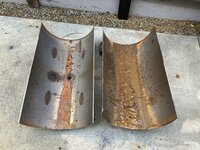
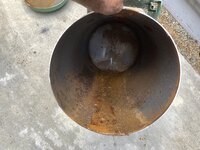
That tank looks like raw uncoated steel on the inside, are most of them like that? I assumed they would have some sort of coating, but maybe not?
 

txvwnut

Well-known member
Joined
Jan 1, 2015
Messages
7,607
Location
Bedford, Texas
I put an automatic drain on my compressor a couple of years ago. The only thing I don't like about it is the timer has a max setting of purge every 45 minutes and I would like it to have a longer duration between purges.
 

Oldsmobile

Well-known member
Joined
Feb 24, 2011
Messages
248
Location
Harrisburg PA
As a home DIYer, I drain my tank after the job is done, as I never know when I'm going to need the air again. If it's the next day, fine; it just takes a couple of minutes. But I don't want to leave it pressured for days without use. It might be a week or two and I don't relish the idea of moist air staying inside the tank indefinitely.
 

Chris_Hamilton

Well-known member
Joined
Dec 2, 2012
Messages
1,023
Is the OP's question to drain the water or to empty the tank of air when done using? It reads like he thinks it's best to evac all the air when not in use. That's nuts. It is harder on the compressor, you waste electricity and you create more water. The heat that will build by going from zero to 150 psi will create a lot of water vapor that will condense when it cools. Leave the air in the tank you will have far less. Design and install a proper air piping and filter system (mandatory really) and water will not be much of an issue. Install a refrigerated dryer and it becomes a non issue. I've never heard of anyone doing this and I've been working in an Industry that uses compressed air my entire adult life.
 
To avoid these ads, REGISTER NOW!
Top Bottom