To avoid these ads, REGISTER NOW!

Concrete Anchor Blow through Substrate

maralibis

Active member
Joined
Sep 12, 2014
Messages
32
Location
Fort Wayne, IN
Max Jax installation on 4.25 of concrete 4000psi
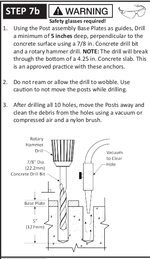
Attached is MJ's installation instructions on the wedge anchors, they state there anchors are designed to blow through the concrete at 5 inches and install there wedge anchors THIS IS AN APPROVED INSTALLATION as per MJ

all my readings and questions to other anchor companies tell me this isn't true ..any thoughts on this?

P.S i have two locations selected in my garage position 1 will be dug out and concrete poured with epoxy anchors
Position two was to be wedge anchors but i have concerns about MJ's instructions.
 

Attachments

  • Max-Jax-Anchor-Install.png
    Max-Jax-Anchor-Install.png
    63.1 KB · Views: 78
To avoid these ads, REGISTER NOW!

Spud McGee

Well-known member
Joined
Apr 11, 2022
Messages
405
Are you asking if holes are commonly drilled all the way through the concrete?

My slab is 12" thick. The authorized rotary installer, who has to take their classes and adhere to their instructions to the letter, said they always drill all their holes all the way through. Even if they have to buy a longer bit. Reason being that statistically, a lot of wedge anchors eventually fail. When they do, if the hole goes all the way through, its significantly easier to pound a new one in and torque it down.

As far as your 5" anchors in 4.25" concrete, how much of the anchor is actually going to be down in the hole? A couple threads above the nut, a washer, your lift base plate, a spacer. Will the bottom of the anchor protrude through the hole? And if the tip does stick out, does it matter? The anchors grip on the sides, not by the tip.
 

mepstein

Well-known member
Joined
Sep 17, 2010
Messages
1,281
After reading a couple hundred maxjax posts and listening to the advice of my friend who installed his own maxjax, I bypassed the wedge anchors and went right to epoxy. 100% happy and no regrets.
 
OP
M

maralibis

Active member
Joined
Sep 12, 2014
Messages
32
Location
Fort Wayne, IN
Are you asking if holes are commonly drilled all the way through the concrete?

My slab is 12" thick. The authorized rotary installer, who has to take their classes and adhere to their instructions to the letter, said they always drill all their holes all the way through. Even if they have to buy a longer bit. Reason being that statistically, a lot of wedge anchors eventually fail. When they do, if the hole goes all the way through, its significantly easier to pound a new one in and torque it down.

As far as your 5" anchors in 4.25" concrete, how much of the anchor is actually going to be down in the hole? A couple threads above the nut, a washer, your lift base plate, a spacer. Will the bottom of the anchor protrude through the hole? And if the tip does stick out, does it matter? The anchors grip on the sides, not by the tip.
the anchor is 5.75 in length so 1.5 inches will be below the concrete and as i tightens this will mushroom the anchor
so what your saying is YES this practice is common correct?
 

Renegade1LI

Well-known member
Joined
Mar 11, 2018
Messages
4,937
Location
long island ny
Are you asking if holes are commonly drilled all the way through the concrete?

My slab is 12" thick. The authorized rotary installer, who has to take their classes and adhere to their instructions to the letter, said they always drill all their holes all the way through. Even if they have to buy a longer bit. Reason being that statistically, a lot of wedge anchors eventually fail. When they do, if the hole goes all the way through, its significantly easier to pound a new one in and torque it down.

As far as your 5" anchors in 4.25" concrete, how much of the anchor is actually going to be down in the hole? A couple threads above the nut, a washer, your lift base plate, a spacer. Will the bottom of the anchor protrude through the hole? And if the tip does stick out, does it matter? The anchors grip on the sides, not by the tip.
Never heard of them eventually failing, if that was true they would never be used.
 

Rusted Nut

Well-known member
Joined
Dec 11, 2022
Messages
1,802
Location
PNW
the anchor is 5.75 in length so 1.5 inches will be below the concrete and as i tightens this will mushroom the anchor
so what your saying is YES this practice is common correct?
No, this totally wrong. When you drill through a slab, the bottom 1” or so almost always spalls out. You then have a large hole, thus your anchor depth is less. The bottom of your drilled hole should be should be a minimum of 2” above the bottom of slab. Most anchors have technical data available for embedment depth, pull out strength, etc…
 
To avoid these ads, REGISTER NOW!

Renegade1LI

Well-known member
Joined
Mar 11, 2018
Messages
4,937
Location
long island ny
**** happens. There's a reason they recommend you check the torque of the bolts at regular intervals, too.
Never heard of retorquing a properly installed wedge anchor. We use hilti and redhead, never saw it in the install guide or called out by the engineer. Also never heard of drilling through the slab, that's a new one. We do post installed anchor pull tests, never had one fail. No where in the hilti installation guide does it say to retorque. I always follow the anchor manufacturers install instructions, every engineer will also say to follow the manufacturers instructions.
 

Spud McGee

Well-known member
Joined
Apr 11, 2022
Messages
405
Never heard of retorquing a properly installed wedge anchor. We use hilti and redhead, never saw it in the install guide or called out by the engineer. Also never heard of drilling through the slab, that's a new one. We do post installed anchor pull tests, never had one fail. No where in the hilti installation guide does it say to retorque. I always follow the anchor manufacturers install instructions, every engineer will also say to follow the manufacturers instructions.
IBC 2012 table 1705.3 shows periodic inspections are required for anchors post-installed into hardened concrete, which sounds like wedge anchors. Hilti publishes a checklist for periodic inspection of wedge anchors in concrete, and that checklist includes a place to write in a torque value. The first words on the hilti page, after the title is "periodic inspection must be performed".

The ALI handbook for automotive lifts has a section for periodic inspections that says to follow what the manufacturer of your anchors says to do. They specifically mention re-tightening them, like its not an unexpected thing to need to do.

1688051188907.png
1688051938828.png
1688051308710.png
1688051362878.png


firebirdparts

Well-known member
Joined
Jun 8, 2016
Messages
10,584
Location
Kingsport, TN
the anchor is 5.75 in length so 1.5 inches will be below the concrete and as i tightens this will mushroom the anchor
so what your saying is YES this practice is common correct?
No, you can't do that. You need the wedge to grab the hole in such a way that you don't break anything off or spin the wedge.
 

nadogail

Well-known member
Joined
Jan 23, 2009
Messages
31,910
Location
Coronado, CA
I often used Hilti Quick Bolts when anchoring to concrete. I purposely drilled the holes extra deep so that if at some later point the anchor if desired could be driven down into the floor if it was no longer desired where it was installed.

Industrial Manufacturing plants were a work in progress and some equipment was moved as the product mix changes were made.

It was easier to drive the no longer wanted anchors into the floor than it was to cut them off.
 

racecougar

Well-known member
Joined
Jan 26, 2021
Messages
4,981
Location
Missouri
Drilling through the slab is common practice here in the St. Louis area industrial scene as well.

Who doesn't periodically check torque on their fasteners on a 2-post?
 

Dig Doug

Well-known member
Joined
Apr 16, 2018
Messages
1,094
What typically happens is

When drilling the hole w/ a roto hammer the drill bit BLOWS out the bottom of the hole, you have no idea how much blow out you have.

I would do epoxy all thread

 
To avoid these ads, REGISTER NOW!
Top Bottom