To avoid these ads, REGISTER NOW!

Concrete cold joints

mrekozz

New member
Joined
Dec 2, 2014
Messages
4
Location
Dinwiddie,va
I had my concrete pad poured just over a week ago.

Here are the specs:
30x40
4" minimal depth (it's way deeper than in most sections)
16" footers with continuous rebar
12" deep where the lift is planned to be installed
3600 PSI fiber reinforced concrete

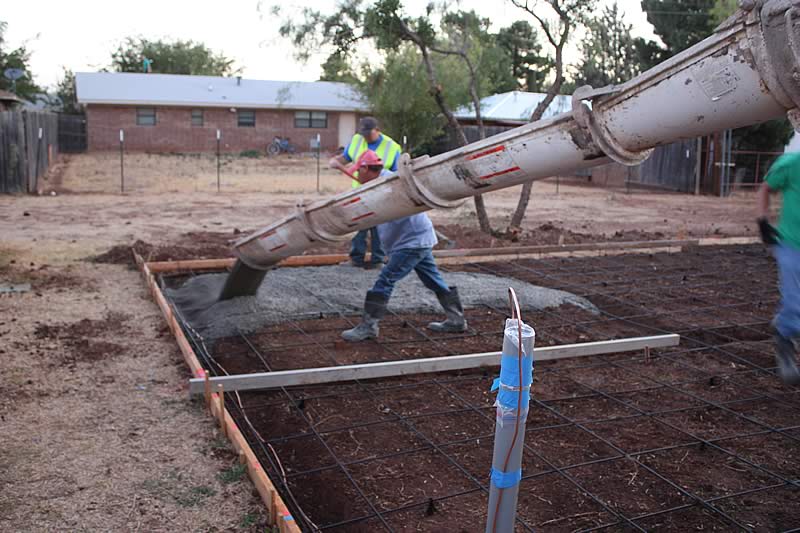
While stopping by and watching the guys do the work (of which I don't think I could have done) they had 2 significant delays in the concrete trucks getting there on time.

The owner of the concrete business did say there is likely to be a cold joint because of that and did point out that it was cracked in that exact spot where I saw the delay happen.

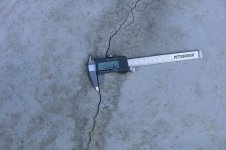
After about a week or so of setting the crack is around 1/16" (a little less for sure).

I don't know much about concrete other than what I've read on the forum here but it seems to be that it's likely not a concern unless the crack either gets pretty large or the surface starts to become uneven.

I hoping someone with more experience can convince me it's either ok or I should start hammering the concrete installer about it.
 

Attachments

  • IMG_4456.jpg
    IMG_4456.jpg
    146 KB · Views: 229
  • IMG_4457.jpg
    IMG_4457.jpg
    142 KB · Views: 244
  • IMG_4458.jpg
    IMG_4458.jpg
    147.1 KB · Views: 225
To avoid these ads, REGISTER NOW!

Chaznsc

Well-known member
Joined
Apr 9, 2013
Messages
6,529
Location
SC
Doesn’t look like a cold joint to me. Looks like a shrinkage crack.
 

ConCretin

Well-known member
Joined
Jan 20, 2011
Messages
3,378
Location
Central Maine
I'm with Chaznsc. Those are not cold joints, they are shrinkage cracks. I see you have saw cut control joints but they clearly didn't work. The cracks by themselves aren't too much of a concern other than aesthetics. If your control joints had worked, you'd still have cracks, you just wouldn't see em.

The bigger question is why the control joints failed to induce cracks. When were they cut? How deep are they? The other possibility is that the slab cracked at the control joints AND where we can see them. This would suggest a very wet mix, which could lead to strength and surface issues. Can you see cracks in the bottom of the saw cuts?
 

TRWham

Well-known member
Joined
Aug 11, 2017
Messages
1,959
Location
East Cobb County, Georgia
Yes, the control cuts may have been made too late, or too shallow, or too far apart or some combination of these things. It's hard to tell the spacing and symmetry from those pictures.
 

wssix99

Well-known member
Joined
Mar 2, 2011
Messages
5,159
Location
Chicago, IL
I'm with Chaznsc. Those are not cold joints, they are shrinkage cracks. I see you have saw cut control joints but they clearly didn't work.

Definitely.


continuous rebar
12" deep where the lift is planned to be installed

This can do it. The thickened section can negate any benefit from the control joints. This thickened section is going to trigger the shrinkage cracking how ever it wants. (It's the elephant in the system.) In order for the control joint crossing this area to be effective, it would need to be 4" deep. (Even if the control joints are the proper 1" deep for the rest of the slab, the thickened area and its location in the field is going to dictate what happens.)

The 16" OC rebar would also not nearly be enough to control any cracking for the 12" thick area.

On top of all this, the reinforced slab with an inconsistent cross section will create stress around the thickened area, potentially leading to more stresses and cracking.


There have been members here who have been able to do this without seeing major cracking. Most of the designs I recall seeing have not been reinforced or have had the thickened area in the center of the slab or centered between control joints. Even then a little bit of luck was probably involved.
 

Chaznsc

Well-known member
Joined
Apr 9, 2013
Messages
6,529
Location
SC
I have one that looks much the same, there two pours were about hour a part, beside looking poor, I doubt if it will cause you any problems, mine has looked like that for about 25 years,

The only thing that concerns me are some of the sizes of the resulting cracks. Those small ones can tend to work themselves loose over time. The contractror should have covered this in plasstic with the different thicknesses which will dry at dramaticaly different rates.
 

joes169

Well-known member
Joined
Sep 19, 2011
Messages
663
Location
WI
The 16" OC rebar would also not nearly be enough to control any cracking for the 12" thick area.


I don't think there's any rebar in the slab, other than 2-3 continuous in the perimeter grade beam. Only fibermesh in the vast majority of the pour.

I'd be curious to here how much and how big the rebar is in the gradebeam from the OP.........
 
OP
M

mrekozz

New member
Joined
Dec 2, 2014
Messages
4
Location
Dinwiddie,va
Control joints were sawed less than 24 hours after the concrete was poured. Which are 3/4" deep by 5/32" wide. Sawed every 10-15'.

There is a vapor barrier under the slab (6 mil). The digouts for the lift are 2 15x15x12" (or round about). Nothing was put on top of the concrete after

Rebar is only in the footings which is 2x no. 4 (1/2" diameter I believe). Only fibermesh and some shorter rebar pieces stuck vertically to hold the vapor barrier down.

The cracks started forming just a few hours after the pour was complete.

The inconsistent drying because of varying heights makes a lot of sense and may have been the ultimate cause of the cracking. We also have been getting a lot of rather hot days here in VA.

Thanks everyone for the information!
 

ConCretin

Well-known member
Joined
Jan 20, 2011
Messages
3,378
Location
Central Maine
I hoping someone with more experience can convince me it's either ok or I should start hammering the concrete installer about it.

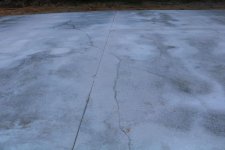
Having given this a little more thought. I suppose its possible the the cold joint below triggered a shrinkage crack in the paste above. While there is no visible joint, you seem pretty clear there was a gap in the placement and the leading edge of hardened concrete was roughly along the crack line. If the finishers were able to work a layer of paste over the cold joint, it would be very susceptible to cracking.

Doesn't really change anything at this point. Unfortunately lack of rebar means that there is nothing restraining these cracks from moving. Hopefully the base is solid. If it is the cracks shouldn't get any worse.

To answer your original question. We are all trying to diagnose the cause but the end result is that you have a defective slab. With fiber and properly cut control joints, you shouldn't have to look at ugly random cracks. Then there is the issue of long term performance due to the cold joint, etc. All the contributing factors are the responsibility of your contractor.

I don't know where you are with payment or how reputable and responsive he is but yes, you should start hammering him. Personally I wouldn't accept it all but at the very least there should be some financial consideration.
 

ConCretin

Well-known member
Joined
Jan 20, 2011
Messages
3,378
Location
Central Maine
Control joints were sawed less than 24 hours after the concrete was poured. Which are 3/4" deep by 5/32" wide. Sawed every 10-15'.

There is a vapor barrier under the slab (6 mil). The digouts for the lift are 2 15x15x12" (or round about). Nothing was put on top of the concrete after

Rebar is only in the footings which is 2x no. 4 (1/2" diameter I believe). Only fibermesh and some shorter rebar pieces stuck vertically to hold the vapor barrier down.

The cracks started forming just a few hours after the pour was complete.

The inconsistent drying because of varying heights makes a lot of sense and may have been the ultimate cause of the cracking. We also have been getting a lot of rather hot days here in VA.

Thanks everyone for the information!

Sorry for the double post - we were apparently typing at the same time.

For saw cut control joints to be effective, 24 hours is often too long. Shrinkage and the resulting tension begins to occur as soon as the concrete starts setting. You often don't see the cracks right away but they are there. Plus the saw cuts should be at least 1/4 of the slab depth. 3/4" is not enough.

I'm not that concerned about the thickened sections. Its true that a 1" saw cut won't reliably induce a crack in 12" of concrete the crack is likely to carry through a couple 15 x 15 thickened areas or at worse 'jump the cut' for a short distance. It's also true the thickened areas restrain the slab from shrinking and can contribute to cracking, that is why you have control joints.

Just to be clear - The cracking you experienced very likely resulted from some some combination cold joints and improperly cut control joints. Call your contractor. Good luck.
 

mcbane

Well-known member
Joined
Jul 23, 2017
Messages
794
Location
California
Control joints were sawed less than 24 hours after the concrete was poured. Which are 3/4" deep by 5/32" wide...

That may be the problem. Control joints for a 4" slab should be around 1-1/2" deep. Also, you mentioned that the slab is way deeper than 4" in most sections. That would make the shallowness of the saw cut an even bigger problem.
 
Last edited:

TRWham

Well-known member
Joined
Aug 11, 2017
Messages
1,959
Location
East Cobb County, Georgia
That may be the problem. Control joints for a 4" slab should be around 1-1/2" deep. Also, you mentioned that the slab is way deeper than 4" in most sections. That would make the shallowness of the saw cut an even bigger problem.

Exactly. As I recall, control cuts should be 1/3 the depth of the slab.
 
To avoid these ads, REGISTER NOW!

pcmeiners

Well-known member
Joined
Aug 13, 2009
Messages
7,891
Location
In the only town in Pennsylvania, Bloomsburg.
I see at least three areas of the cracks for what appears to be following the edges of puddles. Was the crete keep wet for any time other then the puddles? willing to bet the only moisture it receive was from rain, should have been solidly wet for a week or more .
Truck delays, how much of a delay?
How even was the soil surface, ("way deeper in most sections") this does not sound good.
Overall, way too many cracks for a "professional" contractor. Personally I would have done this in the early Spring, but I do not know the circumstances.
 
Last edited:

Falcon67

Well-known member
Joined
Jun 11, 2009
Messages
18,371
Location
Merkel, TX
There have been members here who have been able to do this without seeing major cracking. Most of the designs I recall seeing have not been reinforced or have had the thickened area in the center of the slab or centered between control joints. Even then a little bit of luck was probably involved.

24x40, 12x12 perimeter with 12x12 beams per pic, 2 ea 1/2" bar in the ditches, 3/8" bar 18" OC. No control cuts, only "normal" shrinkage cracks which is what you expect around here anyway. No changes to the floor in the last 8 years. 1st pour started on left side, 2nd pour was late. Just caused an bit of uneven surface but no cold joint.

showthread.php


Foundation11.jpg


I shoulda killed that tree back there, now it's going to cost me $400 to be rid of it for the shop expansion.
 
Last edited:

1mikeg

Active member
Joined
May 1, 2015
Messages
35
I was a landscape and concrete contractor in Southern California for 25 years (high-end residential market - Beverly Hills, Holmby Hills, Brentwood, etc). I poured thousands of yards of driveways/walks/patios/pool decks etc. The variables that I encountered were quite varied. Expansive soils (clay), extreme temperatures (over 100 degrees Fahrenheit), added colors (believe it or not, the concrete "acts" differently - depending on the pounds of color/cubic yard added), different design mixes (2800psi - 4000psi). All of this required many years of learned experience (the learning curve resulted in a few tear-outs (on my dime!) LOL!
Finishes included simple broom finish, rotary finish, stamped concrete with and without color, exposed aggregate, etc.
I have to tell you that pouring concrete was the most stressful aspect of my job. There were so many variables that were out of my control yet I still had to guarantee a quality product. I had to deal with truck delays - critical in the clean-up loads (as experienced by the O.P.), finisher's (depending on the size of the pour, I would have to hire additional finishers - these guys are a whole different breed) not showing up or showing up late, bad attitudes/hungover, concrete pumpers being late along with equipment breakdowns, reactive aggregate (causes "pops" weeks/months after the job is done), concrete truck operators adding water (without being told to do so). Getting a "hot" load - Goes off on you as soon as it hits the ground! You think it is easy to refuse a load because it is hot? What do you do with the pumper/finishers/employees? Stressful? Variables out of my control? All of the above! The best I could do was to prepare for the unexpected. 2nd truck delayed (temperature dependent)?, Create a cold joint. This may not have been where you wanted a control joint located, but it beat the alternative of concrete cracks.
As others have mentioned, concrete will almost always crack - it is up to the contractor to try to dictate where the cracks will occur (laying out tooled joints, saw-cutting control joints (early entry saw-cutting is optimal) and reinforcing the concrete slab with rebar -helps prevent vertical separation, when, and if, the concrete cracks.
I know that some concrete contractors (commercial and residential) will have their own opinions and suggestions (and criticisms), but this is my experience.
 

rayra

Well-known member
Joined
Dec 1, 2014
Messages
4,724
Location
Escaped from Los Angeles
Isn't the issue with the colorant is that it is primarily cement (too) and when you add a lot you are making your mix hotter?

I see a lot of crews here in SoCal - especially when using pattern stamps - just cast the colorant powder across the surface of the fresh pour, before applying the stamp. Struck me as a poor practice.
 
OP
M

mrekozz

New member
Joined
Dec 2, 2014
Messages
4
Location
Dinwiddie,va
Thanks for all the extremely helpful information. I'll be in touch with the contractor and hopefully I get some results.
 

1mikeg

Active member
Joined
May 1, 2015
Messages
35
Isn't the issue with the colorant is that it is primarily cement (too) and when you add a lot you are making your mix hotter?

I see a lot of crews here in SoCal - especially when using pattern stamps - just cast the colorant powder across the surface of the fresh pour, before applying the stamp. Struck me as a poor practice.

The colorant is a synthetic iron oxide. I don't understand the mechanics, but colored concrete just seems different when finishing. Adding water to each batch of concrete (different amounts of water) changes the color and will likely be noticeable when the concrete dries.
There are a few different methods of using color for stamped concrete. The purpose of the color (when broadcast on the surface of non-integrally mixed colored concrete) is to alter the color of the finished product as well as to provide a "release" so that the stamps don't stick to the concrete. You can use different colors to create interesting variations. This is a nasty/dusty/hazardous (?) operation! The downside to this (beyond what I just described) is that you are only adding color to the surface. Any chips that occur later will expose the natural color underneath. Additionally, the color tends to fade. Many add sealers/waxes to the surface after curing to enhance the color(s)
Alternative methods involve using integrally mixed color (at the concrete plant) and using a liquid release to prevent the stamps from sticking to the concrete
 

ConCretin

Well-known member
Joined
Jan 20, 2011
Messages
3,378
Location
Central Maine
I was a landscape and concrete contractor in Southern California for 25 years....... I know that some concrete contractors (commercial and residential) will have their own opinions and suggestions (and criticisms), but this is my experience.

I don't think you are going to get much disagreement with your last two posts 1mikeg. Your comments obviously come from long experience and a passion for the trade. Let me offer a slightly belated welcome to the board.
 

joes169

Well-known member
Joined
Sep 19, 2011
Messages
663
Location
WI
I was a landscape and concrete contractor in Southern California for 25 years (high-end residential market - Beverly Hills, Holmby Hills, Brentwood, etc). I poured thousands of yards of driveways/walks/patios/pool decks etc. The variables that I encountered were quite varied. Expansive soils (clay), extreme temperatures (over 100 degrees Fahrenheit), added colors (believe it or not, the concrete "acts" differently - depending on the pounds of color/cubic yard added), different design mixes (2800psi - 4000psi). All of this required many years of learned experience (the learning curve resulted in a few tear-outs (on my dime!) LOL!
Finishes included simple broom finish, rotary finish, stamped concrete with and without color, exposed aggregate, etc.
I have to tell you that pouring concrete was the most stressful aspect of my job. There were so many variables that were out of my control yet I still had to guarantee a quality product. I had to deal with truck delays - critical in the clean-up loads (as experienced by the O.P.), finisher's (depending on the size of the pour, I would have to hire additional finishers - these guys are a whole different breed) not showing up or showing up late, bad attitudes/hungover, concrete pumpers being late along with equipment breakdowns, reactive aggregate (causes "pops" weeks/months after the job is done), concrete truck operators adding water (without being told to do so). Getting a "hot" load - Goes off on you as soon as it hits the ground! You think it is easy to refuse a load because it is hot? What do you do with the pumper/finishers/employees? Stressful? Variables out of my control? All of the above! The best I could do was to prepare for the unexpected. 2nd truck delayed (temperature dependent)?, Create a cold joint. This may not have been where you wanted a control joint located, but it beat the alternative of concrete cracks.
As others have mentioned, concrete will almost always crack - it is up to the contractor to try to dictate where the cracks will occur (laying out tooled joints, saw-cutting control joints (early entry saw-cutting is optimal) and reinforcing the concrete slab with rebar -helps prevent vertical separation, when, and if, the concrete cracks.
I know that some concrete contractors (commercial and residential) will have their own opinions and suggestions (and criticisms), but this is my experience.


I've been a concrete & masonry contractor for 20 years, and I think you might have just touched the tip of the iceburg here, but it's all very true! Stick around and feel free to contribute more! :thumbup:
 

joes169

Well-known member
Joined
Sep 19, 2011
Messages
663
Location
WI
I see a lot of crews here in SoCal - especially when using pattern stamps - just cast the colorant powder across the surface of the fresh pour, before applying the stamp. Struck me as a poor practice.

More than likely, they were broadcasting powdered release, which can't be mixed into the concrete. It adds color to the low points/joints/depressions as well as keeps the stamps from sticking to the concrete. The only other alternative is using a clear liquid release, and following up with an antiquing agent at a later date, which is my current preference on most jobs.
 

ConCretin

Well-known member
Joined
Jan 20, 2011
Messages
3,378
Location
Central Maine
Just had this done today, the relief cuts were done not even 2 hours after the pour. No cracks yet.

Congrats on your new slab and your choice in concrete contractors. You probably do have cracks but thanks to your contractor, they are hidden in the bottom of your control joints. :beer:
 
To avoid these ads, REGISTER NOW!
Top Bottom