To avoid these ads, REGISTER NOW!

Concrete cracking

bluedog225

Well-known member
Joined
Jan 31, 2012
Messages
3,369
Location
Texas
This is a picture of a mailbox in the neighborhood. Like most of the new construction in the last 10 years, it looked good for a couple of years.

It’s a good example of what I want to avoid.

I’ll be pouring some redimix into forms for plinths and some sonotube posts this fall. And don’t mind spending extra for good additives. Fiberglass, more Portland, whatever.

I’d rather not just go look on the Internet and find whatever it is I find.

Some of you guys are experts.

What do you recommend?

Thanks


IMG_5629.jpeg
 
To avoid these ads, REGISTER NOW!

wssix99

Well-known member
Joined
Mar 2, 2011
Messages
5,167
Location
Chicago, IL
Are you making a mailbox? This example is missing reinforcing. If it had some good mesh inside it (I would go for something like 3/4" mesh for regular concrete) things would be fine today.
 

Dig Doug

Well-known member
Joined
Apr 16, 2018
Messages
1,147
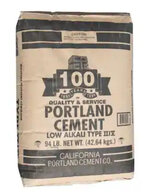
When ever I mix up redi Crete I buy a couple bags of cement (see attached pics Portland cement)

I usually mix 3 or 4 -60lb bags and add a shovel or 2 of cement, then mix up really well - Don’t add to much water to turn it into soup

Tamp / vibrate the concrete mix in the form to remove any air pockets / voids

IMG_2354.jpegIMG_2353.jpeg
 

carcruse

Well-known member
Joined
Apr 7, 2007
Messages
220
Location
SE Michigan
That more looks like alkali–silica reaction (ASR), also commonly known as concrete cancer. We have alot of that in Michigan especially with concrete placed in the 1990's to 2010's. Usually starts showing up 10-15 years after it was placed.
 

Codyboy

Well-known member
Joined
Jan 31, 2019
Messages
1,755
Location
S.E. TEXAS
This is a picture of a mailbox in the neighborhood. Like most of the new construction in the last 10 years, it looked good for a couple of years.

It’s a good example of what I want to avoid.

I’ll be pouring some redimix into forms for plinths and some sonotube posts this fall. And don’t mind spending extra for good additives. Fiberglass, more Portland, whatever.

I’d rather not just go look on the Internet and find whatever it is I find.

Some of you guys are experts.

What do you recommend?

Thanks


IMG_5629.jpeg
I would stucco it and make it look like an Adobe hut. Cracks and all. Would look pretty cool.
But I don't have a fancy mailbox . I just have a extra large box on a 4x6 wood post.
 

ConCretin

Well-known member
Joined
Jan 20, 2011
Messages
3,381
Location
Central Maine
That more looks like alkali–silica reaction (ASR), also commonly known as concrete cancer. We have alot of that in Michigan especially with concrete placed in the 1990's to 2010's. Usually starts showing up 10-15 years after it was placed.
I'd be surprised if ready mix plants were still using aggregate with reactive silica as late as you indicate. This problem has been known since the 1940's.. It's pretty well understood at this point and it's hard to imagine any legitimate supplier selling concrete that is subject to this kind of deterioration. These things tend to be regional in nature so I could be wrong.

As to that mailbox; It looks like some kind of load was applied before the concrete was to strength. Maybe they stripped too soon and that big chunk of steel created micro cracks that took a little time to open up. Rebar may have kept the cracks a little tighter but wouldn't have prevented them.

To the OP's question. Even bagged concrete has adequate strength for applications such as you describe. The biggest concern with bagged concrete mix is keeping the mix water within the specified range. This is challenging because the advertised strength is based on minimal amounts of water and don't provide a very workable mix. AS mentioned by others, you can add some type II cement to offset extra water but that's a bit of a guessing game. The other consideration is to use air entrained concrete in cold weather climates if possible to reduce damage from moisture in freeze thaw conditions.
 
Last edited:
OP
B

bluedog225

Well-known member
Joined
Jan 31, 2012
Messages
3,369
Location
Texas
Nothing fancy like air entrained is going to happen. I’ve taken into using liter water bottles and mark one at 0.9 liters. That’s all the water it’s going to get. Seems to work much better than eyeballing it with the hose.

Consistency of the end product has been good.
 

C-S-H

Well-known member
Joined
Jan 18, 2024
Messages
148
We still use reactive aggregates all the time. ASR is easily controlled by using pozzolans and lower water/cementitious ratios. We already use the pozzolans for increased strength and much reduced permeability, and water reducing admixtures give us any slump we want with lower w/c ratios. Keep w/c ratio less than 0.45 (<0.40 for more severe exposure), and Type F fly ash at 20%-25% or slag at 40%-50% replacement for portland cement.

The problems with using sack-crete:
1. You don't know the amount or blend of cementitious material in the sack. Based on the durability of my home projects, I would say that there is some fly ash in it. Why not, it is much cheaper than portland cement.
2. Natural slump of good concrete is about 2". You won't have water reducing admixture to make it flow, so you will need to pack it into the forms like the Romans did.
3. Aggregates are not saturated.
4. The lower strength mixes tend to be lean and sandy. On home projects I add some portland and coarse aggregate to a 60 Lb. sack, and 1/2 gallon of water gives about 0.40 w/c ratio.
5. As dry as the mix needs to be, you really need to be using a mixer.
6. No air entrainment, so low mix water is very important in freeze/thaw environment.

I would pass on the fibers. Moist cure until strength >75% of target strength, or 1 week minimum. Do not allow plastic concrete to dry out. Minimum grade 60 steel rebar ratio is 0.09% on each face, each way. Keep bar spacing less than 3 times thickness of piece, or 18" max. You can put it all in one layer if thickness < 6". There may be other rebars needed for strength. Sounds like you are on the right track.
 

carcruse

Well-known member
Joined
Apr 7, 2007
Messages
220
Location
SE Michigan
I'd be surprised if ready mix plants were still using aggregate with reactive silica as late as you indicate. This problem has been known since the 1940's.. It's pretty well understood at this point and it's hard to imagine any legitimate supplier selling concrete that is subject to this kind of deterioration. These things tend to be regional in nature so I could be wrong.

As to that mailbox; It looks like some kind of load was applied before the concrete was to strength. Maybe they stripped too soon and that big chunk of steel created micro cracks that took a little time to open up. Rebar may have kept the cracks a little tighter but wouldn't have prevented them.

To the OP's question. Even bagged concrete has adequate strength for applications such as you describe. The biggest concern with bagged concrete mix is keeping the mix water within the specified range. This is challenging because the advertised strength is based on minimal amounts of water and don't provide a very workable mix. AS mentioned by others, you can add some type II cement to offset extra water but that's a bit of a guessing game. The other consideration is to use air entrained concrete in cold weather climates if possible to reduce damage from moisture in freeze thaw conditions.
As a retired City Engineer, I know for a fact is showed up in concrete placed as late as 1998. Retired in 2008 and was still hearing of some problems then. Here is an article about a runway placed in 2001 at a Detroit Metro Airport Runway where ASR showed up a few years later: https://www.freep.com/story/news/lo...irport-needs-rebuild-million-runway/21236323/
 
To avoid these ads, REGISTER NOW!

Burl

Well-known member
Joined
Sep 21, 2007
Messages
795
Location
Where Mountaineers are free
Before you do anything, check local laws about mailbox posts. You sure wouldn't want to see what an immovable concrete structure does to a kid driving a Cavalier when they blow a tire and hit it. Something breakaway would be much safer.
 

mm08822

Well-known member
Joined
Jan 13, 2012
Messages
6,171
Location
NJ
Consider concrete block, be it decorative or plain and you can add a stone veneer to.

A single stone cap helps keep out water, too.
 

LopezBart

Well-known member
Joined
Oct 13, 2023
Messages
2,577
Location
Lopez Island, WA
Before you do anything, check local laws about mailbox posts. You sure wouldn't want to see what an immovable concrete structure does to a kid driving a Cavalier when they blow a tire and hit it. Something breakaway would be much safer.
From https://www.usps.com/manage/mailboxes.htm


Installing the Mailbox Post​

The best mailbox supports are stable but bend or fall away if a car hits them. The Federal Highway Administration recommends:

  • A 4″ x 4″ wooden support or a 2″-diameter standard steel or aluminum pipe.
  • Avoid unyielding and potentially dangerous supports, like heavy metal pipes, concrete posts, and farm equipment (e.g., milk cans filled with concrete).
  • Bury your post no more than 24″ deep.
 

carcruse

Well-known member
Joined
Apr 7, 2007
Messages
220
Location
SE Michigan
From https://www.usps.com/manage/mailboxes.htm


Installing the Mailbox Post​

The best mailbox supports are stable but bend or fall away if a car hits them. The Federal Highway Administration recommends:

  • A 4″ x 4″ wooden support or a 2″-diameter standard steel or aluminum pipe.
  • Avoid unyielding and potentially dangerous supports, like heavy metal pipes, concrete posts, and farm equipment (e.g., milk cans filled with concrete).
  • Bury your post no more than 24″ deep.
Those are only recommendations not requirements. He should still check with the local governmental agencies having jurisdiction over the spot the mailbox with be placed. Also, if there is one, the HOA may have some rules on mailboxes.
 

carcruse

Well-known member
Joined
Apr 7, 2007
Messages
220
Location
SE Michigan
From https://www.usps.com/manage/mailboxes.htm


Installing the Mailbox Post​

The best mailbox supports are stable but bend or fall away if a car hits them. The Federal Highway Administration recommends:

  • A 4″ x 4″ wooden support or a 2″-diameter standard steel or aluminum pipe.
  • Avoid unyielding and potentially dangerous supports, like heavy metal pipes, concrete posts, and farm equipment (e.g., milk cans filled with concrete).
  • Bury your post no more than 24″ deep.
Those are only recommendations not requirements. He should still check with the local governmental agencies having jurisdiction over the spot the mailbox with be placed. Also, if there is one, the HOA may have some rules on mailboxes.
 

PCustoms

Well-known member
Joined
Jul 23, 2011
Messages
23,684
Location
VT
I'd be surprised if ready mix plants were still using aggregate with reactive silica as late as you indicate. This problem has been known since the 1940's.. It's pretty well understood at this point and it's hard to imagine any legitimate supplier selling concrete that is subject to this kind of deterioration. These things tend to be regional in nature so I could be wrong.

What was the huge issue in MA tied to?

IIRC it was something in the sand or rock used. Concrete just crumbles
 

LopezBart

Well-known member
Joined
Oct 13, 2023
Messages
2,577
Location
Lopez Island, WA
I'd be surprised if ready mix plants were still using aggregate with reactive silica as late as you indicate. This problem has been known since the 1940's.. It's pretty well understood at this point and it's hard to imagine any legitimate supplier selling concrete that is subject to this kind of deterioration. These things tend to be regional in nature so I could be wrong.
There was a shortage of flyash in Texas, apparently. From the article I posted up-thread:

While ASR was originally identified around the early 1930s, it rarely appeared
in pools until fly ash became in short supply circa 2016-2017.
The most recognized ASR preventative is the addition of
Type F fly ash to the mix. Other Supplementary Cementitious
Materials (SCMs), such as furnace slag (from iron ore
smelting) or silica fume (from silicone alloy processing), are
similarly used as a partial cement replacement to mitigate
the possibility of ASR. Fly ash is a byproduct of the coal burning process and became scarce
around 2016 to 2017 when coal fired power plants converted to
natural gas. Given its scarcity at the time, a few concrete material
providers stopped including fly ash in their mixes and, in turn, several
industries, including pool construction, have been impacted.
 

C-S-H

Well-known member
Joined
Jan 18, 2024
Messages
148
Based on the unknown availability of fly ash, I frequently have to do two mix designs for each casting type on a project (one with fly ash, and one with slag or other pozzolan). We have been using slag as a pozzolan in this country for 200 years, so recent ASR problems are largely due to ignorance or negligence in mix design. And there are many, many billions of tons of usable fly ash waiting for us in landfills.
 

loganb

ALLIANCE MEMBER
Joined
Dec 29, 2011
Messages
5,687
Location
Omaha, NE
What was the huge issue in MA tied to?

IIRC it was something in the sand or rock used. Concrete just crumbles

This issue I'm aware in the northeast is pyrrhotite contamination which can make residential foundations fail and cause full replacement of it which as you can imagine is spendy
 

LopezBart

Well-known member
Joined
Oct 13, 2023
Messages
2,577
Location
Lopez Island, WA
And there are many, many billions of tons of usable fly ash waiting for us in landfills.
I cannot imagine that someone would take a shortcut to save some money, undercut their competitors and then discover that fly ash was being used for a reason.
 

3baygarage

Well-known member
Joined
Sep 1, 2013
Messages
12,053
Location
SW Florida/from Buffalo,NY
There are two types of concrete: concrete that is about to written in and concrete that has already been written in.
There. I fixed it. Been that way in my old neighborhood as long as I can remember. My buddy just watched a driveway pour being done next to his house and he about blinked and two people were already writing in it. He chased them away like it was 30 years ago. :lol:
 

PCustoms

Well-known member
Joined
Jul 23, 2011
Messages
23,684
Location
VT
This issue I'm aware in the northeast is pyrrhotite contamination which can make residential foundations fail and cause full replacement of it which as you can imagine is spendy

Yep that's the one I was thinking of
 

zendriver

Well-known member
Joined
Dec 10, 2014
Messages
30,477
Location
Indiana
Was that supposed to be attractive when it was new? :headscrat

tip-36.gif

Slap together a half-assed form and dump in mix so wet, you barely have to smooth off the top.

It'll last forever.
 

C-S-H

Well-known member
Joined
Jan 18, 2024
Messages
148
I cannot imagine that someone would take a shortcut to save some money, undercut their competitors and then discover that fly ash was being used for a reason.
But the fly ash (flue) is much cheaper than the portland cement it replaces. And the concrete is 15% stronger, so less cement can be used. I read a study about the terrible concrete life on the Pennsylvania Turnpike. Some structures looked great, and most others looked bad with terrible rebar corrosion. Out of all the variables studied as to the cause of the poor concrete life, it all came down to the contractor. We saw this with the Interstate era bridges as well. Huge numbers of inexperienced and unknowledgeable people came into the heavy construction industry, and many bridge decks lasted only 12-18 years. But I have also seen them cut apart after 50+ years in service in perfect condition.
 
To avoid these ads, REGISTER NOW!
Top Bottom