To avoid these ads, REGISTER NOW!

concrete form help

sluginxlt

Well-known member
Joined
Jan 18, 2015
Messages
64
i am building a 24x30 garage and after some quotes i decided to do the concrete prep my self and one of my buddies has been laying concrete for union for a few years so he is gonna do the floating and such. my problem with forms is the city require me to have a 42" x12" foundaion and under about a foot of soil everything is sand. shortly after i started digging i realised the sand wasnt gonna hold up so i wedged plywood in the trenches that i plan to remove when the concrete starts flowing because they are supposed to be the walls of the garage lol. now that it is time to build the forms the problem i have is that i can not stake into the ground at the form board because its right at the edge of trench so it just blows into the trench and wont hold anything. any ideas or pictures would be great dealing with a similar situation. also im off grade so the one side form is about a foot off the ground so ill need to fill that in.


To avoid these ads, REGISTER NOW!

Bluedodge

Well-known member
Joined
Jun 22, 2015
Messages
1,995
Location
Michigan (not the Detroit part)
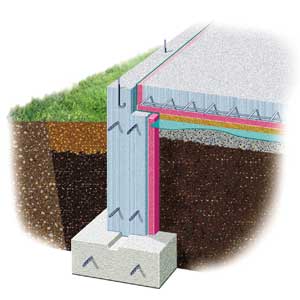
Not sure where you are, but don't you need to pour a keyed foundation under your walls?

slab-foundations-00.jpg
 

boobag

Well-known member
Joined
Aug 15, 2010
Messages
397
yes, i hate to break it to you, but you need a footing under a wall.
 
OP
S

sluginxlt

Well-known member
Joined
Jan 18, 2015
Messages
64
the city just said i just needed a 42x12 foundation wall. i personally think its all overkill, my neighbor haas the same size garage he built in the late 80s and at that time all the city required him to do was a 24" by 4" rat wall under the slab
 

PeterT

Well-known member
Joined
Jul 31, 2011
Messages
1,476
Location
Toledo Ohio
That looks like easy digging, sand. Where I am 12" down its clay, clay you need a grub hoe/pick axe to dig with.

If nothing else, can you pull the forms out and dig another 12" down and a little wider and put in some #6 stone?
That will be a lot of concrete weight in those forms, and I would think it will want to sink over time.
 

audioworks04

Well-known member
Joined
Oct 6, 2015
Messages
141
Location
Olathe KS
Are you sure this is what the city mean? Maybe post the actual wording of the code. Where are you located? I would be most worried about the bearing capacity of your soil, apparently this is sand. I would never build anything on sand, it moves too much and tends to wash away over time leaving a large void and causing settlement issues.
Are you trying to pour your foundation and slab monolithic (one pour)? If this is your plan how do you plan to pull the osb and the chunks of lumber you have wedged in your trench currently? Once it is full of concrete you will not beable to pull these due to the pressure and weight from the concrete will be alot more than you can imagine.
I would recommend pouring your foundations first and then setting your edge form for your slab on the footing then you will be able to hammer drill directly into it and get it set exactly how you want it.
 
OP
S

sluginxlt

Well-known member
Joined
Jan 18, 2015
Messages
64
i copied the part of the westland michigan building code here .............
MINIMUM GUIDELINES - GARAGES/SHEDS
SITE PREPARATION: Remove all organic material. Fill material under slab must be approved
by the Building Department. Minimum 4" approved drainable fill under
slab. Site must be ready to pour concrete at first inspection.
INSPECTIONS: Open trench fill sand, and final. MUST BE CALLED IN TO THE
INSPECTION LINE AND THE INSPECTION WILL BE SCHEDULED
FOR THE NEXT AVAILABLE DAY.
CONCRETE: 2500 PSI after 28 days. 5 bag mix.
ACCESSORY STRUCTURES UNDER 600 SQ FT AND WITH EAVE HEIGHT OF 10’ FOR LESS
(2006 MBC Sec 1805.2.1):
Ratwall should be 4” thick x 24’ below existing ground level. Floor must
be a minimum thickness of 3 ½”. (2006 MBC Sec 1910)
ACCESSORY STRUCTURES OVER 600 SQ FT – (2006 MBC Sec. 1805.2.1)
12” x 42” frost footing below existing grade required.
 

bczygan

Well-known member
Joined
Nov 4, 2009
Messages
22,002
Location
DETROIT! Arsenal of Scrappers
A lot of places in Michigan only require a trench footing or even just a rat wall under a garage slab. If you want a second story or bonus room, you may need either a wider trench footing or a keyed one like shown above. It all depends on the loads and requirements.

The OP will be fine by meeting the requirements he posted.

I don't know how he will pull the forms though.

To keep the outside of the form from spreading he can place stakes outboard from the forms, in solid soil, and nail horizontal pieces of wood that hold the forms in place.

Bill
 
Last edited:

matt_i

Well-known member
Joined
Mar 14, 2008
Messages
10,717
Location
SE Michigan
So yes, you can do a 12" wall as a trench footing, common in Michigan. It can be combined with a monolithic slab too. Or you can pour a footer and then pour or block-builld a narrower wall on top of that.

The key in the footer is more for an unbalanced fill like a basement. Usually not present in a garage...the fill is balanced both sides so there is not a lot of soil load pushing the wall off the footer. One can also supplement in the "key" area with rebar as well.

I think I would recommend pouring the footer and then block-build the foundation walls. You might have to do some more digging if there are collapses but its sand, should be easy to dig and then fill. Not what I've fought with all summer. Time to get cracking, we are just dipping into freezing weather and its time to finish out concrete work for the year.

Also, I recommend removing that topsoil layer (with all the roots exposed) inside the perimeter as its going to present problems for your floor (under your floor) eventually.
 
OP
S

sluginxlt

Well-known member
Joined
Jan 18, 2015
Messages
64
i originally planned a monolithic slab but my concrete guy is suggesting filling the foundation walls first so the forms will go better and the area will be less "delicate" for gravel compacting
 
To avoid these ads, REGISTER NOW!
OP
S

sluginxlt

Well-known member
Joined
Jan 18, 2015
Messages
64
Serious questions:

In several years, your 1x10 boards will rot out of your foundation and become air gaps. Won't your wall then become a series of three foot wide concrete blocks with 3/4" gaps separating them?

Isn't a wall stronger when it is straight? Where your wall bows outward halfway along the right side, it seems like the pressure on the backside will be magnified there and blow out your foundation "wall".

I plan to pull the osb out of the trench as we start pouring. The trenches were some what stable its just as they stared to dry out and if you didnt walk very carefully they kept having little cave in. The trenches arent as crooked as the plywood makes them look. The boards have some warpage and the 1x11 spacer boards i wedged in made the boards bow and look funky. Im thinking i should hose down around the osb before i pull it out because the trench i dug the first day seemed to stay fine until it started to dry out the next day
 
OP
S

sluginxlt

Well-known member
Joined
Jan 18, 2015
Messages
64
pulling those boards and OSB out as you pour is easier said than done IMO...
The foundation should not be "bowed & funky" either, that's the footprint for the rest of your build.

The boards will be removed as we go meaning pull them out right before the concrete goes in. And once again the trench was dug strait before they plywood wedged in. Can anyone get back to my question about staking forms around a trench?
 

69gp

Well-known member
Joined
Jan 1, 2013
Messages
255
Location
MA
There is no way you are going to pull that OSB Board out after concrete gets in there or removing it as you are pouring. The building department or code inspection may not allow you to keep that OSB in the ground after the pour is done and before you start building. If it were me i would keep the 2x10 in place with some strong-backs going about 3 feet back to hold the weight. remove the wood that you are using for spreaders and wedge some 1" pvc spreaders to keep the OSB against the side walls. Before pouring get some motor oil and spray the OSB so the concrete does not stick. Pour the foundation. dig down after and remove as much of the OSB as you can. Concrete is wicked heavy and the force on the sidewalls is going to be tremendous. If you start messing around with the OSB as you are pouring you risk having a blowout and then you have even more troubles.

just my take on it
 
OP
S

sluginxlt

Well-known member
Joined
Jan 18, 2015
Messages
64
I plan on removing the osb completely before the concrete even touches it. Like i said the first side trench held good on its own for a day until it started to dry out and walking around the area. I plan to hose the area down a bit so its not as dry and pull the boards out before concrete ever touches them.
 
OP
S

sluginxlt

Well-known member
Joined
Jan 18, 2015
Messages
64
well i had the inspector come and look and he aproved me to go ahead and fill the trench now and then i will build the forms abd pour slab afterwards. so my new question is how i should put the rebar connecting the founddation wall im pouring now to the slab that will be poured a week later.
 

JWVan

Member
Joined
Nov 24, 2013
Messages
24
What you appear to be getting ready to place is called a grade beam and not a footing. I think your inspector may have indicated that it must be 42 inches deep and 12 inches wide. How do you plan on maintainng grade, looks to me you are heading for an outcome that most likely you will not be proud of when the concrete gets hard. I would recommend that you place the grade beam just below the finish grade and then set edge forms on top of the grade beam after the first placement. This would give you a means to set your form on a stable surface vs. a floating form and trying to brace the edge form from the area behind/in front of the form. You need a laser level or surveyor type level to keep the top of the grade beam level. In the area I am from you have clay and can put nails into the side of the trench to maintain grade, does not work with sandy soil. That way you can use the top of the edge form to pull off when doing the slab on the second placement.
 
To avoid these ads, REGISTER NOW!
Top Bottom