To avoid these ads, REGISTER NOW!

Concrete slab and frost heaving

Double J

Well-known member
Joined
Sep 27, 2008
Messages
143
Location
Springfield, OH
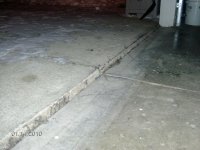
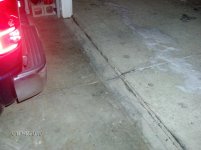
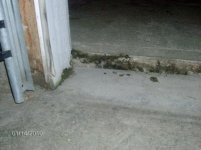
I'm going on my third winter in this home and this is only the second year that I've noticed the slab in front of my detached garage lifting in the winter. The frost heaving this year seems to be much worse than last, even though I tried filling and sealing the cracks this fall. Everything appeared to be going well until the last deep freeze we had the last two weeks.

As seen in the pics, the slab in front of my heated detach has risen 1.5"! The odd thing is that the slab in front of my attached garage hasn't moved an inch. It even had larger cracks than the detach and I didn't fill or seal it. :headscrat
 

Attachments

  • Slab 006.jpg
    Slab 006.jpg
    140.5 KB · Views: 104
  • Slab 010.jpg
    Slab 010.jpg
    142.5 KB · Views: 94
  • Slab 003.jpg
    Slab 003.jpg
    134.6 KB · Views: 99
To avoid these ads, REGISTER NOW!

bimmer1980

Well-known member
Joined
Feb 5, 2009
Messages
2,104
Location
York, PA
water in the ground underneath the slab is freezing and causing the heaving....

you could try adding some better drainage around it or even try insulating around the perimeter of the the slab..... no guarantees tho.....
 
To avoid these ads, REGISTER NOW!

tcianci

Well-known member
Joined
Feb 7, 2009
Messages
4,242
Location
Walpole, Ma
It is common for the front of the slab to heave just as yours is doing. The reason for this is the front edge of the slab is the only edge where it is easy for water to get in under the slab. The most common way for this to happen is when the slab pour doesn't go all the way down to the frost pour. If you were to imagine a cross section of your garage floor and foundation, you have the slab and then you have the gravel under the slab and then you have the frost pour which is typically dropped down in the door areas so the proper grade can be attained before the floor is poured. The mistake here is that after the gravel is graded, it needs to be REMOVED in the area at the door openings to expose the frost pour and then you pour the slab right down to the frost pour. This results in a very thick leading edge of the slab which is in tight contact with the frost pour. This eliminates the chances of the gravel becoming a conduit for water to wick under the slab. The door opening area is also the coldest part of the slab, so if you have moisture in the gravel under the slab and it freezes, you will heave up the front edge of the slab every time. I have been pouring slabs right down onto the frost pour for over 30 years and have never had an instance of the slab heaving. I have also repaired failures like this by cutting the slab out in the damaged area and then removing it. Then the area is excavated to expose the frost pour and the new concrete installed. I usually take the time to install an angle iron edge which is installed even with the inside of the stem wall at a level even with the desired finish level of the floor. The concrete ahead of the angle iron is finished even to the lower edge of the angle making a step in the floor. The garage door will close onto this lower step, eliminating the possibility of wind driven rain coming up into the garage even with the door closed.
 

red

Well-known member
Joined
Feb 20, 2009
Messages
720
Location
Hudson Valley, NY
. . . . . I usually take the time to install an angle iron edge which is installed even with the inside of the stem wall at a level even with the desired finish level of the floor. The concrete ahead of the angle iron is finished even to the lower edge of the angle making a step in the floor. The garage door will close onto this lower step, eliminating the possibility of wind driven rain coming up into the garage even with the door closed.

That's a great idea! Do you have any pictures? thanks
 
To avoid these ads, REGISTER NOW!
Top Bottom