
casmurbax
Well-known member
Good day,
I have been working out in my newly built garage the past couple of weeks and while doing so I have been running a propane heater, outside temps have been below 20 Fahrenheit if not colder. The garage is 432 sq ft with a 8 foot ceiling. The walls and ceiling are insulated and sheetrocked.
While I am out there working, a window is open to allow fresh air in and the heater is running about 15%-25% of its capacity if that. I turn it down when it gets to warm so its not running the entire time I am out there. Though I am using a stand alone propane heater currently it is not something that I plan on using after this winter, I will have a permanent heater installed by next winter .
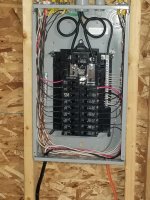
My electrical panel is placed in between 2 studs and insulated from the top, bottom and sides but is placed against the inside of the outside sheathing. I have a 2 inch and 1 inch conduit that come from the outside of the building, through a LBL and run 24 ft above the insulation in the ceiling and then down about 2.5 feet in the insulated wall to the panel.
While working out there yesterday, I noticed that the cover was damp. I disconnected the power to the panel, popped the cover off and noticed that there was moisture inside the panel.
I believe the condensation is coming from the cold air in the conduit hitting the warm air from the garage and the ambient temperature change condensation is being created. I also believe that running the propane heater is contributing to the moisture in the panel as well.
My questions are: How can I stop the condensation from happening?
Is the propane heater a major contributor to my issue? Should I use duct seal to plug up the ends of the conduit in the LBL's on the outside of the garage? Should I plug the PVC on the inside of the panel? Should I pull the electrical panel away more from the outside wall? I don't believe it is actually touching the outside wall, but it is not insulated behind it at all.
NEC code 300.7 states:
Raceways Exposed to Different Temperatures.
(A) Sealing. Where portions of a raceway or sleeve are known to be subjected to different temperatures, and where condensation is known to be a problem, as in cold storage areas of buildings or where passing from the interior to the exterior of a building, the raceway or sleeve shall be filled with an approved material to prevent the circulation of warm air to a colder section of the raceway or sleeve. An explosion proof seal shall not be required for this purpose.
Is duct seal appropriate to use? Should both ends of the PVC be plugged?
Before insulation and sheetrocked.
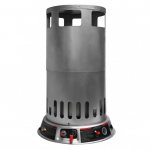
I am heating with this type of a heater.
Sorry for such a long post. Hopefully I posted it under the right forum, if not please feel free to move it.
Thank you in advance for any help.
I have been working out in my newly built garage the past couple of weeks and while doing so I have been running a propane heater, outside temps have been below 20 Fahrenheit if not colder. The garage is 432 sq ft with a 8 foot ceiling. The walls and ceiling are insulated and sheetrocked.
While I am out there working, a window is open to allow fresh air in and the heater is running about 15%-25% of its capacity if that. I turn it down when it gets to warm so its not running the entire time I am out there. Though I am using a stand alone propane heater currently it is not something that I plan on using after this winter, I will have a permanent heater installed by next winter .
My electrical panel is placed in between 2 studs and insulated from the top, bottom and sides but is placed against the inside of the outside sheathing. I have a 2 inch and 1 inch conduit that come from the outside of the building, through a LBL and run 24 ft above the insulation in the ceiling and then down about 2.5 feet in the insulated wall to the panel.
While working out there yesterday, I noticed that the cover was damp. I disconnected the power to the panel, popped the cover off and noticed that there was moisture inside the panel.
I believe the condensation is coming from the cold air in the conduit hitting the warm air from the garage and the ambient temperature change condensation is being created. I also believe that running the propane heater is contributing to the moisture in the panel as well.
My questions are: How can I stop the condensation from happening?
Is the propane heater a major contributor to my issue? Should I use duct seal to plug up the ends of the conduit in the LBL's on the outside of the garage? Should I plug the PVC on the inside of the panel? Should I pull the electrical panel away more from the outside wall? I don't believe it is actually touching the outside wall, but it is not insulated behind it at all.
NEC code 300.7 states:
Raceways Exposed to Different Temperatures.
(A) Sealing. Where portions of a raceway or sleeve are known to be subjected to different temperatures, and where condensation is known to be a problem, as in cold storage areas of buildings or where passing from the interior to the exterior of a building, the raceway or sleeve shall be filled with an approved material to prevent the circulation of warm air to a colder section of the raceway or sleeve. An explosion proof seal shall not be required for this purpose.
Is duct seal appropriate to use? Should both ends of the PVC be plugged?
Before insulation and sheetrocked.
I am heating with this type of a heater.
Sorry for such a long post. Hopefully I posted it under the right forum, if not please feel free to move it.
Thank you in advance for any help.

