To avoid these ads, REGISTER NOW!

Coppper Wire - Solid or Stranded?

boiler7904

Well-known member
Joined
Apr 4, 2006
Messages
3,414
Location
NW IN
Getting ready to add a few outlets and eventually some lighting to my garage. Going to use 12 ga. copper to pull 20 amp receptacle circuits and a 15 amp lighting circuit. All wiring will be in EMT. Looking at wire at the store the other day, they have stranded and solid copper. Not worried about the couple dollar difference in price between the two spools to get the better product for my application. Which is the better choice for me and why?
 
To avoid these ads, REGISTER NOW!

35mastr

Well-known member
Joined
Dec 6, 2007
Messages
2,534
Location
Norcal
If your pulling it.Stranded is much easier.

Especially if its going to be turning 90's and so on.

We pull miles of it at the plant.I wont ever buy solid again if I dont have to.
 

rinny_tin_tin

Well-known member
Joined
Dec 20, 2008
Messages
636
Location
Northern Virginia
Getting ready to add a few outlets and eventually some lighting to my garage. Going to use 12 ga. copper to pull 20 amp receptacle circuits and a 15 amp lighting circuit. All wiring will be in EMT. Looking at wire at the store the other day, they have stranded and solid copper. Not worried about the couple dollar difference in price between the two spools to get the better product for my application. Which is the better choice for me and why?

I'll take stranded any day - much easier to work with and pull, etc
 

mrb

Well-known member
Joined
Dec 31, 2008
Messages
3,734
for your application, solid all the way. Do yourself a favor, and buy industrial grade receptacles where you stick the wire in a hole in the back and tighten the screw on the side. Note: these are NOT the same as the 'backstab' type.

Leviton and Hubbell p/n is 5262 for 15a and 5362 for 20a. Leviton makes another series BR15/BR20 which is much cheaper and still has a clamping mechanism.
 

sberry

Banned
Joined
Jun 18, 2005
Messages
35,747
Location
Brethren, Michigan
I personally like stranded and the back wired recepts are nice especially where the box is used for a junction with multiple wires on a device. I rarely spend the money on them though, usually use the 4$ a box of 10 specials, never have a problem with them and I have some that have been used thousands of times.
 

tfi racing

Well-known member
Joined
Apr 19, 2008
Messages
2,907
Location
Cedar,BC
Solid is what you want.Stranded has its applications that it is better suited for,this isn't one of them.
 

cat06

Well-known member
Joined
Oct 22, 2005
Messages
229
Location
in tha garage
Stranded is a better conductor, current actually flows around the outside of the copper conductor not through it. Stranded having more strands has more surface area for current to flow. In your application it really doesn't matter, but you asked which was better.

Like the other reply use back wired devices that you put the wire in and tighten the screw to hold the wire in.
 

mrb

Well-known member
Joined
Dec 31, 2008
Messages
3,734
Stranded is a better conductor, current actually flows around the outside of the copper conductor not through it. Stranded having more strands has more surface area for current to flow. In your application it really doesn't matter, but you asked which was better.

Like the other reply use back wired devices that you put the wire in and tighten the screw to hold the wire in.


there is no difference in the current carrying capacity of solid vs stranded THHN
 

mrb

Well-known member
Joined
Dec 31, 2008
Messages
3,734
I personally like stranded and the back wired recepts are nice especially where the box is used for a junction with multiple wires on a device. I rarely spend the money on them though, usually use the 4$ a box of 10 specials, never have a problem with them and I have some that have been used thousands of times.

you should be splicing your wires together and pigtailing to the device, not passing through it, especially using the $0.50 receptcales.
 

sberry

Banned
Joined
Jun 18, 2005
Messages
35,747
Location
Brethren, Michigan
you should be splicing your wires together and pigtailing to the device, not passing through it, especially using the $0.50 receptcales.
I do. Actually very few in my shop have more than one outlet to a circuit and when there are more they are in 4x4 boxes with plenty of room. Or, they are fed from a gfci recept.
 
Last edited:

Charles (in GA)

Well-known member
Joined
Jan 11, 2006
Messages
12,489
Location
50 mi south of Atlanta
I know stranded is easier to pull, but I'd much rather deal with solid when it comes to attaching the ends to breakers, switches and outlets. I pulled all of the wire thru EMT by myself in a 60x60x16 metal building. Something like 27 receptacles, plus the twelve MH lights on three multi-wire circuits.

I have Leviton, Cooper (Eagle), and Hubbell professional type backwired outlets in the shop and house. Loosen the screw, push the screw in to the serrated plate inside moves out of the way, insert the wire, and tighten the screw while keeping the wire in place. Pinches the wire tightly. Hubbell is best, but pricey, and Leviton was real good, but they redesigned the backwire and I don't care for it now. These outlets are difficult to plug into and pull the plug, they have alot of gripping force and contact surface area on the plug.

Charles
 

kbs2244

Well-known member
Joined
Nov 11, 2006
Messages
14,065
I use both types of wire interchangeably.
The full time timers seem to use solid for residential and stranded for industrial though.
I always assumed it was because in an industrial environment you may have some vibration and that stranded would be more flexible and therefore less likely to be damaged.
I may be a traditionalist, but I like the old style outlets with the screws on the side.
You can see the connection.
It isn’t hidden down in a hole.
And I take the time to make a curl to go around the screw.
Because I don’t like to stand on cold concrete any more than necessary, I do pre-wire the outlets with pigtails, fix them to the faceplate, and then wire nut them in the box.
BTW, the deep boxes are more than worth the extra pennies.
 

ddawg16

Well-known member
Joined
Jul 11, 2008
Messages
21,005
Location
S. California
To clarify the following...

Stranded is a better conductor, current actually flows around the outside of the copper conductor not through it. Stranded having more strands has more surface area for current to flow.

A true statement....but only at higher voltages.....much higher voltages.....like in the 100K voltage range....

The main advantage of stranded over solid is flexibility....and cost...solid is cheaper....and in a house, the wiring usually does not do any flexing once it is installed.....

For 12 AWG and smaller wire, solid is fine and for the most part, a bit easier to work with....until you have to pull it a long distance.

Larger than 12g, and you are going to use stranded....otherwise, you will never be able to bend it.
 

rinny_tin_tin

Well-known member
Joined
Dec 20, 2008
Messages
636
Location
Northern Virginia
Stranded is a better conductor, current actually flows around the outside of the copper conductor not through it. Stranded having more strands has more surface area for current to flow. In your application it really doesn't matter, but you asked which was better.

Like the other reply use back wired devices that you put the wire in and tighten the screw to hold the wire in.

Not true at these frequencies. You are talking about skin effect that occurs at much higher frequencies. At 50/60 Hz, the current density is uniform throughout the cross-section with a *skin depth* of about 5 meters!

Voltage and current terms are not part of the skin-effect/skin-depth formula - and therefore have no bearing.

The rope bunch stranding used in stranded conductors is to facilitate construction and not to distribute current throughout the conductor as commonly misunderstood. The hollow centers, or jute/steel center of HiV transmission cables is to reduce weight. Special *Litz* wire is used to address skin-effect - where the strands are juxtaposed throughout the length to evenly distribute current. However, for our application, solid or stranded are equal in this regard.
 

Torque1st

MEMBER EMERITUS
Joined
Sep 14, 2008
Messages
5,668
Location
KC Metro, Kansas
Not true at these frequencies. You are talking about skin effect that occurs at much higher frequencies. At 50/60 Hz, the current density is uniform throughout the cross-section with a *skin depth* of about 5 meters!

Voltage and current terms are not part of the skin-effect/skin-depth formula - and therefore have no bearing.

The rope bunch stranding used in stranded conductors is to facilitate construction and not to distribute current throughout the conductor as commonly misunderstood. The hollow centers, or jute/steel center of HiV transmission cables is to reduce weight. Special *Litz* wire is used to address skin-effect - where the strands are juxtaposed throughout the length to evenly distribute current. However, for our application, solid or stranded are equal in this regard.
High frequencies is correct. :thumbup:
 

Aceman

Well-known member
Joined
Jan 28, 2007
Messages
2,513
Location
Eastern Oregon
Boiler, it's personal preference. The only time I use solid wire is if I'm running Romex or MC cable. Stranded for everything else.

In a garage, you'll want to use the better 20 amp spec grade devices which will handle the abuse(plugging and unplugging) better than the cheapo 15 amp residential grade devices. These will come with sidewire type pressure plates, which means you stick the the wire in the hole and tighten the plate down on it. Stranded or solid won't matter in the case, they'll both terminate the same. I'm a fan of P&S devices, their spec grade line also has a pressure plate for the ground as well where some other brands don't.

If you nick stranded when pulling, you might lose one or two strands. You nick solid, you can create a potential weak/hot spot. It's happened more than once where I've take a device out of a box and the solid wire has broken off right where the installer stripped the insulation and nicked the conductor.
 

walrus

Well-known member
Joined
Nov 12, 2008
Messages
11,675
Location
Maine
In a garage, you'll want to use the better 20 amp spec grade devices which will handle the abuse(plugging and unplugging) better than the cheapo 15 amp residential grade devices. .

This should be repeated. Their's a reason the Big Boxes sell stuff for less, some of their stuff is garbage. Their cheap recepts are just that, cheap. Spec devices may cost more but they're alot easier to wire and should take more abuse in a shop enviroment
 
To avoid these ads, REGISTER NOW!

sberry

Banned
Joined
Jun 18, 2005
Messages
35,747
Location
Brethren, Michigan
I will agree that premium recepts are easier to wire and its arguable that they are worth the extra money, not much where the numbers are not usually significant so it could be a peace of mind thing and a comforting thought.
What is pretty much a fact is that on a bid job most contractors use the bargain recepts. I been at this a while so what I can describe from personal experience is this. Most loads in a home shop are connected by 15A plug, the biggest reason to use one would be that it would accept a 20A plug, very rare in all but commercial applications. Even hi draw items like chop saws or circ saws come with 15's and most appliances don't draw near that, grinders, drills, sawzalls, etc and the real demand in these types of shops is greatly over estimated. I have seen recepts fail, usually back stabbed and cant recall right off hand ever seeing one have an issue where there wasn't apparent physical damage, maybe but a case just doesn't come to mind at least not in recent memory.
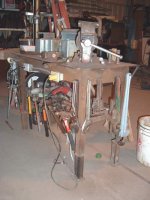
The ones on these benches in the pics have seen thousands of cycles over the years, sometimes several uses a day by multiple mechanics, way more and beyond what any home/small shop would ever see, grinders plugged in like a yo yo, not as heavy as use as back in the day since the prevalence of battery tools and especially drills, don't think I have ever replaced one due to wear. I do scrounge up a better unit on occasion especially in old work or remodel where we are feeding in and out of single boxes where pig tails just add to the fill, that is a place they are worth their weight. Only a couple outlets in most shops really see severe service, these days most of them are holders for wall warts.
 

Attachments

  • bench3.jpg
    bench3.jpg
    37.7 KB · Views: 57
  • bench wrenchess.JPG
    bench wrenchess.JPG
    42.3 KB · Views: 68
Last edited:
OP
B

boiler7904

Well-known member
Joined
Apr 4, 2006
Messages
3,414
Location
NW IN
Thanks for the responses. Looks like it's split about 50/50 between the two. Will probably go with stranded since it will be easier to pull through the conduit. Definitely going to use the spec grade receptacles when I get to that point.
 

hotro1988

Member
Joined
Nov 3, 2007
Messages
9
If you use stranded with standard screw connection receptacles, twist the wire in a counter clock-wise direction. The twist is less likely to come undone while doing this.
 

mrb

Well-known member
Joined
Dec 31, 2008
Messages
3,734
another point to consider, is properly twisting solid wires then installing a wirenut gives a much better connection than wirenutting stranded wires
 

Aceman

Well-known member
Joined
Jan 28, 2007
Messages
2,513
Location
Eastern Oregon
another point to consider, is properly twisting solid wires then installing a wirenut gives a much better connection than wirenutting stranded wires

I disagree.

Our company(and many others) only use stranded wire unless solid is spec'ed. If there ever was any question our stranded splices might fail we would not be using stranded wire. We have warranties to think about. But they don't, so I don't see your statement as any reason not to use stranded wire. Regardless of whether it's solid or stranded, if you make a good splice, your good to go. I highly recommend the Ideal tan twister wire nuts for general purpose splicing. It's hard to make a bad splice with these, they tighten down on almost everything, not like those small yellow wirenuts.
 

foolishpride

Well-known member
Joined
Mar 21, 2009
Messages
343
Location
Southwestern Ohio
You can use the cheaper grade receptacles with the stranded wire. Just use a spade terminal (forked terminal) Sta-Kon connector crimped on the end of the wire. Then attach that to the receptacle screw. That's what I have done in the past.
 

rinny_tin_tin

Well-known member
Joined
Dec 20, 2008
Messages
636
Location
Northern Virginia
another point to consider, is properly twisting solid wires then installing a wirenut gives a much better connection than wirenutting stranded wires

I always thought that the way to use the wire nuts was to let the wire nuts do the twisting and not to twist the conductors them beforehand -
 

walrus

Well-known member
Joined
Nov 12, 2008
Messages
11,675
Location
Maine
I always thought that the way to use the wire nuts was to let the wire nuts do the twisting and not to twist the conductors them beforehand -

I think the thing to do is read the instructions, most of the ones I've seen say nothing about pretwisting and talk about 3 twists outside the nut when done
 

mrb

Well-known member
Joined
Dec 31, 2008
Messages
3,734
it is common practice by professional electricans to pre twist and trim the end flat with linemans, then install the wirenut.
 

rinny_tin_tin

Well-known member
Joined
Dec 20, 2008
Messages
636
Location
Northern Virginia
another point to consider, is properly twisting solid wires then installing a wirenut gives a much better connection than wirenutting stranded wires

I always thought that the way to use the wire nuts was to let the wire nuts do the twisting and not to twist the conductors them beforehand -
 

porschedude996TT

Well-known member
Joined
Oct 28, 2007
Messages
2,384
Location
Santa Maria, California
To clarify the following...


A true statement....but only at higher voltages.....much higher voltages.....like in the 100K voltage range....

Very interesting dawg, I have heard this to true in audio tansmission that the signal is carried on the outside surface of the wire and perfer oxygen free copper wire. I learned something today...
 

Torque1st

MEMBER EMERITUS
Joined
Sep 14, 2008
Messages
5,668
Location
KC Metro, Kansas
Whether you are using stranded or solid always pre-twist the wires then trim and lastly install the wire nut to keep the connection tight.

The so called "instructions" on the box of wire nuts are overly simple...

There is a trick to use when using fine stranded wire or connecting stranded to solid. Fold back a few strands of the stranded wire at the tip of the twisted area to give the wire nut a better grip on the stranded wire. :thumbup:
 

walrus

Well-known member
Joined
Nov 12, 2008
Messages
11,675
Location
Maine
Whether you are using stranded or solid always pre-twist the wires then trim and lastly install the wire nut to keep the connection tight.

The so called "instructions" on the box of wire nuts are overly simple...

The so called instructions is what one has to go by, simple or not I assume they are part of their listing process??

I use Ideal Twisters and they say no pretwisting is required

http://www.idealindustries.com/products/wire_termination/twist-on/twister.jsp
 

Torque1st

MEMBER EMERITUS
Joined
Sep 14, 2008
Messages
5,668
Location
KC Metro, Kansas
The so called instructions is what one has to go by, simple or not I assume they are part of their listing process??

I use Ideal Twisters and they say no pretwisting is required

http://www.idealindustries.com/products/wire_termination/twist-on/twister.jsp

One does not HAVE to go by anything. One can always do more than the minimum required by code or overly simple instructions. Codes etc are minimums stated to just get by. If you want high quality or lasting work don't use the minimum effort required by codes or the simple instructions on the package, go that extra distance for workmanship and lasting quality.

Houses burn down because of those "brown" or "black" twistlocks every day.
 
Last edited:

walrus

Well-known member
Joined
Nov 12, 2008
Messages
11,675
Location
Maine
One does not HAVE to go by anything..

Lets say I have a motor, going by nameplate on the motor the NEC says I have to use a #10 wire. The manufacturers instructions say I have to use a #8. Which do I use if I don't have go by anything?
 

rinny_tin_tin

Well-known member
Joined
Dec 20, 2008
Messages
636
Location
Northern Virginia
Lets say I have a motor, going by nameplate on the motor the NEC says I have to use a #10 wire. The manufacturers instructions say I have to use a #8. Which do I use if I don't have go by anything?

Use the manufacturer's rec -- and I believe the NEC says to defer to the man's req over their tables when such data is available.
 

Torque1st

MEMBER EMERITUS
Joined
Sep 14, 2008
Messages
5,668
Location
KC Metro, Kansas
Use the manufacturer's rec -- and I believe the NEC says to defer to the man's req over their tables when such data is available.
Correct! :thumbup:

One can always do better than the minimums. There can be problems with going too overboard tho, like trying to use #6 wire on a 20A outlet, but in the case of twisting wire before using a wire nut it is only prudent to do so.
 
Last edited:
To avoid these ads, REGISTER NOW!
Top Bottom