To avoid these ads, REGISTER NOW!

Country variations or alternates on tools

YesIHaveAHammer

Well-known member
Joined
Jun 1, 2025
Messages
813
I'm aware of a few examples, and we seem to like what tool shopping in France or Switzerland looks like, so let's have a thread.

Any others you know? Or remarks on the below.

To be clear, I mean any tool you might assume is used everywhere, but actually some parts of the world have a tweak on it, or use something quite radically different.

Also would be interesting to hear experiences of using these, or coming the other way to the American/English ones. I expect there's an element of "that's what we've always used here" inertia, in addition to objective pros and cons.

Linesman pliers - in Europe including the UK, it's combination pliers you'll find everywhere.
1761506625314.png

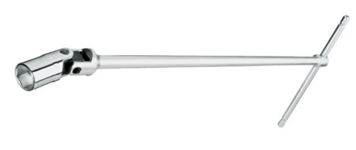
Combination wrenches - in France the common general purpose wrench, is the L-shaped double ended (one size) socket wrench, known as Clés à pipe (good explainer post here). Whereas in the Nordic countries the double ended hinged socket "Saltus" wrench is common (explainer), but I believe not as dominant.
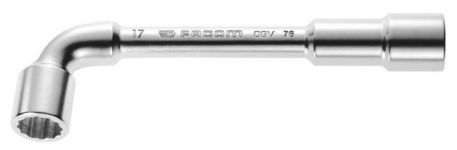
1761506468314.png

1761506998277.png

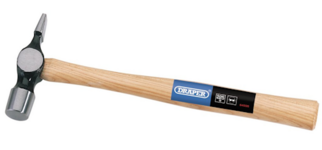
Workshop hammers - in Germany rather than a ball pein, the common hammer is a cross pein with a square face. And in France, a variation with a different shaped pein and a rectangular face.
1761507222045.png 1761507346237.png

Pipe wrenches - Swedish type, various jaw shapes available.
1761507913773.png
 
Last edited:
To avoid these ads, REGISTER NOW!

AEAdam

Well-known member
Joined
May 27, 2023
Messages
2,740
Location
SE PA
The UK has a lot of different, older names for tools, than we have in the US. There are people who call screwdrivers “turn screws”, which I’m fairly certain is the older term.

The whole thing about spanners always threw me. We have pretty specific meaning for that term. I needed them (I think all) for my Bridgeport rebuild. We have hook spanners, pin spanners and face spanners. I think we call them Spanner nuts. Of course most wrenches are spanners in the UK. Not sure about what we’d call monkey wrenches or pipe wrenches.

Then there’s the sizing problems. I think one of the units used for automotive tools referred to the bolt diameter and not the bolt head size. Was that Whitworth? So some sockets and wrenches are known as AF wrenches, for “across flats”. I think that means inch sized stuff, tho technically metric tools are measured across flats.

Most people I knew, living in the UK, used metric units for most things but “English“ units for some things, or switched back and forth. I could have sworn a micron is used by some manufacturers (Mitutoyo?) to describe a micro inch, which is much smaller than a micro meter. I was touring a machine shop where the guide was talking about machine tool accuracy as 40 microns, which would be amazing in inches but nothing too special in metric. They were all inch machines, which is what threw me.

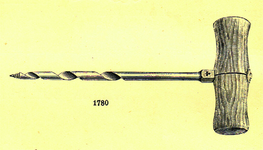
When tool shopping, you can buy a Warrington hammer in their version of Home Depot (B&Q). You can buy a Joiners mallet, a gimlet (like a tiny hand auger for drilling small holes). You can buy new versions of 200yr old screwdrivers, handles originally turned in wood, now plastic. All these tools are really hundreds of years old.

Hand saws and files were in use by professionals in the UK, unlike in the US where if it doesn’t have a motor or an air hose, it doesn’t get used. I felt like tradesmen there had actual training. I also felt like they earned more respect from society but got paid far less than similar tradesmen in the US.

In all, my impression was that tools and trade work in the UK were all much more rooted in centuries old traditions. We had joiners here, before our country started, but I guess no proper Joiners Guild, so woodworkers here, who did architectural woodwork didn’t keep that name. Then all the names for their traditional tools, and indeed some of the forms of those tools, disappeared.
 

richfinn

Well-known member
Joined
Jan 29, 2011
Messages
4,813
Location
Leeds, Yorkshire, England
The UK has a lot of different, older names for tools, than we have in the US. There are people who call screwdrivers “turn screws”, which I’m fairly certain is the older term.

The whole thing about spanners always threw me. We have pretty specific meaning for that term. I needed them (I think all) for my Bridgeport rebuild. We have hook spanners, pin spanners and face spanners. I think we call them Spanner nuts. Of course most wrenches are spanners in the UK. Not sure about what we’d call monkey wrenches or pipe wrenches.

Then there’s the sizing problems. I think one of the units used for automotive tools referred to the bolt diameter and not the bolt head size. Was that Whitworth? So some sockets and wrenches are known as AF wrenches, for “across flats”. I think that means inch sized stuff, tho technically metric tools are measured across flats.

Most people I knew, living in the UK, used metric units for most things but “English“ units for some things, or switched back and forth. I could have sworn a micron is used by some manufacturers (Mitutoyo?) to describe a micro inch, which is much smaller than a micro meter. I was touring a machine shop where the guide was talking about machine tool accuracy as 40 microns, which would be amazing in inches but nothing too special in metric. They were all inch machines, which is what threw me.

When tool shopping, you can buy a Warrington hammer in their version of Home Depot (B&Q). You can buy a Joiners mallet, a gimlet (like a tiny hand auger for drilling small holes). You can buy new versions of 200yr old screwdrivers, handles originally turned in wood, now plastic. All these tools are really hundreds of years old.

Hand saws and files were in use by professionals in the UK, unlike in the US where if it doesn’t have a motor or an air hose, it doesn’t get used. I felt like tradesmen there had actual training. I also felt like they earned more respect from society but got paid far less than similar tradesmen in the US.

In all, my impression was that tools and trade work in the UK were all much more rooted in centuries old traditions. We had joiners here, before our country started, but I guess no proper Joiners Guild, so woodworkers here, who did architectural woodwork didn’t keep that name. Then all the names for their traditional tools, and indeed some of the forms of those tools, disappeared.

The UK is a weird outlier to the rest of Europe, when I was a little kid we switched from Imperial measurements to Metric (Decimalisation), but some stuff was just too hard to let go of.

We still measure distance/speed in Miles/MPH (maybe it was too difficult to change all the speedometers/signs)

We still insist on drinking Pints of Beer and Milk (although the glass/bottle has to be marked in in Millilitres)

We still use old terms like "Furlongs" when we watch the Horse Racing

We still use Feet/inches for Human Height measurements

We still use Stones/lbs for Human Weight measurements

Tyre sizes are a mixture of Metric/Inches
 

GaryM909

Well-known member
Joined
Apr 11, 2016
Messages
1,523
Location
Calgary, Alberta, Canada
That sounds about the same as here. Mostly everything has been changed but I still convert metric to Imperial because it's still stuck in my brain. I was in my last year of high school when we switched in 1975.
I was pumping gas part time when the pumps were changed from gallons to litres. Almost everyone complained because they thought they were getting ripped off - myself included.
 
OP
Y

YesIHaveAHammer

Well-known member
Joined
Jun 1, 2025
Messages
813
Of course most wrenches are spanners in the UK. Not sure about what we’d call monkey wrenches or pipe wrenches.
Pipe wrench is a wrench. Wikipedia has captured it - "wrench is generally used for tools that turn non-fastening devices".

I think one of the units used for automotive tools referred to the bolt diameter and not the bolt head size. Was that Whitworth? So some sockets and wrenches are known as AF wrenches, for “across flats”.
Yes. I remember my grandfather always said "AF" after sizes, presumably out of habit from older days.
 

dscheidt

Well-known member
Joined
Apr 26, 2017
Messages
2,888
.
I was pumping gas part time when the pumps were changed from gallons to litres. Almost everyone complained because they thought they were getting ripped off - myself included.
in 2005, I was driving a tow truck, and had taken a car a long distance into rural central Michigan. I pulled into a little country filling station to get diesel. Before I had gotten out the truck, a geezer shuffled up and told me the pump was in liters, and the price per gallon was what the sign said. They had an ancient pump with a mechanical computer that could not handle prices greater than $2/gallon, but it could do up to $2/litre, so they’d set it up in liters.
 

AEAdam

Well-known member
Joined
May 27, 2023
Messages
2,740
Location
SE PA
I bought diesel in liters but my vehicle gave me gas mileage in miles per gallon, but they were imperial gallons which is more liquid than a US gallon. So my Land Rover discovery with its diesel engine was getting around 25mpg according to the trip computer, but that was more like 18 miles/ US gallon.

Really enjoyed British ales, especial the locally brewed stuff. We lived adjacent to cider country (Somerset) and I enjoyed all the then new dry and cloudy ciders (or at least they were new to me). But I especially enjoyed all those drinks measured in imperial pints which are 20oz to our 16oz. So if you have 2 of those, it’s like 2-1/2 of ours! That took some getting used to. Cider is like 6+% and can sneak up on you.

One of my favorite stories about units was the fun when my wife, then newly in the UK, asked the lady behind the lunch meat counter at the grocery store for a “pound of ham”. Did she mean a pound sterling’s worth of ham or a pound weight of ham? Oh dear!
 
Last edited:

CGarage

Well-known member
Joined
Nov 23, 2018
Messages
2,997
Location
United States/Switzerland
In the states, if you work in the trades, it seems to be vogue and stylish to go around with your Stanley Fatmax tape measure clipped to your belt, with a big key chain next to it, fastened on the belt loop.

In Europe, Switzerland in particular, folks go around with a folding ruler clipped outside of their cargo pants pocket. You don’t often see a tape measure in use over here, the folding ruler reigns supreme.

Here are two examples.

The top folding rule, in a standard size.

The bottom, a compact size.

Also, in Europe, I don’t see a lot of workers with 3/8 drive. It is still mostly 1/4” and 1/2” drive with 3/8” skipped entirely.
 

Attachments

  • IMG_2885.jpeg
    IMG_2885.jpeg
    1.1 MB · Views: 44
Last edited:

dscheidt

Well-known member
Joined
Apr 26, 2017
Messages
2,888
In the states, if you work in the trades, it seems to be vogue and stylish to go around with your Stanley Fatmax tape measure clipped to your belt, with a big key chain next to it, fastened on the belt loop.

In Europe, Switzerland in particular, folks go around with a folding ruler clipped outside of their cargo pants pocket. You don’t often see a tape measure in use over here, the folding ruler reigns supreme.

Here are two examples.

The top folding rule, in a standard size.

The bottom, a compact size.

Also, in Europe, I don’t see a lot of workers with 3/8 drive. It is still mostly 1/4” and 1/2” drive with 3/8” skipped entirely.

In the states, only people I see using a folding ruler are masons and union electricians running pipe. My dad used to use a folding rule a lot, and I still have it. I don’t ever remember I have it, so I don’t use it, even when the sliding bit would be useful for inside measures.

I worked with a german guy who didn’t have any 3/8 drive tools. He had a couple specialty sockets that only came in 3/8, and would need to borrow a ratchet to use them. His reasoning was that you can put a lot more torque into 1/4 tools than Americans tend to think, and if it’s too much for that, step up to 1/2, so there’s no reason for all 3 sizes. I will say I use 1/4 a lot more after working with him, and it’s probably more true on modern vehicles.
 
OP
Y

YesIHaveAHammer

Well-known member
Joined
Jun 1, 2025
Messages
813
Also, in Europe, I don’t see a lot of workers with 3/8 drive. It is still mostly 1/4” and 1/2” drive with 3/8” skipped entirely.
Interesting. I'd been wondering why Mac does the RBRT sockets in 3/8" while Facom only does 1/4" and 3/8".
 
OP
Y

YesIHaveAHammer

Well-known member
Joined
Jun 1, 2025
Messages
813
Not a tool variation, but a set one... wrench/socket sets having regional variants.

e.g. Beta 42 SC9I (international?) omits 9,16,18mm, whereas SC9E (Europe?) omits 9,14,15mm.
 

CGarage

Well-known member
Joined
Nov 23, 2018
Messages
2,997
Location
United States/Switzerland
I also have to add, in Italy, there is an obsession for T-Handles. I see them prefer T-Handles to ratchets and you will find there is a strong preference for this across both automotive and industry use.
 

jmdirk

Well-known member
Joined
May 4, 2015
Messages
704
The UK is a weird outlier to the rest of Europe, when I was a little kid we switched from Imperial measurements to Metric (Decimalisation), but some stuff was just too hard to let go of.

We still measure distance/speed in Miles/MPH (maybe it was too difficult to change all the speedometers/signs)

We still insist on drinking Pints of Beer and Milk (although the glass/bottle has to be marked in in Millilitres)

We still use old terms like "Furlongs" when we watch the Horse Racing

We still use Feet/inches for Human Height measurements

We still use Stones/lbs for Human Weight measurements

Tyre sizes are a mixture of Metric/Inches

You guys are more screwed up wrt to units of measure than we are here in Canada :) Our excuse is proximity to the US
 
To avoid these ads, REGISTER NOW!

richfinn

Well-known member
Joined
Jan 29, 2011
Messages
4,813
Location
Leeds, Yorkshire, England
You guys are more screwed up wrt to units of measure than we are here in Canada :) Our excuse is proximity to the US

I remember my Mum trying to explain the old British money to me as a kid, they had ha'pennys, shillings, thrupenny bits, ten bobs and white fivers 😂

It must of been a complete nightmare for foreign visitors, even to me it all still sounds like "Pirate Talk", they didn't even bother to change the actual coins straight away, they just altered the values. 🤐

Everything was calculated in multiples of twelve, insanity really considering we had been a Roman Colony!!!!
 

dnschmidt

Well-known member
Joined
Oct 3, 2014
Messages
7,271
Location
Phoenix, AZ
Funny as TOPTUL in Taiwan makes, or copies, many of the tools in the original posting. Suddenly everybody likes the Swedish Pipe wrench as even Harbor Freight's ICON line has them. I love 'em but of course mine are TOPTUL since I saw them first there. Is it just me or do other people on this board love the angled socket wrench or whatever the French call them? I gave a set to Eric at South Main Auto and he uses them all the time particularly for replacing struts. One of the weird things about the angled socket wrench is that you can apply a lot more torque using them than you typically can with a normal wrench of the same length as the round shape doesn't dig into your hand. You can also easily extend them using a round bar of steel, I use drill rod, if you need even more grunt. I am surprised that these are not more popular here in America.
 
OP
Y

YesIHaveAHammer

Well-known member
Joined
Jun 1, 2025
Messages
813
^ Cles-a-pipe "Angle socket wrench"

I thought he may be referring to the Saltus Combination socket wrench, because I already mentioned Cles-a-pipe.
 

four.cycle

Well-known member
Joined
Oct 19, 2015
Messages
28,723
Location
Tacoma, Washington
^ Yes. For some reason the "Saltus" type wrench never really caught on with the masses in this country. Lots of companies made them. Herbrand made a double-ended number (as opposed to your single-end examples above.)
You can find reasonably priced models in the second-hand market made by Truecraft, which are actually decent quality.
 

dscheidt

Well-known member
Joined
Apr 26, 2017
Messages
2,888
^ Yes. For some reason the "Saltus" type wrench never really caught on with the masses in this country. Lots of companies made them. Herbrand made a double-ended number (as opposed to your single-end examples above.)
You can find reasonably priced models in the second-hand market made by Truecraft, which are actually decent quality.

I bought a set, because I thought they would work well. Maybe if I had to put two wrenches in my pocket, and walk 12 miles to the thing I needed to fix, but a socket and an open end wrench are better, so I never really used them, and got rid of them.

The French style cles-a-pipe are the bees knees for jobs like strut replacement, where you need to hold an outer nut and turn an inner one (or vice versa, for that matter). I keep meaning to use the set I have more, but never remember to.
 

M.Jay

Well-known member
Joined
Nov 3, 2025
Messages
214
Location
Southern Germany
In Europe, Switzerland in particular, folks go around with a folding ruler clipped outside of their cargo pants pocket. You don’t often see a tape measure in use over here, the folding ruler reigns supreme.
It's the same in Austria and Germany. The folding ruler, or Gliedermaßstab (yes, we like long words) how it is officially called; is the default measuring instrument for every tradesman over here and there is probably no household that doesn't have one.
Tapes are usually only used when the distance to be measured exceeds the 2 meters a common folding ruler covers.

They are in fact so widespread, that workwear manufacturers have added a dedicated pocket to their pants for easy access.

Also, in Europe, I don’t see a lot of workers with 3/8 drive. It is still mostly 1/4” and 1/2” drive with 3/8” skipped entirely.
Ture, most mechanics just have 1/4" and 1/2" sets. This is also reflected in a limited selection of 3/8" offered by many manufacturers.

also have to add, in Italy, there is an obsession for T-Handles.
Those are also common among bike mechanics. Really handy if you want to spin a few screws in and out. Way faster than using a ratchet.

I personally also like to pair a spinner handle with a ratcheting adapter and a sliding T-handle (like in my profile picture), so i can loosen a screw first and then spin it out fast without having to change the tool.

For some reason the "Saltus" type wrench never really caught on with the masses in this country.
The widespread availability of affordable socket sets has probably made them obsolete before they became popular.
 

M.Jay

Well-known member
Joined
Nov 3, 2025
Messages
214
Location
Southern Germany
I noticed this while browsing some German tool websites:
  • wrench = Schraubenschlüssel
  • open-end socket wrench = Gabel-Gelenksteckschlüssel
Schraubenschlüssel is more of a generic term. The different type of wrenches are more specific named as:

open-end wrench = Maulschlüssel or Gabelschlüssel
combination wrench = Maulringschlüssel or Gabelringschlüssel
box-end wrench = Doppelringschlüssel
line wrench = Bremsleitungsschlüssel
ratcheting wrench = Ratschenschlüssel
saltus wrench = Gelenksteckschlüssel

Related to this, there is a widespread joke in German speaking countries about absurdly long compund words which includes the Donaudampfschiffahrtsgesellschaft. We sometimes also just make words up to mess with foreigners. :evil:
 

Steve_P

Well-known member
Joined
Sep 15, 2010
Messages
5,182
I've said this before, but I bought a set of "Saltus" style wrenches in the 1980s from HF as I thought they'd be useful when I was working as a small engine mechanic. I used them a few times, realized they served no purpose for me, and eventually gave then away.
 

dnschmidt

Well-known member
Joined
Oct 3, 2014
Messages
7,271
Location
Phoenix, AZ
Schraubenschlüssel is more of a generic term. The different type of wrenches are more specific named as:

open-end wrench = Maulschlüssel or Gabelschlüssel
combination wrench = Maulringschlüssel or Gabelringschlüssel
box-end wrench = Doppelringschlüssel
line wrench = Bremsleitungsschlüssel
ratcheting wrench = Ratschenschlüssel
saltus wrench = Gelenksteckschlüssel

Related to this, there is a widespread joke in German speaking countries about absurdly long compund words which includes the Donaudampfschiffahrtsgesellschaft. We sometimes also just make words up to mess with foreigners. :evil:
As an American with German origins all I can say is: "That's the spirit." :love:
 
OP
Y

YesIHaveAHammer

Well-known member
Joined
Jun 1, 2025
Messages
813
Swiss VSM standard slotted screwdrivers, with stepped down truly parallel tips, and rounded corners.

As featured on e.g. PB Swiss, Stahlwille 4621

1781827951683.png

1781827865179.png


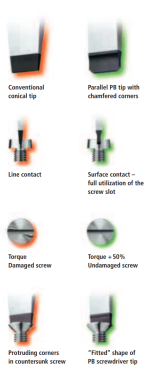
The parallel screwdriver tip is a Swiss speciality. It does not
feature in international standards (e.g. ISO, DIN) and only
exists in the Swiss VSM standard. The manufacturing accuracy
of the parallel shape and sloping corners is due to real Swiss
precision.

1. The parallel shape of the PB tip guarantees optimum transmission of force to a surface. Stress on the material is therefore much lower than with the conical tip, where the force is transmitted along a line. When torque is applied with a conical tip, ejection force (”cam-out” effect) occurs, pushing the screwdriver out of the screw.

…which results in damage to the screw. With the same contact pressure, you get up to 50% higher torque with the parallel PB tip, without damage to the screw!

2. The chamfering of the PB tip obviates the nuisance of protruding corners, when used on countersunk screws. This means that the screw does not get scratched and the screwdriver is not pushed out of the screw.
 
To avoid these ads, REGISTER NOW!
Top Bottom