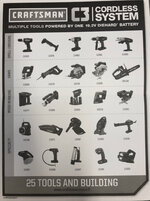
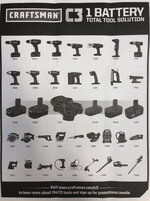
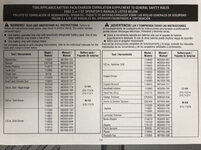
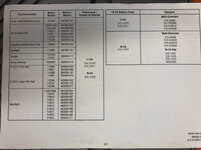
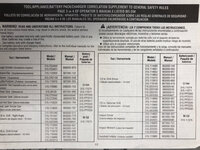
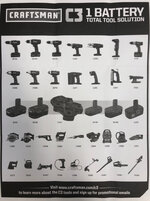
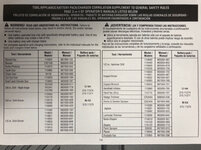
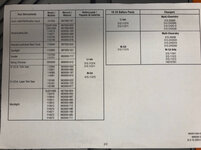
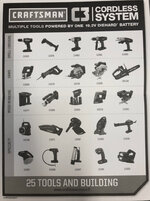
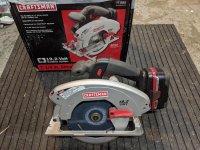
Trust me on this. For a few years I ran a little side business fixing and reselling broken power tools (C3 was by far my main money maker). Although I still sell an occasional tool every now and then, I'm pretty much out of that game now because modern brushless tools are difficult to diagnose and expensive to repair. And I admit I haven't bothered repairing V20 tools, but when the line debuted a year ago or whenever that was, I was naturally curious about what was inside them and went checking all the part numbers for the individual parts inside from the repair schematics. It was all Black and Decker and (as you correctly surmised) some Porter clone. The brushed drill that was available on launch was a clone of the $30 SBD drill and battery kit, but it cost double that or something in Craftsman red. I had to laugh. I made one of the tool shills online mad for pointing that out after he gave the Craftsman version drill a good review. If a $30 drill with battery and charger is a good performer, than we have reached the point there are no bad cordless tools being made anymore. The V20 batteries were B&D in Craftsman cases as well. If anyone is looking for an affordable tool line to get into I recommend Ryobi or Kobalt 24v. Or if you don't care about warranty, go bargain hunting online for Milwaukee, DeWalt, Makita. I know a lot of us have a senseless affinity (myself included) for the Craftsman brand, but that SBD stuff is ****. At least that's my two cents anyways, fwiw.
One drill tear down does make for a good generalization about SB&D Craftsman. It is no surprise that they rushed to market with existing designs to get their presence out there, especially once they realized that Sears still intended to release their next gen Craftsman tools. SB&D needed an entry level, lower tier drill, similar to how Ryobi still puts their lower end, 1-2 generations old tools in many of their combo kits. They just needed something to put on the shelves to start generating sales. Maybe it was an unwise move in this internet era where tools get reviewed online, but they own the brand and have time to make up for that.
SB&D cordless were never "bad" tools per se, just a tolerable quality that you'd have been better off getting for that MSRP price point than settling for a generic. On the other hand, check out their newer brushless tools that share a lot of design elements from the Dewalts, for example their 1/4" impact driver:
They also share tech on things like the Craftsman V60 leaf blower and the first gen Dewalt axial leaf blower.
IMO, by a small margin, SB&D-brand < Porter Cable < Hart < Sears Craftsman C3 <= Ryobi <= SB&D Craftsman (depending on what is most important to you, if it's a wide portfolio of tools and/or battery compatibility then Ryobi moves up a slot) <= Ridgid < Dewalt < Milwaukee (only considering these SB&D & TTI brands). I'm comparing current generation tools here, obviously the older C3 NiCd based generations would fare poorly in this list, and any of them could swap positions with the next higher or lower if you only focus on one specific tool and the other brand's same tier counter part #.
The real problem with the current generation SB&D V20/V60 Craftsman tools is once you factor in battery cost, the SB&D Craftsman cost is too near that of Dewalt, and currently there are too few tools to commit if you want to plan on expanding on that platform.