To avoid these ads, REGISTER NOW!

Crawl space circulation and venting help.

jayfrank5074

Well-known member
Joined
Dec 1, 2013
Messages
100
Good morning Everyone,

I have an issue with my crawl space and need help figuring out the best way to solve it.

Here is a drawing of my house crawl space. The area in red had some mold build up. It’s been cleaned, but I don’t want this issue again. I have since laid down 6mil plastic and taped seams. It is not air tight under there. Walls and pillars are not sealed up.

Right now I have a 20” lowes utility fan blowing across it. The engineer that looked at my place a few months ago told me to get two fans and have them blow anytime its over 50F-55F. I have this fan on a smart switch that kicks it on at 55F and off if below 55F or at 6:30pm.

I’m not sure this is the best fan(150 watts) and its kinda loud even on lowest setting. I’m looking for something maybe quieter and better on power.

I thought about a ceiling fan on low in the dead center of the area just to move air continuously.

I have also thought about a duct fan, squirrel cage fan, or any utility fan thats quieter and less power.

I’m open to any suggestions.

69f66039227b7e4005772ead61b8b604.jpg


Sent from my iPad using Garage Journal
 
To avoid these ads, REGISTER NOW!

Shiftless

Well-known member
Joined
Mar 9, 2014
Messages
14,479
Location
East Bay SFO
If you have room, the ceiling fan seems to me to be the best bet for low sound levels and for total air movement. You don’t need a lot of velocity... you need lots of air moving around to equalize moisture.

Condensation that leads to mold problems is related to relative humidity and not just temperature. Perhaps you should get some meters to measure outdoor humidity compared to humidity in various areas under your house. If under house humidity is much greater than outside, that’s when you’d be better off with fans forcing moist air out and dry air in. That would involve humidity sensing switches (which are readily available).
Keep us posted on your progress...I have a similar problem under my house. I run a dehumidifier with a sensor switch. No mold and I intend to keep it that way. :)
Dehumidifiers use LOTS of electricity.
 
Last edited:

Hot shot

Well-known member
Joined
Jul 10, 2019
Messages
420
Location
Virginia
2 years ago I had a company do my crawl space
They put down 10ml white poly on the dirt, foundation walls and pier blocks
Sealed the vents with blocks of styrofoam Also sealed crawl space door
My hvac ductwork is in the crawl space
I had them cut 2 holes in the ductwork and put little vents in 3 or 4 inch size
Can’t remember right now but I think the vents have a flap that closes when the system is not running so bugs won’t get in
Humidity in the house went from 70 to 50
Well worth the money
 
OP
J

jayfrank5074

Well-known member
Joined
Dec 1, 2013
Messages
100
I do have room for a ceiling fan down there. I didnt know if I needed to have the cross flow. I know a ceiling fan can pretty much run continuous for many years with no issues.

I think the reason he said to run them above 50F is because even if humidity is higher, mold cant grow at low temperatures. Or at least thats the way I understand it. Check out this chart I found.

I thought about sealing it up better than it is and running a dehumidifier down there. They say the whole house ones are more efficient, I’m not sure.

I do run a dehumidifier 50pt in my house when it rains for days and days to keep it down. As long as it doesnt rain for more than a day, I usually dont have to run it as the house stays below 60RH.

When I had the plastic put down, it IMMEDIATELY improved RH in the house and under. I wish I had it put down the year we moved in now.


IMG_0021.jpg


Sent from my iPad using Garage Journal
 
OP
J

jayfrank5074

Well-known member
Joined
Dec 1, 2013
Messages
100
Sorry double pic.

Also I can’t add more vents behind the porch or the carport as they are solid concrete.

Any other opinions on ceiling fan vs cross flow. If I put a ceiling fan down, I’d run it on low probably 8am to 6-7pm. After dark, I dont know that it would do any good.

Maybe run 24/7 like all the ones in the house.


Sent from my iPad using Garage Journal
 

Toyomech

Well-known member
Joined
May 31, 2010
Messages
67
Location
Delaware
Mold can be very unhealthy. Vents only work in some areas of the country. I cant see your location but I would suggest crawlspace encapsulation with closed cell foam. Affordable and will resolve the problem permanently. Our company does it and we fix this issue dozens of time a year for many people. You can see alot of examples of this on youtube and google. Lots of times people try all kinds of workarounds and then finally choose to encapsulate and problem solved.
 

JRC3

Well-known member
Joined
Jun 30, 2014
Messages
12,481
Location
Southwestern OH
You need a radon setup under your plastic. A radon fan will handle the moisture and run some perforated PVC under the plastic to collect the moisture at the source. Full encapsulation is what you want by running the plastic up the walls but leave enough room below the sill plate for termite inspection. The cool thing about doing it this way is if radon is present, it gets removed. It also removes any smell from the mold or fungus that will start growing under the plastic.

Radon fan kits can be had for less than $140 and 3" x 10' perforated PVC drain pipe is about $7 a section plus fittings. This is what I'v done and I have the fan mounted in the crawl space with an exhaust tube going out at ground level and not up past the roof line like with radon. I may eventually run it up.

The old vent holes are usually sealed up. Then a proper crawl space dehumidifier, or as I've done, a big cold temp dehumidifier that works down to 40 degrees.

But who knows exactly without your location being filled out.
 

larry4406

Well-known member
Joined
Jan 27, 2006
Messages
19,057
Location
Northern Virginia
2 years ago I had a company do my crawl space
They put down 10ml white poly on the dirt, foundation walls and pier blocks
Sealed the vents with blocks of styrofoam Also sealed crawl space door
My hvac ductwork is in the crawl space
I had them cut 2 holes in the ductwork and put little vents in 3 or 4 inch size
Can’t remember right now but I think the vents have a flap that closes when the system is not running so bugs won’t get in
Humidity in the house went from 70 to 50
Well worth the money

I think a sealed conditioned crawl space is the best option. I am leaning this way on a forthcoming home addition where I can't readily expand the basement.
 
OP
J

jayfrank5074

Well-known member
Joined
Dec 1, 2013
Messages
100
I apologize, I am in Mid-Mississippi.

I have heard a lot about encapsulation, but never about radon under the plastic. The plastic is down and I am hesitant to remove it for any reason.


We have lived in this house for 10 years, and last summer I found the mold. In January of last year, it wasn’t there.

This house was built in 61, why suddenly all the problems? There was no vapor barrier plastic when we moved in.

BUT I will say, of course we have had more rain in the last couple years than in a very long time.

I used to go under the house and the dirt was like concrete. No more. It’s generally soft.


Sent from my iPad using Garage Journal
 
OP
J

jayfrank5074

Well-known member
Joined
Dec 1, 2013
Messages
100
You need a radon setup under your plastic. A radon fan will handle the moisture and run some perforated PVC under the plastic to collect the moisture at the source. Full encapsulation is what you want by running the plastic up the walls but leave enough room below the sill plate for termite inspection. The cool thing about doing it this way is if radon is present, it gets removed. It also removes any smell from the mold or fungus that will start growing under the plastic.

Radon fan kits can be had for less than $140 and 3" x 10' perforated PVC drain pipe is about $7 a section plus fittings. This is what I'v done and I have the fan mounted in the crawl space with an exhaust tube going out at ground level and not up past the roof line like with radon. I may eventually run it up.

The old vent holes are usually sealed up. Then a proper crawl space dehumidifier, or as I've done, a big cold temp dehumidifier that works down to 40 degrees.

But who knows exactly without your location being filled out.


So the radon pipes go on top of the ground and under the plastic?


Sent from my iPad using Garage Journal
 

JRC3

Well-known member
Joined
Jun 30, 2014
Messages
12,481
Location
Southwestern OH
I would still run the plastic up the walls, you'd be amazed how much moisture makes it way through block. A proper dehumidifier is the next step.

Some also prescribe an inducer to let about 50cfm to flow from the air conditioned ductwork directly into the crawl space keeping it conditioned down there. I prefer to keep my living space separated from it. I know it's an old house drafty house, but at least try. It's also a 1960 built house.


Another safe bet is to fog the crawlspace with Concrobium on a regular basis. You can rent a fogger for like $20. https://www.homedepot.com/tool-truck-rental/Mold-Fogger/200-620810/


https://www.homedepot.com/p/Concrobium-1-gal-Mold-Control-Jug-025001/100654369
 

u2slow

Well-known member
Joined
Nov 20, 2011
Messages
3,583
Location
BC
Do you have good perimeter drainage? That's half my battle.... heavy rain on the driveway runs under the house.

Otherwise I find that passive leaking of my forced-air system into the crawlspace helps dry it out.
 

kbs2244

Well-known member
Joined
Nov 11, 2006
Messages
14,065
Before you spend too much money I would try 2 ceiling fans, placed at the 1/3 points, set on low, blowing up, running 24/365.
Blowing up will keep the floor bottom dry.
This will keep the air moving, stopping the mold.

Ceiling fans are designed for 24 hr duty.
I have a curbside one in my garage set up as above.
(In your case size and looks do not matter.)
Lt has been going for 20 years without any concerns.
The wife does dust off the blades before her annual garage sale, but that is just for looks
 
Last edited:

dmdc411

Well-known member
Joined
Aug 28, 2016
Messages
132
Location
Mn
JRC3 hit it right on the head. All the scenarios listed all vary by location in the country. Most of all, your climate. I'm in southern Minn. Radon is a very bad gas to trap in your home. And we have it in this part of the country. Sealing my house the way that's been suggested would be "bad", as it would trap the gas inside. As much as I hate to say it, you need to find the fix for your location. Call in a specialist. Ask questions, how they'll fix it, and cost. If they don't want to explain the steps, find someone else.

Sent from my SAMSUNG-SM-G870A using Tapatalk
 

yeldogt

Well-known member
Joined
Jan 2, 2012
Messages
18,184
in a humid climate ... you can't control the humidity with fans.

sealing is the best solution ...

are you in a radon area?
 

Shiftless

Well-known member
Joined
Mar 9, 2014
Messages
14,479
Location
East Bay SFO
in a humid climate ... you can't control the humidity with fans.

sealing is the best solution ...

are you in a radon area?

:+1: to that ^^^^^^^^^^^
Fans just move air around...moisture follows the air.

If you seal the area, a relatively small dehumidifier would keep it quite dry. I average about 75% humidity in my crawl space and have no mold. No plastic over the dirt. Open vents to the outside. But the San Francisco Bay Area is completely different than Mississippi.

If you live in an area where at times there is warm moist air outside which blows into the crawl space which is cooler than outside, condensation can easily form on surfaces. That leads directly to mold.
 
Last edited:

greg13

Well-known member
Joined
Aug 2, 2018
Messages
497
Location
Weedsport, NY
Heavy plastic on the dirt will give you a vapor barrier. The rule of thumb for ventilation (HUD spec) is 1 sq ft of ventilation per every 150 sq ft. of floor area.

There are powered foundation vents made to help move air, some have humidistats to control the fan.

With a good seal on the plastic I would think any Radon issues would be minimal, plus with ventilation it should not enter the house.

http://www.smartvent.net/?gclid=Cj0...vxb6iBg4FAGg17rArey8nAPhitoVsBqgaAvvGEALw_wcB
 
Last edited:
OP
J

jayfrank5074

Well-known member
Joined
Dec 1, 2013
Messages
100
According to the radon map, I am in the lowest area. I have never heard anyone around here talking about radon.

I will look at water drainage around the house. We have had so much rain this year, everyone is having problems with it. I did put some extensions on the gutter downspouts. I’m thinking about running at least the main one to the ditch, but that requires digging up part of the driveway.

I don’t think there are any specialist in my area. I haven’t found any. The engineer that the insurance company paid to deny my claim said to put the 6mil down and run 2 fans anytime over 50F. He was from a town 1.5hrs away.


I have thought about full sealing. I assume one should insulate those cinder block walls? What I had in mind was a 1” foam board with 6mil over it. Might could get away with 10 since you wont ever be on it. Seal up vents would be easy. Maybe put a Santa Fe dehumidifier under there.

I guess drill and put in anchors? I dont have a fancy cinder block gun.


My vents are made of brick and covered by screen. Basically its bricks standing up in the vent for whatever reason. So brick, space, brick, space, brick, space. I_I_I_I_I kinda like that. I’d have to get a picture.


I haven’t thus far tried to add more air to the space. It is humid down here year round, hot and humid in the summer and stays pretty wet in the “cooler” months.


Sent from my iPad using Garage Journal
 
To avoid these ads, REGISTER NOW!

3onthetree

Well-known member
Joined
Nov 14, 2018
Messages
191
Ceiling fans won't do you much good except move the moist air around in the space. You need the outside air to enter/exit.

You seem to have enough vents. The change in the dirt moisture level is key. The area of mold is behind the porch, so you probably have a concentration of water sitting under the porch. If you are saying it is an old school brick foundation and probably limey mortar, it will always pass lots of moisture.

Get all your downspouts dumping far away, and make sure grade is sloped away. Vapor barrier on the dirt is good. Make sure none of the vents are blocked in by bushes. Add a dehumidifier if necessary. Complete encapsulation is a Defcon5 solution and if you haven't solved the subsurface water issues it will do no good for the huge trouble in doing it to a brick foundation.
 

JRC3

Well-known member
Joined
Jun 30, 2014
Messages
12,481
Location
Southwestern OH
According to the radon map, I am in the lowest area. I have never heard anyone around here talking about radon.

I only brought up radon as an added benefit of using a radon fan to draw out the moisture from the source, the ground. Full encapsulation is the best method. Venting under that is even better. IMHO.

I'm no expert but 4 years ago I bought a foreclosed home that had sat for over two years with a lot of moisture problems. I've done yard drainage and put a drain around the perimeter of my crawl space that leads to a sump pump. There was a lot of water and termite damage down there that I had to fix. I got this house for about 40% it's value and spent weeks replacing and correcting the damage. This leads me to want to keep it as dry as possible and through research I think I've found the best options, maybe even a little over kill or redundant.

Before I took ownership I had 5 different companies assess the mold in the crawl. Cost everywhere from 3 to 13K. A franchise company, Dry Patrol, wanted the 13K. Their solution was to spray it with a branded solution that was basically hydrogen peroxide and surfactant. Thirteen thousand dollars to spray some solution. The one I went with used dry ice blasting. When you blast with dry ice it explodes and vaporizes on impact blasting away and destroying the mold but not damaging the wood. I think they misquoted the job because it only cost me 3K. That or they are money launderers. LOL They are a rather large local company. The equipment, dry ice, 2-3 guys for a full day+ and they even fogged the space...They were the least expensive and offered the best product.

One of the first things I did was add a proper access and not some ****** little hole from the outside. My thought is, the more accessible, the better the maintance and the more you'll keep an eye out for potential problems. This also gave the mold remediators and myself good access for our work. After they were done I added 9-Edison sockets with 100w CFL bulbs.

attachment.php


attachment.php


I only bring this up to show my thought process and reasoning about full encapsulation and ventilating it. I don't have any finished pics but might take some later.
 

slowtwitch73

Well-known member
Joined
Apr 18, 2019
Messages
5,876
Location
Hellgate
I would seal the entire vapor barrier like a radon barrier (or just put in a radon barrier and fan). We have a radon mitigation system and a bathroom fan hooked to a humidistat that works like a charm. I can just barely hear the fan running, and that's only because I know it's there.. nobody else hears it. It starts like clockwork in the spring when humidity and temps get higher and the gas forced air isn't running as much to pull moisture. It turns off 6 wks or so later and may come on sporadically through the summer if we get a prolonged wet period.
 

Jeepster04

Well-known member
Joined
Jun 25, 2013
Messages
3,093
You may be able to get free radon test kits from your health dept. We can in Ky.

Unless you're in a low humidity area (mississippi is NOT) then sealing up the crawl space and adding a dehumidifier is your best bet. Leave 4-6" of block exposed so you can see termite tubes if that becomes an issue.

Otherwise, taking outside air and putting it under your house never makes sense. Cold air in the winter, hot humid air in the summer, humid air at night, it never makes sense.
 

nicholsmf

Well-known member
Joined
Mar 23, 2011
Messages
246
Location
TN
My crawl space has all vents sealed except one, which has a humidistat controlled fan installed that pulls air out of the crawl space when the RH is at 40% or above. I also have a humidistat controlled dehumidifier that run when the RH is at 40% or above. If it's humid outside and you have open vents, then it's gonna be humid inside. Fans will just move the humid air around.
 

slowtwitch73

Well-known member
Joined
Apr 18, 2019
Messages
5,876
Location
Hellgate
There are quite a few other things a radon system will remove.. ground gases and most importantly moisture. This is especially true of crawl space systems that use plastic membrane to completely seal the crawl floor (as opposed to drilling a slab).

I'm a big proponent of them, radon levels be damned.
 
OP
J

jayfrank5074

Well-known member
Joined
Dec 1, 2013
Messages
100
Seal space no vents and crawlspace dehumidifier. Buy the largest you can afford and pipe drain outside of space. Any humidity over 50% grows mold.

https://www.amazon.com/dp/B06XKH666P/?tag=atomicindus08-20

Put the sensor in space then see the condition.


I just thought about it, I have a nest thermostat I am not using, a 24vAC transformer and I would have an instant WiFi humidity and temperature monitor.

I just wish IFTTT still worked with NEST like google said it would.


Sent from my iPad using Garage Journal
 

3onthetree

Well-known member
Joined
Nov 14, 2018
Messages
191
Everyone likes to jump to "seal the space" right away, but forget that houses have been built in the south with vented crawlspaces for hundreds of years and performed perfectly fine with moisture.

When you seal the crawlspace, it then must become a conditioned space per code, and if you have any makeup air pulling from there, you will have to deal with that too. Then you also have to deal with opportunity for condensation now at the outer walls.

Something has changed with the amount of ground water, figure that out first.
 

CraigStu

Well-known member
Joined
May 22, 2014
Messages
4,013
Location
Blacksburg, Va
Everyone likes to jump to "seal the space" right away, but forget that houses have been built in the south with vented crawlspaces for hundreds of years and performed perfectly fine with moisture.

When you seal the crawlspace, it then must become a conditioned space per code, and if you have any makeup air pulling from there, you will have to deal with that too. Then you also have to deal with opportunity for condensation now at the outer walls.

Something has changed with the amount of ground water, figure that out first.
I agree. The ground under there used to be dry and now it's not. Why?
I just read through this thread again and the location of the problem jumped out at me. It is inside the foundation exactly where the slab porch is on the other side. That has to have some significance. First I'd check w/ a level if that slab angles down away from the foundation. If it is level, I'd be thinking about taking it out. Next I'd look at how it is sealed to the foundation. Is there a roof over the slab? How is the land around the slab graded? Is that slab in a bit of a bowl?
 
OP
J

jayfrank5074

Well-known member
Joined
Dec 1, 2013
Messages
100
I agree. The ground under there used to be dry and now it's not. Why?

I just read through this thread again and the location of the problem jumped out at me. It is inside the foundation exactly where the slab porch is on the other side. That has to have some significance. First I'd check w/ a level if that slab angles down away from the foundation. If it is level, I'd be thinking about taking it out. Next I'd look at how it is sealed to the foundation. Is there a roof over the slab? How is the land around the slab graded? Is that slab in a bit of a bowl?


So a little back story.

We bought this house 10 years ago. It had a little mold in the red area. Inspector said to bleach it and put a piece of plastic down. I did that.

The porch is covered and is sealed very well to the brick. Very little water gets on the slab . I have checked this. I do think the porch has been there for a lot longer than 10 years. The roof was pretty old when we moved in, so I’m guessing 20 years on the roof. So this porch is at least 30 years old.


I had the 6mil plastic put down about 2 months ago. Instantly better both in the house and below.

The ground under the house IS more moist than it was several years ago.

We have had more rain in the past 2 years that I can remember. I have a dozer guy coming to asses standing water in the back yard, far away from the house and a lot lower elevation. Last year I extended the gutter down spouts several feet to get water away from the house. I know the middle gutter water is crossing the driveway and going into the ditch.

I do have some standing water in the front yard this morning. I rained all night and is raining now. I hope the dozer guy can meet me this afternoon so he can see that also. I do not think this area will be a big deal as the standing water isn’t very deep and not a large area.

This thread wasn’t really about water, although it doesn’t bother me to talk about it, but rather to talk about the red area in terms with air flow suggestions.

Even if I do have to get the water away from the house it still doesnt have a vent in this area. 10 years ago it was a problem and the dirt was BONE dry under the house. NO PLASTIC when we moved in.

I must concur that while I do like the sealed up idea, but this house is 59 years old, and the moist ground is new the past year, maybe two. I have to wonder how it made it 57 years without having a sealed up crawl space.


I wish I had put the 6mil plastic down the year we moved in, it is so much nicer when under there. And brighter too.

This crawl space is not super low. Crawling on knees is fine, and you can “sit” where you want to work, so I’d say 3ft average height.

I do appreciate everyone’s input so far. That is why I came here to ask this question, I know there are many experienced people on this forum. I really dont think there are any experts in my area and if there were, they are very busy right now.


Sent from my iPad using Garage Journal
 

slowtwitch73

Well-known member
Joined
Apr 18, 2019
Messages
5,876
Location
Hellgate
Time are changing.. and water is always on the move.

I too have had instances with our house where I've wondered 'how did that last owner get away with this'.

There's a gal down the street who lives in the house she grew up in.. she's on the downhill of middle age. Her house has recently been getting water in the finished basement fairly regularly.. she's pulling her hair out trying to deal with it.. big financial/emotional hit. She said it never happened in the decades past.

Home owners/city/county doing work above you can trigger a change, leaky mains, other leaky water pipes, removing vegetation that had previously taken up water, neighbor over watering, change in weather etc etc.
 

stokefire7

Well-known member
Joined
Oct 5, 2011
Messages
616
Good morning Everyone,

I have an issue with my crawl space and need help figuring out the best way to solve it.

Here is a drawing of my house crawl space. The area in red had some mold build up. It’s been cleaned, but I don’t want this issue again. I have since laid down 6mil plastic and taped seams. It is not air tight under there. Walls and pillars are not sealed up.

Right now I have a 20” lowes utility fan blowing across it. The engineer that looked at my place a few months ago told me to get two fans and have them blow anytime its over 50F-55F. I have this fan on a smart switch that kicks it on at 55F and off if below 55F or at 6:30pm.

I’m not sure this is the best fan(150 watts) and its kinda loud even on lowest setting. I’m looking for something maybe quieter and better on power.

I thought about a ceiling fan on low in the dead center of the area just to move air continuously.

I have also thought about a duct fan, squirrel cage fan, or any utility fan thats quieter and less power.

I’m open to any suggestions.

69f66039227b7e4005772ead61b8b604.jpg


Sent from my iPad using Garage Journal

Which way is North ?
Insulate foundation wall where slab porch outline is ?
 

Showkey

"MEMBER EMERITUS"
Joined
Aug 9, 2014
Messages
8,638
Location
Wausau WI
in a humid climate ... you can't control the humidity with fans.

sealing is the best solution ...

are you in a radon area?


X10 ^^^^^^^^^

If the humidity is 70% outside the home........moving air is not going to dry anything.......especially in a damp crawl space.

In the north we have basements.........when a basement get musty or damp , high humidity blowing air around has little effect. Dehumidifier to “condition” the air in the basement is the solution. In the basement example.....it’s cool and damp, pulling outside air the warm and moist make the basement situation worse not better.
 

CraigStu

Well-known member
Joined
May 22, 2014
Messages
4,013
Location
Blacksburg, Va
I am not an engineer but I have to think doing nothing but rigging a fan to move outside air through the crawl space has to help. I can see that just moving the air around in the crawl space (ceiling fan) might not do much but through has to help some. Maybe not a total solution but it's got to be better than no movement. 70% humid air from outside is still better than 100% wet dirt or foundation walls right? And how about if you keep that fan running when it is 30% outside? That could help **** moisture out of the dirt right?
 

2Busy

Well-known member
Joined
Oct 12, 2017
Messages
128
Location
Williamson Cty. Tennessee
To seal or not to seal, that is the question! In certain parts of the country it’s an easy answer, like the gulf coast area where hot, humid outdoor air needs to be kept out of the cooler underground crawl space lest it will “rain inside” when humid hot meets cool. In cool northern climates, air movement is your friend, so vent away, run those fans and you’ll be fine.

Unfortunately, if you live north of the gulf coast and south of the cool north, it’s not so simple. Jayfrank, your situation in MS sounds a lot like what I’ve had to deal with in middle TN. You might be too far south for vents and fans to be effective but I’d give that approach every possible chance before you encapsulate and dehumidify. Sounds like you’ve done everything reasonable to keep ground water out. Next step, I’d suggest you look into specialized vent fans (fans that mount directly in the vent), with one set pulling air into one end of the space and another exhausting it out the other end. You may even benefit from covering up some of those side vents so you get a good corridor of flow, pulling cool air in from the north and exhausting it to the south if that’s possible. The less expensive fans have sensor switches that measure crawl space humidity and temp but all they really end up doing is automatically turning off for the winter and on for the summer. However there are also more sophisticated ones that do a better job regulating things in the hot, humid months. These guys measure outside air and compare it to what’s inside the space, shutting off rather than pulling hot, humid daytime air into the space, then turning on and drying out the space when conditions are right.

This approach along with 6 mil plastic works reasonably well for me provided I keep the ground water out but it’s not perfect. Occasionally a little mildew will appear on a couple overhead joists that I’ll hit with bleach and Jomax but it’s manageable. If I ever feel I need to move to encapsulation/dehumidification I will, but not now.

Because you’re farther south my approach might not get it done for you, but that’s where I’d start before writing the (very big) check for an encapsulation. Good luck!
 

Showkey

"MEMBER EMERITUS"
Joined
Aug 9, 2014
Messages
8,638
Location
Wausau WI
I am not an engineer but I have to think doing nothing but rigging a fan to move outside air through the crawl space has to help. I can see that just moving the air around in the crawl space (ceiling fan) might not do much but through has to help some. Maybe not a total solution but it's got to be better than no movement. 70% humid air from outside is still better than 100% wet dirt or foundation walls right? And how about if you keep that fan running when it is 30% outside? That could help **** moisture out of the dirt right?

Have you been to Mississippi or the gulf area?????

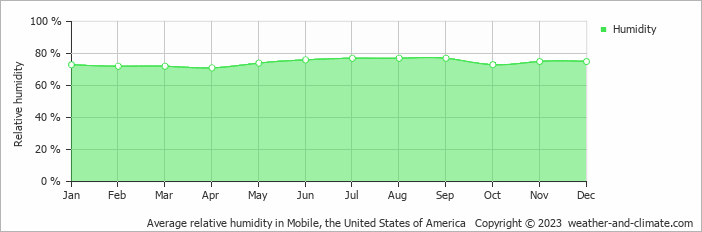
Jackson, MS. The month with the highest relative humidity is September (77.3%). The month with the lowest relative humidity is March (71.1%).

A few more fun facts: And according to the National Climactic Data Center, Mississippi has, on average, the highest humidity levels in the country at 91 percent. That number climbs to 93 percent during the summer, a time when multiple daily showers are realistically needed.

This is for Gulfport, MS
average-relative-humidity-united-states-of-america-gulfport-mississippi-us.png
 
Last edited:
OP
J

jayfrank5074

Well-known member
Joined
Dec 1, 2013
Messages
100
A little update, I haven’t done anything. Dozer guy hasn’t came by yet. He is planning to come Saturday. I do think I need to get some water away from the house. There is one spot is collecting about 15 ft in front of the house. I need to address that.

We have had so much rain, and its raining now. My back yard continually has a stream running out of it(way away from house).


Sent from my iPad using Garage Journal
 
To avoid these ads, REGISTER NOW!
Top Bottom