
You are using an out of date browser. It may not display this or other websites correctly.
You should upgrade or use an alternative browser.
You should upgrade or use an alternative browser.
Creative splicing
- Thread starter sberry
- Start date

lakeroadster
Well-known member
Nice.. so this was inside the panel?
wyliesdiesels
Well-known member
wow 
How were the splices done?
Western union, crimp, solder or just plain tape it tight?
Looks like modern day K+T....
How were the splices done?
Western union, crimp, solder or just plain tape it tight?
Looks like modern day K+T....
Were flying splices ever legal? There were remnants of K&T but one of the later circuits that went everywhere in the place, probably pre WW2 were simply spliced, switch loops spliced in the attic. I didn't have time to tear one apart and see how it was done, someone came along later and tapped in the same method. Then there was a generation of more modern NM where lots of the ground wires were chopped off. The design was poor and all the recepts on 14, there was a possibility of saving a little but for a couple extra hours we ripped it out and ran new wire, used 3 conductor to the switch loops. Used only 1 wire to a box, no daisy chains and going to put a couple Jboxes in the attic where they can be found.
I didn't trust any of the old work in the whole place. I pulled wire to the most difficult and timely part of it today, it looked like a problem when we started but it got better.
Anyone know off hand what the spacing rules in bedrooms are? Its been so long since I read it.
I didn't trust any of the old work in the whole place. I pulled wire to the most difficult and timely part of it today, it looked like a problem when we started but it got better.
Anyone know off hand what the spacing rules in bedrooms are? Its been so long since I read it.
Dave Nelson
Well-known member
- Joined
- Sep 25, 2011
- Messages
- 181
Perfectly legal ...........in India.
larry4406
Well-known member
Spacing of outlets - we install one within 6' of any door/opening, then every 12'. Any wall greater then 2' needs an outlet (ie short wall between adjacent doors). NEC 2015 as applied in Montgomery County MD. YMMV
Were flying splices ever legal?
In knob and tube, yes. In anything else, no.
In the second picture, is that an al to cu splice? The entrance facility can be al, but I didn't think you could do anything with it but connect to the panel. I could be wrong, I'm an accountant by education and master of nothing by training.
In the second picture, is that an al to cu splice? The entrance facility can be al, but I didn't think you could do anything with it but connect to the panel. I could be wrong, I'm an accountant by education and master of nothing by training.
Yes, 2 pics of AL to 1 copper. You got 1 of the issues. Look carefully at the copper....
wyliesdiesels
Well-known member

Look carefully at the upper left neutral!

There's at least 2 things wrong in this picture, can you name them?
I cant quite tell whats up with the neutral other than its cut?
Copper to aluminum under same lug and the copper isnt even a manufactured conductor.
In the second picture, is that an al to cu splice? The entrance facility can be al, but I didn't think you could do anything with it but connect to the panel. I could be wrong, I'm an accountant by education and master of nothing by training.
Aluminum building wire is legal for use for everything inside a building.
I cant quite tell whats up with the neutral other than its cut?
Copper to aluminum under same lug and the copper isnt even a manufactured conductor
Snapped the pic after I started cutting into it, but look carefully, that's not a neutral, it's a bare ground with a piece of phone cord insulation slipped over it!
Good catch with the copper, I missed it the first time I had the meter open. That's actually 3 pics of 4 gauge bare ground lumped together and taped.
Whole house was wired by someone who knew enough to make it all work but that was it. Everything has since been replaced, with the exception of 2 circuits that I was able to inspect and deemed correct. Too many issues to leave anything else in the house
Last edited:
ddawg16
Well-known member
Poster child as to why we have electrical codes
lakeroadster
Well-known member
In regard to splices.. if they are done correctly.. what issues would they cause?
A lot of the NEC, and rightly so, is to prevent techniques that could be an issue if not well thought out and not well implemented.
I'm not saying don't follow the NEC, I am asking the electricians here that make a living doing this, what is the issue?
A correctly soldered splice with correct insulation after the splice is made, what's the issue from a practical standpoint, not a code standpoint?
A lot of the NEC, and rightly so, is to prevent techniques that could be an issue if not well thought out and not well implemented.
I'm not saying don't follow the NEC, I am asking the electricians here that make a living doing this, what is the issue?
A correctly soldered splice with correct insulation after the splice is made, what's the issue from a practical standpoint, not a code standpoint?
JRC3
Well-known member
I had the same behind one of my medicine cabinets. The old white cloth romex is grounded 12ga. The black was pieces of old extension cord. That also fed a GFI in the same bath and another room.


This was in the crawlspace going to my dishwasher. No wire nuts or box, only wrapped with electrical tape.

This was in the crawlspace going to my dishwasher. No wire nuts or box, only wrapped with electrical tape.
sleek98
Well-known member
We bought a lake house a few years ago that I knew I wanted to rewire the living room since it didnt have grounded plugs. Just a pet peeve of mine. I started opening up the walls to do some remodeling and noticed that almost every wall had a splice in it. Kicker was most were done with duct tape and left hanging, some were just twisted and left nothing covering the hot wires.
About 2 days into it I said F it and gutted the entire house. Found 20+ splices. It now has all new electric ran from the panel through out the house. I dont understand how the house didn't burn down.
About 2 days into it I said F it and gutted the entire house. Found 20+ splices. It now has all new electric ran from the panel through out the house. I dont understand how the house didn't burn down.
OH_Varmntr
Well-known member
Poster child as to why we have electrical codes
Codes are just suggestions.

Zeke
Well-known member
We bought a lake house a few years ago that I knew I wanted to rewire the living room since it didnt have grounded plugs. Just a pet peeve of mine. I started opening up the walls to do some remodeling and noticed that almost every wall had a splice in it. Kicker was most were done with duct tape and left hanging, some were just twisted and left nothing covering the hot wires.
About 2 days into it I said F it and gutted the entire house. Found 20+ splices. It now has all new electric ran from the panel through out the house. I dont understand how the house didn't burn down.
No significant loads. Nowadays homes have a lot more draw. A lake house might have an old TV as the biggest draw.
I have seen the same as the OP many times — even found one in my house which has been totally redone since, as you did.
TractorJeff
Well-known member
Old plaster lathe house sitting on timbers. Neighbor lady is talking to the owners wife and she mentions her husband being electrician. Well of course he gets invited over to "help" her husband with some project. Turns out all the outlets in the living room were daisy chained from the one original outlet with lamp cord!
Needless to say the Electrician was busy for more than the hour he thought he would be there!
Back in those days, one or two lamps and a TV that replaced the Radio.
Needless to say the Electrician was busy for more than the hour he thought he would be there!
Back in those days, one or two lamps and a TV that replaced the Radio.
BuffettFan
Well-known member
Aren't these types of splices referred to as "Burn-Eze" connections?
Falcon67
Well-known member
The first pic - is that a phone wire far upper left next to/under the black cable, or is that some romex with a staple through the middle of it.
I have seen lamp cord for switch loops. This had quite a bit of stuff on one circuit from an original installation then it had been tapped precariously in a couple more spots. I spent some time figuring how it was wired and fixing up some stuff for the trades. The whole place was 14, they tripped a compressor today and I really had intended putting on a temp 20 somewhere for heavy tools. I think someone ran a saw while the comp was on though.
We are going to get 12 for all the recepts, 3 conductor to the loops with 14. Its got to have some jboxes in the attic as its 2 stories.
We are going to get 12 for all the recepts, 3 conductor to the loops with 14. Its got to have some jboxes in the attic as its 2 stories.
Last edited:
I've been slowly redoing my house and keep finding things like this. Splice in a wall that was twisted wires, at least it was wrapped in tape. Lamp cord used in place of romex. Even had an extension cord with 2 male plugs jumping power from one outlet to another, hidden behind a basement wall, and the second outlet was wired to an additional outlet. House was built in the 50's so almost nothing is grounded, but if it originally was its just a bare wire run to the nearest water or soil line. I'm continually amazed it hasn't burnt down.
MikeF2316
Well-known member
In regard to splices.. if they are done correctly.. what issues would they cause?
A lot of the NEC, and rightly so, is to prevent techniques that could be an issue if not well thought out and not well implemented.
I'm not saying don't follow the NEC, I am asking the electricians here that make a living doing this, what is the issue?
A correctly soldered splice with correct insulation after the splice is made, what's the issue from a practical standpoint, not a code standpoint?
I'm not a pro, but I'll give you my take on it.
Electrical tape dries out and unravels. No more needs to be said.
Following code with no hidden connections makes troubleshooting easier and safer for the next guy.
These were working, not sure how much load was on them and the fact it was on 15A didn't hurt but,,, these were twisted and taped and not very well at that. A few had wire nuts on them. A twisted splice doesn't have the pressure connection a nut gives it. Even a couple of the nuts were loose, looks like they pre twist them which would have been ok provided the nut was tight.In regard to splices.. if they are done correctly.. what issues would they cause?
I see the TOH guy do this, I personally don't but am careful about strip length and making the ends even and my hands are strong and I get the nut tight. I like to lay them along side each other and let the nut do the work. I also replace all those old ****** vinyl Scotch things that have a crummy taper and never seem to fit right, I find them loose all the time in old work. I like the Ideals and Wing nut.
Same for staples. do not really care for all metal, would just as soon use the 2 nail plastic types. I find wires pulled against staples on occasion, I havnt ran across a short as I recall but they certainly don't look good.
Think backstab connections, they have some pressure and fail all the time. A guy could never really trust a twisted wire without a nut in most cases and certainly not as a matter of routine practice.
Last edited:
lakeroadster
Well-known member
Has the NEC Code in regard to splices since 2002?
Interesting article over at "Electrician Talk" here: Splices in wall
Data below is from post #10
We discussed this product over at another forum recently:
Here is what I found:
quote:
* The AMP NETCONNECT Non-Metallic (NM) Sheathed Cable Interconnections provide a fast and reliable way to permanently interconnect 3.23 or 2.07 mm² (12 and 14 AWG) circuits. They eliminate the need for junction boxes, covers, wire nuts and box connectors.
* NM Cable Splices and Taps use insulation displacement contacts (IDC) and require no special tools for termination.
* Meets requirements of NEC 2002 articles 545, 550, 551 and 334-40B (Tap and 3-Wire Interconnection)
http://www.ampnetconnect.com/product...07&path=0,2299
NEC '02 334.40(B) states:
quote:
334.40(B) Devices of Insulating Material.
Switch, outlet, and tap devices of insulating material shall be permitted to be used without boxes in exposed cable wiring and for rewiring in existing buildings where the cable is concealed and fished. Openings in such devices shall form a close fit around the outer covering of the cable, and the device shall fully enclose the part of the cable from which any part of the covering has been removed. Where connections to conductors are by binding-screw terminals, there shall be available as many terminals as conductors.
For '02 code cycle - this product IS LEGAL.
For '05 code cycle, the NEC remains unchanged on 334.40(B), therefore this product IS LEGAL.
For the '08 code cycle, the NEC remains unchanged on 334.40(B), therefore this product IS LEGAL.
I, personally, would NOT use this product in spite of it's compliance with 334.40(B)
A few threads from some other forums where the item was also discussed:
Amp Connectors and 334.40(B) from 02-27-2007
Romex splice/tap connectors from 11-01-2007
One of the above threads also cites a reference to the IAEI:
http://iaei-western.org/Files/2007/2...ePanel_Q&A.doc
Here is the relevant text from that document:
quote:
93. A company advertises a "Romex 3 Conductor Splice Kit" which has been used in the past for connecting power in sections of a modular home. This company is now also claiming that these splice kits can be used in remodeling work in an existing house and be buried in the wall per "Article 334-40b" (their exact terminology). The UL listing category appears to be QAAV, which in the brief description in the White Book indicates that these must be capable of withstanding"... mechanical shock that might occur while transporting the units in which they are used." which would seem to indicate their use is for the modular home connections and not for burial in a wall. Is this the correct listing for the product? Can they be buried in a wall?
As the question states that these NM cable and splice kits are Lsited under the category Non Metallic Sheathed Cable Interconnectors (QAAV), located on page 240 in the 2007 White Book. This category covers self-contained interconnectors employing pressure cable connectors, insulation displacement or insulation piercing connectors for splicing or tapping nonmetallic (NM) sheathed cable. These interconnectors are intended for installation in accordance with ANSI/NFPA 70, "National Electrical Code."
These devices have been investigated for equivalency to Type NM cable in insulation and temperature rise, and for capability to withstand fault currents, vibration and mechanical shock that may occur during transport of the units in which they are used.
300.15 Where boxes or fittings are required, (H) Insulated Devices As permitted in 334.40(B), a box or conduit body shall not be required for insulated devices supplied by nonmetallic-sheathed cable.
334.40 (B) Devices of Insulating Material Switch, outlet, and tap devices of insulating material shall be permitted to be used without boxes in exposed cable wiring and for rewiring in existing buildings where the cable is concealed and fished. Openings in such devices shall form a close fit around the outer covering of the cable, and the device shall fully enclose the part of the cable from which any part of the covering has been removed.
These interconnecors are insulating devices equivalent to NM cable and can be installed in accordance with Section 334.40(B), so if is being used for rewiring in existing building, it can be concealed and fished.
Bottom line:
These interconnecors are insulating devices equivalent to NM cable and can be installed in accordance with Section 334.40(B), so if is being used for rewiring in existing building, it can be concealed and fished.
Interesting article over at "Electrician Talk" here: Splices in wall
Data below is from post #10
We discussed this product over at another forum recently:
Here is what I found:
quote:
* The AMP NETCONNECT Non-Metallic (NM) Sheathed Cable Interconnections provide a fast and reliable way to permanently interconnect 3.23 or 2.07 mm² (12 and 14 AWG) circuits. They eliminate the need for junction boxes, covers, wire nuts and box connectors.
* NM Cable Splices and Taps use insulation displacement contacts (IDC) and require no special tools for termination.
* Meets requirements of NEC 2002 articles 545, 550, 551 and 334-40B (Tap and 3-Wire Interconnection)
http://www.ampnetconnect.com/product...07&path=0,2299
NEC '02 334.40(B) states:
quote:
334.40(B) Devices of Insulating Material.
Switch, outlet, and tap devices of insulating material shall be permitted to be used without boxes in exposed cable wiring and for rewiring in existing buildings where the cable is concealed and fished. Openings in such devices shall form a close fit around the outer covering of the cable, and the device shall fully enclose the part of the cable from which any part of the covering has been removed. Where connections to conductors are by binding-screw terminals, there shall be available as many terminals as conductors.
For '02 code cycle - this product IS LEGAL.
For '05 code cycle, the NEC remains unchanged on 334.40(B), therefore this product IS LEGAL.
For the '08 code cycle, the NEC remains unchanged on 334.40(B), therefore this product IS LEGAL.
I, personally, would NOT use this product in spite of it's compliance with 334.40(B)
A few threads from some other forums where the item was also discussed:
Amp Connectors and 334.40(B) from 02-27-2007
Romex splice/tap connectors from 11-01-2007
One of the above threads also cites a reference to the IAEI:
http://iaei-western.org/Files/2007/2...ePanel_Q&A.doc
Here is the relevant text from that document:
quote:
93. A company advertises a "Romex 3 Conductor Splice Kit" which has been used in the past for connecting power in sections of a modular home. This company is now also claiming that these splice kits can be used in remodeling work in an existing house and be buried in the wall per "Article 334-40b" (their exact terminology). The UL listing category appears to be QAAV, which in the brief description in the White Book indicates that these must be capable of withstanding"... mechanical shock that might occur while transporting the units in which they are used." which would seem to indicate their use is for the modular home connections and not for burial in a wall. Is this the correct listing for the product? Can they be buried in a wall?
As the question states that these NM cable and splice kits are Lsited under the category Non Metallic Sheathed Cable Interconnectors (QAAV), located on page 240 in the 2007 White Book. This category covers self-contained interconnectors employing pressure cable connectors, insulation displacement or insulation piercing connectors for splicing or tapping nonmetallic (NM) sheathed cable. These interconnectors are intended for installation in accordance with ANSI/NFPA 70, "National Electrical Code."
These devices have been investigated for equivalency to Type NM cable in insulation and temperature rise, and for capability to withstand fault currents, vibration and mechanical shock that may occur during transport of the units in which they are used.
300.15 Where boxes or fittings are required, (H) Insulated Devices As permitted in 334.40(B), a box or conduit body shall not be required for insulated devices supplied by nonmetallic-sheathed cable.
334.40 (B) Devices of Insulating Material Switch, outlet, and tap devices of insulating material shall be permitted to be used without boxes in exposed cable wiring and for rewiring in existing buildings where the cable is concealed and fished. Openings in such devices shall form a close fit around the outer covering of the cable, and the device shall fully enclose the part of the cable from which any part of the covering has been removed.
These interconnecors are insulating devices equivalent to NM cable and can be installed in accordance with Section 334.40(B), so if is being used for rewiring in existing building, it can be concealed and fished.
Bottom line:
These interconnecors are insulating devices equivalent to NM cable and can be installed in accordance with Section 334.40(B), so if is being used for rewiring in existing building, it can be concealed and fished.
Last edited:
theoldwizard1
Well-known member
My son is redoing his kitchen and found a "free air" splice in one of the stud bays. It was the first time we ever used one of these
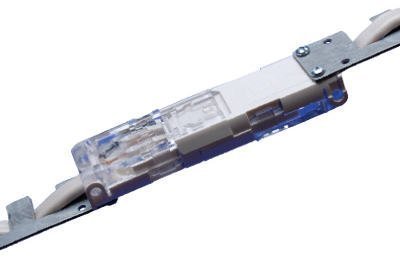
Yes that is a splice that is ALLOWED OUTSIDE OF A JUNCTION BOX and is premitted to be BURIED IN A HOLLOW WALL !
They also make a tap !

Yes that is a splice that is ALLOWED OUTSIDE OF A JUNCTION BOX and is premitted to be BURIED IN A HOLLOW WALL !
They also make a tap !
Last edited:
JRC3
Well-known member
Funny because I just thought about those and was gonna post them and you just did.
I saw those one day and read the package. Looks like a nice and easy tap. You think they's have some sort of larger box to put over it all once the connection was made.
I saw those one day and read the package. Looks like a nice and easy tap. You think they's have some sort of larger box to put over it all once the connection was made.
dutchgray
Well-known member
Seen similar a few times, your not even allowed to do your own electrical here any more.
Whats worse is when you find old rubber insulated where the rubber has rotted away, fine until its disturbed, or old lead cased outer, that likes to short and melt itself back to the panel like a fuse cord, or cloth insulated.
Whats worse is when you find old rubber insulated where the rubber has rotted away, fine until its disturbed, or old lead cased outer, that likes to short and melt itself back to the panel like a fuse cord, or cloth insulated.
greenlizard
Well-known member
My current house, no pun intended, had a flying splice or two in the attic, a hidden fuse panel with screw in fuses at the base of a bathroom closet, and an amazing spider web of cloth insulated ungrounded mess all over. We had a complete rewire done with my choice of electrician as part of the purchase deal.
Scary stuff. I highly recommend doing it right.
Scary stuff. I highly recommend doing it right.
6768rogues
Banned
Most are familiar with the clear round plastic containers that 3M electrical tape comes in. At the public school where I worked new parking lot lights installed as part of a recent capital project stopped working. We opened a grade level junction box and the contractors used one of those 3M tape containers, cut holes in the side and made their junctions in it and then wrapped it with electrical tape. They were union electricians doing public work for prevailing wages, not some guys from outside Home Depot.
wyliesdiesels
Well-known member
People seem to forget the code is a minimum, not always the best way.
Code is NOT a minimum. That is a myth that wont go away.
No where in NFPA 70 does it say its a minimum.
Most are familiar with the clear round plastic containers that 3M electrical tape comes in. At the public school where I worked new parking lot lights installed as part of a recent capital project stopped working. We opened a grade level junction box and the contractors used one of those 3M tape containers, cut holes in the side and made their junctions in it and then wrapped it with electrical tape. They were union electricians doing public work for prevailing wages, not some guys from outside Home Depot.
The stupid thing about that is weatherproof/underground wire nuts wouldve been cheaper both in materials AND labor.
Last edited:
It says something to the effect it is adequate and safe for persons and property not always the best design or way to do it. I agree that it is not really a minimum and doesn't mean it isn't adequate. In fact lots has got better, they have improved insulation dramatically and voltage has risen neat 10% with the wire sizing remaining the same. Now we have more devices but lots have reduced consumption due to energy "efficiency", can now turn every light on in a standard house from a 15A circuit.
There are more compressors, lots of 5 hp now are only 23A, most of the worlds welding was done from 50A and now the 211 draws 17A down from 24 a couple years ago. Lots of services have been upgraded, fairly rare to see a 60 with fuses. So many wires have been changed to 200 with relatively the same load, this may change some with car chargers.
There are more compressors, lots of 5 hp now are only 23A, most of the worlds welding was done from 50A and now the 211 draws 17A down from 24 a couple years ago. Lots of services have been upgraded, fairly rare to see a 60 with fuses. So many wires have been changed to 200 with relatively the same load, this may change some with car chargers.
Last edited: