
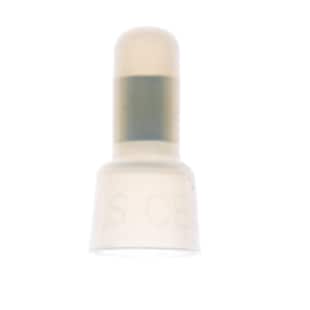
I saw some white translucent wire nuts at the store that look like they're made to be crimped vs the yellow/orange/red etc. twist nuts. I've never seen them in any junction box I've opened up. Are they considered inferior to the twist wire nut, or do electricians not use them due to convenience and cost?
Specifically, for inside an appliance it seems like a great option and I was thinking about buying some for my garage door opener where I connect the power leads from a new power cord. Both ends would be stranded copper. Pros/cons? What crimper does one use on these?
Back story why I got to thinking about this:
I'm replacing my garage door opener. Since the opener hangs 6 ft down from the ceiling, the stock cord doesn't reach. The original opener (installed before I lived here) had an old extension cord with one end cut off and then the wires connected with twist wire nuts inside the opener. I tried the same thing with the same old cord, but no power. My best guess is that the problem was the mismatched wire gauges and the huge molded wire insulation of the old cord somehow blocking a good connection in the twist wire nut. The wire nuts are undoubtedly designed for solid copper wire and these are stranded. I'm going to buy a replacement power cord that they sell for tools so I'll have (near) equal wire sizes at the connections.
Home depot cord
Specifically, for inside an appliance it seems like a great option and I was thinking about buying some for my garage door opener where I connect the power leads from a new power cord. Both ends would be stranded copper. Pros/cons? What crimper does one use on these?
Back story why I got to thinking about this:
I'm replacing my garage door opener. Since the opener hangs 6 ft down from the ceiling, the stock cord doesn't reach. The original opener (installed before I lived here) had an old extension cord with one end cut off and then the wires connected with twist wire nuts inside the opener. I tried the same thing with the same old cord, but no power. My best guess is that the problem was the mismatched wire gauges and the huge molded wire insulation of the old cord somehow blocking a good connection in the twist wire nut. The wire nuts are undoubtedly designed for solid copper wire and these are stranded. I'm going to buy a replacement power cord that they sell for tools so I'll have (near) equal wire sizes at the connections.
Home depot cord