To avoid these ads, REGISTER NOW!

CSST vs poly for gas line through slab inside PVC conduit

elcom

Well-known member
Joined
Apr 15, 2012
Messages
195
Location
Houston, TX
My question relates to the best material to replace a rusted (?black) pipe that supplies gas to an island cooktop in the kitchen.

I can’t confidently identify the original material because it is so rusted, but suspect that it is standard black pipe.

This is a dedicated line to an island cooktop and developed a leak out the small (~2 ft) section that is external to the house wall and has a valve. I am told that this is standard in my area.

The pipe is rusted outside and inside the slab where it runs in a PVC conduit 20 feet from the outside wall to the island.

I have two bids to replace so far - third bid pending.

First bid is just over $5000 using poly (plastic) pipe.

Second bid is $2700 using CSST (corrugated stainless steel tubing).

Both plumbers say that using the other kind of pipe would be wrong.

Question: which is correct?

Thanks!
 
To avoid these ads, REGISTER NOW!

Firebrick43

Well-known member
Joined
May 12, 2015
Messages
14,161
Location
West central Indiana
You can not use poly gas pipe inside a house period.

NFPA 54 which is what states adopt as their code states in table A.5.6 in the PE pipe row

“Pipe and tubing shall be installed outdoors underground only”

If using CSST I would suggest the newer sleeves product such as flashsheild. It has a black cover instead of yellow and is much more resistant to being holed by lightning due to its woven grounding sleeve in the cover. Also ensure it’s properly bonded with #6 conductor.
 

Zeke

Well-known member
Joined
Aug 13, 2009
Messages
17,176
Location
Long Beach CA, the sewer by the sea.
There's a thread on this already. All the info is there.
 
OP
E

elcom

Well-known member
Joined
Apr 15, 2012
Messages
195
Location
Houston, TX
There's a thread on this already. All the info is there.
Apologies - you must have meant another thread, the link is to this thread. I saw threads re: buried gas pipe and house layout, perhaps I missed the relevant information in those threads?
 

HoosierBuddy

Well-known member
Joined
May 9, 2006
Messages
2,931
Location
Southern Indiana
PE isn't allowed for this application. Typically PE is used in buried service for NG and can't be used abov eground.

If the entire length of PE was inside a rigid STEEL conduit, I'd be less certain of my answer....but PVC can't be used for NG period, so I don't see how having a conduit made out of it would change the fact you can't use PE aboveground.

So I think your CSST guy is right here. I'm not a fan of CSST, but your application is one of the few where I'd be in favor of using it, as using threaded pipe would likely be impossible...and the CSST will not rust like the original pipe did. Plus as you are using a professional to do this, he will be aware of the bonding requirements, and should install it properly.

You might just casually ask him "Hey, does the quote include the required electrical bonding back to my building ground" and if he acts surprised or perplexed....consider that a "red flag".
 

Zeke

Well-known member
Joined
Aug 13, 2009
Messages
17,176
Location
Long Beach CA, the sewer by the sea.
Apologies - you must have meant another thread, the link is to this thread. I saw threads re: buried gas pipe and house layout, perhaps I missed the relevant information in those threads?
Yeah, I'm sorry, I guess I can't find the search words to find the thread. It had all the same issues, PVD to an island.
 
To avoid these ads, REGISTER NOW!
OP
E

elcom

Well-known member
Joined
Apr 15, 2012
Messages
195
Location
Houston, TX
This is very helpful. Thank you all.
I wonder why the seemingly reputable plumber suggested using plastic pipe for this purpose - perhaps not PE, but some other plastic (non-metal) is allowed?

Also, one of plumbers quoted $242 x 2 for gas sediment traps that seem very easy to build out of pipe using <$20 in parts; ironically, the one who suggested using CSST and whose bid is ~1/2 of the plastic pipe person.

Really hate having to get professional help - prefer to do it myself with help from this board!
 

Zeke

Well-known member
Joined
Aug 13, 2009
Messages
17,176
Location
Long Beach CA, the sewer by the sea.
From what I gathered reading the other thread the plumber that said CSST over 10' is correct. If you have straight through access from the outside to the riser vent pipe you can install the elbow and shove it it and run the vertical pipe down to the el. It should have a valve at that end before your CSST to your cooktop. You can pressure test it with a bicycle pump. Only needs to hold 15 lbs for 15 minutes. Don't blow your pipe seal out with a higher pressure. Don't test with a valve in place. The test is just for your confidence. After you assemble the rest of the fittings use soapy water to test again when it's live. Do rinse the test liquid or buy the prepackaged stuff for testing. I've read that soap can be corrosive even though I have been using that for years on gas connections and my welding equipment.
 

GrayFlattop

Well-known member
Joined
Jan 18, 2018
Messages
1,051
Location
Chicago
Why not just replace it with new black iron pipe & black fittings outside. Outside, just paint it for corrosion protection - that should buy you 10-15 years before re-painting. Black fittings & pipe are inexpensive. Inside / under slab, you're kind of stuck with CSST since it will have to be fished through the existing PVC in the slab - ASSUMING that the PVC sleeve is continuous. If it is not, then you have a real project on your hands.
 
OP
E

elcom

Well-known member
Joined
Apr 15, 2012
Messages
195
Location
Houston, TX
Update...

It turned out that there was a 45 degree angle inside the house near the cooktop.
Therefore, at least some cutting would be required to remove the entire pipe.
However, looking at the pipe carefully after removing rust revealed that the pipe inside the house is actually just fine with minimal if any rust.

There was a focal area of rust close to the wall with a visible hole, but outside of the wall.
All that was needed was to remove the rusted segment, thread the remaining pipe and install a 3" replacement segment.

Finally, to prevent future rust.

There were other areas of significant rust on the outside portion of the pipe, but no more leaks.
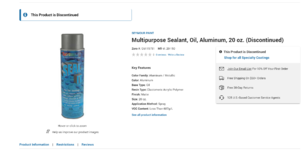
Short term, after removing existing rust the pipe was covered with "Seal It" (see below).
This product seemed to work well on other outside pipes, and stood up to weather/sun well.
I am considering removing this and covering with a product to arrest/convert existing rust.
Does anyone have any suggestions re: best coating to prevent further rust?


1696884360733.png
 

Walkers

Well-known member
Joined
May 17, 2021
Messages
3,912
Location
Cave Creek Az
Update...

It turned out that there was a 45 degree angle inside the house near the cooktop.
Therefore, at least some cutting would be required to remove the entire pipe.
However, looking at the pipe carefully after removing rust revealed that the pipe inside the house is actually just fine with minimal if any rust.

There was a focal area of rust close to the wall with a visible hole, but outside of the wall.
All that was needed was to remove the rusted segment, thread the remaining pipe and install a 3" replacement segment.

Finally, to prevent future rust.

There were other areas of significant rust on the outside portion of the pipe, but no more leaks.
Short term, after removing existing rust the pipe was covered with "Seal It" (see below).
This product seemed to work well on other outside pipes, and stood up to weather/sun well.
I am considering removing this and covering with a product to arrest/convert existing rust.
Does anyone have any suggestions re: best coating to prevent further rust?
Glad you were able to fix it. Any oil based paint will do a decent job protecting it. I would have used galvanized and then not worried about it. Just about any coating to keep it from rusting will work.
 
To avoid these ads, REGISTER NOW!
Top Bottom