

designer485
Well-known member
When I bought my Atlas 63 drill press, I started looking for a Multi-Speed adapter pulley only to realize they were relatively hard to come by and expensive when they did show up. Now that I am done with the restoration, I decided to build my own multi speed pulley assembly. I went through a few iterations in SolidWorks, but ultimately came up with the below design using off the shelf components from McMaster / eBay.
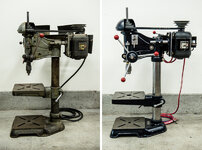
My drill press (Before and After restoration):
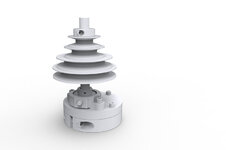
Rendering of the assembly:
Parts needed:
2.75" Shaft Collar (4" OD)
4" x 0.5" 6061 Aluminum Disk
NOS Baldor / Dodge 2 Bolt Flange Bearing (USA Made)
NOS Congress 5-4-3-2 V-Belt Pulley (USA Made) for .625" Shaft
.625" x 6" D Profile Shaft
.75"OD / .625" ID x 1" Bronze Bushing (realized I needed this after the fact)
Gates 29in and 25in V-Belts (Going to replace the 25" with a 27" or 28")
1/4-20 x 3/4" Socket Head Cap Screws
1/4-20 x 1.25" Socket Head Cap Screws
1/4" Washers
#7 Drill Bit
1/4-20 Tap
.75" Drill Bit

The flange bearing / bushing are mounted .625" off center to allow for 1.25" of swing when rotated. This was plenty to tension the front belt.
My biggest mistake was assuming the flange bearing I bought was fixed and not a pillow block. This allowed the shaft to move too much...the bronze pushing through the aluminum disk took care of that. Oversight on my part, but I worked around it. Lesson learned. I actually found an old MTB headset spacer that fits underneath the outer bearing race perfectly that stops the bearing from floating. This combined with the bushing make for a very stable and smooth rotating shaft.
If I were to make another, I would use a completely fixed bearing with no float or mount a shaft into the disk and have the pulley ride on bronze bushings. I wanted the shaft running on a bearing, but I am not sure it is completely necessary.
To drill all of my holes, I made / printed full scale CAD templates with all center punch locations. This made marking all of the holes very simple and insured everything lined up properly.
Low speed should now be: 276rpm
Flange Bearing and Pulley:


Shaft Collar:

D Profile Shaft:

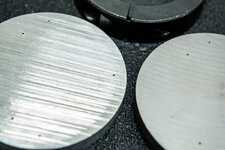
Aluminum Disk (I also bought a steel disk, but ultimately used the aluminum for ease of drilling / tapping):

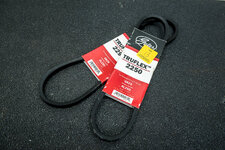
Belts:
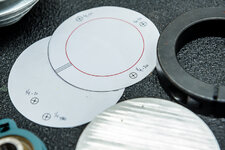
Hole locations marked / drilled using CAD templates:


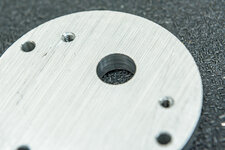
Test fit of the flange bearing on the mounting disk:

Drilled / tapped the holes to mount the disk to the shaft collar. I used three holes opposite the clamp to allow the clamp bolt to function.

At this point I put everything together only to realize that my pillow block bearing was not going to work. The shaft moved all over the place.

Time to drill the .75" hole to add the bronze bushing into the aluminum disk. It was nice being able to use my newly refinished drill press to make parts for itself:


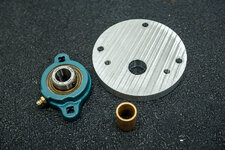
Time to assemble all of the parts:
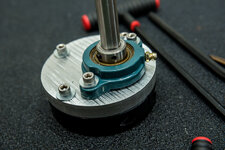


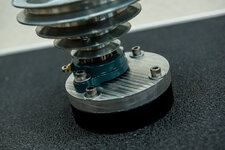

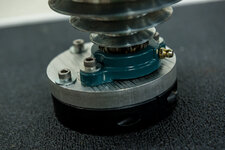
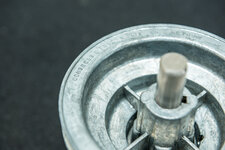
Installed and ready to use:


I am very happy with how it turned out, especially for less than half the price of the OEM adapters found on eBay, etc. The column shaft collar could fit a bit looser to allow for easier belt tension adjustment, but otherwise it works exactly as intended.
My drill press (Before and After restoration):
Rendering of the assembly:
Parts needed:
2.75" Shaft Collar (4" OD)
4" x 0.5" 6061 Aluminum Disk
NOS Baldor / Dodge 2 Bolt Flange Bearing (USA Made)
NOS Congress 5-4-3-2 V-Belt Pulley (USA Made) for .625" Shaft
.625" x 6" D Profile Shaft
.75"OD / .625" ID x 1" Bronze Bushing (realized I needed this after the fact)
Gates 29in and 25in V-Belts (Going to replace the 25" with a 27" or 28")
1/4-20 x 3/4" Socket Head Cap Screws
1/4-20 x 1.25" Socket Head Cap Screws
1/4" Washers
#7 Drill Bit
1/4-20 Tap
.75" Drill Bit
The flange bearing / bushing are mounted .625" off center to allow for 1.25" of swing when rotated. This was plenty to tension the front belt.
My biggest mistake was assuming the flange bearing I bought was fixed and not a pillow block. This allowed the shaft to move too much...the bronze pushing through the aluminum disk took care of that. Oversight on my part, but I worked around it. Lesson learned. I actually found an old MTB headset spacer that fits underneath the outer bearing race perfectly that stops the bearing from floating. This combined with the bushing make for a very stable and smooth rotating shaft.
If I were to make another, I would use a completely fixed bearing with no float or mount a shaft into the disk and have the pulley ride on bronze bushings. I wanted the shaft running on a bearing, but I am not sure it is completely necessary.
To drill all of my holes, I made / printed full scale CAD templates with all center punch locations. This made marking all of the holes very simple and insured everything lined up properly.
Low speed should now be: 276rpm
Flange Bearing and Pulley:
Shaft Collar:
D Profile Shaft:
Aluminum Disk (I also bought a steel disk, but ultimately used the aluminum for ease of drilling / tapping):
Belts:
Hole locations marked / drilled using CAD templates:
Test fit of the flange bearing on the mounting disk:
Drilled / tapped the holes to mount the disk to the shaft collar. I used three holes opposite the clamp to allow the clamp bolt to function.
At this point I put everything together only to realize that my pillow block bearing was not going to work. The shaft moved all over the place.
Time to drill the .75" hole to add the bronze bushing into the aluminum disk. It was nice being able to use my newly refinished drill press to make parts for itself:
Time to assemble all of the parts:
Installed and ready to use:
I am very happy with how it turned out, especially for less than half the price of the OEM adapters found on eBay, etc. The column shaft collar could fit a bit looser to allow for easier belt tension adjustment, but otherwise it works exactly as intended.