To avoid these ads, REGISTER NOW!

Cutler hammer breaker experts?

andyvh1959

Well-known member
Joined
Feb 15, 2020
Messages
2,598
Location
Green Bay WI
Especially for 70's vintage Cutler Hammer Safety Breaker Load Centers?

I have a CH24MB200 Load Center, and I'm shopping for some 100 amp breakers to power the sub panel in my detached garage. These are the old Type CH breakers with the metal claw, and the slot on the opposite end from the cable lugs.

And no, the new Eaton CH type breaker do NOT snap into place on this panel, I've tried that already and no amount of pushing will get it to snap into place. I have an extra 30 amp duplex breaker that easily snaps in, and the the current Eaton CH type do not snap in.

Anybody know what other Cutler Hammer breakers might fit? Perhaps the CH3 type?
 
To avoid these ads, REGISTER NOW!

Chuckster in NJ

Well-known member
Joined
Jan 26, 2010
Messages
2,301
Location
Hunterdon County NJ
Short answer: Only install the APPROVED/LISTED breaker in in your panel...... This goes for any brand of panel.
Cutler Hammer panels are very well made and I have installed hundreds of them in all types of uses BUT your 1970’s breakers should be upgraded due to the age....... The only breakers that will fit these panels are the ones "labeled for use" with that panel (as you guessed) and you should never modify a breaker to fit.
I suggest doing a full panel change with all new breakers. Square D is a good brand and is widely available at big box stores........ Cutler Hammer still manufactures a great panel but may they may not be as available as Square D in some areas.
 
OP
A

andyvh1959

Well-known member
Joined
Feb 15, 2020
Messages
2,598
Location
Green Bay WI
Thanks for the reply, but a full panel replacement is not in the works or budget right now. If I can replace the breakers themselves while maintaining the panel itself I can see doing that. Do older, but decent quality, breakers age over time such that they trip below their rated amperage? But far worse, that the older breakers DON'T trip within range of their rated amperage.

Is there any concern to keep the old panel in service? I've not had any issues with the panels in the house since I bought it in 2002. I say panels, because the house has two panels. The main 200 amp panel is on the south wall of the attached garage. The tri-level house was built in 1973, and a 100amp sub-panel is in the basement (also Cutler Hammer).

One thing I will say, whoever wired the two panels back in the early 70's did some of the sloppiest looking work. I'm sure everyone has long lengths routed into the panels when first installing the wiring, and then route and trim the wires as each is breaker or device is wired in. Well the person that did these panels just used whatever length the wires were in the panels and let the wires bend, loop, scatter all over the damn place. Looks like ****. When I wired the new Square D sub panel in my detached garage I took the time and effort to make it look clean and orderly.
 
Last edited:

Chuckster in NJ

Well-known member
Joined
Jan 26, 2010
Messages
2,301
Location
Hunterdon County NJ
Maybe you can locate a few “New Old Stock" (aka: NOS) breakers on Flea Bay or from a "Obsolete Breaker Dealer" that will fit your CH panel. When I sold my Electrical Contracting business I had many NOS breakers (20+ years old) in stock that I would feel comfortable installing in my house....... Keep looking and you will find the proper breakers.
 
OP
A

andyvh1959

Well-known member
Joined
Feb 15, 2020
Messages
2,598
Location
Green Bay WI
That's the plan for now. As long as the older CH breakers are not a functional or safety issue than I'll plan to continue with them for now. When the electrical inspector comes in to view my sub panel connections to my detached garage it'll be interesting to get his comments on the appearance of the original work done in the main panel.


Just a thought; the house was built in 1973, with 200 amp service, wired in with aluminum SE cable. Should I hire an electrician to come in and re-torque all the aluminum cable lug connections?
 

Chuckster in NJ

Well-known member
Joined
Jan 26, 2010
Messages
2,301
Location
Hunterdon County NJ
Just a thought; the house was built in 1973, with 200 amp service, wired in with aluminum SE cable. Should I hire an electrician to come in and re-torque all the aluminum cable lug connections?

YES! Have the connections re-torqued and a little bit of anti oxidation compound applied to the wire after a good cleaning....... Be proactive on checking aluminum connections.

I have properly torqued aluminum wires at the time of installation only to go back a day later and get another couple of turns on them. Aluminum wires have no "memory" to contraction and expansion and this is why aluminum wires are problematic........ When aluminum wires become "loose" they will create arcing under load (like a small welder) and create heat that "may" cause a fire.

Millions of homes have aluminum FEEDERS and utility companies use aluminum wires without any problems BUT stay alert with any dimming of lights in your house that will indicate a aluminum connection problem.
 

NUTTSGT

Super Moderator
Staff member
Joined
Sep 14, 2009
Messages
51,000
Location
Northern Central Ohio
Don't look at a big box store for those breakers. Try searching for a local electrical supply house or mom/pop style hardware store.

The big box store clearance old stock like that while the others hold on to that stuff in their inventory.
 

rlitman

Well-known member
Joined
Oct 18, 2010
Messages
24,621
Location
Long Island
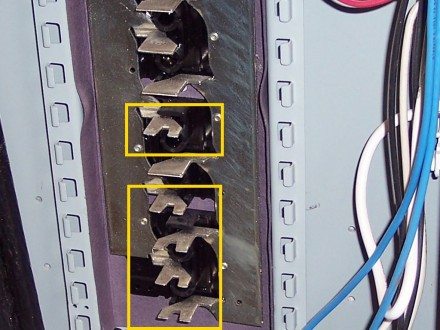
...And no, the new Eaton CH type breaker do NOT snap into place on this panel, I've tried that already and no amount of pushing will get it to snap into place...

Does the bus on your panel look like the upper or lower part of this picture?

Bus-Stabs-440x330.jpg
 

TRWham

Well-known member
Joined
Aug 11, 2017
Messages
1,961
Location
East Cobb County, Georgia
Current production CH breakers fit CH panels from the 1970s. I have one circa 1972 and a newer sub. The breakers are interchangeable in my experience and per Eaton tech support.
 

Chuckster in NJ

Well-known member
Joined
Jan 26, 2010
Messages
2,301
Location
Hunterdon County NJ
Please link to any information of this happening. (Newspapers or otherwise)
Have you personally witnessed any of theses fires?

There is a "reason" aluminum wiring is banned for use on branch circuits and "IF" you are one of the "lucky" owners of a early 70’s house with aluminum wiring you will pay a premium for homeowners insurance.

Have I personally witnessed fires from aluminum wiring? YES..... Because I am in the electrical industry (NJ contractor and NJ state inspector) and although it is not a "common problem" it does happen compared to using copper wiring.

Needless to say...... No Aluminum in my house and I NEVER installed it in any dwelling. :beer:
 

jeepxj

Well-known member
Joined
Mar 2, 2008
Messages
17,874
Please link to any information of this happening. (Newspapers or otherwise)
Have you personally witnessed any of theses fires?

Yes actually. source: ex-firefighter.

you're confusing EVER with all the time. no it does not occur all the time. I'd argue its the same as copper for failure rates. but connections do fail. given a million connections with a 99.999% no fail rate you're still gona have a handful of fires every year.


https://www.utilityproducts.com/safety/article/16002491/preventing-electric-meter-fires

Mann: To prevent hot socket issues, one first has to understand what causes these incidents. Several features or sources can cause hot sockets, but among the most prevalent are:

Mechanical breakdown of components;
Excessive moisture;
Environmental contaminants;
Frequent meter change outs (resulting in loss of jaw tension);
Excessive electrical load (overload or short circuit);
Loose or melted conductors;
Vandalism;
Ground settling; and
Storm damage.


Lets back down the everything works all the time no fail mentality a bit.
 
OP
A

andyvh1959

Well-known member
Joined
Feb 15, 2020
Messages
2,598
Location
Green Bay WI
After some research, and studying a duplex 30 amp CH breaker that was unused in the load center, and after calling Eaton tech support, I think I'm ok to go ahead. The 30 amp breaker I took out had the slot on the side of the breaker that faces the breaker on the other lug of the panel. I assumed the slot was a functional need, as were the metal feet to clip onto the frame, so trying to find a duplex 100 amp CH breaker with the slot is damn near impossible.

The tech person at Eaton asked if my load center had the central rejection bar (that the slotted breaker body would fit into), and my load center does not. Then I noticed another 30 amp duplex breaker in the load center was newer than the others, and it had no slot, and it had the plastic feet. So, I found a type CH3 duplex 100 amp CH breaker on ebay, new in a box, and ordered it. Should be good to go.

Then I will eventually have the connections checked, cleaned and torqued for the aluminum cables in the main load center.

Question: feeding my sub panel in the detached garage, I'm using #2 AWG THHN copper cable. In the CH load center there is no lug or hole large enough to accept the #2 wire. But there is an unused threaded hole between the neutral bar and ground lug. So I plan to put a crimped eye onto the #2 neutral cable and screw it onto that neutral/ground bar in the load center. Comments?
 
OP
A

andyvh1959

Well-known member
Joined
Feb 15, 2020
Messages
2,598
Location
Green Bay WI
Ahh,, hadn't thought of that. Crimp it on the cable end and the tip fits into the screw lugs on the neutral bar. Thanks. I'll have to get those at a local electrical supplier as I doubt Menards or Home Depot stocks them.

Also, for cleaning nearly 50 year old aluminum cable connections; do they have to be removed from the clamp connection and cleaned? Of can some form of corrosion spray/lube be applied and then have the connection re-torqured? Does the aluminum get brittle over the decades?
 
To avoid these ads, REGISTER NOW!

grounded-b

Well-known member
Joined
Oct 23, 2012
Messages
285
Location
Milwaukee, WI
YES! Have the connections re-torqued and a little bit of anti oxidation compound applied to the wire after a good cleaning....... Be proactive on checking aluminum connections.

I have properly torqued aluminum wires at the time of installation only to go back a day later and get another couple of turns on them. Aluminum wires have no "memory" to contraction and expansion and this is why aluminum wires are problematic........ When aluminum wires become "loose" they will create arcing under load (like a small welder) and create heat that "may" cause a fire.

Millions of homes have aluminum FEEDERS and utility companies use aluminum wires without any problems BUT stay alert with any dimming of lights in your house that will indicate a aluminum connection problem.

NO !

Do not go back and re-torque aluminum connections. Like Alfred Neumann said - " aluminum "flows"." You could keep tightening the connections every week, until you cut completely through the wire.

Torque them down to the proper spec once. Be sure to use anti-oxidation paste. Don't torque them again.

Modern ( post 1970 ) aluminum wire is a totally different alloy then the old stuff. It is perfectly safe for feeders.

Steve
JW electrician
 
OP
A

andyvh1959

Well-known member
Joined
Feb 15, 2020
Messages
2,598
Location
Green Bay WI
^ TRUE!!! :beer:
The first number on any breaker indicates the number of poles.

My mistake, yes it is a 2-pole breaker. However, if it was a three pole it would fit in the space available in the Load Center. As it is, I am installing the 2-pole 100 amp breaker to power the sub-panel in my new detached garage. I plan to use the remaining space for a single 50 amp breaker to eventually power a 14-50 outlet I'll install for electric vehicle charging station.
 

alfredeneuman

Well-known member
Joined
Mar 3, 2011
Messages
4,581
Location
Fullerton, CA
From the Aluminum Association of America:
Do aluminum connections need to be periodically tightened to maintain a good electrical connection?

No. Connections on either aluminum or copper should not be retightened after installation following manufacturers’ installation instructions. Connector test performance requirements are based upon no retightening. NFPA 70B, Recommended Practice for Electrical Equipment Maintenance, does not call for retightening aluminum conductors. Both over-tightening and under-tightening can cause failure of aluminum or copper connections. Unwarranted re-tightening of screw-type connectors can lead to failure of the connection with either aluminum or copper conductor
 
OP
A

andyvh1959

Well-known member
Joined
Feb 15, 2020
Messages
2,598
Location
Green Bay WI
Just to be sure: a 14-50 needs 2 spaces for a 2 pole circuit breaker plus a neutral and EGC.

Oh, yes, correct. There is another single pole breaker in the panel that is now unused. I'll have to move a few breakers around to get two poles next to each other so I can wire in the 14-50 plug in. Thanks.
 

wyliesdiesels

Well-known member
Joined
Aug 14, 2012
Messages
20,030
Location
Modesto, CA
anyone that retorques a connection does not know what theyre doing and is creating a problem.

torque them once to spec and they will be fine.
 

Norcal

Well-known member
Joined
Mar 16, 2008
Messages
13,763
anyone that retorques a connection does not know what theyre doing and is creating a problem.

torque them once to spec and they will be fine.

Anyone that is bound and determined to re-torque the conductors must start over & re-teminate the connections, then torque it to specs & leave it alone.


Edit: By starting over I mean cut off the existing stripped conductor & strip the insulation to expose new material, Noalox or any other brand of oxide inhibitor is not required unless manufacturers specs require it, but I do use it.
 
Last edited:
OP
A

andyvh1959

Well-known member
Joined
Feb 15, 2020
Messages
2,598
Location
Green Bay WI
Thanks for the input. No re-torque in my future with the Load Center in my house. Interesting viewpoints. It'll be interesting to see if the electrical inspector says anything about my 70's vintage Load Center when he does the inspection on my service cables to the sub panel in the new garage. I've never had an issue with the electrical in my house since i moved in back in 2002. But until this week I never opened the Load Center. Again, no issues, but boy does it look like a lot of sloppy wire routing done way back in the 70s. But what matters more is how well the connections were made.

I agree too, that if re-torque was the plan, the only way to do it right is to re-do the connection as if it were 1st done.
 

DeeKay

Well-known member
Joined
Nov 25, 2020
Messages
448
Location
Colorado
anyone that retorques a connection does not know what theyre doing and is creating a problem.

torque them once to spec and they will be fine.

I've heard this argued both ways, with valid points on both sides.

I'm still going to re-check connections annually... too many variables to assume that it's good after being torqued once; how often is that torque wrench calibrated, did the they even use a torque wrench, did they get antiox goo on the threads when/if they torqued, did they read the torque table correctly....etc. and When I say they I mean me or whoever else.

ANSI/NETA recommends checking tightness and re-torqueing connections and I believe IEEE does as well. At the end of the day I'm going to do what my employer wants which is to follow NETA and either do a thermographic study, Millivolt drop test or check torque. Since thermographics and Ductors are expensive AF I have to resort to checking tightness at 90% of whatever the original torque spec was. NFPA says if you get movement at 90% you should re-terminate and re-torque at 100% of recommended torque.
A lot of times that's not feasible unless you want to pull a new run, so we just re-torque and keep an eye on that connection.
I've also never seen any of these connections that are getting checked/re-torqued fail and some of these gears are 30+ years old. I don't see how it would be any different in residential.
 

alfredeneuman

Well-known member
Joined
Mar 3, 2011
Messages
4,581
Location
Fullerton, CA
Since thermographics and Ductors are expensive AF I have to resort to checking tightness at 90% of whatever the original torque spec was.

Check it with an infrared thermometer at the connection and compare it the temp of the bus.
A good one will cost <$100.
EDIT: Under load
 
Last edited:

rlitman

Well-known member
Joined
Oct 18, 2010
Messages
24,621
Location
Long Island
Check it with an infrared thermometer at the connection and compare it the temp of the bus.
A good one will cost <$100.
EDIT: Under load

Rent a thermal camera. Most tool rental places have one, and you can see a lot more with an imager than an infrared thermometer.

Just be aware that your body heat will reflect off aluminum surfaces.
 

reader2580

Well-known member
Joined
Dec 31, 2014
Messages
14,550
Location
Minneapolis, MN
I had to tighten the aluminum service wires in my panel as they were heating up and bubbling the insulation. I have since replaced the meter base and the panel. I used copper as the extra cost for copper was a tiny part of the overall cost.
 

jayrush13

Well-known member
Joined
Dec 30, 2006
Messages
340
Location
Lebanon Oregon
If you ever need anymore breakers for your panel get ahold of these guys.

https://oregonbreakers.com/

They test and recertify electrical switch gear and components. I have used them for years and have a good friend that works there. They have tons of breakers some NOS others used and tested.
 

wyliesdiesels

Well-known member
Joined
Aug 14, 2012
Messages
20,030
Location
Modesto, CA
I had to tighten the aluminum service wires in my panel as they were heating up and bubbling the insulation. I have since replaced the meter base and the panel. I used copper as the extra cost for copper was a tiny part of the overall cost.

I hope you cut off the ends and used fresh wire
 

Terry D

Well-known member
Joined
Mar 25, 2015
Messages
2,202
Location
St. Louis, MO.
Especially for 70's vintage Cutler Hammer Safety Breaker Load Centers?

I have a CH24MB200 Load Center, and I'm shopping for some 100 amp breakers to power the sub panel in my detached garage. These are the old Type CH breakers with the metal claw, and the slot on the opposite end from the cable lugs.

And no, the new Eaton CH type breaker do NOT snap into place on this panel, I've tried that already and no amount of pushing will get it to snap into place. I have an extra 30 amp duplex breaker that easily snaps in, and the the current Eaton CH type do not snap in.

Anybody know what other Cutler Hammer breakers might fit? Perhaps the CH3 type?

try googling CH full notch breakers. You may have to get a used one off Ebay or a online place that sells used breakers

https://www.widespreadsales.com/Products/Circuit-Breakers-Cutler-Hammer/CH2100-FULL-NOTCH
 
Last edited:

Bert_

Well-known member
Joined
Dec 24, 2016
Messages
9,749
Location
NW Iowa
I've tightened aluminum connections, copper too, but only if they've been hot. Sure would be better to re terminate but sometimes you do what you gotta do. It's better than leaving it. Usually the eventual plan is replacement.
 
To avoid these ads, REGISTER NOW!
Top Bottom