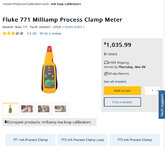
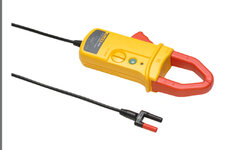
To avoid these ads, REGISTER NOW!

DC clamp meter?

tearapin

Well-known member
Joined
Jun 5, 2016
Messages
223
When working on cars and motorcycles I find myself constantly needing to search for or verify a hot wire. I am thinking a meter which clamps to the wire to measure DC would be a good idea. However, they are hard to find. Anyone know of one?

Alternatively, do you have a better way to look for voltage other than snipping a wire or piercing it with a pin and then taping?
 
To avoid these ads, REGISTER NOW!

rlitman

Well-known member
Joined
Oct 18, 2010
Messages
24,610
Location
Long Island
Clamp meters measure current, not voltage. There are wire piercing alligator clips and other sorts of piercing leads that hold themselves in place, if that's what you're looking for.
 

Beerhippie

Well-known member
Joined
Oct 13, 2023
Messages
9,811
Location
Far NE Oregon

Wrench97

Well-known member
Joined
Jun 23, 2018
Messages
12,107
Location
Southeastern Pa
I have a Fluke 326 pricy if you don't use it all the time.
A clamp meter will only tell you if there is current flow not if there is voltage available.
Take for example a tail light circuit, if the bulb is bad there will still be 12+ and 12- at the socket but no current reading since the circuit is not flowing any current(aka amperage).
So what exactly are you looking for current on working circuits or voltage available on non working circuits?
 

Beerhippie

Well-known member
Joined
Oct 13, 2023
Messages
9,811
Location
Far NE Oregon
I have a Fluke 326 pricy if you don't use it all the time.
A clamp meter will only tell you if there is current flow not if there is voltage available.
Take for example a tail light circuit, if the bulb is bad there will still be 12+ and 12- at the socket but no current reading since the circuit is not flowing any current(aka amperage).
So what exactly are you looking for current on working circuits or voltage available on non working circuits?
Same goes for the non-contact sensor I posted. It senses magnetic fields, which means electrons need to be moving.
 

willf650

Well-known member
Joined
Mar 10, 2010
Messages
821
I’ve never seen one of these that does DC voltage and this one doesn’t appear to either.

If you read the description it picks up DC magnetic fields around solenoids and coils.
 
Last edited:

Beerhippie

Well-known member
Joined
Oct 13, 2023
Messages
9,811
Location
Far NE Oregon
I’ve never seen one of these that does DC and this one doesn’t appear to either.

If you read the description it picks up DC magnetic fields around solenoids.
Guess I didn't read carefully enough. Seems one could make a Hall detector or SQUID that would work for an active DC current. SQUID might be problematic with the Dewar of liquid N2 to haul around.
 

zendriver

Well-known member
Joined
Dec 10, 2014
Messages
29,923
Location
Indiana
I usually just do what it takes to find both ends.

Can't bring myself to pierce a wire but if i did and really worried about moisture penetration, maybe hit it with a tiny smear of silicone caulking.
 

theoldwizard1

Well-known member
Joined
Feb 22, 2011
Messages
43,180
Location
SE MI
When working on cars and motorcycles I find myself constantly needing to search for or verify a hot wire. I am thinking a meter which clamps to the wire to measure DC would be a good idea. However, they are hard to find. Anyone know of one?
There are many to choose from. Just make sure it does DC (not all meters will). Here is what I bought UNI-T UT210E Series True RMS Digital Clamp Meter AC/DC Voltage Tester - $50 Amazon

Alternatively, do you have a better way to look for voltage other than snipping a wire or piercing it with a pin and then taping?
Piercing a wire, with the appropriate tool, is not the end of the world ! A couple wraps of tape is the best repair, but if it is in a bundle, a dab of silicon grease and re-wrapping the bundle is good enough.

There are wire piercing alligator clips and other sorts of piercing leads that hold themselves in place, if that's what you're looking for.
4pcs Wire Piercing Probe Kit - $14 Amazon
 

theoldwizard1

Well-known member
Joined
Feb 22, 2011
Messages
43,180
Location
SE MI
Seems one could make a Hall detector or SQUID that would work for an active DC current.
Non-contacting AC current measurement uses different "detection method" than non-contacting DC current measurement.

What is a SQUID (obviously not the ones in the ocean) ?
 
OP
T

tearapin

Well-known member
Joined
Jun 5, 2016
Messages
223
I see I missed the point. The clamp meters do current.
OK...LOL now to the person that posted the wire piercing clamps for a meter I say, "Hey I have those." Just did not know what they were for. :ROFLMAO:
 

Beerhippie

Well-known member
Joined
Oct 13, 2023
Messages
9,811
Location
Far NE Oregon
Non-contacting AC current measurement uses different "detection method" than non-contacting DC current measurement.

What is a SQUID (obviously not the ones in the ocean) ?
Superconducting QUantum something Detector. From reading, like a Hall sensor on steroids--like being able to read brain nerve signals from feet away.
 

Citation

Well-known member
Joined
Jan 20, 2016
Messages
3,219
Location
Indy
I will second the UniT clamp meter mentioned above! I really like mine. I'm less fond of anything that pokes holes in wires. While probably fine in most cases, a hole in the wire is a place were water can get in and cause the wire to fail from the inside.
 

jayemm

Well-known member
Joined
Dec 18, 2018
Messages
1,531
Location
up high down low
As for patching holes in wire insulation with silicone, I remember reading a long time ago that the acetic acid (causes that sharp vinegar like smell) in silicone caulking can cause corrosion. I'd guess a pin hole's worth wouldn't do much though. Just passing it along for what it's worth.
 

richfinn

Well-known member
Joined
Jan 29, 2011
Messages
4,816
Location
Leeds, Yorkshire, England
When working on cars and motorcycles I find myself constantly needing to search for or verify a hot wire. I am thinking a meter which clamps to the wire to measure DC would be a good idea. However, they are hard to find. Anyone know of one?

Alternatively, do you have a better way to look for voltage other than snipping a wire or piercing it with a pin and then taping?

A Multimeter is the right tool, you just need a good selection of automotive probes to get at the test points.

Back probes are useful for sliding inside the weather seal to touch a terminal if you need to test an intact circuit

Front probes are good and won't damage terminals for open circuit testing

Pomona piercing probes are the best I have found (seal the hole with clear nail polish)

Alligator clips are useful for batteries and making a good ground
 

bwringer

Well-known member
Joined
Jan 1, 2013
Messages
10,293
Location
Indianapolis
Yup, you need the back probes to slip down the wire seals on the backs of the connectors. They do not damage the seal or the wire.

Harbor Freight has a pretty good set for about $14:


PLEASE do not piece wires. Even with a smear of silicone, that wire will not survive the next winter, and is far more vulnerable to vibration and other stress.
 
To avoid these ads, REGISTER NOW!

TurnipTruck

Well-known member
Joined
Aug 28, 2005
Messages
1,567
Location
Southcentral Alaska
This exists, but it’s expensive and didn’t work that well for us.

IMG_1141.jpeg

And it’s limited to 20mA since it is designed for control circuits, not power circuits.
 

Beerhippie

Well-known member
Joined
Oct 13, 2023
Messages
9,811
Location
Far NE Oregon
Fluke i410 Is good of course

IMG_0044.jpeg
I have that one. I wouldn't recommend it. The loop is too large for most electrical boxes. It's very easy to forget to turn it off and the next time you go use it, the 9V batt is dead.

Again, the number of digits your meter resolves determines how low it will go. Got three digits in milivolts? Whole Amps only. For diagnosing 3-phase motor windings, I needed tenths of Amps. It was cheaper to just buy a dedicated clamp that doesn't need a meter with it than to upgrade our old Fluke meter, which is plenty accurate enough for any other use.
 

theoldwizard1

Well-known member
Joined
Feb 22, 2011
Messages
43,180
Location
SE MI
Harbor Freight has a pretty good set for about $14:


PLEASE do not piece wires. Even with a smear of silicone, that wire will not survive the next winter, and is far more vulnerable to vibration and other stress.
Piercing probes are a MUST is some cases.

Much debate about what to do AFTER you have pierced the insulation ! Some say liquid electrical tape. Others ...

Maybe Permatex Form-a-gasket #2. Very sticky and non-hardening !
 

richfinn

Well-known member
Joined
Jan 29, 2011
Messages
4,816
Location
Leeds, Yorkshire, England
Piercing probes are a MUST is some cases.

Much debate about what to do AFTER you have pierced the insulation ! Some say liquid electrical tape. Others ...

Maybe Permatex Form-a-gasket #2. Very sticky and non-hardening !

If I have to pierce a wire I mark the spot first with a fine point sharpie and then I know exactly where to seal the wire afterwards.

I like to use clear nail varnish, it's clean and drys fast.

You have to avoid anything that might contain acetic acid (vinegar smell) it will ruin copper wire!!!
 

Hakeem

Well-known member
Joined
Jan 22, 2024
Messages
1,257
Location
Chicago
Liquid electrical tape is fantastic stuff, and not just to repair holes you’ve made. Electrical tape needs to be stretched and applied tightly to last and if you don’t have good access, there’s no way you can make a durable repair. I noticed this exposed wire termination deep in the hood of a Kenworth but there was no way I could get a good, tight application of electrical tape on it without removing the entire hood. Fortunately a couple of dabs of liquid electrical tape and Bob was my uncle (did I do that right??)
IMG_0446.jpegIMG_0447.jpeg

I think piercing a wire, done judiciously and with forethought, is ok. Great care must be taken to seal the hole back up though. When current flows through a conductor, it heats up and expands. When it cools back down, it shrinks ..if there’s a hole present, it will **** anything surrounding that hole into the insulator. 2 coats of liquid electrical tape have held up well for me so far, but admittedly none of my repairs are older than a year. I think the liquid electrical tape is a bit superior to clear nail polish because it stays flexible. I’d be a little concerned about the brittle nail polish cracking. Just conjecture on my part, though.
 

Citation

Well-known member
Joined
Jan 20, 2016
Messages
3,219
Location
Indy
Liquid electrical tape is fantastic stuff, and not just to repair holes you’ve made. Electrical tape needs to be stretched and applied tightly to last and if you don’t have good access, there’s no way you can make a durable repair. I noticed this exposed wire termination deep in the hood of a Kenworth but there was no way I could get a good, tight application of electrical tape on it without removing the entire hood. Fortunately a couple of dabs of liquid electrical tape and Bob was my uncle (did I do that right??)
IMG_0446.jpegIMG_0447.jpeg

I think piercing a wire, done judiciously and with forethought, is ok. Great care must be taken to seal the hole back up though. When current flows through a conductor, it heats up and expands. When it cools back down, it shrinks ..if there’s a hole present, it will **** anything surrounding that hole into the insulator. 2 coats of liquid electrical tape have held up well for me so far, but admittedly none of my repairs are older than a year. I think the liquid electrical tape is a bit superior to clear nail polish because it stays flexible. I’d be a little concerned about the brittle nail polish cracking. Just conjecture on my part, though.
How the hell did you know I had an Uncle Bob and how did he get here from Australia?
 

rlitman

Well-known member
Joined
Oct 18, 2010
Messages
24,610
Location
Long Island
I have heard that liquid electrical tape hardens and falls off within a year or 2.
My experience is with the 3m Scotchkote. It's not so much a liquid tape, than a liquid that melts your tape, fusing the tape, liquid and wire PVC insulation into one impervious blob. But you apply a layer or two of Scotch 88 (or 33+ if you roll that way) first, and then smear the nasty smelling stuff on it, and don't use it by itself.

Also, to the people who think that RTV silicone is acetic, some is, but not all. If your RTV smells like vinegar, it shouldn't be used on metal, but most automotive RTV doesn't cure with acetic acid, so it's fine around wiring.
 

richfinn

Well-known member
Joined
Jan 29, 2011
Messages
4,816
Location
Leeds, Yorkshire, England
My experience is with the 3m Scotchkote. It's not so much a liquid tape, than a liquid that melts your tape, fusing the tape, liquid and wire PVC insulation into one impervious blob. But you apply a layer or two of Scotch 88 (or 33+ if you roll that way) first, and then smear the nasty smelling stuff on it, and don't use it by itself.

Also, to the people who think that RTV silicone is acetic, some is, but not all. If your RTV smells like vinegar, it shouldn't be used on metal, but most automotive RTV doesn't cure with acetic acid, so it's fine around wiring.

Year's ago they used to sell "o2 sensor safe" RTV/Sealants (presumably for guys using it for exhaust system repairs).
 

theoldwizard1

Well-known member
Joined
Feb 22, 2011
Messages
43,180
Location
SE MI
Year's ago they used to sell "o2 sensor safe" RTV/Sealants (presumably for guys using it for exhaust system repairs).
I was in engineering when they discovered that some RTVs would kill o2 sensor. People were using it for valve covers. It would permeate the oil and eventually get into the combustion chamber. Very strange !
 
To avoid these ads, REGISTER NOW!
Top Bottom