
mattblast
Well-known member
Lye is a great degreaser and you can make 5-7 gallons for about $3.50. It can be reused many times without losing its potency.
I first used lye to clean earlier this week when I picked up some vintage cast iron pans. They had so much built up grease that I couldn't see the maker on one of them.
For cleaning pans it is recommended to use 100% lye crystals and not Drano since Drano also contains a few other ingredients. I pick up bottles of Drano at estate sales for next to nothing (I've been planning to degrease with lye for a while but only had a need this week)
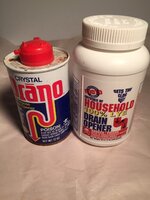
Pure lye is sold at Lowes and Ace hardware.
Do not clean anything but iron and steel as other metals will dissolve in the lye.
Get a bucket or plastic container large enough so you can submerge the parts. For the most potent degreasing fill will hot water. Add lye crystals to the water (but never add water to lye as it will overheat and splatter). The ratio to use is 4-8 gallons of water and one pound of lye. Crystals will dissolve quickly.
Do not put bare hands in solution as it is very basic ( opposite of acid) and will peel your skin. Any plastic gloves will protect you even dishwashing gloves.
To keep for having to dig around for parts you can twist a piece of a metal hanger around each part and hook to edge of container. This is important because almost immediately the solution will become murky and you won't be able to see your parts.
It's probably best to do this outdoors or with good ventilation as lye produces gaseous hydrogen. Put in a sunny spot and cover container for safety.
Here are some shots of the frying pan when I got it. I rinsed with soap and water to clean off any loose dirt (this step is not necessary) and put in vat of hot water and lye 7 gallon:1 lb ratio)
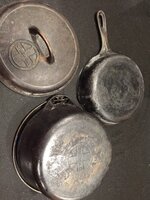
Here is how it looked 1 hour later.

And after 2 days and some light scrubbing in the sink.
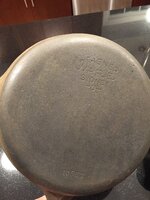
It's a Wagner! My $1 purchase is worth $25+
The grease melted away. Once I pulled the pan from the vat I put it in a clean bucket to transport to the sink (wearing gloves) then thoroughly rinsed in hot water and lightly scrubbed with a 3m scrubby. Then scrubbed with some dish soap. For light rust you can soak in vinegar which also neutralizes the base of the lye. I'll season the pan over the weekend and put it in rotation with my other cast iron.
This was my first cast iron pan restoration and it came out very well I never realized how well lye can clean up iron.
Yesterday I picked up a Wilton bullet vise (my first) and spent about an hour cleaning it up with my go-to solvents (kerosene, denatured alcohol, lighter fluid and wd40). These solvents clean well but it's time consuming to clean and I used a whole roll of paper towels and was just getting started.
Well I had an empty vat of lye and decided to give it a try. I put each part in for less than an hour then rinsed and lightly scrubbed. It came out well. I thought the vise wasn't painted but in fact the grease had coated the paint.
Before

About an hour of soaking and 5 mins of scrubbing got me this
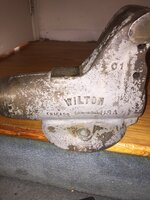
Now I'll lube the vise and reassemble. What's the recommended lube for these?
I'm going to keep my vat in a corner of the garage and use it as a poor-mans part cleaner.
I first used lye to clean earlier this week when I picked up some vintage cast iron pans. They had so much built up grease that I couldn't see the maker on one of them.
For cleaning pans it is recommended to use 100% lye crystals and not Drano since Drano also contains a few other ingredients. I pick up bottles of Drano at estate sales for next to nothing (I've been planning to degrease with lye for a while but only had a need this week)
Pure lye is sold at Lowes and Ace hardware.
Do not clean anything but iron and steel as other metals will dissolve in the lye.
Get a bucket or plastic container large enough so you can submerge the parts. For the most potent degreasing fill will hot water. Add lye crystals to the water (but never add water to lye as it will overheat and splatter). The ratio to use is 4-8 gallons of water and one pound of lye. Crystals will dissolve quickly.
Do not put bare hands in solution as it is very basic ( opposite of acid) and will peel your skin. Any plastic gloves will protect you even dishwashing gloves.
To keep for having to dig around for parts you can twist a piece of a metal hanger around each part and hook to edge of container. This is important because almost immediately the solution will become murky and you won't be able to see your parts.
It's probably best to do this outdoors or with good ventilation as lye produces gaseous hydrogen. Put in a sunny spot and cover container for safety.
Here are some shots of the frying pan when I got it. I rinsed with soap and water to clean off any loose dirt (this step is not necessary) and put in vat of hot water and lye 7 gallon:1 lb ratio)
Here is how it looked 1 hour later.
And after 2 days and some light scrubbing in the sink.
It's a Wagner! My $1 purchase is worth $25+
The grease melted away. Once I pulled the pan from the vat I put it in a clean bucket to transport to the sink (wearing gloves) then thoroughly rinsed in hot water and lightly scrubbed with a 3m scrubby. Then scrubbed with some dish soap. For light rust you can soak in vinegar which also neutralizes the base of the lye. I'll season the pan over the weekend and put it in rotation with my other cast iron.
This was my first cast iron pan restoration and it came out very well I never realized how well lye can clean up iron.
Yesterday I picked up a Wilton bullet vise (my first) and spent about an hour cleaning it up with my go-to solvents (kerosene, denatured alcohol, lighter fluid and wd40). These solvents clean well but it's time consuming to clean and I used a whole roll of paper towels and was just getting started.
Well I had an empty vat of lye and decided to give it a try. I put each part in for less than an hour then rinsed and lightly scrubbed. It came out well. I thought the vise wasn't painted but in fact the grease had coated the paint.
Before
About an hour of soaking and 5 mins of scrubbing got me this
Now I'll lube the vise and reassemble. What's the recommended lube for these?
I'm going to keep my vat in a corner of the garage and use it as a poor-mans part cleaner.

