
You are using an out of date browser. It may not display this or other websites correctly.
You should upgrade or use an alternative browser.
You should upgrade or use an alternative browser.
Delta Unisaw Fence
- Thread starter Twobyfour
- Start date
Packard V8
Well-known member
Yes, but since the Unisaw has been produced for almost 100 years, there are many sets of take-offs lying around from those who've upgraded to more expensive aftermarket fences. I found a long set to replace the standard length ones I had.
Ask around on craigslist, marketplace, OWWM, Lumberjocks, et al woodworking sites.
jack vines
Ask around on craigslist, marketplace, OWWM, Lumberjocks, et al woodworking sites.
jack vines
Firebrick43
Well-known member
There are at least three different fences installed from the factory.
Which one do you have or post a picture
Which one do you have or post a picture
eBay is the place.Does anyone know if replacement rails are available for the Delta Unisaw Fence?
What are you looking for? I have a good shorter one, Unifence, I might consider selling, 32"??
seber
Well-known member
Double locking, Unifence or Biesemier?
shoot summ
Well-known member
- Joined
- Jun 8, 2010
- Messages
- 2,952
ebay or local market place is your best bet. They show up on FBM from time to time, ebay will have a significant shipping cost.
Unless you just love the fence(it is a good fence) I see more Biesemeyer style show up on marketplace,
Unless you just love the fence(it is a good fence) I see more Biesemeyer style show up on marketplace,
Beisemeyer rails as well as Unifence rails are available retail, new.
Jet-lock rails look for a used set. I don't think anything changed on the design for 60 years.
Lots of them out there, I’ve given more sets of rails than I can remember. The mounting hardware is proprietary, special shoulder bolts and half-moon spacers; so if included, a big plus.
Jet-lock rails look for a used set. I don't think anything changed on the design for 60 years.
Lots of them out there, I’ve given more sets of rails than I can remember. The mounting hardware is proprietary, special shoulder bolts and half-moon spacers; so if included, a big plus.
acer66
Well-known member
We have a woodworking section now.
 www.garagejournal.com
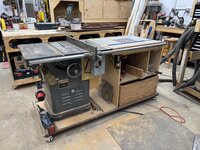
I have a Unisaw myself I but not sure what type of fence I have.
Woodworking Fabrication & Technique
Show off your woodworking skills here or learn a little something about using your tools...
www.garagejournal.com
I have a Unisaw myself I but not sure what type of fence I have.
Firebrick43
Well-known member
That is/was the Jet lock fence, introduced around 1960.We have a woodworking section now.
Woodworking Fabrication & Technique
Show off your woodworking skills here or learn a little something about using your tools...
I have a Unisaw myself I but not sure what type of fence I have.
Previous to that was the micro set fence which was very similar but had a lock, below

Then came the great and mighty unifence, the pinnacle of fences especially if you have both the factory fence extrusion and a peachtree UNI-T-Fence extrusion.
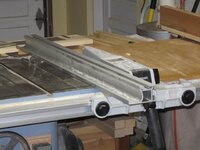
And lastly delta started cutting cost and slumming it with the Biesemeyer and its termite barf parts

ez-duzit
Well-known member
Simply not true. The Beismeyer fence is superior....
And lastly delta started cutting cost and slumming it with the Biesemeyer and its termite barf parts
shoot summ
Well-known member
- Joined
- Jun 8, 2010
- Messages
- 2,952
Well they did cut costs, the unifence is ridiculously over built and engineered. I have no issues with my Biesemeyer, and have one for the next saw in the mix.Simply not true. The Beismeyer fence is superior.
Biesmeyer superior to the Unifence? I don't know about that. I have used both, and they are both great fences. Which one is superior is probably opinion and which one you are accustomed too. IMO, it is a toss up.Simply not true. The Beismeyer fence is superior.
Personally, I like the Unifence better, but if I bought a saw with a Biesmeyer I wouldn't spend the money to replace it with a Unifence, or the other way around.
I retrofitted an old Craftsman contractor saw with a Biesmeyer before I bought my Powermatic 66 that came with a Unifence Accu-fence. Hands-down prefer the Unifence Accu-fence but the Biesmeyer worked fine.
It's funny the Powermatic was shipped with two sets of rails. I kept the second set as a spare for years but wound up sending it to the scrap yard when we moved. Still brand new in the original box. Sat on my lumber shelf for years...
ETA sorry, Powermatic uses an Accu-fence not Unifence.
It's funny the Powermatic was shipped with two sets of rails. I kept the second set as a spare for years but wound up sending it to the scrap yard when we moved. Still brand new in the original box. Sat on my lumber shelf for years...
ETA sorry, Powermatic uses an Accu-fence not Unifence.
Last edited:
acer66
Well-known member
Yeah that looks like mine and good eye that the one I have does not have the locking feature.That is/was the Jet lock fence, introduced around 1960.
Previous to that was the micro set fence which was very similar but had a lock, below
Then came the great and mighty unifence, the pinnacle of fences especially if you have both the factory fence extrusion and a peachtree UNI-T-Fence extrusion.
And lastly delta started cutting cost and slumming it with the Biesemeyer and its termite barf parts
Thank you.
seber
Well-known member
I have now had two saws with biesemeyer fences and two with Unifence. For me it isn't even close. I will never have another Biesemeyer even if I have to pay buy an entire saw to get a Unifence. Which as it happens, is exactly what I did to get my current unit.Simply not true. The Beismeyer fence is superior.
ez-duzit
Well-known member
What makes the Unifence inferior to the Beismeyer is its flexibility, which is readily apparent when you run large/long, heavy workpieces through, the increased force of which causes noticeable and undesirable deflection of the flimsier Unifence components. I have had both systems in my shop for decades. The Unifence works fine on smaller, lighter workpieces.
senlow
Well-known member
I agree. I much prefer the rigidity of a Beismeyer. Since I'm more of a metal worker, I built a Biesmeyer clone.What makes the Unifence inferior to the Beismeyer is its flexibility, which is readily apparent when you run large/long, heavy workpieces through, the increased force of which causes noticeable and undesirable deflection of the flimsier Unifence components. I have had both systems in my shop for decades. The Unifence works fine on smaller, lighter workpieces.
seber
Well-known member
The greatest advantage of the Unifence is adjustability. When properly set up, it can be set to the proper location with one hand and no messing around back and forth lock and unlock as with the Biesemeyer. That saves real time and frustration. But if your Unifence is flexing with large sheets, it is set up improperly. I just went out and pushed on the outer end, It most definitely does not flex without truly unreasonable force. If you are pushing your fence that hard, you need to question your method.
ez-duzit
Well-known member
Baloney.The greatest advantage of the Unifence is adjustability. When properly set up, it can be set to the proper location with one hand and no messing around back and forth lock and unlock as with the Biesemeyer. That saves real time and frustration. But if your Unifence is flexing with large sheets, it is set up improperly. I just went out and pushed on the outer end, It most definitely does not flex without truly unreasonable force. If you are pushing your fence that hard, you need to question your method.
alinc100
Well-known member
Push on your Unifence at its far outmost end with a 3/4" sheet of birch plywood as leverage. I will bet $20 it moves/deflects, as would a Biesmeyer to some degree as well. I'm not arguing one is better than the other.The greatest advantage of the Unifence is adjustability. When properly set up, it can be set to the proper location with one hand and no messing around back and forth lock and unlock as with the Biesemeyer. That saves real time and frustration. But if your Unifence is flexing with large sheets, it is set up improperly. I just went out and pushed on the outer end, It most definitely does not flex without truly unreasonable force. If you are pushing your fence that hard, you need to question your method.
Packard V8
Well-known member
This begs the question, why would one ever be pushing a 3/4" sheet of birch plywood sideways at the outermost end of a Unifence????Push on your Unifence at its far outmost end with a 3/4" sheet of birch plywood as leverage. I will bet $20 it moves/deflects, .. . .
In sixty years of woodworking, I've never found that operation necessary.
jack vines
ez-duzit
Well-known member
To keep it from coming away from the fence....why would one ever be pushing a 3/4" sheet of birch plywood sideways at the outermost end of a Unifence????
...
jack vines
I no longer have this issue, since buying a Festool track saw.
Packard V8
Well-known member
I used a Unisaw with Unifence for many years and don't remember plywood coming away from the properly adjusted Unifence. Just asking, why would this be a reoccurring issue?To keep it from coming away from the fence.
I no longer have this issue, since buying a Festool track saw.
jack vines
whateg01
Well-known member

ez-duzit
Well-known member
It isn't a reoccurring issue... as long as you apply enough force against the fence. And that force is sufficient to deflect the Unifence enough to provide a poor cut, depending on the quality expected of your work. If you're building garage cabinets, you can get away with it.I used a Unisaw with Unifence for many years and don't remember plywood coming away from the properly adjusted Unifence. Just asking, why would this be a reoccurring issue?
jack vines
Indexmill
Well-known member
Please do tell; where can I buy a new Unifence Rail today? Really, where?Beisemeyer rails as well as Unifence rails are available retail, new.
Firebrick43
Well-known member
You don’t have to push at it on the end of the fence? You don’t have to put that much pressure at the head of the fence either.To keep it from coming away from the fence.
I no longer have this issue, since buying a Festool track saw.
How would you even push on the fence past the blade? You would just close up the kerf of the wood your cutting, binding the blade or push against the splitter if one is installed, then none of the force is directed at the fence.
Last edited:
Firebrick43
Well-known member
So this morning I grabbed an indicator and placed it where the center of the blade would be if the fence was against the blade.
I then grabbed a 1.5" x 6 " x 6' piece of black walnut and placed it as if it was in the cut but not touching the indicator.
Then from the proper operator position as to not catch a gut full of kick back, I pushed as hard as I could with my left hand into the fence while leaving my right as to feed the board thru the blade.
The absolute max was 0.002" deflection I could manage. I couldn't feed the wood soothingly while applying that pressure or even hold those pressures with any amount of time
At normal side pressures into the fence while feeding there was no deflection.
For reference I am 6' 1" and 250 lbs. and used to lifting/moving 125lbs parts/cylinders and i work out regularly include fly presses on my REP cable machine/weight rack.
I then grabbed a 1.5" x 6 " x 6' piece of black walnut and placed it as if it was in the cut but not touching the indicator.
Then from the proper operator position as to not catch a gut full of kick back, I pushed as hard as I could with my left hand into the fence while leaving my right as to feed the board thru the blade.
The absolute max was 0.002" deflection I could manage. I couldn't feed the wood soothingly while applying that pressure or even hold those pressures with any amount of time
At normal side pressures into the fence while feeding there was no deflection.
For reference I am 6' 1" and 250 lbs. and used to lifting/moving 125lbs parts/cylinders and i work out regularly include fly presses on my REP cable machine/weight rack.
Renovo parts is producing them, new, at $128Please do tell; where can I buy a new Unifence Rail today? Really, where?
Firebrick43
Well-known member
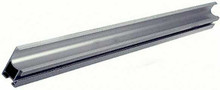
34-916 - Unifence Rail
 www.renovoparts.com
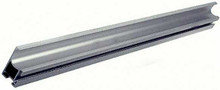
34-894 - Unifence Extrusion 43 Inch
www.renovoparts.com
Then there is the Uni-T-fence
Uni-T-Fence | Table Saws & Accessories | Peachtree Woodworking Supply
The Uni-T-Fence is a heavy duty aluminum extrusion up-grade fence for the Delta Uni-fence Table Saw System
www.ptreeusa.com
alinc100
Well-known member
Jack,I used a Unisaw with Unifence for many years and don't remember plywood coming away from the properly adjusted Unifence. Just asking, why would this be a reoccurring issue?
jack vines
All I am saying is the far end of a Unifence,a Beismeyer fence,and probably a host of others will deflect slightly with the force compounded/leverage of the mass of a sheet of plywood. If you were to rip a 4' x 8' sheet of plywood in half , the fence will almost certainly deflect slightly as the material clears the blade. I don't have a Unifence to test my thoughts. And my current saw is covered in junk.
ez-duzit
Well-known member
You designed your flawed "test" so that it would fail to show any noticeable deflection.So this morning I grabbed an indicator and placed it where the center of the blade would be if the fence was against the blade.
I then grabbed a 1.5" x 6 " x 6' piece of black walnut and placed it as if it was in the cut but not touching the indicator.
Then from the proper operator position as to not catch a gut full of kick back, I pushed as hard as I could with my left hand into the fence while leaving my right as to feed the board thru the blade.
The absolute max was 0.002" deflection I could manage. I couldn't feed the wood soothingly while applying that pressure or even hold those pressures with any amount of time
At normal side pressures into the fence while feeding there was no deflection.
For reference I am 6' 1" and 250 lbs. and used to lifting/moving 125lbs parts/cylinders and i work out regularly include fly presses on my REP cable machine/weight rack.
The pressure the fence would see, while actually ripping a full sheet of 3/4" ply (or long, heavy plank) could be so many times greater than your "test", as that pressure would be exerted on the very end of the fence (not at the center of the blade) and you would be using the length of the sheet goods as a lever.
Firebrick43
Well-known member
I dont honestly understand how your using piece of wood as a lever with a saw fence.You designed your flawed "test" so that it would fail to show any noticeable deflection.
The pressure the fence would see, while actually ripping a full sheet of 3/4" ply (or long, heavy plank) could be so many times greater than your "test", as that pressure would be exerted on the very end of the fence (not at the center of the blade) and you would be using the length of the sheet goods as a lever.
For there to be a lever there has to be a fulcrum.
If you use the infeed side of the fence as a fulcrum then you would be pivot the out feed end away from the far end of the fence and into the blade or splitter as well?
The only way you could use the cut piece as a lever and deflect the outfeed end of the fence is to use the blade/splitter as a fulcrum but that would not be good at all for obvious reasons and you would be pulling it away from the fence on the infeed side.
A lever without a fulcrum is just a stick.
I dont honestly understand how your using piece of wood as a lever with a saw fence.
For there to be a lever there has to be a fulcrum.
If you use the infeed side of the fence as a fulcrum then you would be pivot the out feed end away from the far end of the fence and into the blade or splitter as well?
The only way you could use the cut piece as a lever and deflect the outfeed end of the fence is to use the blade/splitter as a fulcrum but that would not be good at all for obvious reasons and you would be pulling it away from the fence on the infeed side.
A lever without a fulcrum is just a stick.
I have used a unisaw with a unifence that had noticable movement at the far end. I was using the fence with a stop block to do a bunch of cut offs, and when I'd slide the work piece over into the stop block, I'd see the fence wiggle. Didn't matter to me, so didn't worry about it, but it might have been an issue with long rips. It was an old saw, and in a woodworking school, so it had probably not seen the most careful use. it's pretty likely something was worn, borked, or out of adjustment.
pushing the workpiece into the fence will cause the fence to move. How it moves, and how much, depends on the construction and how it's locked in place. If there are no locks (or the locks ****, like the fence on lots of craftsman contractor saws), the fence will move over, ruining the setting. a fence that's securely locked front and back will bow away from the pressure, but a reasonably well fence is stiff enough that the bowing is close to zero. A fence locked only in the front will pivot around the lock, or the rails. a properly adjusted unifence shouldn't move much, it's a ridgid rail, the fence is rigid, and the distance the fence is pivoting around is pretty wide.
I have ripped full sheets of plywood and full sheets of MDF, all alone, all it takes is a bit of light pressure to keep the wood against the fence, maybe a couple pounds of force. Certainty low enough pressure to not cause any problematic deflection in the fence. What are you guys doing to push that hard against the fence??
And are you the same guys that keep chucking holes in the walls of your shop?
And are you the same guys that keep chucking holes in the walls of your shop?