
designer485
Well-known member
Preview - Before and After:
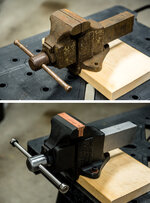
Quick back story:
Last November I was talking to my father-in-law about some of the tool restorations I have been doing and mentioned that the next project needed to be a vise as I did not have one. My plan was to find an older Craftsman, Wilton, or Reed to restore. He casually mentions that he has 2 of the exact same vise and would love to stop stubbing his toe on the extra one in his garage, it was mine. Two things, I didn't know what it was and it was in Wisconsin, I am in California.
After he returned home a few images showed up in my text messages and to my delight, it was a Desmond Stephan Simplex 41p. Perfect. A well made, USA built machinist vise that came out of a shut down machine shop.
On my last trip out to visit the family, we boxed it up and prepared for me to check it on my plane ride back home. My background in packaging design served me well here as it arrived home in perfect shape. The vise itself was in great shape, but was covered in years of dirt, grime, surface rust and flaking paint (could not see any paint until a really good bath).
The Plan:
My plan for this vise is to make it a nice usable vise that still shows some history and one that I am not afraid of using because it became a museum piece.
Inspiration came from a guy on Instagram that goes by @cavemanwelder. He does some really nice vise restoration / rework and I wanted to treat my vise to the same process. Clean up the casting marks, new jaws, new handle, reduce slop in the lead screw and finish the vise in a deep black gun blue finish.
Before Images:

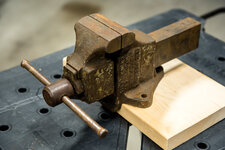


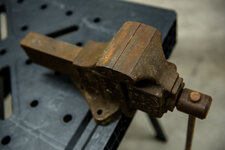


Nothing was stuck and everything came apart very easy. I was amazed.
After a wash and disassembly:

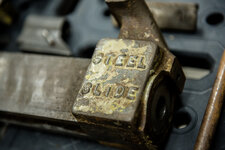


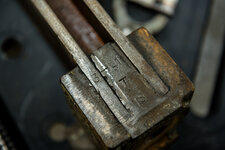
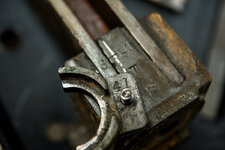
Some date stamps:
I believe this dates it as March, 1941.

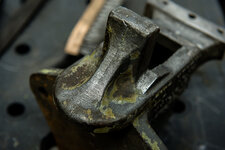
After Evaporust, the wire wheel and some file work to knock down the casting marks:




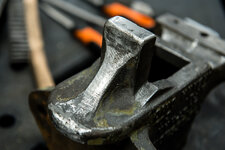
Test fitting my Custom Jaw 3D Model file.

Back from sandblast and ready for Gun Bluing:
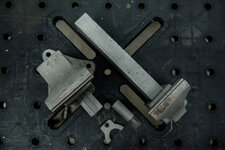
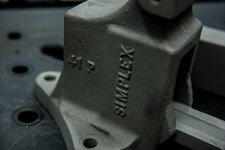


Bluing. Wipe everything down with acetone, then heat up the parts. I used Oxpho Blue and it works great and gets really black. Apply the bluing fluid, let it sit for a minute or two, then pat dry and apply a liberal amount of oil (I used 3 in 1 and it worked great). Let it soak or a few hours or overnight, then wipe clean. Finally I wiped everything down with Fluid Film:

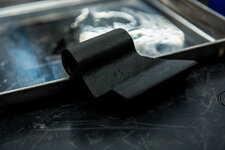

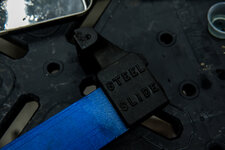
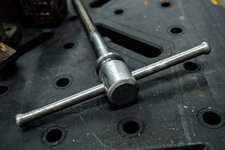
I decided that the stock handle had too many hammer marks on it and I wanted some fresh and new. My solution was a 12in piece of 9/16" diameter 17-4 stainless bar stock and two 9/16" 303 Stainless shaft collars along with a few large diameter o-rings. I am super pleased how this came out, especially as it all came together with off the shelf parts from McMaster.


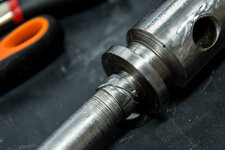
Due to the years of use and just OK manufacturing tolarances, the lead screw showed some wear near the hub that caused quite a bit of unwanted movement. My solution: A small expanding sleeve bearing to take up the slop between the lead screw and dynamic jaw. It worked better than even expected.
New Jaws!

110 Copper

6061 Aluminum Soft Jaws

Parts ready for reassembly:

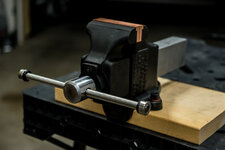

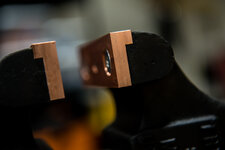

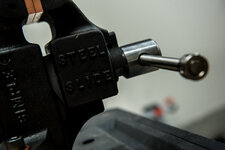
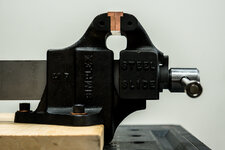


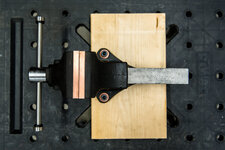


And there it is.
I have way to many hours / $ into it, but it is awesome and I love the way it turned out. Definitely a labor of love, but the results speak for themselves. Now I just need a proper bench to mount it to...
Quick back story:
Last November I was talking to my father-in-law about some of the tool restorations I have been doing and mentioned that the next project needed to be a vise as I did not have one. My plan was to find an older Craftsman, Wilton, or Reed to restore. He casually mentions that he has 2 of the exact same vise and would love to stop stubbing his toe on the extra one in his garage, it was mine. Two things, I didn't know what it was and it was in Wisconsin, I am in California.
After he returned home a few images showed up in my text messages and to my delight, it was a Desmond Stephan Simplex 41p. Perfect. A well made, USA built machinist vise that came out of a shut down machine shop.
On my last trip out to visit the family, we boxed it up and prepared for me to check it on my plane ride back home. My background in packaging design served me well here as it arrived home in perfect shape. The vise itself was in great shape, but was covered in years of dirt, grime, surface rust and flaking paint (could not see any paint until a really good bath).
The Plan:
My plan for this vise is to make it a nice usable vise that still shows some history and one that I am not afraid of using because it became a museum piece.
Inspiration came from a guy on Instagram that goes by @cavemanwelder. He does some really nice vise restoration / rework and I wanted to treat my vise to the same process. Clean up the casting marks, new jaws, new handle, reduce slop in the lead screw and finish the vise in a deep black gun blue finish.
Before Images:
Nothing was stuck and everything came apart very easy. I was amazed.
After a wash and disassembly:
Some date stamps:
I believe this dates it as March, 1941.
After Evaporust, the wire wheel and some file work to knock down the casting marks:
Test fitting my Custom Jaw 3D Model file.
Back from sandblast and ready for Gun Bluing:
Bluing. Wipe everything down with acetone, then heat up the parts. I used Oxpho Blue and it works great and gets really black. Apply the bluing fluid, let it sit for a minute or two, then pat dry and apply a liberal amount of oil (I used 3 in 1 and it worked great). Let it soak or a few hours or overnight, then wipe clean. Finally I wiped everything down with Fluid Film:
I decided that the stock handle had too many hammer marks on it and I wanted some fresh and new. My solution was a 12in piece of 9/16" diameter 17-4 stainless bar stock and two 9/16" 303 Stainless shaft collars along with a few large diameter o-rings. I am super pleased how this came out, especially as it all came together with off the shelf parts from McMaster.
Due to the years of use and just OK manufacturing tolarances, the lead screw showed some wear near the hub that caused quite a bit of unwanted movement. My solution: A small expanding sleeve bearing to take up the slop between the lead screw and dynamic jaw. It worked better than even expected.
New Jaws!
110 Copper
6061 Aluminum Soft Jaws
Parts ready for reassembly:
And there it is.
I have way to many hours / $ into it, but it is awesome and I love the way it turned out. Definitely a labor of love, but the results speak for themselves. Now I just need a proper bench to mount it to...
