Pressingonward
Well-known member
I have a detached pole building built in 1975, and the current sub-panel is too small and is definitely not code compliant (to any year of code...) I'm looking to add a few circuits in the shop but have no room in the current panel to do so, so I'd like to replace the current panel and address the code issues at the same time. I'm not looking to bring it up to current code unless I absolutely have to, and we're not planning on staying at this property for too much longer so I'd like to keep cost and effort to a minimum.
The shop is fed by 3 wire (hot, hot, and neutral) #6 aluminum underground in steel conduit, and is on a 50 amp breaker in the main panel. Distance from panel to subpanel is approximately 75 feet. From what I read the 50 amp breaker is OK with #6 AL as long as the insulation is rated for 75c...I'm assuming that's the case for now and I can take a closer look at the wire to confirm later. I do expect I'll be pulling close to max load every once and a while. Conduit size is 1 1/4" (for reference in case I need to run new wires)
I know current code requires 4 wire connections to detached structures, but I think 3 wire is OK since it was put in service in 1975? However, I read somewhere that metal conduit isn't allowed - is that correct, and if so is it a serious safety concern? I don't suppose it could be used as the ground connection since there isn't a separate ground wire?
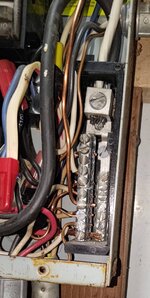
In the shop subpanel they wired all of the neutrals and grounds to the same bus bar, which I know is not correct by current code. There are no grounding stakes or anything - the neutral feed from the main panel is connected to the neutral/ground bus bar. If I can stick with the existing feed wires (3 wire), then the new panel should get two grounding stakes to feed the ground bar, the neutral wire to the neutral bus bar, and the two should be unbonded - is that correct?
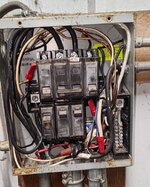
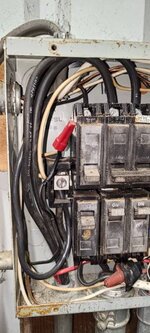
The other fun thing going on with the existing wiring is that someone tapped into this subpanel to feed another subpanel. Since there was no room, they stuck the #6 copper wires into the main lugs along with the #6 aluminum supply wiring, so there is no breaker on the secondary sub panel feed wires except for the 60A breaker feeding the first subpanel. The big issue is they didn't run a common or a ground to the secondary subpanel - just two hots in a direct burial cable that runs another ~75 feet to the secondary subpanel. There must be a grounding rod at the second subpanel because it's being used for 120v circuits - I haven't looked closely yet.
Clearly this secondary subpanel needs a neutral run to it at a minimum. If I can stick with 3 wire to the first subpanel then I assume I could stick with 3 wire to the second? Does the secondary subpanel need the same ground setup as the first subpanel (2 ground rods, neutral and ground unbonded)? How dangerous is it to be using a grounding rod for a neutral like it's currently set up? Wondering how urgent it is to fix that issue since I'll need to dig a new trench and run wires.
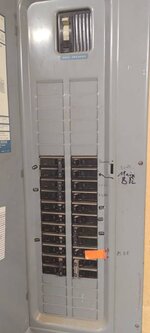
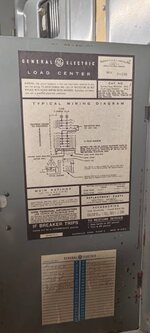
Sorry for the long post but wanted to be thorough. The current panel is a GE panel as are the ones in the house. GE panels and breakers are lower cost than the other ones out there - any reason not to go with a GE panel for the replacement?
Here's some pictures of the current disaster for your viewing pleasure:


The shop is fed by 3 wire (hot, hot, and neutral) #6 aluminum underground in steel conduit, and is on a 50 amp breaker in the main panel. Distance from panel to subpanel is approximately 75 feet. From what I read the 50 amp breaker is OK with #6 AL as long as the insulation is rated for 75c...I'm assuming that's the case for now and I can take a closer look at the wire to confirm later. I do expect I'll be pulling close to max load every once and a while. Conduit size is 1 1/4" (for reference in case I need to run new wires)
I know current code requires 4 wire connections to detached structures, but I think 3 wire is OK since it was put in service in 1975? However, I read somewhere that metal conduit isn't allowed - is that correct, and if so is it a serious safety concern? I don't suppose it could be used as the ground connection since there isn't a separate ground wire?
In the shop subpanel they wired all of the neutrals and grounds to the same bus bar, which I know is not correct by current code. There are no grounding stakes or anything - the neutral feed from the main panel is connected to the neutral/ground bus bar. If I can stick with the existing feed wires (3 wire), then the new panel should get two grounding stakes to feed the ground bar, the neutral wire to the neutral bus bar, and the two should be unbonded - is that correct?
The other fun thing going on with the existing wiring is that someone tapped into this subpanel to feed another subpanel. Since there was no room, they stuck the #6 copper wires into the main lugs along with the #6 aluminum supply wiring, so there is no breaker on the secondary sub panel feed wires except for the 60A breaker feeding the first subpanel. The big issue is they didn't run a common or a ground to the secondary subpanel - just two hots in a direct burial cable that runs another ~75 feet to the secondary subpanel. There must be a grounding rod at the second subpanel because it's being used for 120v circuits - I haven't looked closely yet.
Clearly this secondary subpanel needs a neutral run to it at a minimum. If I can stick with 3 wire to the first subpanel then I assume I could stick with 3 wire to the second? Does the secondary subpanel need the same ground setup as the first subpanel (2 ground rods, neutral and ground unbonded)? How dangerous is it to be using a grounding rod for a neutral like it's currently set up? Wondering how urgent it is to fix that issue since I'll need to dig a new trench and run wires.
Sorry for the long post but wanted to be thorough. The current panel is a GE panel as are the ones in the house. GE panels and breakers are lower cost than the other ones out there - any reason not to go with a GE panel for the replacement?
Here's some pictures of the current disaster for your viewing pleasure: