

You are using an out of date browser. It may not display this or other websites correctly.
You should upgrade or use an alternative browser.
You should upgrade or use an alternative browser.
Dewalt 18v battery options?
- Thread starter ron350
- Start date
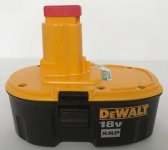
I remember there were people offering pack rebuilding services for them but now a days I can't imagine those guys are still around, well rebuilding common NiCad packs anyway. Generics are cheap now.
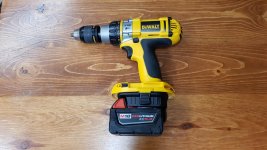
I was cheap & just spent $12 on one of these. This same adapter accepts Dewalt li-ions too but I'm on the red platform now.
I was cheap & just spent $12 on one of these. This same adapter accepts Dewalt li-ions too but I'm on the red platform now.
Attachments
JRC3
Well-known member
A few years back I was going to rebuild mine. Would've cost me like $100 to do 3) 18v and 2)14v packs from decent 2200mah cells from ebay. I used to build my own nimh packs back in the R/C days so it would've been no problem. Even had about 8 or so 7-cell R/C packs that I could've tore down to use if the cells were still good. But then I bought a 20v brushless driver/drill combo to get me by and then decided to just wait it out for the long awaited 18v/20v adapter to use with the older tools. I got the adapter and use it sometimes with some of my more special tools like right angle drill and angle grinder. In the end the bulk, weight, runtime, everything of 18v and even my smaller 14v drill was realized...It was like wearing cinder blocks as shoes compared to sneakers. Just ditch the platform. You'll be so much happier.
I looked on ebay a few weeks ago and am amazed at what that stuff sales for. Stuff like the little vacuum and angle grinder was like $80+ ea. I wanna say the crappy flex flashlight was around $30. I didn't check the big boombox and other tools. Reinvest and buy stuff right around Christmas and it wouldn't cost much more for the bare tools and then invest in the batteries. That's my experience and opinion and the whole 2 cents.
I looked on ebay a few weeks ago and am amazed at what that stuff sales for. Stuff like the little vacuum and angle grinder was like $80+ ea. I wanna say the crappy flex flashlight was around $30. I didn't check the big boombox and other tools. Reinvest and buy stuff right around Christmas and it wouldn't cost much more for the bare tools and then invest in the batteries. That's my experience and opinion and the whole 2 cents.
Ohmthis
Well-known member
I bought amazon specials and tried them out. I don’t remember the brand name (I can look if you’d like), but they are red and black. They have the same power as the one good factory battery that I bought about 6 months before. They do not last as long, but I saw this coming and bought a new drill and impact. I didn’t want to throw away the older good tools, so I took a chance on it.
Dishpointer
Member
I purchased the DEWALT 18v to 20v Adapter - Bare (DCA1820) and use the 20v lithium batteries. I've had no issues for the last year or so.
Ohmthis
Well-known member
I purchased the DEWALT 18v to 20v Adapter - Bare (DCA1820) and use the 20v lithium batteries. I've had no issues for the last year or so.
I do this at work, but work pays for the tools and batteries. If I were to think this way at home a new drill, impact, or other tools usually cost a little more with 2 batteries and a charger over just buying 2 li-on batteries and charger. I bought the cheaper batteries and then bought a new drill and impact because my old tools were going on 15 years.
thesilverone
Well-known member
get the lithium adapter
Parrothead
Well-known member
I’ve got most of the DeWalt 18v line and it still works great so I’m getting these.
ANTRobut 2 Pack Upgraded 5000mAh XRP DC9096 18 Volt Lithium Replacement Battery for Dewalt 18V Ni-Cad Battery DC9098 DC9099 DE9039 DE9095 DE9096 DE9098 DW9095 DW9096 DW9098 DE9503 Dewalt Batteries
https://www.amazon.com/dp/B07RSS6YTV/?tag=atomicindus08-20
ANTRobut 2 Pack Upgraded 5000mAh XRP DC9096 18 Volt Lithium Replacement Battery for Dewalt 18V Ni-Cad Battery DC9098 DC9099 DE9039 DE9095 DE9096 DE9098 DW9095 DW9096 DW9098 DE9503 Dewalt Batteries
https://www.amazon.com/dp/B07RSS6YTV/?tag=atomicindus08-20
finn
Well-known member
My local battery store (Remy) rebuilds them. Costs ~$40 if I recall. The rebuilt battery seems as good as the remaining original.
I later bought the Dewalt adapter, which also works well.
Fact is, though, my 18v Dewalt drill is over 11 years old and owes me nothing. I bought a new 20 v brushless Dewalt and a Bosch, both of which have better ergonomics and are lighter, so the old 18 v is relegated to service in the fifth wheel and backup.
Invest in a new drill. The cost is trivial considering you will use it for ten plus years.
I later bought the Dewalt adapter, which also works well.
Fact is, though, my 18v Dewalt drill is over 11 years old and owes me nothing. I bought a new 20 v brushless Dewalt and a Bosch, both of which have better ergonomics and are lighter, so the old 18 v is relegated to service in the fifth wheel and backup.
Invest in a new drill. The cost is trivial considering you will use it for ten plus years.
JerryC
Well-known member
My Dewalt 18v charger killed my batteries, one of them actually smoked for 24 hours after i pulled it off the charger. Leaving me needing both a charger and new batteries. I had bought my wife a Dewalt 20v kit so I bought the 20v to 18v Dewalt adapter kit with two 20v batteries so we can share 20v batteries. The adapter works but it makes an already large tool even larger.
Bad Habit
Well-known member
Funny, I just watched a video this AM comparing Dewalt and chinesium batteries.
southalabama
Well-known member
I bought one dewalt adapter to convert to 20v.
Ended up buying one for each tool. Took the 18v batteries to dad and said good luck.
IMHO get the adapter.
Ended up buying one for each tool. Took the 18v batteries to dad and said good luck.
IMHO get the adapter.
JRC3
Well-known member
With the adapter you also get a built in battery meter on the 20v batteries. Not to mention you can charge a 20v li-ion at anytime for any duration. Lets say the battery dies, pop it on the charger for a 'splash and dash.'
kctyphoon
Banned
You should be able to use Nimh cells no problem with using a nicad charger. Not the case with lithium. The charger must say it's ok for lithium. You can order loose subc cells if you like, or order build kits made for tool packs there's a nice looking kit that includes tabs to connect each cell together with minimal effort - might even be some now that don't need to be soldered.
The truth is it's more money, but alot easier to just get a battery adapter and use newer packs. The only issue is once you start just buying batteries and a charger - for not much more $$ you can probably buy a new drill kit or combo kit.. all a matter of what ur willing to spend.
But yes - it shouldn't be too hard to just rebuild your old packs if you want to. If you decide to, take the opportunity to use higher capicity cells.
The truth is it's more money, but alot easier to just get a battery adapter and use newer packs. The only issue is once you start just buying batteries and a charger - for not much more $$ you can probably buy a new drill kit or combo kit.. all a matter of what ur willing to spend.
But yes - it shouldn't be too hard to just rebuild your old packs if you want to. If you decide to, take the opportunity to use higher capicity cells.
Last edited:
Thanks for all the replies but I am not interested in buying an adapter, a slide on battery and a charger for the new battery. I have a good DC759 drill and a good DC9310 charger and just need a good battery for light use.
Looks like some one has deleted a reply to Parothead’s post. Those batteries that use Li-on 18650 are an interesting option.
I see that the Li-on battery requires a internal circuit board for some reason.
Looks like some one has deleted a reply to Parothead’s post. Those batteries that use Li-on 18650 are an interesting option.
I see that the Li-on battery requires a internal circuit board for some reason.
Attachments

kctyphoon
Banned
If you wanna keep it cheap and don’t use this much, then why not just spend $40 and get cheap aftermarket batteries already built?
You can get the in NIMH and use the charger you have.
Lithium packs NEED a charger that work with lithium batteries. Dewalt did have some chargers that style that do lithium also. It will say it right on the top of the charger.
You can get the in NIMH and use the charger you have.
Lithium packs NEED a charger that work with lithium batteries. Dewalt did have some chargers that style that do lithium also. It will say it right on the top of the charger.
Last edited:
decableguy2000
Well-known member
- Joined
- Nov 4, 2012
- Messages
- 658
Dewalt has 18v lithium (dc9182),but must use a a lithium charger. The dewalt charger (dc9320)will charge lithium, Nicad, Nimh. I have 2 batteries and a charger for my jigsaw and impact driver Everything else I have is 20v. Ran the adapters for awhile, but have got rid of all them. I'll get rid of these as well just to down size to one battery platform.
You can still get new 18v XRP batteries at Lowes and Home Depot
You can still get new 18v XRP batteries at Lowes and Home Depot
Lithium batteries require circuitry to turn off the battery when they reach a certain discharge point. That's why lithium tools don't seem to run down, they kinda just suddenly quit. That is the circuitry turning the battery off.
If lithium cells discharge too far the chemistry becomes unstable. Copper shunts form inside the cells and can short them out. Charging a lithium pack that's been run down beyond the safe limit can be kinda dangerous. That's why the charger will refuse to charge some batteries. If they get stored in a run down state they can continue to discharge below the safe threshold. When a charge is introduced to shorted cells, the cells can almost spontaneously burst into flame and it can pack a pretty good punch with a big battery like that.
The older 18v lithium packs had the control circuitry on board each battery. These were made as a retrofit, to use lithium on nicad tools. They also require a different charger to charge the lithium cells. The 20v line is designed from the ground up to be lithium power so the the control circuitry is instead located on each tool (or the adapter). This makes the batteries a bit cheaper to manufacture.
The 18v lithium batteries were expensive and low amp hour by today's standard. Friend had a bunch of them for his construction biz and they worked OK, no comparison to these modern 20v packs though. My drill was failing and was down to one good battery so I bought a 20v drill/impact kit. It was so much better I pretty much made the decision to abandon the old tools that day.
Amazon has genuine dewalt 18v two packs for $110.
If lithium cells discharge too far the chemistry becomes unstable. Copper shunts form inside the cells and can short them out. Charging a lithium pack that's been run down beyond the safe limit can be kinda dangerous. That's why the charger will refuse to charge some batteries. If they get stored in a run down state they can continue to discharge below the safe threshold. When a charge is introduced to shorted cells, the cells can almost spontaneously burst into flame and it can pack a pretty good punch with a big battery like that.
The older 18v lithium packs had the control circuitry on board each battery. These were made as a retrofit, to use lithium on nicad tools. They also require a different charger to charge the lithium cells. The 20v line is designed from the ground up to be lithium power so the the control circuitry is instead located on each tool (or the adapter). This makes the batteries a bit cheaper to manufacture.
The 18v lithium batteries were expensive and low amp hour by today's standard. Friend had a bunch of them for his construction biz and they worked OK, no comparison to these modern 20v packs though. My drill was failing and was down to one good battery so I bought a 20v drill/impact kit. It was so much better I pretty much made the decision to abandon the old tools that day.
Amazon has genuine dewalt 18v two packs for $110.
4xdog
Well-known member
As usual, TGJ to the rescue. I have an old 18V DeWalt hammer drill, which still gets used 'cause none of my 20V stuff does that job. The 18V batteries are dying -- although they've led a gentle life -- and I was happy to learn of the 18V->20V converter. Didn't know about that, but was hoping something was available.
I'll be back in the hammer drilling business for the next few years it looks like.
I'll be back in the hammer drilling business for the next few years it looks like.
This is the one I purchased for $39.
https://www.amazon.com/dp/B07ZD5XPTP/?tag=atomicindus08-20
I only needed one battery and this amazon seller has a one year warranty. The fit, finish and function is great with the battery weighing 1 lb.-6.8 oz. compared to the Hi-Cad version at 2lb-2.5oz.
The instructions that came with the battery says to only use a Dewalt charger that state that it is for Li-Ion batteries. You might want to research this because some amazon reviews say they are using older chargers.
https://www.amazon.com/dp/B07ZD5XPTP/?tag=atomicindus08-20
I only needed one battery and this amazon seller has a one year warranty. The fit, finish and function is great with the battery weighing 1 lb.-6.8 oz. compared to the Hi-Cad version at 2lb-2.5oz.
The instructions that came with the battery says to only use a Dewalt charger that state that it is for Li-Ion batteries. You might want to research this because some amazon reviews say they are using older chargers.
Last edited:
Coloshaver
Well-known member
I’ve got most of the DeWalt 18v line and it still works great so I’m getting these.
ANTRobut 2 Pack Upgraded 5000mAh XRP DC9096 18 Volt Lithium Replacement Battery for Dewalt 18V Ni-Cad Battery DC9098 DC9099 DE9039 DE9095 DE9096 DE9098 DW9095 DW9096 DW9098 DE9503 Dewalt Batteries
https://www.amazon.com/dp/B07RSS6YTV/?tag=atomicindus08-20
I need replacements for my XRP 18V batteries. How are those ANTRobut batteries working for you?