To avoid these ads, REGISTER NOW!

Die Grinder for Smoothing/Cleaning up Engine Block Flash/Rough Edges

Model A Fan

Well-known member
Joined
Dec 1, 2011
Messages
1,223
Location
NW Washington
I'm working on an antique motor (WWII Jeep engine, L134) and I'd like to clean up some of the casting lines and inside the block/head to make it a little smoother and make the paint adhere better as well.

I'm looking for die grinder recommendations that won't break the bank but I don't need a Gucci brand one because this is just a one-off project. Also looking for grinding attachment recommendations, and I'm figuring something like this is what I'll need: Tungsten Carbide Burrs.

Thanks for the info!
 
To avoid these ads, REGISTER NOW!

BTL-A4

Well-known member
Joined
Feb 28, 2018
Messages
1,255
Location
Santa Clarita
If this is a one-off, just get a Harbor Freight one and be done. I had a right angle one and it worked fine. I have the Astro Pneumatic grinding burrs and they are excellent. They work much better on metal at high speed. I use them on a Ryobi battery-powered die grinder.
 
OP
M

Model A Fan

Well-known member
Joined
Dec 1, 2011
Messages
1,223
Location
NW Washington
If this is a one-off, just get a Harbor Freight one and be done. I had a right angle one and it worked fine. I have the Astro Pneumatic grinding burrs and they are excellent. They work much better on metal at high speed. I use them on a Ryobi battery-powered die grinder.
I'm looking for something that's not too unwieldly, so a small plugin one vs a battery powered or pneumatic sounds better. A right angle one sounds easier on the hand, as well. I see there is one electric option and the rest are battery/air powered. Is the pneumatic version annoying to have to use because of the handles? I'm not much of a fan of that style tool.
 

GeoBruin

Well-known member
Joined
May 5, 2018
Messages
3,742
I'm looking for something that's not too unwieldly, so a small plugin one vs a battery powered or pneumatic sounds better. A right angle one sounds easier on the hand, as well. I see there is one electric option and the rest are battery/air powered. Is the pneumatic version annoying to have to use because of the handles? I'm not much of a fan of that style tool.

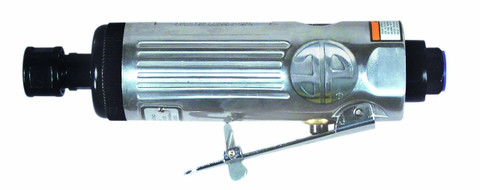
There's nothing small about most corded electric die grinders. Pneumatic die grinders regardless of format (straight or right angle) are available in a variety of sizes (usually corresponding to horsepower ratings but) but in general they are much smaller. The kicker is you have to have the air to run them. If you have a good supply of shop air, they are cheap, powerful, and will last forever.

Battery die grinders have come along way and add the convenience of having no cord to deal with, but they are more expensive than air, larger, and can be more limited in power, though that's probably not a huge concern for running burrs.

I agree with the Harbor freight recommendation. If you have one near you, walk in and check them out. The Cheif line of pneumatic grinders are a good bargain and are available in a variety of sizes and configurations. I have a right angle and an extended straight model and both perform well.

Under the same roof, you can get a corded Hercules which is pretty comparable to a similar Makita or dewalt for somewhat less money.

I also have the Astro burrs, but honestly the Chief burrs at HF look good too.
 

PCustoms

Well-known member
Joined
Jul 23, 2011
Messages
23,096
Location
VT
I'm working on an antique motor (WWII Jeep engine, L134) and I'd like to clean up some of the casting lines and inside the block/head to make it a little smoother and make the paint adhere better as well.

I'm looking for die grinder recommendations that won't break the bank but I don't need a Gucci brand one because this is just a one-off project. Also looking for grinding attachment recommendations, and I'm figuring something like this is what I'll need: Tungsten Carbide Burrs.

Thanks for the info!

Sorry to go a different direction, but doesn't sanding off the casting marks on a vintage block sort of detract from it?
 

larry4406

Well-known member
Joined
Jan 27, 2006
Messages
19,349
Location
Northern Virginia
I recall reading about doing this on the interior of the engine and then after proper cleaning, coating the prepped cast iron with Glyptal to aid fast oil drain back to the sump.

Not sure if it’s worth the squeeze.
 
OP
M

Model A Fan

Well-known member
Joined
Dec 1, 2011
Messages
1,223
Location
NW Washington
There's nothing small about most corded electric die grinders. Pneumatic die grinders regardless of format (straight or right angle) are available in a variety of sizes (usually corresponding to horsepower ratings but) but in general they are much smaller. The kicker is you have to have the air to run them. If you have a good supply of shop air, they are cheap, powerful, and will last forever.

Battery die grinders have come along way and add the convenience of having no cord to deal with, but they are more expensive than air, larger, and can be more limited in power, though that's probably not a huge concern for running burrs.

I agree with the Harbor freight recommendation. If you have one near you, walk in and check them out. The Cheif line of pneumatic grinders are a good bargain and are available in a variety of sizes and configurations. I have a right angle and an extended straight model and both perform well.

Under the same roof, you can get a corded Hercules which is pretty comparable to a similar Makita or dewalt for somewhat less money.

I also have the Astro burrs, but honestly the Chief burrs at HF look good too.

I see the Chief ones and can run air (I have an 80gal tank along with a smaller portable one depending on where I'm working). There's a Harbor Freight in the next town over I'll visit as I like to go there and just wander. Which can be dangerous 😅. I'm leery of Harbor Freight consumables like burs and cutting discs. I've never had a real problem, but you just see the exploding disc photos...

Sorry to go a different direction, but doesn't sanding off the casting marks on a vintage block sort of detract from it?
While normally you'd be correct, the value of this engine isn't very high. During WWII, Ford and Willys made engines and Jeeps. The engine is a Ford made GPW engine (made for Ford produced Jeeps called GPWs and Willys made MBs). The chassis and body are Willys produced and the engine being Ford made means they don't match, so there's not an historical value in the two of them or keeping the engine "as produced". I guess its not really that big of a deal to "pretty it up" as its not a showpiece either. I figured since I was going to possible address some casting flash, I may do the outside as well. Honestly, this tool would lead me to some rather tedious work that likely will produce nil for any improvement on a measurable basis.

I recall reading about doing this on the interior of the engine and then after proper cleaning, coating the prepped cast iron with Glyptal to aid fast oil drain back to the sump.

Not sure if it’s worth the squeeze.
I'm debating on if the juice is worth that squeeze as well. Sometimes you need to be brought back to reality by others when you've narrowed your focus and watched too much YouTube 😅 It will be a handy tool for other stuff as I work on the body and other engine pieces like rivets or burs on non-internal parts.
 
Last edited:

PCustoms

Well-known member
Joined
Jul 23, 2011
Messages
23,096
Location
VT
I'm debating on if the juice is worth that squeeze as well. Sometimes you need to be brought back to reality by others when you've narrowed your focus and watched too much YouTube 😅 It will be a handy tool for other stuff as I work on the body and other engine pieces like rivets or burs on non-internal parts.

Maybe because it's so damn hot out, but the prospect of being covered in razor sharp shavings (carbide burr) or gross grinding dust (stone or paper) with no performance, financial or historical improvement turns me off pretty fast.
 
OP
M

Model A Fan

Well-known member
Joined
Dec 1, 2011
Messages
1,223
Location
NW Washington
Maybe because it's so damn hot out, but the prospect of being covered in razor sharp shavings (carbide burr) or gross grinding dust (stone or paper) with no performance, financial or historical improvement turns me off pretty fast.
Yes, the prospect of those outcomes is rather uninteresting, to say the least. Especially when I've got a million other things to do that NEED to be done...yard work, field work, house work, work work, play with the kids...
 

Firebrick43

Well-known member
Joined
May 12, 2015
Messages
14,099
Location
West central Indiana
We used the piss out of die grinders deburring large engine cranks, blocks, and rods.

For years we used IR one that were the berries but they were expensive enough that the wanted they guy that maintained all the air tools and torque wrenches to rebuild them.

As production increased they decided instead of making a second position to just go to throw aways.

They tested a bunch and settled on the Astro T210. They would last 6 to 9 months running 2 to 4 hours a day across three shift depending on the operation. They were slightly louder than the IR

 
To avoid these ads, REGISTER NOW!
OP
M

Model A Fan

Well-known member
Joined
Dec 1, 2011
Messages
1,223
Location
NW Washington
We used the piss out of die grinders deburring large engine cranks, blocks, and rods.

For years we used IR one that were the berries but they were expensive enough that the wanted they guy that maintained all the air tools and torque wrenches to rebuild them.

As production increased they decided instead of making a second position to just go to throw aways.

They tested a bunch and settled on the Astro T210. They would last 6 to 9 months running 2 to 4 hours a day across three shift depending on the operation. They were slightly louder than the IR

From my Amazon perusal, that's a reasonably priced one. The burrs however are spendy! Thanks for the recommendation!
 

RoninB4

Well-known member
Joined
Jul 22, 2020
Messages
3,569
Location
Under My House
-I've used a lot of electric and pneumatic grinders over the years on the job. Plenty of pros/cons to both electric and pneumatic powered devices, many have already been posted. A couple that may not have been:

Electric- Slower RPM than many Pneumatic types. This makes a difference with burrs more than abrasives, especially carbide burrs. Carbide burrs that aren't run fast enough have a tendency to "grab" at the flutes and/or "bounce" on the surface being worked. This results in a tendency for the carbide edges to chip. Abrasives (mounted wheels/discs) aren't as susceptible to problems at lower RPM's like burrs are. Have no data or experience but doubt that battery devices have the RPM, torque, or sustainability for work lasting more than 30 minutes of continuous duty.

Pneumatic- Higher RPM, often a better spindle (important for polishing), less torque than electric (not always important). Better variety of configuration choices. Much louder, often requires hearing protection in small enclosed spaces. Air requirements are more than just tank size and should be calculated per device minimum requirements in CFM for continuous duty. This isn't like filling tires or a pneumatic nail gun, insufficient compressor HP and/or CFM in duty cycle will lead to low RPM and/or stalling. Carbide burr chipping to follow. Those small, portable compressors on wheels aren't going to cut it.

For both- If you're rather new to die grinders it should be mentioned that body/hand/device positioning can be quite important. If you and/or the device are not anchored against rotation (especially with burrs at slower RPM's) the burr/abrasive can grab the work and start to run away. Burrs work fast but can start to bury themselves in the material more than wanted. Abrasives have a bit more control but can leave "waves" of noticeable irregularity. JMO, hope this helps someone.
 

Schurkey

Well-known member
Joined
Oct 27, 2011
Messages
2,369
Location
The Seasonally Frozen Wastelands
I'm looking for die grinder recommendations that won't break the bank but I don't need a Gucci brand one because this is just a one-off project.
The Company supplied compressed-air die grinders. They were CP and IR, and they were uniformly worthless, no-torque pieces of ****. 20,000+ RPM free-speed, zero RPM stalled-out and hissing, when actually expected to do some work. When my own die grinder failed after several years, I bought one off the Mac truck. I used it professionally--hard--for about eight years, and home-hobby shop porting a few heads and general casting shaping/clean-up for another twenty. It did go back to Mac for bearings once. The thing has a Mac logo on it, but Mac's supplier was SP Air. The SP Air unit costs less in today's devalued dollars than I paid Mac way back then, off the truck. VERY recommended. The single downside is that the aluminum housing gets really cold when it's been run constantly for long periods. In that respect only, the composite Snap-On 1/2 hp "PTGR200" is more comfortable/better. Both have wonderful torque plus the 20K RPM. I have several Snap-On PT-200 variants--long nose, angled, etc. to compare to. (Obtained "broken" and I repaired 'em.) The Snappies are more than 3X the price of the SP Air 7220.


I recall reading about doing this on the interior of the engine and then after proper cleaning, coating the prepped cast iron with Glyptal to aid fast oil drain back to the sump.

Not sure if it’s worth the squeeze.
Paint you DON'T apply to the oiled parts of an engine, CANNOT flake off and cause problems with plugged oil pump screens, or get pulverized by the crank and rods, ending up plugging the oil filter.

Moreover, I never understood how oily paint could speed oil return, compared to an oil-wetted metal surface. The oil is flowing down an oiled surface either way.

I could understand using paint to seal any traces of casting-sand inside the rough-cast texture of a new casting, that's going to be torn down for inspection every one, or two, or ten races, or perhaps at the end of each racing season. But by the time most "used" castings are being rebuilt, (Never mind one from WWII!) all of that would be long-gone anyway.
 
Last edited:

JradM

Well-known member
Joined
Sep 4, 2019
Messages
1,819
Location
Alberta
You might be surprised what you can accomplish with a good 1/4" burr in a Dremel/rotary tool. I used that and a Bosch 12v right angle die grinder when doing my block - mostly switching to the Dremel for detail work. However, the Dremel wasn't bad, just slower. I probably could have done the whole thing with it. Might depending on how large of casting flaw you're trying to remove.
 

Schurkey

Well-known member
Joined
Oct 27, 2011
Messages
2,369
Location
The Seasonally Frozen Wastelands
As terrible as those "Company" CP and IR die grinders were, I can't imagine doing anything "real" with a Dremel.

I own a Dremel. Must be 50 years old, maybe more. The accessories that Dremel sells are toys--they LOOK like rotary files, polishing wheels, wire brushes. But in reality they're disposable trash.

If you're making figurines out of bars of soap, I suppose a Dremel would work OK.
 

liliysdad

Well-known member
Joined
Jul 18, 2008
Messages
5,414
You might be surprised what you can accomplish with a good 1/4" burr in a Dremel/rotary tool. I used that and a Bosch 12v right angle die grinder when doing my block - mostly switching to the Dremel for detail work. However, the Dremel wasn't bad, just slower. I probably could have done the whole thing with it. Might depending on how large of casting flaw you're trying to remove.


I’d rather gnaw that **** off with my teeth than try it with a dremel. Probably be faster and a lot less stressful.
 
To avoid these ads, REGISTER NOW!
Top Bottom