does duetz make any water cooled engines or are they all oil cooled? its a burning question i've been having
They make a lot of liquid cooled engines now.
Fendt switched to them with the newer 900 series back in 07/08. They used to run MAN. The 7.4L Duetz has been more reliable, but many still prefer the 8.4L Sisu in the Agco/MF/Challenger tractors. Fendt is owned by Agco.
I still prefer the Fendt though regardless of the engines. They are a prime example of good German engineering. The Mercedes/BMW of tractors. Every little detail thought out, tested and put out with only the best quality. THey have the least amount of issues of any tractor and are the most advanced to boot. They do charge a premium for it though. A comparable MF/Challenger will be $220,000, a CNH will be around that price too, then the Fendt will be $270,000. Deere is close to Fendt in price, and does have better quality than Agco, however Deere is not an innovator, lacks in many features compared to the Fendt and sells on brand image more than anything.
Yes Deutz make water cooled engines. Older Deutz tractors, up until the early nineties used air cooled engines. When they launched a completely new range, they switched to water cooled. The only oil cooled ones, I have come across , have been powering industrial compressors. I believe the air cooled engines are still produced for use where there is no emissions regulations, Africa for example.
Deutz, also used to produce large slow speed marine diesels, upto 15000 hp. Deutz sold that division to Wartsila in 2005. The still produce them under the wartsila name. They can be run on diesel or natural gas.
Volvo ,also owns a large share of Deutz engines and rebadge 6 and 7 litre engines as Volvos, still with the Deutz data plate. I Don't know what engines ,Volvo uses in the US
Used to run an old FMC Pea Stripper combine with a V8 air cooled Duetz. Many of the Gleaner combines used them for a long time as well.
Our wheel loader has one of the Duetz engines (Volvo L60E). It is very fuel efficient, quiet and has been reliable.
The Duetz in the Fendt tractors is also very efficient.
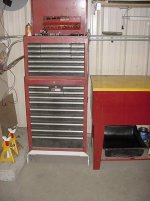
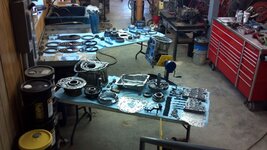
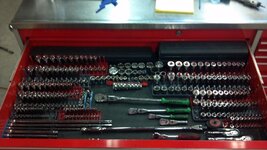
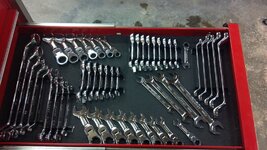
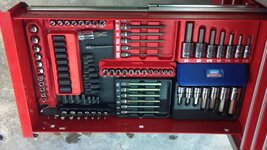
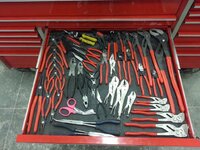
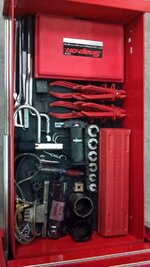
I work on our farm's equipment which is all diesel except for the small engines. I started buying my own tools out of frustration with the farms tools. When it comes to bigger stuff and some of the specialty stuff, I stock it in the shop. In addition to working on the stuff, I also manage the shop, so having the tools needed, and parts on hand takes the majority of my time. I enjoy it though, nothing worse than not having the right tools or having the parts on hand. I've been working on upgrading, and adding to the shops tool collection lately. We're building a locked tool room with keypad entry to store the ones we don't want walking away.
I would lock the entire shop down, but our farm is a large dairy farm and there are people working all but the time from 2:00am-3:30am. Many of those guys are the milkers at night who are not fixing things regularly, but they still need access to tools incase something comes up. Most of the help is migrant workers, while good at their assigned jobs, their wrenching skills tend to be crude at best. They are rough on tools and getting them back from them is tough sometimes. I am currently working on setting up a tool cabinet for them in the barn. It will have a peg board with every tool traced and labeled. Their tools will either be scribed or simply painted so that it is known where they belong. Most will probably be of the harbor freight variety, but none-the-less they will get their few tasks done. Their power tools will be our aging tired DeWalt stuff which will be replaced with Ryobi. They use drills for many things so they need a decent one, but they are hard on them so it doesn't pay to spend the big bucks. They will have a tool allowance that will simply be an end of year bonus fund. The guy we have managing all of them is very responsible and bilingual. He will check the cabinet frequently too see if tools are missing and try to track them down.
The shops tools I will be going a similar direction with I think. I can't decide if I want to keep them in a toolbox or just give up on the box and put them on a rollaround peg board like so many do, I sit and listen to how much time I see guys wasting digging through the wrench drawer or the sockets, looking for the right size. I think a peg board for the general stuff may be a little nicer for them, but then again they are bulky. If I get the barn staff working out of their own tools, it will be easier to justify slightly nicer tools for the shop box if needed. I always keep a backstock of new tools as well that only go out when the others are missing. Many of the special service tools though that we use I do spend a little more on. We can't jusitify the nicest of everything, but with many of those tools, safety becomes an issue and the time needed to complete a task also does. In addition to those, if it is a junk tool that doesn't work well, nobody will want to use it and they may not even want to do the repair. Cordless tools are the next big upgrade. Its between Bosch 18v for most stuff and 36v for saws, and Milwaukee 18v. It would be nice if Bosch had more of their brushless stateside. I've also been spending a lot of time and money, researching and working on eliminating loose hoses and cords in the shop in favor of hose reels, just ordered a 3/8x50' Reelcraft the other day, plan to get some more soon. Already have two hose reels that get used constantly. Loose hoses just leave a mess everywhere, loose extension cords get robbed the second new ones get brought in. They disappear to unknown places, or this time of year get used for block heaters, then caught with snow plows.
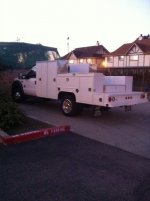
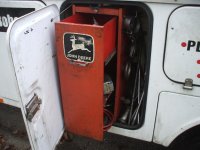
Anyways, its basically me in the shop full time along with another main guy, who does a lot of the trucking and fieldwork, helping out when he can and a new guy thats learning the ropes helping in the shop and running equipment, kinda. Tough to find people with a mechanical mind, and good operator skills it seems. Many just don't have that 2nd nature for feeling/hearing when things seem out of the norm. We also have another guy who does all of the building maintenance and repairs around the farm who is in and out of the shop, but he has most of his own tools in his own truck which he uses around the farm. Shop is far too long of a walk for most tasks, works good that he has his own. Personally I like managing the shop a lot, I like impressing people, so when they show up and say the dealership couldn't make this hose, can you? Then I show them the fitting nobody else had, just made my day. I generally take care of the things with engines while the other guy does the tillage equipment, planters and such. Regular preventative maintenance is actually a favorite of mine too. Many people don't like it, but for me its a chance to get close and personal with the machines and see what problems are developing. I've had to give up pressure washing as I am too picky and it takes too much time, but that also was a good way to notice problems. I now have the new guy wash them off just before I service them regularly. I like new challenges and doing as many of the repairs here that we can, but when I start to fall very far behind on PM and Shop Duties I will farm some of the more time sensitive ones out if needed. I used to not let anything go to get fixed anywhere else and tried doing everything when I would get time, but too many things got put off for too long that I just had to learn to let some of the jobs just go to another place to catch up. I also do a lot of Duramax repair and performance on the side which takes up the rest of my time.
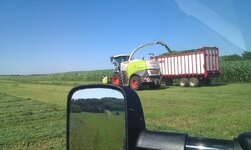
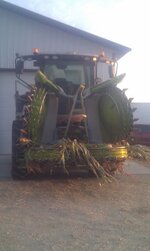
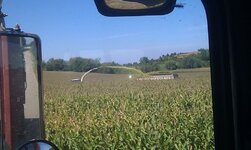
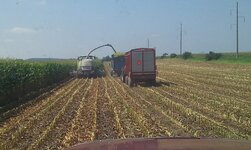
Our equipment consists of multiple late model tractors, and some really old ones too, forage harvester and related harvest equipment, tillage and planting equipment, feeding equipment, loaders, plenty of skid steers, cars and trucks, and a few semis. Its a pretty busy job, but fun. Forage harvesting is my favorite time of year. Generally we do cereal crops in May, 1st crop alfalfa late May early June, 2nd crop end of June, 3rd end of July and 4th end of August. We generally no more than drive out of the last field and everyone is chomping at the bit to chop corn, so then its a mad dash to get the chopper switched over and ready to go for the corn silage season which will last through the middle of september, towards the end of September we switch the chopper over to Snaplage which goes on for a week or two at a slower pace, then if needed we will switch it back over to cereal grains and chop some late oats if any were planted. Otherwise we will clean it off, put it away and switch it back over the winter. The best part about harvesting though is the adrenaline rush. You can't stop. When hay is laying, with the weather we have here, every minute down is costing you a lot. 8 guys standing around waiting for the chopper to get fixed, all of their machines sitting idle, its a couple grand wasted every hour. Our forage equipment runs across 500-800 acres of cereal grains, 1000 acres of corn silage and snaplage, and 1000 acres of alfalfa 4 times per year.
Just for laughs, here's a video from a couple years ago of our "stress relief" after dinner one afternoon before going back out for the night (typically run 7am-midnight). The chopper is a Claas 940. Its actually the 2nd smallest one. has a V8 Twin-Turbo Mercedes at 470hp. The biggest one Claas offers now has a V12 MAN with 880hp. Krone uses the same engine for their 1100hp model.