

You are using an out of date browser. It may not display this or other websites correctly.
You should upgrade or use an alternative browser.
You should upgrade or use an alternative browser.
DIY elevator...
- Thread starter Printer Mike
- Start date

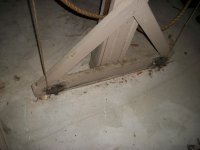

I dont have a picture of the steel for the platform but it has the same shape as this one
http://www.bing.com/videos/search?q...C367AC5F1894D2787133C367&first=61&FORM=NVPFVR
http://www.bing.com/videos/search?q...C367AC5F1894D2787133C367&first=61&FORM=NVPFVR
elevator joe
Well-known member
I do this for a living. Lots of liabilities, be smart,be safe above all else!
Tim The Tool Man
Well-known member
I recall an episode of the Red Green show where he made an elevator out of an old phone booth and duct tape. Might want to try that??

stroked80z28
Well-known member
I do this for a living. Lots of liabilities, be smart,be safe above all else!
I also do this for a living, looks like the material lift in the photos needs to be re-cabled; new manila and new steel cable (fist grips instead of crosbies).
wlightning3
New member
- Joined
- Oct 17, 2013
- Messages
- 1
OK, one person and ~8 ft of lift (one story approximately).
But what, where, and why?
In the (personal) shop to get up to the mezzanine? Just get a scissor-lift aka man-lift.
In the house for someone in a walker/wheelchair to get to the second floor? Go and buy one.
Anything industrial/commercial situation? Go and buy one.
The liability and permits and inspections and certifications pretty much prevent you from any DIY on this one.
Sorry.
Just joined today researching this exact thing which is what brought me here to this site. Ripped my leg off in a motorcycle accident and am moving to KY with a huge deck in back about 16 ft off ground. For firewood to be raised up and to take me down to my workshed. Walking down a hill with a prosthetic leg is damd hard and trust me I twist my foot sideways and fall everytime. Its for personal use so liability isn't a main concern. Go buy one made professionally sure if I had that kind of money. I think its an awesome idea and I'm gonna do this real soon. I originally was thinking steel screw opener but after reading and research I'm gonna go with a heavy duty winch and pulleys, counter weighted on springs. Ill do my own inspections. Negativity has no place in my life and without taking chances lifes at a standstill. The greatest inventore took chances do go gor it. Just be smart about it. Respectfully Greg...Good to meet everyone.
Last edited:
Sureshot
ALLIANCE MEMBER
Just joined today researching this exact thing which is what brought me here to this site. Ripped my leg off in a motorcycle accident and am moving to KY with a huge deck in back about 16 ft off ground. For firewood to be raised up and to take me down to my workshed. Walking down a hill with a prosthetic leg is damd hard and trust me I twist my foot sideways and fall everytime. Its for personal use so liability isn't a main concern. Go buy one made professionally sure if I had that kind of money. I think its an awesome idea and I'm gonna do this real soon. I originally was thinking steel screw opener but after reading and research I'm gonna go with a heavy duty winch and pulleys, counter weighted on springs. Ill do my own inspections. Negativity has no place in my life and without taking chances lifes at a standstill. The greatest inventore took chances do go gor it. Just be smart about it. Respectfully Greg...Good to meet everyone.
Welcome Greg and I am sure your plan will work out. Sounds like you have a vision of what you want.
Engineer61
Well-known member
What allowed elevators to be accepted, and made Otis Elevator a lot of money, was the invention of the emergency stop brakes that will keep an elevator from falling down it's shaft when the lifting system breaks. Doesn't matter what kind of lifting system is used, please look up the various patents and carefully think through some form of these emergency stop brakes on any kind of lift that you build.
Yes, they leave you to be rescued out of the elevator car stuck between floors, but that's a lot better than splatted at the bottom of the elevator shaft, even if it's only two stories tall.
Yes, they leave you to be rescued out of the elevator car stuck between floors, but that's a lot better than splatted at the bottom of the elevator shaft, even if it's only two stories tall.
I have done a lot of research on the subject as I plan to build an elevator.
I've come to the conclusion that the only good way to build a residential elevator is to build a conventional single-cylinder hydraulic. The beauty of a hydraulic elevator is that the "falling" speed is self-limited by the outflow rate of the hydraulic cylinder. In addition, in the event of a power failure the elevator is not "stuck", which can be a major problem if you live alone. A hydraulic elevator can be brought down under gravity by lining the hydraulic cylinder up to the reservoir though an orifice to limit the fall rate.
I've come to the conclusion that the only good way to build a residential elevator is to build a conventional single-cylinder hydraulic. The beauty of a hydraulic elevator is that the "falling" speed is self-limited by the outflow rate of the hydraulic cylinder. In addition, in the event of a power failure the elevator is not "stuck", which can be a major problem if you live alone. A hydraulic elevator can be brought down under gravity by lining the hydraulic cylinder up to the reservoir though an orifice to limit the fall rate.
akdiesel
Well-known member
I have done a lot of research on the subject as I plan to build an elevator.
I've come to the conclusion that the only good way to build a residential elevator is to build a conventional single-cylinder hydraulic. The beauty of a hydraulic elevator is that the "falling" speed is self-limited by the outflow rate of the hydraulic cylinder. In addition, in the event of a power failure the elevator is not "stuck", which can be a major problem if you live alone. A hydraulic elevator can be brought down under gravity by lining the hydraulic cylinder up to the reservoir though an orifice to limit the fall rate.
I have seen long stroke double acting cylinders on Surplus Center
http://www.surpluscenter.com/Hydraulics/Hydraulic-Cylinders/
captaindiode
Well-known member
This is a quick clip about someone who recreated Otis's first elevator:
http://makezine.com/video/make-inventions-the-safety-elevator/
http://makezine.com/video/make-inventions-the-safety-elevator/
RickP
Well-known member
I asked the elevator repair guy in a beach rental house, and he said they were about $20k for a 3 story home.
I have done a lot of research on the subject as I plan to build an elevator.
I've come to the conclusion that the only good way to build a residential elevator is to build a conventional single-cylinder hydraulic. The beauty of a hydraulic elevator is that the "falling" speed is self-limited by the outflow rate of the hydraulic cylinder. In addition, in the event of a power failure the elevator is not "stuck", which can be a major problem if you live alone. A hydraulic elevator can be brought down under gravity by lining the hydraulic cylinder up to the reservoir though an orifice to limit the fall rate.
Not totally correct on the falling speed.
You need to consider any and all failure modes and have safety systems in place.
Hydraulic system could still have a cylinder 'break'. Cylinder splits down the side or the end cap blows off or blows out the seal and the fluid could just dump out there. Result would be a Rapid-Uplanned-Gravity-Powered-Event-Descent, or a RUGPED. Most people would just call it 'falling'.
Just like in aircraft, it's not the fall that is the problem. It's the sudden stop at the end.
I'm all for DIY. But this really isn't a DIY situation. IMNSHO. Even for A_Pmech.
Single acting cylinder with an 8-10' stroke for a single-story residential elevator? Not an 'easy' item to buy or install. Hmmm, a 'full height' basement, then the big a$$ cylinder to power the lift platform from the first up to the second floor.
Surplus Center currently lists one 3-stage telscoping cylinder that could give you the 8-10' list range for a single floor/story extension. Item # 9-7848, actual full stroke is listed as 164", single-acting cylinder. Only $1300 plus shipping (520 lbs). Add in the control valves and hoses/piping and reservoir and pump and power source for the pump and the actual lift platform and the safety interlocks and the fall fail-safes (brakes and/or ratchet interlocks) and I'll bet that the construction costs are getting up there. That doesn't include any permit or 'certification' costs.
Remember that in general, man-lift required safety factors are 5-10x of 'rated' load.
Like I said, I'm all for DIY. In this case though, just go buy the dang thing.
Not totally correct on the falling speed.
You need to consider any and all failure modes and have safety systems in place.
Hydraulic system could still have a cylinder 'break'. Cylinder splits down the side or the end cap blows off or blows out the seal and the fluid could just dump out there. Result would be a Rapid-Uplanned-Gravity-Powered-Event-Descent, or a RUGPED. Most people would just call it 'falling'.
You're over thinking this. Like an airplane, it's just not possible to have a backup system for a catastrophic wing failure. As a consequence, the elevator jack is over-sized, underloaded and inspected regularly, just like an airplane wing structure.
Not even a "real" elevator is designed to withstand a catastrophic cylinder rupture. At normal elevator operating pressures, the pressure within the cylinder tube isn't sufficient to open and propagate a crack far enough to allow a flow rate large enough to cause an injury inducing uncontrolled descent. Even if the gland nut seal, piston rod seal and cylinder tube failed all at the same time, the descent rate would not be large enough to cause injury at the pressures and volumes involved.
Elevator jacks incorporate a pipe rupture valve, however, In the event the supply pipe fails catastrophically, the resulting flow rate will trigger the rupture valve to shut.
Just like in aircraft, it's not the fall that is the problem. It's the sudden stop at the end.
I'm all for DIY. But this really isn't a DIY situation. IMNSHO. Even for A_Pmech.
Americans have become afraid of controlling their own destiny for fear that they are incapable of it, mostly because they have been told that they're incapable of it. Shades of Emile Durkheim in "The Division of Labor in Society?" I think so.
Instead, Americans choose to blindly abdicate their responsibility to the ignorant assumption that other people with "qualifications" have suitably designed, tested and approved a potentially harmful product. In my experience, that is a poor assumption to make. In fact, after studying several residential elevator designs, I'm afraid to ride in a "real" residential elevator. I'd like more than two pinion teeth engaging a rack lagged to a 2x6 wall between me and my destiny.
Single acting cylinder with an 8-10' stroke for a single-story residential elevator? Not an 'easy' item to buy or install. Hmmm, a 'full height' basement, then the big a$$ cylinder to power the lift platform from the first up to the second floor.
Surplus Center currently lists one 3-stage telscoping cylinder that could give you the 8-10' list range for a single floor/story extension. Item # 9-7848, actual full stroke is listed as 164", single-acting cylinder. Only $1300 plus shipping (520 lbs). Add in the control valves and hoses/piping and reservoir and pump and power source for the pump and the actual lift platform and the safety interlocks and the fall fail-safes (brakes and/or ratchet interlocks) and I'll bet that the construction costs are getting up there. That doesn't include any permit or 'certification' costs.
Remember that in general, man-lift required safety factors are 5-10x of 'rated' load.
Like I said, I'm all for DIY. In this case though, just go buy the dang thing.
Just like a "real" elevator, there's no need for a full basement, or any basement at all. Low-rise single-jack hydraulic elevators rarely require pits greater than 5' deep, including the hydraulic machinery space. They commonly use flange-mount jacks installed in cylinder pits.
Buy a cylinder? No way, I build them every day!
Capt Chrysler
Well-known member
A friend of mine installed a fork lift mast into the wall of his new shop. Works great. Not sure what the insurance folks would say.
Capt. Chrysler
Capt. Chrysler
Higgins
Well-known member
We use our car lift to get up to the large overhead shelf, or gain access to the garage attic.
Purchase an extension, and the lift can go to 10+ feel!
AL
Purchase an extension, and the lift can go to 10+ feel!
AL
I'll keep my eyes on this thread. Mother in law was asking about one for her basement-to-main level...thinking for the future laundry duties.
Seems odd a certified car lift is so cheap these days and a 8-10' person lift would be so $$$.
Seems odd a certified car lift is so cheap these days and a 8-10' person lift would be so $$$.
I can't imagine any legal entanglements minor enough not to exceed the cost of a pro install real elevator.
What "might" work is going to depend on the use. I don't see granny hopping on a forklift and pulling on a rope to do the laundry.
What "might" work is going to depend on the use. I don't see granny hopping on a forklift and pulling on a rope to do the laundry.
shortykorte
Well-known member
Built a bicycle jump ramp, no engineering. Jumped off single story roof, no ground cushion. Drive a car that I don't safe check daily (and they kill 40,000 people a year).
After reading this post, I'm putting on my hazmat suit fill it full foam, put on safety glasses and safety hood, take all my pointy objects and grind them down dull then get rid of everything thing that has a warning label. LOL. Sometimes you just have to say "uh?"
After reading this post, I'm putting on my hazmat suit fill it full foam, put on safety glasses and safety hood, take all my pointy objects and grind them down dull then get rid of everything thing that has a warning label. LOL. Sometimes you just have to say "uh?"
Last edited:
My Old Tools
Well-known member
Four is looking down the hole at the weights, turn your screen sideways
Looks exactly like the fly loft in an older theater. We regularly fly sound clouds (big plywood reflectors) over the Dallas Symphony Orchestra with similar equipment.
Last edited:
This is the pics of mine, Like I posted earlier, this could easily be adapted to use a screw drive instead of the cable that I am using.
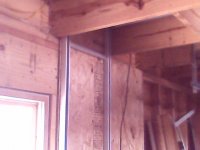
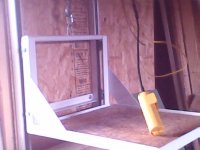
This is exactly what I'm looking for to get boxes from ground level to loft storage. Thanks
Sent from my iPhone using Tapatalk
Firebrick43
Well-known member
My grandmother contracted polio at the age of 21, just after marring my grandfather. In the last house the built/retired in grandpa built a counter weighted wood elevator for her to get to the basement. She was fiercely independent and insisted on being able to perform all tasks(with small accomadations). The elevator is still in use (uncle owns it now) but is only set up for one persons weight and going up/down requires pulling on the rope running through the elevator.
Where is this elevator located?All of you Doom and Gloom safety nazis stay away.
I have been considering a lift and when I saw this I wanted to share with those of you who can appreciate it. It is a 4 story armstrong powered lift in a Hardware Store that was built in 1911. Quiet, no electricity and you can stand beside it and operate it from any floor without your own weight on it
We looked it over good and found no Manufacturer tag anywhere.. It was built in place. My camera quit and I am waiting for the Engineer to send more pictures. The platform looked like a pallet with an iron brace for the cables. It has stamped tin ceiling tiles on the bottom.
First picture in on the fourth floor. The big rope is spliced and taped and is the power rope.
i like the cable over a pulley and counterbalance setup-- 3/8 cable would meet my size needs and gym weight off of craigslist would work great. For safety sake you could use a manual boat winch or if you wanted to splurge get an electric one from harbor freight
look into capstan winches
look into capstan winches
6768rogues
Banned
Having been involved in inspections and approvals of elevators, I would not ride in a home made elevator, even if I were to build it myself.
I can see it now, "Bubba, hold my beer while I ride in my home made elevator."
I can see it now, "Bubba, hold my beer while I ride in my home made elevator."
tymbo
Well-known member
I had the idea of using a used scissor lift for an elevator. What are your thoughts? Can a VCS controller be adapted for this scenario?
ARAMP1
Well-known member
This Old House installed a one person elevator here... www.youtube.com/watch?v=5rc_nzA2dSU
Phoenixl37
Active member
What about using the cylinder from a drive on car lift or a single post from a 2-post lift? some modifications would be needed.
denis4x4
Well-known member
We installed an elevator about 5 years ago and it ran about $18,000. We pay $450 dollars every year to have it inspected. There is a land line phone in the car as a cell phone won't work. Almost every high end home built in the area in the last couple of years has an elevator. Interestingly enough, since ours was installed, there have been new safety regs that may require us to upgrade if we were to sell. There's no doubt in my mind that we'll get our money back when we sell.
Bwana
Well-known member
This is the pics of mine, Like I posted earlier, this could easily be adapted to use a screw drive instead of the cable that I am using.
This is exactly what I'm looking for too. It looks like Unistrut. How do you get around the mounting bolts interfering with the lower wheel set? The uppers pull out, the lower pushes toward the wall.
c39er
Well-known member
Fiberglass Shower stall and a "Super Winch"....
Ries
Well-known member
So I’m looking into this as well now as I do not want to install stairs to get to the loft that is 10.5’ above my main garage floor. I actually designed custom elevators for a short stint early on in my engineering career. However for a 1000lb capacity elevator anything commercially is going to be overkill.
The Unistrut idea is interesting, but I don’t like the safety aspect of it. Implementing a safety brake wouldn’t be the easiest thing and would require a separate rail system.
I was trying to source a standard 8lb T rail, but it would seem most suppliers are not selling directly to consumers. So that said I’m curious what people have been using for safety braking systems on these cable hoist systems. I want something that is going to stop the platform in the event of a cable failure, ideally a mechanical spring applied brake that would apply to the rail.
The Unistrut idea is interesting, but I don’t like the safety aspect of it. Implementing a safety brake wouldn’t be the easiest thing and would require a separate rail system.
I was trying to source a standard 8lb T rail, but it would seem most suppliers are not selling directly to consumers. So that said I’m curious what people have been using for safety braking systems on these cable hoist systems. I want something that is going to stop the platform in the event of a cable failure, ideally a mechanical spring applied brake that would apply to the rail.
biggziff
Well-known member
So I’m looking into this as well now as I do not want to install stairs to get to the loft that is 10.5’ above my main garage floor. I actually designed custom elevators for a short stint early on in my engineering career. However for a 1000lb capacity elevator anything commercially is going to be overkill.
The Unistrut idea is interesting, but I don’t like the safety aspect of it. Implementing a safety brake wouldn’t be the easiest thing and would require a separate rail system.
I was trying to source a standard 8lb T rail, but it would seem most suppliers are not selling directly to consumers. So that said I’m curious what people have been using for safety braking systems on these cable hoist systems. I want something that is going to stop the platform in the event of a cable failure, ideally a mechanical spring applied brake that would apply to the rail.
I haven't seen anyone use any type of braking system. I am starting my build soon and don't have any intention of doing so, either.
6768rogues
Banned
The easiest and safest would be a screw drive.
Orionrising
Well-known member
Scissor man lift sunk in floor.
Sent from my Moto G (5) Plus using Tapatalk
Sent from my Moto G (5) Plus using Tapatalk