
You are using an out of date browser. It may not display this or other websites correctly.
You should upgrade or use an alternative browser.
You should upgrade or use an alternative browser.
DIY install of non-Mrcool units
- Thread starter JackOfDiamonds
- Start date
OP
JackOfDiamonds
Well-known member
I wish there were a way to compare units based on sounds. I know there are db ratings but for one I don't believe them, and second the type of noise is just as bad as the loudness.
pcmeiners
Well-known member
" just how big a hit am I taking in quality?"
Come on N_Jay, not trying to be mean but we are not Consumers Report researchers here. According to the puffery of minisplit manufacturers, EVERY minisplit ever made is high quality. The only true advice as to quality is to never buy no name units, and the obvious, the higher the price usually produce units of higher quality .
"and second the type of noise is just as bad as the loudness."
Agree, a minisplit may have good sound dB specs but manufacturers do not tell or are required to tell if their units make noise at frequencies which are not pleasant. My unit makes a really irritating noise occasionally (very rarely) but no one mentions it on the Internet
Come on N_Jay, not trying to be mean but we are not Consumers Report researchers here. According to the puffery of minisplit manufacturers, EVERY minisplit ever made is high quality. The only true advice as to quality is to never buy no name units, and the obvious, the higher the price usually produce units of higher quality .
"and second the type of noise is just as bad as the loudness."
Agree, a minisplit may have good sound dB specs but manufacturers do not tell or are required to tell if their units make noise at frequencies which are not pleasant. My unit makes a really irritating noise occasionally (very rarely) but no one mentions it on the Internet
Last edited:
I did most of the Pioneer install in my old house. I ordered it with extended length lines so it needed extra charge when the time came. I did 100% of the installation and connecting work. I paid someone $100 to do the commissioning (check for leaks, open up the charge, add a bit due to the longer line set).
I use to have access to Daikin University and what you have posted is not what is taught. You reference to 300 psi test Which Daikin recommends 600 psi makes me think this is old info for an R 22 system.Same with the Daiken manual
I’m going to check with one of the techs at work and see what they say. I’ve got some other irons in the fire but I believe I can work on this a little each day. I got the inside unit hung today.
I’m definitely going to need some help fishing the lineset through and will probably wait until my son can help. Hopefully have this wrapped up my the end of next week.
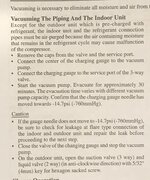

housewolf
Well-known member
I use to have access to Daikin University and what you have posted is not what is taught. You reference to 300 psi test Which Daikin recommends 600 psi makes me think this is old info for an R 22 system.

metlmunchr
Well-known member
- Joined
- Sep 10, 2011
- Messages
- 1,280
A 608 type 1 certification allows you to work on the refrigeration system of small appliances such as refrigerators, window units, and other appliances with 5# or less of refrigerant. The restriction on type of refrigerant applicable to such appliances isn't really restrictive at all. Over the years, window units have used R-12, R-22, and R-410A. Refrigerators use R-134A and used R-12 in the past. On a mini split, the 5# of refrigerant limitation would cover anything up thru an 18000 btu unit. The EPA has defined small appliance as 5# or less of refrigerant, so other opinions of what constitutes a small appliance don't really matter.
I've had Universal certification since 1994 and worked full time in the business for a number of years. I've never once seen any official type snooping around to verify that I've followed the rules,{which I do follow} and I'd say the DIY guy with a Type 1 who's installing or servicing his own stuff has essentially zero chance of encountering any problems even if he was to stretch the rules and have to recharge his 24K btu unit that does hold a bit more than 5#.
I've had Universal certification since 1994 and worked full time in the business for a number of years. I've never once seen any official type snooping around to verify that I've followed the rules,{which I do follow} and I'd say the DIY guy with a Type 1 who's installing or servicing his own stuff has essentially zero chance of encountering any problems even if he was to stretch the rules and have to recharge his 24K btu unit that does hold a bit more than 5#.
Typical, running my mouth without having the correct info. this is an AC only unit not a heat pump. AC only must run
at lower pressure.
Last edited:
housewolf
Well-known member
Typical, running my mouth without having the correct info. this is an AC only unit not a heat pump. AC only must run
at lower pressure.

metlmunchr
Well-known member
- Joined
- Sep 10, 2011
- Messages
- 1,280
Here's some information on required certifications published by the EPA.

 www.epa.gov
If you scroll down thru it, there's some information regarding mini splits. One notable statement is that certification is required for connecting precharged line sets. This would apply to Mr Cool or any other DIY units. As I mentioned previously, type 1 cert covers appliances with 5# or less of refrigerant, so, technically, working on a mini of 24K btu or larger would require a type 2 cert as those would use more than 5# of refrigerant.
The requirements for purchasing some refrigerants changed at the beginning of 2020 or 2021. Can't remember which date. Anyway, prior to that time, no cert was required for the purchase of supposedly less environmentally damaging refrigerants such as R-410A or R-134A while cert was required for the purchase of R-11(common in centrifugal chillers}, R-12, R-22, R-500, etc. After the rule change, cert was (is) required for the purchase of R-410A and R-134A as well as some other less common refrigerants like R-438A and R-407C which are used as replacements for R-22. One exception is that anyone can still purchase the small cans of R-134A. There's a lot of outdated information still on the internet regarding what can and cannot be purchased without cert.
EPA’s Refrigerant Management Program: Questions and Answers for Section 608 Certified Technicians | US EPA
Q&A for section 608 technicians concerning servicing appliances, purchasing or selling refrigerant, leak repair, how to become certified, record keeping, and other general topics.
www.epa.gov
If you scroll down thru it, there's some information regarding mini splits. One notable statement is that certification is required for connecting precharged line sets. This would apply to Mr Cool or any other DIY units. As I mentioned previously, type 1 cert covers appliances with 5# or less of refrigerant, so, technically, working on a mini of 24K btu or larger would require a type 2 cert as those would use more than 5# of refrigerant.
The requirements for purchasing some refrigerants changed at the beginning of 2020 or 2021. Can't remember which date. Anyway, prior to that time, no cert was required for the purchase of supposedly less environmentally damaging refrigerants such as R-410A or R-134A while cert was required for the purchase of R-11(common in centrifugal chillers}, R-12, R-22, R-500, etc. After the rule change, cert was (is) required for the purchase of R-410A and R-134A as well as some other less common refrigerants like R-438A and R-407C which are used as replacements for R-22. One exception is that anyone can still purchase the small cans of R-134A. There's a lot of outdated information still on the internet regarding what can and cannot be purchased without cert.
pcmeiners
Well-known member
"The EPA has defined small appliance as 5# or less of refrigerant,"
Technically the amount of 410a used in many minisplits is under 5lbs but it is a high pressure refrigerant thus type II
"if you work on any system that doesn't qualify as a small appliance or low pressure system....you need type II or universal certification"
Fully agree the EPA's chance of bothering an individual is about zero, if they are going to bother anyone, it a business with deep pockets. I got my universal to buy gas, and maybe I can get a repair part under a warranty.
Aside from that, the entire EPA 608 laws are warped. Example...If you have a very large low pressure system such as a chiller with hundreds of pounds of refrigerant, it is OK to have rupture disks to vent gas (all or nothing); if the EPA is so worried, they would mandate a pressure relief system which it should be. Also I like the percent of gas leakage allowed and time frame large systems get for repairs; basically they can let 100s of pounds of gas leak, god forbid I let an oz of gas release . The 608 cert reminds me of the asbestos regulations, where the government should NOT be making up the regulations.
Metimunchr, thanks for the precharged line info.
Technically the amount of 410a used in many minisplits is under 5lbs but it is a high pressure refrigerant thus type II
"if you work on any system that doesn't qualify as a small appliance or low pressure system....you need type II or universal certification"
Fully agree the EPA's chance of bothering an individual is about zero, if they are going to bother anyone, it a business with deep pockets. I got my universal to buy gas, and maybe I can get a repair part under a warranty.
Aside from that, the entire EPA 608 laws are warped. Example...If you have a very large low pressure system such as a chiller with hundreds of pounds of refrigerant, it is OK to have rupture disks to vent gas (all or nothing); if the EPA is so worried, they would mandate a pressure relief system which it should be. Also I like the percent of gas leakage allowed and time frame large systems get for repairs; basically they can let 100s of pounds of gas leak, god forbid I let an oz of gas release . The 608 cert reminds me of the asbestos regulations, where the government should NOT be making up the regulations.
Metimunchr, thanks for the precharged line info.
Last edited:
I give up when I looked up the model the internet said AC only. I wondered why someone would spend that much for AC only.
pcmeiners
Well-known member
Mr cool warranty, required kit for extended for DIY, twice a year...
Energy rating..., personally HSPF is far more important than SEER. if you use heating most of the winter. Using SEER representing efficiency is a bit of a scam.
Seer savings calculator...
 hvacdirect.com
Calculator showing heat vs cooling energy use.....

 cemcpower.com
Also consider your utility company likely has a rebate, then consider the Federal tax credit, so if it breaks down early it would be practical to buy another unit rather than pay ridiculously high repair cost.
.
Energy rating..., personally HSPF is far more important than SEER. if you use heating most of the winter. Using SEER representing efficiency is a bit of a scam.
Seer savings calculator...
SEER Efficiency Savings Calculator | HVACDirect.com
hvacdirect.com
Calculator showing heat vs cooling energy use.....
Heat Pump Calculator | Central Electric Membership Corporation
Estimate the annual cost of your home heating and cooling energy use.
cemcpower.com
Also consider your utility company likely has a rebate, then consider the Federal tax credit, so if it breaks down early it would be practical to buy another unit rather than pay ridiculously high repair cost.
.
Last edited:
housewolf
Well-known member
@jjrbus
No worries. In all honesty I think your original comment may have been directed at info in another post. What the install manual for this unit says is; pull a vacuum for 30 minutes, if it holds, fill the system. That’s it, no mention of a pressure test, nitrogen, or a micron gauge. When I get to that point, I’ll call my old start up guy at (former) work and see what he’s been doing (even though I pretty much know what he’s going to say). I’m not an HVAC guy per se but I worked 40+ years in the commercial Plumbing/HVAC business starting as a plumber then supervising coordinating plumbing & HVAC work. I’d never tell a guy on the Internet how to, but I do have (slightly) more than a layman’s knowledge of how these units should be installed.
My actual hands on experience installing MSs is limited to this Mits I installed two years ago servicing my garage & guest room over it. I installed it following the installation manual to a tee. It’s been an awesome unit. Very efficient & whisper quiet but it was kind of pricey. I wanted something more economical for the shop and and don’t need to control the air to the degree I do in a living area, the Daikin was a fraction of the cost. In fact I don’t think I could have spent less on a unit. They are local here (no shipping) and over the years at work I’ve done a lot of business with them. Trane too for that matter but I guess the Trane guy doesn’t like me as much.

No worries. In all honesty I think your original comment may have been directed at info in another post. What the install manual for this unit says is; pull a vacuum for 30 minutes, if it holds, fill the system. That’s it, no mention of a pressure test, nitrogen, or a micron gauge. When I get to that point, I’ll call my old start up guy at (former) work and see what he’s been doing (even though I pretty much know what he’s going to say). I’m not an HVAC guy per se but I worked 40+ years in the commercial Plumbing/HVAC business starting as a plumber then supervising coordinating plumbing & HVAC work. I’d never tell a guy on the Internet how to, but I do have (slightly) more than a layman’s knowledge of how these units should be installed.
My actual hands on experience installing MSs is limited to this Mits I installed two years ago servicing my garage & guest room over it. I installed it following the installation manual to a tee. It’s been an awesome unit. Very efficient & whisper quiet but it was kind of pricey. I wanted something more economical for the shop and and don’t need to control the air to the degree I do in a living area, the Daikin was a fraction of the cost. In fact I don’t think I could have spent less on a unit. They are local here (no shipping) and over the years at work I’ve done a lot of business with them. Trane too for that matter but I guess the Trane guy doesn’t like me as much.
tdkkart
Well-known member
Profit margin for sure, I often here quotes for $4-6000 or more for a minisplit install.No offense to the HVAC installers out there. But in my opinion mini splits are just through wall units that got split in two and are no sustitute for a central system with proper distribution, filtration and humidity contol. Yet they get pushed hard by HVAC companies because the profit margin, ease of install and low risk of call backs. Not that its the best solution for the customer.
tdkkart
Well-known member
I installed 2 24k Pioneer units last spring, I did splurge on a new flaring tool, had a vacuum pump etc but didn't use it.
Did use this manufacturer approved "flushing kit' to purge the lines, but otherwise there was nothing all that special about the installs.
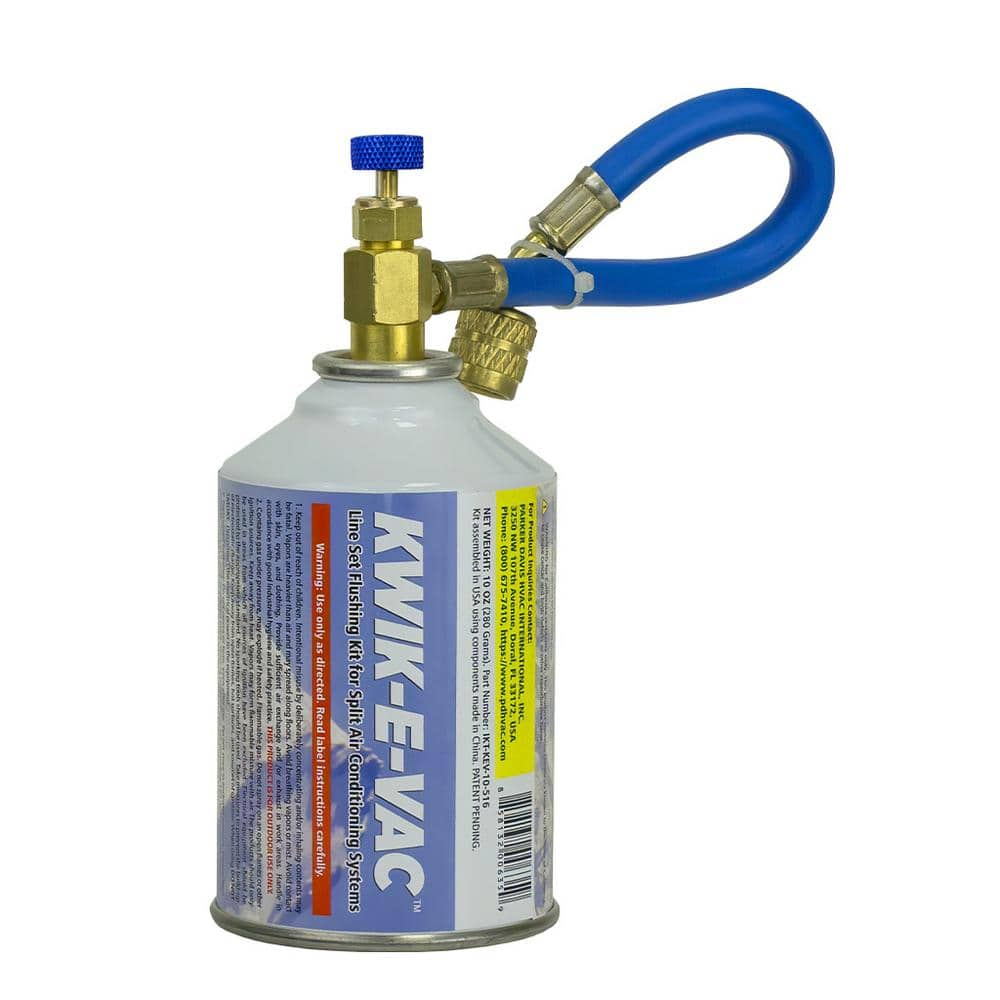
The Pioneer units were about $400ea cheaper than similar DIY Mr Cool systems.
The units both performed incredibly all last summer and appear to be ready to rock this spring as soon as the weather straightens out.
Did use this manufacturer approved "flushing kit' to purge the lines, but otherwise there was nothing all that special about the installs.
Pioneer KWIK-E-VAC Line Set Flushing Kit for Mini Split Air Conditioning Systems IKT-KEV-10-516 - The Home Depot
Pioneer KWIK-E-VAC is an all-new, revolutionary, patented kit designed to simplify the installation process. This product is intended to provide an alternative to a vacuum pump, a tool that was previously
www.homedepot.com
The Pioneer units were about $400ea cheaper than similar DIY Mr Cool systems.
The units both performed incredibly all last summer and appear to be ready to rock this spring as soon as the weather straightens out.
pcmeiners
Well-known member
"That’s it, no mention of a pressure test, nitrogen, or a micron gauge."
As to a pressure test, I can question the need for a high pressure test to a point, though you still need nitrogen purges. As to not using a micron gauge, you could easily miss a slow leak without using one, it also cuts down how long you need to monitor your mechanical pressure gauge for leaks and moisture, all the while of having to consider ambient temperature changes.
As to a pressure test, I can question the need for a high pressure test to a point, though you still need nitrogen purges. As to not using a micron gauge, you could easily miss a slow leak without using one, it also cuts down how long you need to monitor your mechanical pressure gauge for leaks and moisture, all the while of having to consider ambient temperature changes.
Last edited:
racecougar
Well-known member
What the install manual for this unit says is; pull a vacuum for 30 minutes, if it holds, fill the system. That’s it, no mention of a pressure test, nitrogen, or a micron gauge.
The Gree manual is even less stringent. Pull a vacuum for 10-15 mins, and watch it for 1-2 mins. No micron gauge, no nitrogen, no nothing.

housewolf
Well-known member
Well if summer doesn’t get here quickly I’m in no hurry. First day the temps are 84*+, test over, start the unit."That’s it, no mention of a pressure test, nitrogen, or a micron gauge."
As to a pressure test, I can question the need for a high pressure test to a point, though you still need nitrogen purges. As to not using a micron gauge, you could easily miss a slow leak without using one, it also cuts down how long you need to monitor your mechanical pressure gauge for leaks and moisture, all the while of having to consider ambient temperature changes.

Summers down here for the most part aren’t pleasant but I’m getting anxious. I’m sitting here outside now and it’s 60* our highs haven’t even consistently been in the 80s yet and nothing in the two week forecast says that will change. That’s unseasonably cool for Texas this time of year.
metlmunchr
Well-known member
- Joined
- Sep 10, 2011
- Messages
- 1,280
"The EPA has defined small appliance as 5# or less of refrigerant,"
Technically the amount of 410a used in many minisplits is under 5lbs but it is a high pressure refrigerant thus type II
"if you work on any system that doesn't qualify as a small appliance or low pressure system....you need type II or universal certification"
Fully agree the EPA's chance of bothering an individual is about zero, if they are going to bother anyone, it a business with deep pockets. I got my universal to buy gas, and maybe I can get a repair part under a warranty.
Aside from that, the entire EPA 608 laws are warped. Example...If you have a very large low pressure system such as a chiller with hundreds of pounds of refrigerant, it is OK to have rupture disks to vent gas (all or nothing); if the EPA is so worried, they would mandate a pressure relief system which it should be. Also I like the percent of gas leakage allowed and time frame large systems get for repairs; basically they can let 100s of pounds of gas leak, god forbid I let an oz of gas release . The 608 cert reminds me of the asbestos regulations, where the government should NOT be making up the regulations.
Metimunchr, thanks for the precharged line info.
You have to look at the definition of high and low pressure refrigerants as defined by federal regulation 40 CFR 82.152. A low pressure refrigerant is one that has a saturation pressure less than 45 psia (30 psig) at 104*F. In simple terms, this means if you put a liquid refrigerant in a sealed container and raise the temperature to 104*F, the pressure will be 45 psia or less.
By this definition, all the common refrigerants used in residential A/C or refrigeration over the last 60-70 years are classified as high pressure. R-12, 22, 134A, 500, 410A, etc. I'm not sure where the low pressure thing comes into a type 1 cert, but I assume it could be related to some of the absorption type refrigerators used in RV's. I have no knowledge of those as I always avoided working on anything RV related like I'd avoid the plague. In any case, purchase of R-410A wouldn't be excluded from purchase because it happens to have higher operating pressures than the other high pressure refrigerants.
I agree that the practice of venting a rupture disc on a centrifugal chiller to atmosphere is simply crazy, not only from a pollution standpoint but from an economic standpoint as well. Back in the early 90's, I had installed a 200 ton York centrifugal as a part of a hospital remodel and addition job I had. We had started up the system and were a couple days away from putting it online for the remodeled portion of the job when some ***** water treatment "expert" contracted by the hospital dumped a bunch of chemicals into the condenser water and fouled the condenser to the point where the rupture disc let go and blew all the R-11 out of the chiller. We ended up with a change order for several thousand $$ to pay York's people to pull the heads, clean the condenser, and recharge the chiller.
While idiot proofing isn't possible, if there was a requirement for a pressure vessel to contain the low pressure refrigerant from a centrifugal chiller in case of a disc rupture, not only would you not be blowing the gas into the atmosphere, but you'd also be able to recover the gas to recharge the chiller.
Re the precharged line hookup requirements, that surprised me. Trane used precharged line sets with fittings made by Aeroquip in the early days after they purchased GE's residential equipment line. They were a general pain in the *** as compared to standard hookups using brazed connections as initial leaks at the joints were far more common and difficult to deal with as compared to the near zero issues with brazed joints made by a competent installer.
Last edited:
pcmeiners
Well-known member
"While idiot proofing isn't possible, if there was a requirement for a pressure vessel to contain the low pressure refrigerant from a centrifugal chiller in case of a disc rupture, not only would you not be blowing the gas into the atmosphere, but you'd also be able to recover the gas to recharge the chiller."
At this point I am assuming most new chiller setups now have a tank for recover purposes, but God forbid the EPA would mandate a pressure relief system to dump to the tank first, then if the pressure is still somehow dangerous, have a rupture disk as a secondary safety in place. As to rupture disks, they are like late 1800s technology, not to mention 15 lbs rupture pressure is too damn low . Again the government screws thing up.
As to brazing, I think they want to avoid it as it weaken the copper pipe. Along with this I wonder how many HVAC guy can't braze, and the liability of fires and comp cases due to burns; I know in NYC the HVAC guys use to live on yearly recharge service calls, to them a small leak was no problem.
"Summers down here for the most part aren’t pleasant but I’m getting anxious."
Pleasant would not be a word I used in a sentence in reference to Texas in the summer. My word would only be 4 letters. I would not survive in Texas.
"The Gree manual is even less stringent. Pull a vacuum for 10-15 mins, and watch it for 1-2 mins. No micron gauge, no nitrogen, no nothing."
Sort of Russian Roulette, 90-95% of the time you will have no problem, but watch a mechanical gauge for only 2 minutes... your pulling the tiger with 1 round in a six shooter. If your system has a (very)slow leak, watching a gauge for 2 minutes, the needle will not move, it might not move in multiple hours, whereas with a micron gauge you will see it immediately; my gauge starts at 25000 microns, so I have 25000 increments, and the meter updates in a fraction of second .
As to the nitrogen purge, as long as your vacuum gets all the moisture, your fine; get all the moisture in 15 minutes, unlikely, be prepare for a longer vacuum time, then with a Nitrogen purges. Are you sure you got all the moisture? a micron gauge is far more accurate than gauges.
No high pressure test, you will probably will be OK, as long as your vacuum test really shows no leak, then again in 1-2 minutes I would say it is absolutely totally IMPOSSIBLE to catch a small leak with mechanical gauges in that time frame. With a tiny leak maybe in 24 hours, than again you will need to be great at compensating for ambient temperature changes.
My point, why have doubts with a high cost item (even with a steep discount, rebates and tax credits). Even if it ends up costing you very little, it is a pain in the *** to replace, and of course it will fail at an inopportune time. At least buy or borrow a micron gauge; check the gauge has no leaks, think that is unlikely.... I bought (2) new Elitech VG-760 Digital micron gauges within a few weeks of each other, both leaked massively, finally got a used Yellow Jacket 69086, no leaks.
At this point I am assuming most new chiller setups now have a tank for recover purposes, but God forbid the EPA would mandate a pressure relief system to dump to the tank first, then if the pressure is still somehow dangerous, have a rupture disk as a secondary safety in place. As to rupture disks, they are like late 1800s technology, not to mention 15 lbs rupture pressure is too damn low . Again the government screws thing up.
As to brazing, I think they want to avoid it as it weaken the copper pipe. Along with this I wonder how many HVAC guy can't braze, and the liability of fires and comp cases due to burns; I know in NYC the HVAC guys use to live on yearly recharge service calls, to them a small leak was no problem.
"Summers down here for the most part aren’t pleasant but I’m getting anxious."
Pleasant would not be a word I used in a sentence in reference to Texas in the summer. My word would only be 4 letters. I would not survive in Texas.
"The Gree manual is even less stringent. Pull a vacuum for 10-15 mins, and watch it for 1-2 mins. No micron gauge, no nitrogen, no nothing."
Sort of Russian Roulette, 90-95% of the time you will have no problem, but watch a mechanical gauge for only 2 minutes... your pulling the tiger with 1 round in a six shooter. If your system has a (very)slow leak, watching a gauge for 2 minutes, the needle will not move, it might not move in multiple hours, whereas with a micron gauge you will see it immediately; my gauge starts at 25000 microns, so I have 25000 increments, and the meter updates in a fraction of second .
As to the nitrogen purge, as long as your vacuum gets all the moisture, your fine; get all the moisture in 15 minutes, unlikely, be prepare for a longer vacuum time, then with a Nitrogen purges. Are you sure you got all the moisture? a micron gauge is far more accurate than gauges.
No high pressure test, you will probably will be OK, as long as your vacuum test really shows no leak, then again in 1-2 minutes I would say it is absolutely totally IMPOSSIBLE to catch a small leak with mechanical gauges in that time frame. With a tiny leak maybe in 24 hours, than again you will need to be great at compensating for ambient temperature changes.
My point, why have doubts with a high cost item (even with a steep discount, rebates and tax credits). Even if it ends up costing you very little, it is a pain in the *** to replace, and of course it will fail at an inopportune time. At least buy or borrow a micron gauge; check the gauge has no leaks, think that is unlikely.... I bought (2) new Elitech VG-760 Digital micron gauges within a few weeks of each other, both leaked massively, finally got a used Yellow Jacket 69086, no leaks.
Last edited:
racecougar
Well-known member
Sort of Russian Roulette, 90-95% of the time you will have no problem, but watch a mechanical gauge for only 2 minutes... your pulling the tiger with 1 round in a six shooter. If your system has a (very)slow leak, watching a gauge for 2 minutes, the needle will not move, it might not move in multiple hours, whereas with a micron gauge you will see it immediately; my gauge starts at 25000 microns, so I have 25000 increments, and the meter updates in a fraction of second .
As to the nitrogen purge, as long as your vacuum gets all the moisture, your fine; get all the moisture in 15 minutes, unlikely, be prepare for a longer vacuum time, then with a Nitrogen purges. Are you sure you got all the moisture? a micron gauge is far more accurate than gauges.
No high pressure test, you will probably will be OK, as long as your vacuum test really shows no leak, then again in 1-2 minutes I would say it is absolutely totally IMPOSSIBLE to catch a small leak with mechanical gauges in that time frame. With a tiny leak maybe in 24 hours, than again you will need to be great at compensating for ambient temperature changes.
My point, why have doubts with a high cost item (even with a steep discount, rebates and tax credits). Even if it ends up costing you very little, it is a pain in the *** to replace, and of course it will fail at an inopportune time. At least buy or borrow a micron gauge; check the gauge has no leaks, think that is unlikely.... I bought (2) new Elitech VG-760 Digital micron gauges within a few weeks of each other, both leaked massively, finally got a used Yellow Jacket 69086, no leaks.
I was simply providing the manual. I did not advise that it was a smart thing to do.
danski0224
Well-known member
That's because the DIY target market doesn't own tools to do the work and/or doesn't want to buy them.The Gree manual is even less stringent. Pull a vacuum for 10-15 mins, and watch it for 1-2 mins. No micron gauge, no nitrogen, no nothing.
Combined with likely nebulous warranty coverage, or no coverage from the online seller, it's a win win situation. For them.
pcmeiners
Well-known member
Get a kick out of manufacturers stating the warranty is void if purchased from an online dealer, the online retailer I purchased from buys from the manufacturer direct. I wonder if the stipulation would hold up if a states attorney general became involved. Personally I think the manufacturers are pushing the boundary of legality with the warranty stipulations.
metlmunchr
Well-known member
- Joined
- Sep 10, 2011
- Messages
- 1,280
Based on a few articles I've read, the common practice for mini split installation in Asia is to do something {quick evacuation, blow some refrigerant thru the lines, etc} to remove the bulk of the air from the system, then hook up the lines and let 'er rip. The helter skelter variation of installation instructions supplied with units in the US market are primarily just translations of the original language instructions.
Here in the US and in most first world countries we have well established best practices for installation that assure the best chance for long term reliability of any split hvac system. These practices are well known and include both pressure testing and deep evacuation to remove not only air but also any moisture that exists in the evaporator and line set. A person can choose to follow the best procedures or they can use the excuse that the instructions don't mention any or all of these steps. After all, its your money and your problem if things don't work out when you choose to cut corners.
Here in the US and in most first world countries we have well established best practices for installation that assure the best chance for long term reliability of any split hvac system. These practices are well known and include both pressure testing and deep evacuation to remove not only air but also any moisture that exists in the evaporator and line set. A person can choose to follow the best procedures or they can use the excuse that the instructions don't mention any or all of these steps. After all, its your money and your problem if things don't work out when you choose to cut corners.
Coils!!! Upright coils look like an oil trap to me, but I am not a HVAC engineer, but am burdened with common sense. I would lay coils flat and above service valves on unit. One bright young fella made a roof/cover above the unit and put the coil in it!My use is in a metal workshop building and while the engineer in me will not like the coiled lines, if I measure carefully I can probably just put the indoor units were ever the end of the line falls.
I did not use coils, I ran the extra lineset in a serpentine fashion behind the condenser unit. What turned me off on the Mr Cool was the unneeded lineset coiled up behind the unit.
pcmeiners
Well-known member
"After all, its your money and your problem if things don't work out when you choose to cut corners."
With the lawyers writing the minisplit warranties. no matter what you do, correct or incorrect it is your problem. They even mandate what legal rights you have as in mandated arbitration. Nothing like having lobbyists influencing law makers...along with apple pie, the flag, it's the American way.
On the good side, just got an email, my (2) $450 minisplit PPL Electric rebates were approved, nice
With the lawyers writing the minisplit warranties. no matter what you do, correct or incorrect it is your problem. They even mandate what legal rights you have as in mandated arbitration. Nothing like having lobbyists influencing law makers...along with apple pie, the flag, it's the American way.
On the good side, just got an email, my (2) $450 minisplit PPL Electric rebates were approved, nice
Last edited:
housewolf
Well-known member
Follow up;
Even though the Daiken installation manual doesn’t mention a micron gauge, I do want the level of QA it provides. I was looking to buy one/reading reviews and started getting apprehensive hearing so many of them not working right out of the box. I called a local HVAC service company and asked what they’d charge to do it at their convenience. $85 for leak test, vacuum, and start up. That’s a no brainer in my situation. I’m “involved” with an HVAC service company but our area is 70 miles from me, I can’t cover the costs of one of our techs coming out or buy a micron gauge for $85.
Even though the Daiken installation manual doesn’t mention a micron gauge, I do want the level of QA it provides. I was looking to buy one/reading reviews and started getting apprehensive hearing so many of them not working right out of the box. I called a local HVAC service company and asked what they’d charge to do it at their convenience. $85 for leak test, vacuum, and start up. That’s a no brainer in my situation. I’m “involved” with an HVAC service company but our area is 70 miles from me, I can’t cover the costs of one of our techs coming out or buy a micron gauge for $85.
danski0224
Well-known member
It is doubtful that a micron gauge is defective out of the box.Follow up;
Even though the Daiken installation manual doesn’t mention a micron gauge, I do want the level of QA it provides. I was looking to buy one/reading reviews and started getting apprehensive hearing so many of them not working right out of the box. I called a local HVAC service company and asked what they’d charge to do it at their convenience. $85 for leak test, vacuum, and start up. That’s a no brainer in my situation. I’m “involved” with an HVAC service company but our area is 70 miles from me, I can’t cover the costs of one of our techs coming out or buy a micron gauge for $85.
What a micron gauge will show you is your defective equipment that's hooked up to the system.
Charging hoses that aren't vacuum rated are porous like a sponge to a micron gauge. So is the charging manifold.
All of the refrigerant oil in the hoses and manifold will off gas and cause wonky micron gauge readings.
Hose connections to service ports will leak if the gaskets are not in the best of shape, and/or if a sealant like Nylog is not used.
****** vacuum pumps won't pull down a vacuum very well. Contaminated vacuum oil will not pull down a vacuum very well, and a micron gauge will show that the oil needs to be changed for each use, at a minimum.
Using 1/4" HVAC charging hoses and leaving Schrader cores in will not allow a vacuum to be pulled very quickly.
There are some free training videos on Tru Tech Tools pertaining to pulling a vacuum and micron gauges and hoses. Well worth watching.
pcmeiners
Well-known member
"It is doubtful that a micron gauge is defective out of the box."
Used micron gauges for years. Both gauges were directly hooked up to a vauum pump, with only a valve and checkvalve in place in line to test the gauges; same setup for testing as other non leaking micron gauges I have used. The first gauge lost vacuum within minutes, the second slower. Changed the seals on the units, but still leaked. Originally had a Fieldpiece, which was fine, but the battery leaked and killed it (1 year old), Yellow Jacket gauge has been fine.
As note if you google leaking micron gauges it is not as uncommon as you think.
"$85 for leak test, vacuum, and start up."
Around my area no one will touch a DIY
Used micron gauges for years. Both gauges were directly hooked up to a vauum pump, with only a valve and checkvalve in place in line to test the gauges; same setup for testing as other non leaking micron gauges I have used. The first gauge lost vacuum within minutes, the second slower. Changed the seals on the units, but still leaked. Originally had a Fieldpiece, which was fine, but the battery leaked and killed it (1 year old), Yellow Jacket gauge has been fine.
As note if you google leaking micron gauges it is not as uncommon as you think.
"$85 for leak test, vacuum, and start up."
Around my area no one will touch a DIY
Last edited:
danski0224
Well-known member
If you are relying on the isolation valve in a vacuum pump, there's your problem. Not to mention contaminated oil.
pcmeiners
Well-known member
"If you are relying on the isolation valve in a vacuum pump, there's your problem."
“What we’ve got here is failure to communicate.” . Please read my last posts, I did not have, repeat did not have a problem with my knowlege or my equipement, other than 2 new leaking gauges.
“What we’ve got here is failure to communicate.” . Please read my last posts, I did not have, repeat did not have a problem with my knowlege or my equipement, other than 2 new leaking gauges.
Last edited:
housewolf
Well-known member
On the one hand; I believe it’s probably not as common as the reviews on Amazon would leave one to believe. On the other; seeing a dozen reviews on every gauge I looked at claiming DOA didn’t exactly give me the warm & fuzzies either.It is doubtful that a micron gauge is defective out of the box
pcmeiners
Well-known member
DOA gauges are not super common but the two Elitech gauges were a dead issue, a definite manufacturing issue; mind you Elitech and other companies sell the same basic gauge. Others on the Internet get gauges with very slow leaks which is more common than DOA. Had a difficult time believing the first gauge had an issue until I isolated it as the only device in the vacuum system, the second Elitech went to testing right out of the box.
The main issue, I had a system ready to go, my Fieldpiece dies from battery acid, 2 weeks to get the first Elitech, another 10 days for the second, 2 more weeks until I got the Yellow Jacket, so I got jammed up for over a month.
Strange story.... I go to (2) plumbing/HVAC supply houses and (1) refrigeration supply house, in the Bloomsburg area, I ask each one for an adapter for a micron gauge I had in my hand. All (3) counter personal looked at me like a deer in the headlights, they did not know what a micron gauge was... I thought I was in the twilight zone, totally dumbfounded. Ended up ordering what I needed over the Internet
The main issue, I had a system ready to go, my Fieldpiece dies from battery acid, 2 weeks to get the first Elitech, another 10 days for the second, 2 more weeks until I got the Yellow Jacket, so I got jammed up for over a month.
Strange story.... I go to (2) plumbing/HVAC supply houses and (1) refrigeration supply house, in the Bloomsburg area, I ask each one for an adapter for a micron gauge I had in my hand. All (3) counter personal looked at me like a deer in the headlights, they did not know what a micron gauge was... I thought I was in the twilight zone, totally dumbfounded. Ended up ordering what I needed over the Internet
Last edited:
Amazing, going from watching people install mini's in Asia without even a vacuum pump to being exposed to Daikin Univesity, plus seeing what I believe are pretty competent installers on the net. Now reading the manuals, I think we will be seeing lots of failed DIY installs here.
FYI when I bought the ready to use lineset 1 out of 4 flairs would not pass the flair gauge test!
FYI when I bought the ready to use lineset 1 out of 4 flairs would not pass the flair gauge test!
danski0224
Well-known member
I have always heard to cut off the factory lineset flares, and remake them.
IIRC Daikin University and what appears to be the knowledgeable techs on You Tube say to remove the light weight flair nuts and use the heavier ones on the units. Noticeable difference in the bulk and weight of the unit flair nuts.I have always heard to cut off the factory lineset flares, and remake them.
pcmeiners
Well-known member
"Now reading the manuals, I think we will be seeing lots of failed DIY installs here."
Agree, it seems we have some members who are proud of how many improper installation procedures they can get away with...beats me considering how expensive minisplits and service calls are.
Agree, it seems we have some members who are proud of how many improper installation procedures they can get away with...beats me considering how expensive minisplits and service calls are.
racecougar
Well-known member
Who?"Now reading the manuals, I think we will be seeing lots of failed DIY installs here."
Agree, it seems we have some members who are proud of how many improper installation procedures they can get away with...beats me considering how expensive minisplits and service calls are.