
You are using an out of date browser. It may not display this or other websites correctly.
You should upgrade or use an alternative browser.
You should upgrade or use an alternative browser.
DIY Solar
- Thread starter N_Jay
- Start date
vrinner
Well-known member
Where are you located. I'm in SoCal and got several quotes from big name companies that advertise a lot. Then got a quote from a recommended independent and price was about 2/3 for the exact same system/components.Has anyone does a DIY Solar system or designed and purchased the parts for others to install.
Looking to get names of trustworthy suppliers and average costs (and savings vs. a full install compnay)
Half-fast eddie
Well-known member
Does Dominion Power or Duke Power offer anything? Might be a place to start, see what brands they install.
Stuart in MN
Well-known member
I just watched a video from this guy the other day, he has an off grid cabin and put in some solar:
He is in Canada, so I don't know if the panels he chose are available where you live.
billconner
Well-known member
Following, especially since someone suggested it would be $25-30k for service where I want to build a cabin. Waiting for official estimate, but sure makes me look at solar.
inphx
Well-known member
My tesla install fell through (they wont do the roof mount on my toy shop steel roof unless its standing seam style roof) . On my tracking spreadsheet im at $21,916 for a DIY 16kw (solar) 12kw out of the inverters and with a starter 10.2kw of battery backup. Hustling to install this year to claim 2022 fed tax credit.
There are mounts for 5-rib corrugated steel (That is what I have).
How many panels of what size is your design?
Since I have commercial power, I am not doing a battery.
Hoping (but losing hope) it comes together for this years rebate.
How many panels of what size is your design?
Since I have commercial power, I am not doing a battery.
Hoping (but losing hope) it comes together for this years rebate.
inphx
Well-known member
Yes i found the "s-5!" clamps for my use. But Tesla wont deviate from main stream cookie cutter installs, and this was new for them.There are mounts for 5-rib corrugated steel
rebelranger
Well-known member
- Joined
- Sep 18, 2012
- Messages
- 188
I did diy solar. 7.7kw system 100% diy for under $5k.
I installed on my shop corrugated roof. SMA sunny boy 7.7, Trina panels, ironridge racking, snapnrack connectors.


I installed on my shop corrugated roof. SMA sunny boy 7.7, Trina panels, ironridge racking, snapnrack connectors.
rebelranger
Well-known member
- Joined
- Sep 18, 2012
- Messages
- 188
I did not use batteries and am grid tied due to batteries cost and ROI over 10years with power consumption limitations.
My house and shop are 100% electric, minus outdoor BBQ grill. Water heater is heat pump, hvac heat pump, stove, over, dryer are electric.
I used factory solar connectors in series to use the smallest wire from panels to inverter. This method uses high voltage but low amperage [safer] so save money on wire.
I had to submit an application for permits and grid tie permissions. The electric copy inspected and cleared my install.
I make enough power daily to have a 0 electric usage bill [ still pay hook up fee] and build a credit for winter when solar generation is lower.
I got three non batteries quote before I installed, lowest was 26,000, highest was 31,000. I did it for under 5,000!
My house and shop are 100% electric, minus outdoor BBQ grill. Water heater is heat pump, hvac heat pump, stove, over, dryer are electric.
I used factory solar connectors in series to use the smallest wire from panels to inverter. This method uses high voltage but low amperage [safer] so save money on wire.
I had to submit an application for permits and grid tie permissions. The electric copy inspected and cleared my install.
I make enough power daily to have a 0 electric usage bill [ still pay hook up fee] and build a credit for winter when solar generation is lower.
I got three non batteries quote before I installed, lowest was 26,000, highest was 31,000. I did it for under 5,000!
rebelranger
Well-known member
- Joined
- Sep 18, 2012
- Messages
- 188
Seriously super easy install. Ask any questions you want.
billconner
Well-known member
Rebelranger, did you look at batteries? Any idea what that would add?
dcg9381
Well-known member
Seriously super easy install. Ask any questions you want.
I have installed several "DIY" systems... I wouldn't call it "easy" especially with DC voltages that can go over 400V. I'd say if you can install a sub panel and have mastered 12V DC wiring, you've got a good shot at understanding it.
Now will your utility let you do it by yourself is a different matter.. (They will in my area)
ROI will largely be determined by the agreement with your power provider. And by the way, they may decide to change it in the future. Our original ROI was probably 6-7 years (I did all the labor). They changed the net metering program, it's probably doubled that time table.
rebelranger
Well-known member
- Joined
- Sep 18, 2012
- Messages
- 188
I did and continue to look. If I were to add batteries I've priced it on low end at $15000 and higher end over $35000. I would have to AC couple, so an off grid inverter, and I need 30kw in batteries to comfortably last a cold winter day.Rebelranger, did you look at batteries? Any idea what that would add?
Telsa batteries are $9850 installed, 13.5kw
LG resu lithium are $10k without inverter, 16kw
Linotech lithium $5k w/o inverter, 10kw.
I could never make the numbers work to justify.
rebelranger
Well-known member
- Joined
- Sep 18, 2012
- Messages
- 188
I have installed several "DIY" systems... I wouldn't call it "easy" especially with DC voltages that can go over 400V. I'd say if you can install a sub panel and have mastered 12V DC wiring, you've got a good shot at understanding it.
Now will your utility let you do it by yourself is a different matter.. (They will in my area)
ROI will largely be determined by the agreement with your power provider. And by the way, they may decide to change it in the future. Our original ROI was probably 6-7 years (I did all the labor). They changed the net metering program, it's probably doubled that time table.
Well I guess our experiences are different.
My home system does not expose you or anyone one to the 500v in the lines because it's plug and play mc4 connectors. This was not a "diy" kit, it was all parts which three companies were going to use but I installed myself instead.
My ROI is under 2 years. I highly Recommend every house install solar and not get screwed by a solar bs company.
billconner
Well-known member
Rooftop or freestanding? I lean towards freestanding. Been reading about vertical panels and two sided.
Notgrownup
Well-known member
Friend of mine installed a system in Canada, loves it. Did it gradually and now is off grid. Still has a few little inverter generators in case and only uses them now when using high demand power tools. All regular appliances are all on solar and battery bank. I no clue what it cost him.
earl84
Well-known member
I paid $200 for Boxed Solar to design a system, since I was new to solar. Bought my equipment from them, they refunded the $200. I needed all their details to get an electrical permit anyway, and it would have been a maddening experience for me to do all that work and research. I had to pass an electrical inspection, but around here, homeowner can do the entire install. Their prices on equipment was as good or better than most companies. They were very responsive and helpful with questions, and I would recommend them.
Did the entire ground mount install minus the actual hooking up and routing of wires into the subpanel and inverter, I paid an electrician to do that. Was just over $12k with everything including trencher and Bobcat rental. With federal credits and local power company credit, payback will be 5.5-6 years.
Did the entire ground mount install minus the actual hooking up and routing of wires into the subpanel and inverter, I paid an electrician to do that. Was just over $12k with everything including trencher and Bobcat rental. With federal credits and local power company credit, payback will be 5.5-6 years.
reader2580
Well-known member
I installed my own DIY grid-tie solar system. I spent just over $1 per watt for a 9,300 watt system after federal tax credits. I did LOTs of research including actually reading the NEC. (The NEC is available to read online for free.) It was the first electrical inspection of a dozen that I failed, but the fixes were pretty minor and easy to do. None of the fixes involved any wiring issues.
I did some additional solar work later which necessitated a new meter base, exterior service disconnect switch, and a new load center. I had to separate the neutrals and grounds in the load center after adding the external service disconnect. It was nearly impossible to do with the current load center so I installed a new one. I had already replaced most of the breakers with AFCI for previous electrical upgrades in the house. My understanding is you can take the tax credit for any electrical upgrades required for a solar installation.
I did some additional solar work later which necessitated a new meter base, exterior service disconnect switch, and a new load center. I had to separate the neutrals and grounds in the load center after adding the external service disconnect. It was nearly impossible to do with the current load center so I installed a new one. I had already replaced most of the breakers with AFCI for previous electrical upgrades in the house. My understanding is you can take the tax credit for any electrical upgrades required for a solar installation.
gpiggaz
Well-known member
There have been a few other threads on this, but I'll quote you my experience.
We installed our own system last year, We used a ground mounted system because of the angles and type of roof we have ( tile) We didn't go with the least expensive solution because we decided we wanted to use SolarEdge optimizers and their inverter. This adds about $70/panel to the cost of the installation for the solar optimizer that is put on the back of each panel. We also used Mission Solar 385W panels (24 of them) These too were not the least expensive, but they were made in the USA. Our system generates power from dawn to dusk because the optimizers step up the panel voltage so that if there is any energy available, it makes it to the inverter. All in we spent about 20K (pre tax credit) for 9.2KW DC ( 7.6KW AC) the oversizing the DC gets us closer to an ideal amount of power out of the system on a daily basis . We didn't optimize the tilt angle, which costs us a few KWH of power a month, but it is a much more attractive system where we put it in our yard. The cost of ground mounting adds a considerable cost, in terms of site prep, We had to dig 12 holes for the piers, and we hand mixed concrete since site access was limited. Plus we had to order the pipes from out of state so there was an additional shipping cost that effected the installed price. Plus we did this installation at the height of Covid, so some materials were hard to get ( think Conduit!) and prices were jacked up.
We did have to become "official" installers with the local power company, getting them to approve the installation was one extra step beyond just getting the local authority to approve the plans. We had to sign a 10 year agreement with the local power company for their "Distributed Generation " rules including an agreement to maintain it.
We purchased all of the solar equipment from a company called Unbound Solar.com, they were wonderful to work with, had reasonable prices on the panels and SolarEdge equipment. They created one of the drawings the county and power company required as part of their sales service, We had to create all the other required drawings, Plot plan, Plan view drawing, Iron Ridge provided the engineering for the ground mount as part of process. (it's all done on line) SolarEdge designer helps with the predictions of the power generated. We've matched the projections for all but the last 2 months, But not because the predictions are wrong, it's been exceedingly cloudy in AZ since mid June!.
If we had to do it again, we'd still go with Unbound Solar and use Solar Edge inverters and optimizers, They seem to be very robust so far, As for the panels, we'd likely buy similar ones but might be open to foreign sources if the warranty and pricing were reasonable. Solar panels are pretty much a commodity now.
Finally, we looked into battery backup- the ROI just isn't there at this time for our area.
Our system generates about $200/month average so far - we try to use the solar power in real time, because the local utility pays us wholesale for any overage. So we actually charge our cars around noon each day- our house is all electric too- So no gas for Hot-water or cooking.
So $20K spent, less $5.2K tax credit. $14.8K after tax credit, payback will be a little over 6 years, presuming no maintenance costs.
Hope that is useful information.
We installed our own system last year, We used a ground mounted system because of the angles and type of roof we have ( tile) We didn't go with the least expensive solution because we decided we wanted to use SolarEdge optimizers and their inverter. This adds about $70/panel to the cost of the installation for the solar optimizer that is put on the back of each panel. We also used Mission Solar 385W panels (24 of them) These too were not the least expensive, but they were made in the USA. Our system generates power from dawn to dusk because the optimizers step up the panel voltage so that if there is any energy available, it makes it to the inverter. All in we spent about 20K (pre tax credit) for 9.2KW DC ( 7.6KW AC) the oversizing the DC gets us closer to an ideal amount of power out of the system on a daily basis . We didn't optimize the tilt angle, which costs us a few KWH of power a month, but it is a much more attractive system where we put it in our yard. The cost of ground mounting adds a considerable cost, in terms of site prep, We had to dig 12 holes for the piers, and we hand mixed concrete since site access was limited. Plus we had to order the pipes from out of state so there was an additional shipping cost that effected the installed price. Plus we did this installation at the height of Covid, so some materials were hard to get ( think Conduit!) and prices were jacked up.
We did have to become "official" installers with the local power company, getting them to approve the installation was one extra step beyond just getting the local authority to approve the plans. We had to sign a 10 year agreement with the local power company for their "Distributed Generation " rules including an agreement to maintain it.
We purchased all of the solar equipment from a company called Unbound Solar.com, they were wonderful to work with, had reasonable prices on the panels and SolarEdge equipment. They created one of the drawings the county and power company required as part of their sales service, We had to create all the other required drawings, Plot plan, Plan view drawing, Iron Ridge provided the engineering for the ground mount as part of process. (it's all done on line) SolarEdge designer helps with the predictions of the power generated. We've matched the projections for all but the last 2 months, But not because the predictions are wrong, it's been exceedingly cloudy in AZ since mid June!.
If we had to do it again, we'd still go with Unbound Solar and use Solar Edge inverters and optimizers, They seem to be very robust so far, As for the panels, we'd likely buy similar ones but might be open to foreign sources if the warranty and pricing were reasonable. Solar panels are pretty much a commodity now.
Finally, we looked into battery backup- the ROI just isn't there at this time for our area.
Our system generates about $200/month average so far - we try to use the solar power in real time, because the local utility pays us wholesale for any overage. So we actually charge our cars around noon each day- our house is all electric too- So no gas for Hot-water or cooking.
So $20K spent, less $5.2K tax credit. $14.8K after tax credit, payback will be a little over 6 years, presuming no maintenance costs.
Hope that is useful information.
inphx
Well-known member
... If I were to add batteries
5.1kw rack mount batteries $1500 each at https://signaturesolar.com/shop-all/batteries/eg4-lifepower4/
The system i am doing i have a pair of these "as a starter"
5.1kw rack mount batteries $1500 each at https://signaturesolar.com/shop-all/batteries/eg4-lifepower4/
The system i am doing i have a pair of these "as a starter"
dcg9381
Well-known member
My next system will be backed with batteries. Who are you guys using for inverters with advanced features? Ideally, I want something that can be set to daily store and discharge, since the local POC dropped net metering off the map.
Seems like Enphase and Tesla are the leaders - but their stuff is not "consumer friendly" - it's made to be done by certified installers.
Seems like Enphase and Tesla are the leaders - but their stuff is not "consumer friendly" - it's made to be done by certified installers.
reader2580
Well-known member
A lot of the DIY solar folks with battery storage are using the 48 volt rack mount lithium batteries. Not sure which grid tie inverters can charge or discharge batteries based on time of day. I would like to be able to do this myself at some point.
dcg9381
Well-known member
My home system does not expose you or anyone one to the 500v in the lines because it's plug and play mc4 connectors. This was not a "diy" kit, it was all parts which three companies were going to use but I installed myself instead.
In my area, we still have to get the DC voltage to a physical (accessible by the power company) disconnect. That means I've got to cut wires. Should I do that while the array is active? Probably not (it's protected by rapid shut down anyway) - but there is no getting around (for me) handling high voltage potential DC wires.
Still interested in inverter recommendations that will handle power storage (battery) and power distribution settings that are not Enphase or Tesla..
billconner
Well-known member
I just got some prices for service from road 1200' to river - just wire, no digging - that's on me or extra - starting around $20,000 for 80 amps. Overhead complete - $45,000. Solar and batteries seems to make a lot of sense. Might consider pellets for heat, and or propane for backup with a generator.
rebelranger
Well-known member
- Joined
- Sep 18, 2012
- Messages
- 188
Dcg - I have a physical disconnect as well. It's bottom my meter. I'm at a loss of why you are saying it's dangerous. Regarding your interest I don't know Jack about all the companies but SMA is on point. Solark is another great off grid option. If I add batteries I'll go SMA Sunny Island with rack batteries.
Bill conner- do it and don't look back. You'll need to do a good load calculation for 100% off grid but the tax credit takes a decent nose dive at end of this year, time to pull the trigger.
Bill conner- do it and don't look back. You'll need to do a good load calculation for 100% off grid but the tax credit takes a decent nose dive at end of this year, time to pull the trigger.
reader2580
Well-known member
I'm surprised the power company wants a disconnect on the DC side. My utility requires an AC disconnect switch so one of their linemen could disconnect the power in an emergency. It seems redundant since the inverter has to cut power if power goes out. I also have rapid shutdown at the panels.In my area, we still have to get the DC voltage to a physical (accessible by the power company) disconnect. That means I've got to cut wires. Should I do that while the array is active? Probably not (it's protected by rapid shut down anyway) - but there is no getting around (for me) handling high voltage potential DC wires.
Just a couple basic questions.
After the inverter where does the ac voltage tie into? Does it connect to your breaker panel or does it go out to the meter base?
What type of penetration is used to get the wiring from the roof to inside where the inverter is? Do they go thru the roof or somehow bring it around the edge of the roof?
Just pondering this since it came up as a discussion. When I built my shop I had to change and upgrade my electrical service. So what I ended up with is 1-400a meter base on my house that is split into 2-200a feeds, each with a outdoor disconnect. 1-200a is for the house and the other 200a is for my shop. In my house & shop I have typical 200a breaker panels. I would consider putting panels on my shop roof which is completely out in the open with no trees and is a simple gable roof using metal PBR roof panels on a 4/12 pitch.
After the inverter where does the ac voltage tie into? Does it connect to your breaker panel or does it go out to the meter base?
What type of penetration is used to get the wiring from the roof to inside where the inverter is? Do they go thru the roof or somehow bring it around the edge of the roof?
Just pondering this since it came up as a discussion. When I built my shop I had to change and upgrade my electrical service. So what I ended up with is 1-400a meter base on my house that is split into 2-200a feeds, each with a outdoor disconnect. 1-200a is for the house and the other 200a is for my shop. In my house & shop I have typical 200a breaker panels. I would consider putting panels on my shop roof which is completely out in the open with no trees and is a simple gable roof using metal PBR roof panels on a 4/12 pitch.
reader2580
Well-known member
You can tie into either a breaker panel, or a tap which is commonly done inside the meter base, but just has to be between the meter and the service entrance. (Service entrance is generally your main panel, but can be a service rated disconnect switch too.) I used to have my solar going to the breaker panel in my garage and then my garage panel went to a tap between my meter and my house breaker panel. I moved my solar to ground mount and did a tap directly into the meter base.Just a couple basic questions.
After the inverter where does the ac voltage tie into? Does it connect to your breaker panel or does it go out to the meter base?
What type of penetration is used to get the wiring from the roof to inside where the inverter is? Do they go thru the roof or somehow bring it around the edge of the roof?
There are limits when tying into the breaker panel. For a common 200 amp panel you usually can't go past a 7,600 watt total inverter size without changes to the panel. This limit is why 7,600 watts is a common size for string inverters. You'll have to look online for the exact details.
So if I put it on the shop roof, I would have to run the cabling back to the house where the meter and disconnects are?
Is there a approved way to tap it into the breaker panel before the main breaker?
What gauge ac wire is usually coming out of the inverter?
Is there a approved way to tap it into the breaker panel before the main breaker?
What gauge ac wire is usually coming out of the inverter?
I have a 7.7 SMA inverter, its 32 amps 240 volts maximum, So #8 thhnSo if I put it on the shop roof, I would have to run the cabling back to the house where the meter and disconnects are?
Is there a approved way to tap it into the breaker panel before the main breaker?
What gauge ac wire is usually coming out of the inverter?
reader2580
Well-known member
To me, the tap off the meter is a little bit crazy. This is how it is done at my house, but now I have about a 20 foot run of wire that is always hot unless I remove the meter. I guess it is no different than the run between the meter and my main breaker panel, but that run is around five feet.
reader2580
Well-known member
I would talk to your local electrical inspector on what might be allowed. The NEC technically doesn't allow two electrical feeds to a structure, but solar might be exempt. The reasoning for this rule is so someone doesn't get electrocuted when they turn off power to a building not realizing there is a second feed.So if I put it on the shop roof, I would have to run the cabling back to the house where the meter and disconnects are?
Is there a approved way to tap it into the breaker panel before the main breaker?
There are ways to be able to feed solar into a main breaker panel. The concern with solar in breaker panels is overloading the bus bar. In theory you could be drawing says 200 amps through the main breaker plus an additional say 40 amps through your solar breaker and overload the bus bar. One way to deal with this is to buy a 200 amp panel and replace the main breaker with a 150 amp or 100 amp if you can get by with a smaller main breaker. Another option is a 225 amp breaker panel with a 200 amp main breaker.
Some of this may have changed with the 2020 NEC as I did my solar electrical work under the 2017 NEC. I got my solar electrical permit two days before the change in Minnesota to the 2020 NEC. (Didn't realize the change was imminent when I got my permit.)
I think Tap rules require a fused disconnect within 10 ft? I agree on tapping in Meter pan, I don't believe power companies in Maine will allow thatTo me, the tap off the meter is a little bit crazy. This is how it is done at my house, but now I have about a 20 foot run of wire that is always hot unless I remove the meter. I guess it is no different than the run between the meter and my main breaker panel, but that run is around five feet.
dcg9381
Well-known member
I believe solar is exempt from the 2-feed rule (which changed in 2020). Why? It's not considered a feed because inverters shut down when the grid goes off line.I would talk to your local electrical inspector on what might be allowed. The NEC technically doesn't allow two electrical feeds to a structure, but solar might be exempt. The reasoning for this rule is so someone doesn't get electrocuted when they turn off power to a building not realizing there is a second feed.
Here, I'm required to do a physical disconnect (NEC does not require this if you have "rapid shutdown", but my utility does). So I have to run from panels, to a physical disconnect, inside to the inverter, then over to the panel.
NakeDiesel
Well-known member
I've been spending considerable time researching and am on the initial steps of planning. Mine will be done in phases once I start. I plan on going with a sol-ark 15k that has 200amp pass through built into it. I'm waiting on feedback from sol ark on my plans and if they will work with their all in one inverter.
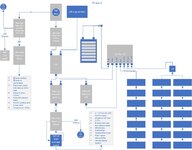
Phase 1 will be installing a ~20kw propane generator, ATS, MTS and Manual Disconnect.
Phase 2 will be installing the Sol-Arc 15 and Sol 14 load management boxes.
Phase 3 will be 3 strings of DC based solar panels with each string feeding into the 3 built in Mppt's. Each Mppt can handle 6.8kw I believe off the top of my head. Looking at Canadian Solar or Trina panels. Most likely ground mounted and will build my own mounts.
Phase 4 will be adding a Lifepo4 battery bank, still researching these.
Phase 5 will be adding AC connected Solar up to 19.5kw for additional power to feed the house.
My biggest issue is figuring out where to put the generator to start with. I have 400 amp service coming in at the pole and feed out to 2 - 200 amp feed through lug boxes. The one that feeds the house also has the 30amp feed to my well house. If I put the genny out there and tap in before the 200 amp box, I can power my well but will need to run like a 1 1/4 or 1 1/2 line from my propane tank to feed the generator about 200' away.
If I put the generator at the back of the house and tap in between the feed from the 200 feed through panel and the house panel, I will either need to run new 2/0 copper from the pole to extend it out or put polaris connectors in a box under the house and extend the lines to the outside panels. Not sure if I really want to do this, still researching into how I want to accomplish this one and figuring out distances from tank to house, etc... for generator pad.
If your wondering about the Manual Disconnect and Manual Transfer switch, this is so if something happens to the inverter, and need to replace or send it in, I can just flip the manual transfer switch to grid feed from the ATS and Turn off the manual disconnect and remove the inverter with no live wires while I work on the inverter or replace it and the house is still powered.
Phase 1 will be installing a ~20kw propane generator, ATS, MTS and Manual Disconnect.
Phase 2 will be installing the Sol-Arc 15 and Sol 14 load management boxes.
Phase 3 will be 3 strings of DC based solar panels with each string feeding into the 3 built in Mppt's. Each Mppt can handle 6.8kw I believe off the top of my head. Looking at Canadian Solar or Trina panels. Most likely ground mounted and will build my own mounts.
Phase 4 will be adding a Lifepo4 battery bank, still researching these.
Phase 5 will be adding AC connected Solar up to 19.5kw for additional power to feed the house.
My biggest issue is figuring out where to put the generator to start with. I have 400 amp service coming in at the pole and feed out to 2 - 200 amp feed through lug boxes. The one that feeds the house also has the 30amp feed to my well house. If I put the genny out there and tap in before the 200 amp box, I can power my well but will need to run like a 1 1/4 or 1 1/2 line from my propane tank to feed the generator about 200' away.
If I put the generator at the back of the house and tap in between the feed from the 200 feed through panel and the house panel, I will either need to run new 2/0 copper from the pole to extend it out or put polaris connectors in a box under the house and extend the lines to the outside panels. Not sure if I really want to do this, still researching into how I want to accomplish this one and figuring out distances from tank to house, etc... for generator pad.
If your wondering about the Manual Disconnect and Manual Transfer switch, this is so if something happens to the inverter, and need to replace or send it in, I can just flip the manual transfer switch to grid feed from the ATS and Turn off the manual disconnect and remove the inverter with no live wires while I work on the inverter or replace it and the house is still powered.
dcg9381
Well-known member
Impressed!