To avoid these ads, REGISTER NOW!

Do 1/2" nuts get brittle from welding?

chowland28

Member
Joined
Aug 8, 2015
Messages
9
Had a project going where I needed a 1/2" nut mig welded onto some steel. Found a 1/2" nut that was not zinc coated or anything, ideal finish for welding. Cleaned 'er off with some brake clean and then layed a few good, hot tacks on a couple of the flats of the nut. (I did not weld the p*ss out of it.)

Didn't really think much of it until now, but this nut is going to have a substantial amount of weight being pulled vertically down on the threads. I have no idea what grade nut I used and I am semi concerned about the nut becoming brittle from the welding?

Unfortunately, the re-do process would be a major PITA. 1/2" hardware will definitely handle the load, I'm just not sure how confident I should be about the grade of the nut and possibly weakening it from welding?
 
To avoid these ads, REGISTER NOW!

f150skidoo

Well-known member
Joined
Dec 29, 2012
Messages
1,206
Location
Ontario, Canada
Re: Do 1/2" nuts get brittle from welding?

I welded the ten 1/2" nuts to the C channel on my press. Those Gr.8 nuts/bolts that hold the cylinders base plate to the frame withstand 42 tons with no issue.

Sent from my LG-K210 using Tapatalk
 

dogdog

Well-known member
Joined
Nov 15, 2011
Messages
12,711
Not sure about the break clean..................

I did weld some 5/8 coupling nuts found in home depot on some plate for shelf support....then used a those long threaded rods to hang the 3' wide about 12' length shelf to the ceiling joist. It's been holding ok. this way I can adjust , level and support the long shelf
 

sberry

Banned
Joined
Jun 18, 2005
Messages
35,747
Location
Brethren, Michigan
It will be fine, it's done 1000's of times every day. As as for the brakeclean as long as it's dry and not sitting in a puddle it's fine, doesn't hurt to vent the place either but you don't need to have it sterile for this either. It shouldn't be covered in grease.
 

f150skidoo

Well-known member
Joined
Dec 29, 2012
Messages
1,206
Location
Ontario, Canada
I should clarify incase OP doesn't know. Chlorinated brake cleaner is dangerous to weld if it hasn't fully dried because it creates phosgene gas which was a very effective WW1 chemical weapon. Non chlorinted is fine to use.

Sent from my LG-K210 using Tapatalk
 
OP
C

chowland28

Member
Joined
Aug 8, 2015
Messages
9
I just used the brake clean to clean off any grease and what not that may have been on the nut before I did the welding. I didn't mean for that to be the highlight of this post lol. I should not have added that detail.
 

dogdog

Well-known member
Joined
Nov 15, 2011
Messages
12,711
I just used the brake clean to clean off any grease and what not that may have been on the nut before I did the welding. I didn't mean for that to be the highlight of this post lol. I should not have added that detail.

It's for your safety.... not exactly a bashing. these things most likely your welds will fail before your nuts does... all dependents.
 

kwb

Well-known member
Joined
May 1, 2009
Messages
1,771
Location
PNW
Typically a nut is softer than the bolt so the material is less likely to get brittle (have brittle areas in HAZ)

The design should be that the nut is trying to be pulled through the part it was welded to not pushed out. The welds should be there just to react the forces of twisting a bolt into it.
 
OP
C

chowland28

Member
Joined
Aug 8, 2015
Messages
9
Typically a nut is softer than the bolt so the material is less likely to get brittle (have brittle areas in HAZ)

The design should be that the nut is trying to be pulled through the part it was welded to not pushed out. The welds should be there just to react the forces of twisting a bolt into it.

That is exactly how it is assembled...Besides the brittleness, my only concern would be that I am unsure of the grade of the nut. Even if it turned out to be the crappiest nut sold, could the threads really get ripped out THAT easily? I would assume not?
 

Advan

Well-known member
Joined
May 25, 2014
Messages
442
Location
Ontario, Canada
That is exactly how it is assembled...Besides the brittleness, my only concern would be that I am unsure of the grade of the nut. Even if it turned out to be the crappiest nut sold, could the threads really get ripped out THAT easily? I would assume not?


A standard 5-6 pitch nut will always have at least the "holding strength" equal to the tensile of the male-threaded element. So if it turns out you've used a grade 2 nut, you'll still have 10,000 lbs tensile and 8000lbs proof load. At this point you're most likely relying on the material that you've welded the nut too.
 
OP
C

chowland28

Member
Joined
Aug 8, 2015
Messages
9
Wow. I was totally unaware how dangerous brake cleaner can really be. Thankfully, I was using non chlorinated. I will be sure to be extremely careful as well as pass the information along. Thanks for the lesson everyone!
 

Fueler

Well-known member
Joined
Jun 22, 2006
Messages
1,620
Location
Urbana, IL
You boys notice the "chlorinated" part of the warnings?
Use NON-chlorinated brake cleaner and the issue is moot.
It is still a pressurized can that should not be around heat or red hot slag.

Talked to a sales rep a while back. When the supply of chlorinated runs out there will be no more. Said they haven't made any new for a while now. Must have been one hell of a stock pile. True or just rep talk I don't know.
 

BD1

Well-known member
Joined
Mar 18, 2007
Messages
4,602
Location
north side
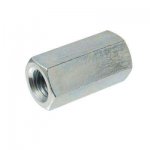
You can buy extra heavy nuts too. Where you located and how many nuts do you need ? You can get 1/2'' rod couplings if that would work .
 

Attachments

  • 83a7de97-2e4b-4d16-b206-ed43cef1f88a_400_compressed.jpg
    83a7de97-2e4b-4d16-b206-ed43cef1f88a_400_compressed.jpg
    7.5 KB · Views: 25
To avoid these ads, REGISTER NOW!

slip knot

Well-known member
Joined
Mar 22, 2010
Messages
2,861
Location
Texas gulf coast
And don't leave the brake clean can on the welding table where you may accidentally hit it with the stinger when striking an arc. It makes on hell of a bang... Don't ask how I know this.
 

CNGsaves

Well-known member
Joined
Sep 26, 2012
Messages
13,233
Location
KS and OK
+1 for GJ doing great job on safety warning on brake clean !! :thumbup:

. . . AND . . . OP did just fine welding his nuts !!! :D
 

pamike

Well-known member
Joined
Aug 4, 2015
Messages
694
Location
Central PA
The one issue with welding nuts is many of plated. The plating makes issues when welding and is toxic to a degree. Unplated, "black" or stainless nuts will weld better. Also, they make "weld nuts" which are bigger outside diameter and tend to shrink less when welded. you may have to run a tap through a standard nut once its welded on to cleanup the threads.
 

BD1

Well-known member
Joined
Mar 18, 2007
Messages
4,602
Location
north side
The one issue with welding nuts is many of plated. The plating makes issues when welding and is toxic to a degree. Unplated, "black" or stainless nuts will weld better. Also, they make "weld nuts" which are bigger outside diameter and tend to shrink less when welded. you may have to run a tap through a standard nut once its welded on to cleanup the threads.

As for the plating, let them soak in white vinegar for a few days. the plating will come off .
 
OP
C

chowland28

Member
Joined
Aug 8, 2015
Messages
9
As for the plating, let them soak in white vinegar for a few days. the plating will come off .

The whole reason I chose that nut was because it wasn't zinc coated or anything like that. Didn't need any work to become weldable.
It wasn't until after the complete install that I thought to myself, "****! I hope that wasn't a low-grade nut and I now just weakened it even more by welding on it!" So I came here to ask other opinions :)
 

matt_i

Well-known member
Joined
Mar 14, 2008
Messages
10,725
Location
SE Michigan
Imo, if its non plated its probably a grade 2. However, unlikely to weaken it much. the threads are rolled (formed) and not cut.

The design rule of 1x bolt diameter in steel or cast iron still applies here. If its any more critical than that then there are several areas which should be looked at.
 
OP
C

chowland28

Member
Joined
Aug 8, 2015
Messages
9
Imo, if its non plated its probably a grade 2. However, unlikely to weaken it much. the threads are rolled (formed) and not cut.

The design rule of 1x bolt diameter in steel or cast iron still applies here. If its any more critical than that then there are several areas which should be looked at.

What do you mean 1x bolt diameter?
 

LumpyMusic

Well-known member
Joined
May 2, 2012
Messages
492
Location
Phoenix Arizona USA
Imo, if its non plated its probably a grade 2...

That seems backwards to me. Every grade 8 bolt and nut I own is non-plated.

I think nearly all my lower grade nuts and bolts are galvanized (zinc plated).

I think every plated fastener I own is lower grade, not hardened.


Lump
 

sberry

Banned
Joined
Jun 18, 2005
Messages
35,747
Location
Brethren, Michigan
Welding it isn't going to hurt a thing and millions of plated nuts are tacked on. Keep head out of fumes. A tack is different than continious welding on them for days.
 

red92s

Well-known member
Joined
Dec 16, 2009
Messages
334
That seems backwards to me. Every grade 8 bolt and nut I own is non-plated.

I think nearly all my lower grade nuts and bolts are galvanized (zinc plated).

I think every plated fastener I own is lower grade, not hardened.


Lump

The yellow/gold color on most grade 8 hardware is zinc plating followed by a hexavalent chromate for additional corrosion resistance. The "clear" zinc you typically see on grade 5 hardware, which is a shiny silver color, uses a different chromate conversion process that is more environmentally friendly but less corrosion resistant.

Hot Dip Galvanized fasteners are coated with zinc as well, but have much thicker coatings than plated hardware.
 

sberry

Banned
Joined
Jun 18, 2005
Messages
35,747
Location
Brethren, Michigan
I am not familiar with all brands and colors but usually been getting it from the farm type stores. Most bare is 2 and isn't marked, most shiney silver plated is 2, the gold used to be 5 and now they use green and where they do stock a small selection of 8 it may also be gold or blue. 5 welds very well as does 2 and there is almost absolutely no reason for mos5t on this forum to think they need 8 for anything they are building.
It is so rare I don't even stock it, the only use for it is in highly engineered machine connections, usually mfg designed and even then fairly rare. About the only place I see it on auto is head bolts, a few internal engine bolts. Possibly on bearing caps in rear ends.
I will have to add a disclaimer I spose, generally only used when super clamping power is needed and provided with high tensile bolts.
 
Last edited:

kmacht

Well-known member
Joined
Apr 12, 2010
Messages
2,769
Location
Connecticut
As soon as you welded on the nut you changed its temper. A big difference in grade 8 vs other grades is the heat treatment process that the nut goes through. If your project will work with a low grade nut of the same size you will be fine. If you were counting on the strength of a grade 8 nut I would be looking at changing the design. Ideally the welds should be used only to keep the nut from turning, not for suspending a critical load. What is the worst that will happen if the nut fails? Will someone get hurt, significant damage incurred or will the part just stop working and you have to weld on another nut.
 
OP
C

chowland28

Member
Joined
Aug 8, 2015
Messages
9
I found a couple more nuts around the shop that I believe to be the same as the one I installed.
It has stamped on it, "2H" as well as a basic Triangle. I was intending on posting a pic in here, but apparently I never took the picture. :(
 

matt_i

Well-known member
Joined
Mar 14, 2008
Messages
10,725
Location
SE Michigan
That seems backwards to me. Every grade 8 bolt and nut I own is non-plated.

I think nearly all my lower grade nuts and bolts are galvanized (zinc plated).

I think every plated fastener I own is lower grade, not hardened.


Lump

I guess my theory is shot. I own no non-plated Grade 5s or 8s. :)

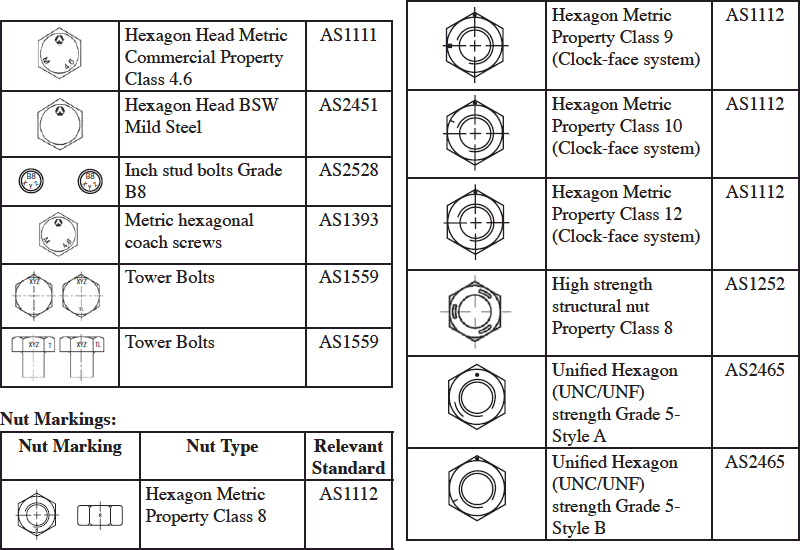
Its tricky to know about the quality of a nut unless you bought it. There are no grade markings like a hex bolt head.
 

Advan

Well-known member
Joined
May 25, 2014
Messages
442
Location
Ontario, Canada
I guess my theory is shot. I own no non-plated Grade 5s or 8s. :)

Its tricky to know about the quality of a nut unless you bought it. There are no grade markings like a hex bolt head.


An unmarked nut is typically a grade 2.


bh02.gif
 

waynem

Member
Joined
Apr 3, 2006
Messages
15
A 2H nut conforms to ASTM A194 for nuts for high temp/ high pressure piping. Typibpcally used with B7 stud bolts in flanges and are heavy hex. It calls for a minimum carbon content of 0.40 which is not a low carbon nut. They are heat treated to 24 to 38 Rc. I am no expert on welding but would think as a minimum should be preheated. The triangle is the manufacturers marking.
 
To avoid these ads, REGISTER NOW!
Top Bottom