To avoid these ads, REGISTER NOW!

Do I need a dedicated welder circuit...

patman2

Well-known member
Joined
May 15, 2011
Messages
58
Location
NH
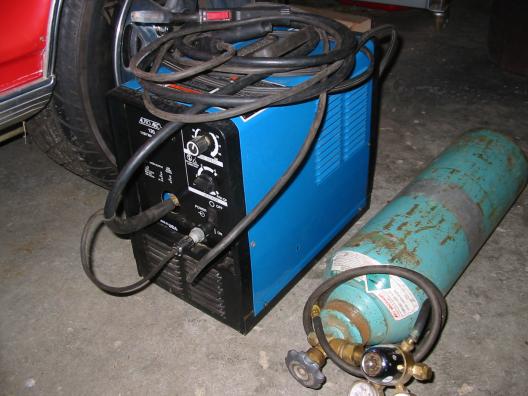
...to run my Miller 110V MIG welder? I've been just plugging it in to a random outlet in the garage along with whatever else is on that circuit. The sheetmetal (car project) welds are birdcrappy and no penetration...or I burn right through. Is a dedicated circuit going to help, or is it just that I have to improve my welding skills, or do I need a new welder?

It's an ancient Miller AutoArc 120 machine...I contacted Miller with the serial number, and they sent me a copy of the manual. It seems to be making sparks and feeding wire and all that. Anything else that needs to be tuned up or checked on these things?

(I have installed fresh tips, and have the polarity set correctly.)
shifter10.jpg
 
To avoid these ads, REGISTER NOW!

1steve

Well-known member
Joined
Mar 28, 2011
Messages
275
Location
Tennessee
Nice welder you got there, plug straight to plug no extension. Power should be fine for sheet metal. Set argon/CO2 15-20, for sheet metal set heat knob at 1 and wire speed about 30 and go from there.

Make sure where your lead hooks up to feeder is tight.
 
Last edited:

rsanter

Well-known member
Joined
Dec 22, 2007
Messages
18,489
Location
visalia ca
It is best to have a dedicated circuit but short of that you could just make sure that the other stuff is off or unplugged.
I would discourage having electronics on the same circuit

Bob
 

Outlawmws

Well-known member
Joined
Aug 9, 2011
Messages
39,100
Location
The Badlands
Make sure the outlet you are using is an actual 20A outlet you would not believe the difference it makes between a 15A and a 20A outlet.

Idealy, yes a dedicated circuit

Get some scrap and PRACTICE. Welding thin stuff is the most difficult welding there is. Just settings alone won't get you there, you have to learn how long to run a bead before stopping to let it cool and hitting the trigger again. Otherwise all you will make are bigger holes...

Another trick is to get some copper clamped up near to where you are welding to heat sink the metal (If possible).
 

Al Bundy

Well-known member
Joined
Aug 1, 2011
Messages
2,026
Location
Upstate NY
What method are you using to weld? A car panel should be done as a succession of small spot welds spread out to keep from overheating the panel. Then keep going back and weld in between until you have a solid weld.
 
To avoid these ads, REGISTER NOW!
OP
P

patman2

Well-known member
Joined
May 15, 2011
Messages
58
Location
NH
Didn't think I could blame the tools, but...figured it was worth an ask. Yep, I need to practice more, still haven't gotten the hang of it.

Usually I get by with a bunch of spot welds, but I was hoping to do a little better than that.
 

K13

Well-known member
Joined
Oct 24, 2007
Messages
2,222
Location
St. Albert, AB Canada
Didn't think I could blame the tools, but...figured it was worth an ask. Yep, I need to practice more, still haven't gotten the hang of it.

Usually I get by with a bunch of spot welds, but I was hoping to do a little better than that.

If you are doing sheet metal work that is the way to do it. Long conitunous beads will result in LOTS of warping and many frustrations trying to get it straight again.
 

SINISTER

Well-known member
Joined
Feb 1, 2012
Messages
130
Location
Long Island
Yea the circut is not your problem. If it was you would be tripping the breaker left and right. It is nice to have a dedicated circuit for high amp drawing tools, this way anyone in the house, kids, wife, girlfriend don't have to continuously switch the breaker back when they are using anything in the house on the same line.

Like what was said previously make sure your grounds are perfect, make sure your gas is feeding correctly. If you are using pure co2 or 75/25 mix or w.e it is with non shielded wire and you line is clogged or not feeding enough gas your gonna get grapes of weld. Try more argon in your mix its more forgiving than co2.

Make sure you are using quality wire not some HF ******** spool. I have seen more new welders fall culprit to crappy welds because of the wire quality.

Make sure all surfaces are free of coatings of any kind including rust. Rust is a huge weld inhibitor. Even surface rust, is essentially oxygen combining with metal at an atomic level. Oxygen is a huge killer of welds.

Use of welding primer will also clean up your welds a bit.
 
OP
P

patman2

Well-known member
Joined
May 15, 2011
Messages
58
Location
NH
Thanks for the tips! I'll keep those in mind. I've never tripped the breaker (or had the welder shut itself down) so I guess that much is OK.

I've got a 75/25 argon/CO2 mix, and I've tried .030 and .023 wire (and the appropriate tip for each) I got the spools from a welding supply shop, don't remember the brand offhand, but it wasn't cheapie stuff.

Does wire 'go bad' after a while? I suppose if the surface of the wire is oxidized that can contaminate things too. I've had this stuff for several years, and I seem to be getting worse at this, not better. Luckily all the stuff I've needed to either didn't show, or could be ground back into submission.

The last time I had the welder out, the regulator failed (as in "popSSSSSSS" fail) so I had to switch to fluxcore (and swap the polarity) to finish what I was working on. (The fluxcore was "TwentyGauge" stuff that I'd read other folks swear by for sheetmetal...)

To replace the failed regulator (pressure-style with two dial gauges) I bought a new HTC flowmeter-style regulator online the other night, so I'm going to give this all another go. I'm told a flowmeter is a more consistent way to go than the pressure-style regulator.

I'm also thinking I need to replace the wire sheath, as the plastic inner is a little ratty at the feed side, and I get jams occasionally. I did a quick search, and the sheaths look pretty inexpensive ($20-ish) so, how difficult are they to replace?

And...Miller is a good solid brand, and I'm assuming it's worth putting a few bucks into getting it back online again. Correct, or should I be looking for something better/newer?
 

HSURDDY

Well-known member
Joined
Nov 13, 2007
Messages
131
Location
Alberta
it sounds that perhaps the failing regulator may have been contributing to your issues by not providing sufficient shielding gas to the puddle, allowing atmospheric gases to affect penetration, resulting in some of the poor conditions you describe. Did conditions improve with the switch to fluxcore wire?

Wire sheaths are an easy replacement, and should be done routinely to avoid jamming. As the the box itself, it would depend on your intended use. 120v boxes usually have a short duty cycle, and a lower amperage range, but are fine for occasional or hobby use. If you plan to weld on a regular basis, with heavier material you will probably find yourself checking out 220V heavier duty cycle units as you become more proficient and start to weld more often.

As others have posted, practice is the best way to get a better weld.
 
Last edited:

wreckerman5357

Well-known member
Joined
Dec 2, 2011
Messages
373
What gas and wire are you using? What kind of polarity is your machine set up for. The standard gas in the collision industry is 75% argon, 25% CO2. Wire should be 0.6mm. Reverse polarity is standard in the collision industry.

Google I-CAR welding and you will find a good amount of information about proper welded setup and welding.g techniques for autobody.
 
To avoid these ads, REGISTER NOW!
Top Bottom