To avoid these ads, REGISTER NOW!

Do I need a magnetic starter?

the_goodfellow

New member
Joined
Jun 7, 2022
Messages
4
Hi All,

I'm new here and thought this forum might be the place to ask. Without too much prior knowlage about electrical motors I bought this from a gent of marketplace. The motor is in the range that i was looking to power the lathe.

Doing a bit more research about powering the lathe I'm looking at other motors in a similar power range that either have a starter or have a rather large capacitor.

I can't seem to find this motor on vintage machinery. But others of the same brand.

I'm just wondering if I need a starter switch and how much one will set me back. 3 phase VFD might have been easier to do in the long run,
Appreciate any help I can get. Thanks
IMG_1074.jpeg
 
To avoid these ads, REGISTER NOW!

justsam

Well-known member
Joined
Aug 20, 2010
Messages
1,271
Location
Penngrove, California
If. you just want to test this motor, you do not need a magnetic starter. I personally would not put a magnetic starter on a 1.0 HP motor that is drawing 7 Amps at 240VAC, however it will certainly do no harm. (Yes I do understand inrush or starting currents). Check how this motor is wired for 120/240 VAC and then test it. Motor of this vintage may well have a defective start/run capacitor, so if it does not run check for it.
 

Norcal

Well-known member
Joined
Mar 16, 2008
Messages
13,792
A mag starter is fine but not required, but overload protection is required, a magnetic starter is one of several ways to provide it.
 

mark-NJ

Well-known member
Joined
Apr 1, 2019
Messages
775
Location
new jersey
why does he a need a starter for a 1HP motor?

My reasoning was the same as was stated by Norcal, above: the overload.

Can you buy a motor-rated wall switch? In lieu of a contactor? Sure. But the overload is still needed (i.e. a starter), so I said "yes". That's my reasoning.
 
Last edited:

marak

Well-known member
Joined
Jan 26, 2015
Messages
339
Location
Anchorage, Alaska
From purely a safety standpoint, isn't a magnetic starter beneficial for equipment like a lathe because if there is a power failure while using the equipment there is no way for the equipment to start up again without pressing the start button?
 

mark-NJ

Well-known member
Joined
Apr 1, 2019
Messages
775
Location
new jersey
^^^

That, too.

(well, when wired with a "3-wire control" through the aux contact, anyway. If the coil is wired "2-wire" directly to a maintained switch, no such protection exists)
 

dogdog

Well-known member
Joined
Nov 15, 2011
Messages
12,711
From purely a safety standpoint, isn't a magnetic starter beneficial for equipment like a lathe because if there is a power failure while using the equipment there is no way for the equipment to start up again without pressing the start button?
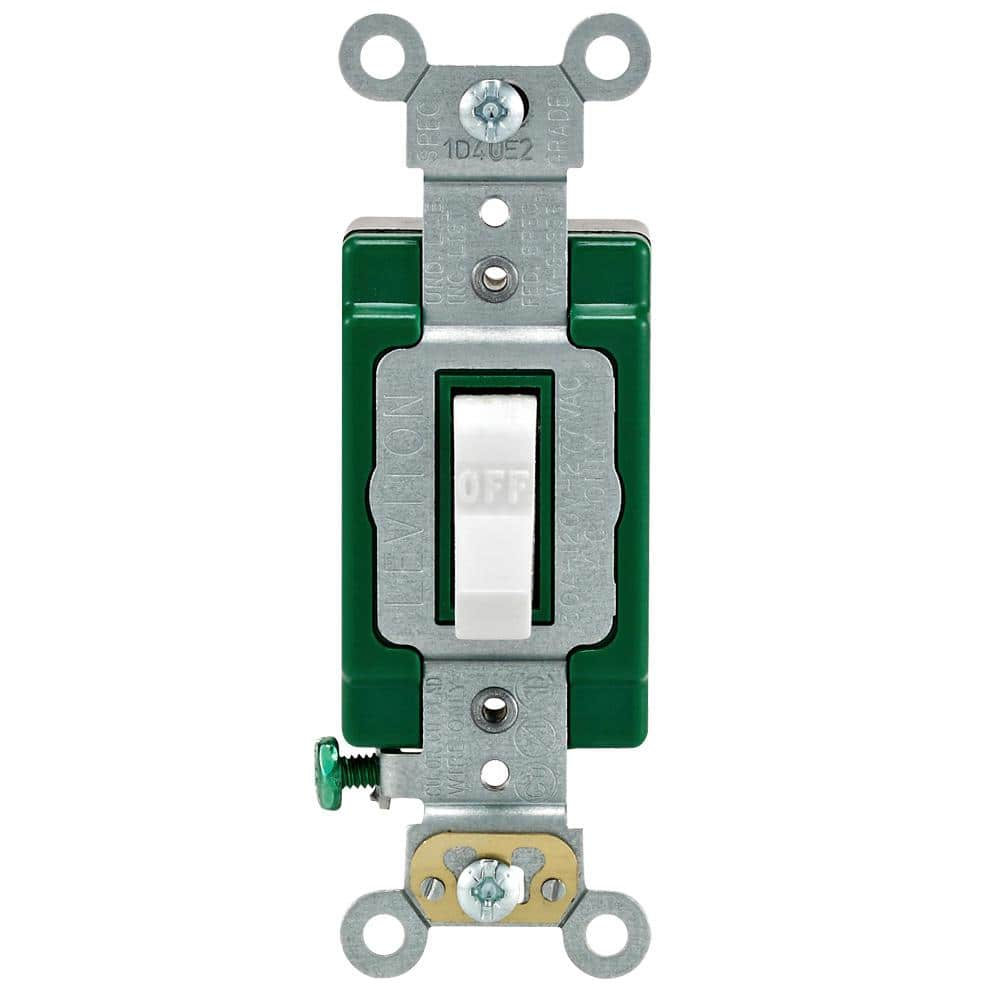
They do sell 30 amp rated double pole single throw switches. Like this one.


Even that is over kill at 1hp about 760 watt it’s drawing about 6 to 8 amp. Most double pole switch are 20 amp rated. 1 hp sounds a lot but not so much.
 

Norcal

Well-known member
Joined
Mar 16, 2008
Messages
13,792

nadogail

Well-known member
Joined
Jan 23, 2009
Messages
32,306
Location
Coronado, CA
I agree with those who are suggesting a magnetic starter for safety reasons, but other than the prevention of unintended restarts when power is restored find no other reason to justify the expense.

What price are we willing to pay for safety?
 
To avoid these ads, REGISTER NOW!

mark-NJ

Well-known member
Joined
Apr 1, 2019
Messages
775
Location
new jersey
A contactor....switch-type or magnetic...does not, alone, contain overload protection. THAT'S the justification for a motor starter.
 

PoorUB

Well-known member
Joined
Mar 29, 2021
Messages
11,976
Location
Fargo, ND
Technically, or perhaps legally it needs overload protection. Now running a lathe it is not going to run unattended, so personally I might ignore the code and just wire it up to a motor rated switch.

If the motor was on some equipment that would be running unattended I would not question the need for overload protection.
 
OP
T

the_goodfellow

New member
Joined
Jun 7, 2022
Messages
4
Hi guys,
enjoying the back and forth so far. My wife would shut me down if I weren't up to code or being safe as possible with these kinds of things. This is why I'm turning to you.

So saying that I'm understanding that the magnetic starter switch is most likely the safest route. I'm pricing them up here in Canada I'm seeing them start with King Canada's at around $130 with out tax. Is there anywhere you recommend picking one up at a reasonable price. Could I Frankenstein one off another piece of machinery cheaper?
 

mark-NJ

Well-known member
Joined
Apr 1, 2019
Messages
775
Location
new jersey
The thing about magnetic starters (which is technically a contactor + an overload) is that the overload needs to be calibrated to a current range in which your motor falls. For example, your motor shows on the nameplate that it will draw 7A (at 240, which I'm guessing is how you're wiring this, right?) Anyway, you need an overload with a range of [let's say] 6-8A, and you'll dial it in to 7 to match your motor's draw. You may be able to harvest a starter off some derelict piece of equipment, and while it may 'function', is the overload set in the proper range? Likely not.

I'd buy new & make sure it's ranged for your motor.

Are you wiring this yourself? Do you understand 3-wire control circuitry? You'll need a momentary start button, a momentary stop button and make sure the contactor portion of the starter has at least one normally-open auxiliary contact.

Decent video here. He's showing it with a 3-phase motor; yours is single-phase, but it doesn't matter; the topic here is the control circuitry.

 
Last edited:

marak

Well-known member
Joined
Jan 26, 2015
Messages
339
Location
Anchorage, Alaska
To add overload protection, can one add an appropriate inline fuse similar to that shown below? I have boxes and boxes of these of various amperages, some slo-blo some not, and this is what I use when I choose a simple switch (as mentioned by others above) vs. a magnetic starter. Any reason this affordable method should not be used?
1654799832435.png
 

mark-NJ

Well-known member
Joined
Apr 1, 2019
Messages
775
Location
new jersey
In my view, not really.

This is an over-simplification, but circuit protection comes in 2 flavors: protection against short circuits (immediate response to extremely-high accidental current) and circuit overloads (like a motor that ought to be drawing 7A, but is being worked too hard and is drawing more). In the first case, we're protecting people & wires. In the second we're trying to protect the motor...shutting it off before the stator winding insulation melts, destroying the motor.

It would be hard to fuse a motor for overload protection, because the time-current curve of an motor overload protector is a lot different than the time / current curve of a fuse.
 

mark-NJ

Well-known member
Joined
Apr 1, 2019
Messages
775
Location
new jersey
That would work. But you don't get the "power failure won't restart" feature of a magnetic

(I know that you know that...I'm posting so the OP understands...)
 

American Locomotive

Well-known member
Joined
Jan 8, 2017
Messages
11,153
Location
Rhode Island
IMO, don't over complicate it. It's a 1 HP 120v motor. Yes a motor starter is the correct thing to do to protect the motor, but there are tons and tons of old-school lathes running around with simple toggle switches. Put a 5-15 120v plug, a 1HP toggle switch, plug it into the wall and be done with it. The motor has a 1.25 service factor. A standard 15A breaker will trip well before that motor hurts itself in an overload situation. I'm not against doing things correctly, but let's be honest here: A manual motor starter will cost $150-200 - it will be worth more than the motor its protecting. On top of that, most homegamer lathe users will not be able to utilize 1+ HP continuously anyways.

What kind of lathe is this going on? This is not an electrically reversible motor, and a motor you can't easily reverse might make some operations on a metal lathe difficult, but would probably be okay for a wood lathe.

Speaking of "non electrically reversible motor", the "To reverse: move brush ring and relock" is a dead a giveaway that this is a repulsion motor. Repulsion motors haven't been relevant for 60-70 years, so this is a very old motor. The "182" frame indicates it was made between 1952 and 1964. There's nothing inherently wrong with repulsion motors, but they do tend to be noisier than normal induction motors.
 
Last edited:

dutchgray

Well-known member
Joined
Sep 28, 2014
Messages
6,481
Location
Dorset. England.
To add overload protection, can one add an appropriate inline fuse similar to that shown below? I have boxes and boxes of these of various amperages, some slo-blo some not, and this is what I use when I choose a simple switch (as mentioned by others above) vs. a magnetic starter. Any reason this affordable method should not be used?
1654799832435.png
I have owned machines that used fuses to protect the coolant pump motor when the coolant pump was wired to the main motor contactor. So if properly sized and rated a fuse will work for overload protection. They were quick blow if memory serves.
 
OP
T

the_goodfellow

New member
Joined
Jun 7, 2022
Messages
4
IMO, don't over complicate it. It's a 1 HP 120v motor. Yes a motor starter is the correct thing to do to protect the motor, but there are tons and tons of old-school lathes running around with simple toggle switches. Put a 5-15 120v plug, a 1HP toggle switch, plug it into the wall and be done with it. The motor has a 1.25 service factor. A standard 15A breaker will trip well before that motor hurts itself in an overload situation. I'm not against doing things correctly, but let's be honest here: A manual motor starter will cost $150-200 - it will be worth more than the motor its protecting. On top of that, most homegamer lathe users will not be able to utilize 1+ HP continuously anyways.

What kind of lathe is this going on? This is not an electrically reversible motor, and a motor you can't easily reverse might make some operations on a metal lathe difficult, but would probably be okay for a wood lathe.

Speaking of "non electrically reversible motor", the "To reverse: move brush ring and relock" is a dead a giveaway that this is a repulsion motor. Repulsion motors haven't been relevant for 60-70 years, so this is a very old motor. The "182" frame indicates it was made between 1952 and 1964. There's nothing inherently wrong with repulsion motors, but they do tend to be noisier than normal induction motors.
IMO, don't over complicate it. It's a 1 HP 120v motor. Yes a motor starter is the correct thing to do to protect the motor, but there are tons and tons of old-school lathes running around with simple toggle switches. Put a 5-15 120v plug, a 1HP toggle switch, plug it into the wall and be done with it. The motor has a 1.25 service factor. A standard 15A breaker will trip well before that motor hurts itself in an overload situation. I'm not against doing things correctly, but let's be honest here: A manual motor starter will cost $150-200 - it will be worth more than the motor its protecting. On top of that, most homegamer lathe users will not be able to utilize 1+ HP continuously anyways.

What kind of lathe is this going on? This is not an electrically reversible motor, and a motor you can't easily reverse might make some operations on a metal lathe difficult, but would probably be okay for a wood lathe.

Speaking of "non electrically reversible motor", the "To reverse: move brush ring and relock" is a dead a giveaway that this is a repulsion motor. Repulsion motors haven't been relevant for 60-70 years, so this is a very old motor. The "182" frame indicates it was made between 1952 and 1964. There's nothing inherently wrong with repulsion motors, but they do tend to be noisier than normal induction motors.
You bring up some great points. I’m kind of veering away from using this on my lathe now. I’d rather use it on my 14” suped up bandsaw with 6” riser block. I don’t think the motor will be turned on for long, keeping the sound down. And thinking if I really push with hard cutting that this motor can take it.
 

fitter30

Well-known member
Joined
Jun 23, 2019
Messages
3,029
Location
Peace Valley,mo
The WEG UMBW series thermal-magnetic miniature circuit breaker line includes both UL489 and UL1077 approvals to provide a solution for circuit & equipment protection in industrial electrical equipment. The UMBW has a range from 1 to 63 amps, and is available in 1,2 or 3 poles, with B, C and D trip curves.
Miniature circuit breaker din rail mount under $20 for a two pole
 
To avoid these ads, REGISTER NOW!
Top Bottom