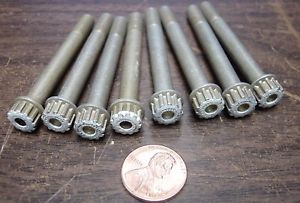
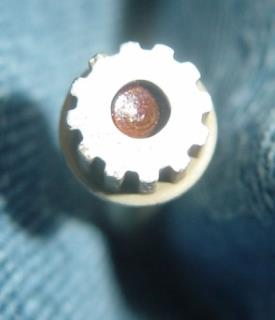
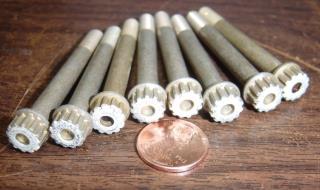
I actually don't believe that spline drive fasteners and spline drive sockets and wrenches are the same thing.
I know you're not trying to argue just for the sake of it, but let me assure you they designed the SPLINE WRENCH when they design the actual SPLINE FASTENER...they were engineered together.
BTW, if you read the spec above, you'll see its for a "wrenching configuration", which is, in other words, covers the spline box end wrench for spline drive.
Wrenching Configuration, Spline Drive Threaded fasteners, SAE Aerospace Standard 1159A
--ie, the actual spline standard--was published in 1970/71.
If you go to the snap on catalog, you will see a pretty large selection of aerospace spline (all SAE) at astronomical prices. The reason for that is that the areospace grade spline wrench is truly designed to be abused--by definition you have that wrench built to apply torque to levels which would damage normal fastener heads.
The need to apply large torque loads using smaller, lighter hardware was why spline was invented (ie, out of necessity). You could always use hex or bi-hex by upsizin the bolt head to take the requisite torque...but the price to pay for this is weight, which is a problem for NASA and others who calculate power/weight and fuel consumption based on mass (eg escaping gravity).
So, that is the story with Spline. They first tried to use 12pt bi-hex wrench on spline hardware...but that failed. So they used spline-specific wrench for spline-specific bolts. The poltics of having single-use tools was a non-starter, so the reverse engineered the Spline standard to ensure the Spline-specific wrench could also be used on hex and bi-hex standard hardware (consolidation prize).
That's why all of this "other spline" stuff confusing. Because there is a true, high quality spline standard. And that spec will work on good quality hex hardware.
But my guess is that (aerospace spec) is not what many companies are building to, hence the modifiers "unviersal" etc on spline drive tools.