I think I still had my flip phone back when this thread started.
 Good one!
I think I still had my flip phone back when this thread started.
Good one!......I wonder how long it will be before I am able to wind up some envious mechanic by telling him that it's the limited edition 'Snap On phone'!......
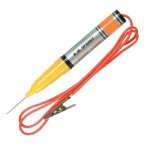
The main gripe with me and digital meters is the batteries. They're either going dead at the worst time, or they bulge and leak caustic goo into the meter and ruin it. Test lights/continuity checkers are cheap and quickly replaced if the battery goes ****. Could be the quality of batteries has dropped but it is what it is.
Very rarely do I need to actually measure ohms, so, going to an analog Amprobe without the battery and a test light with a battery was a no-brainer. Though after years of using digital meters exclusively it took a bit to get back in the analog swing of things. Have two digital clamp meters left - when they die I'll be all-analog.
Analog always!
I am using NiMH cells/batteries in anything I care about these days for just this reason. Duracell Ion Core for AA and AAA; Tenergy Centura for 9V; for C and D cells there are adapters available to hold multiple AAA or AA cells in the same form factor. Got sick of exactly what you describe above; NiMH don't leak. Am using a Maha C9000 for the AA/AAA and whatever charger they sell for the 9V.
Sell it to him at Snap On prices.
I'm new and enjoying this thread. I had a small, probably cheap, analog meter and stupidly threw it away, a battery had corroded in it. I'm sure I could have cleaned it up, or just used it for voltage but I have other DMM's and didn't think I would use it.Each has its place.
There are features the DVM can do out side of the temp mode that are not available in analog mode. But searching for an intermittent connection an analog works best.
In full sunlight the analog makes life easier.
but why bring up a thread from 5 years ago
VTVMs were hot stuff in the day ! Their win was very high impedance so that they did not "load" the circuit. All digital meters have high impedance which can be a problem. Lower impedance would prevent "ghost voltage" readings.A buddy was able to restore and return to excellent calibration the old Heathkit VTVM my late brother built in high school in the 1970s. It gets used once in a while to keep the dust blown off, but most of the time it's on the shelves in my office.
I built one of those in the early 70's. I was 16 years old and interested in electronics. Sadly, I never got into the field and had zero use for the meter I so painstakingly built. Looked good on a shelf though.A buddy was able to restore and return to excellent calibration the old Heathkit VTVM my late brother built in high school in the 1970s. It gets used once in a while to keep the dust blown off, but most of the time it's on the shelves in my office.