To avoid these ads, REGISTER NOW!

Does modifying a UL lighting fixture void UL?

Matt Matt

Well-known member
Joined
May 11, 2017
Messages
523
Location
Ontario
After reading about a half dozen threads where the homeowners have replaced their T8's with a LED retrofit and have to remove the ballast/transformer, does this void the original UL certification on the fixture itself? Is a new UL certification required(custom Field certification)?

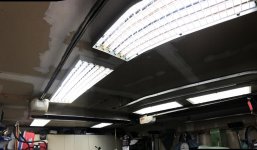
I have tried the Philips Instant fit LED bulbs that do not require the ballast/transformer being removed. I have 36 T8's in my shop for general lighting. With the Philips bulbs, I tested 18 brand new T8 fluorescent bulbs and compared to the Phillips Instant fit. I get fluorescent T8's for about $3.50. The Phillips instant fit, about $10 each. I did my test, and I returned the 18 LED bulbs.

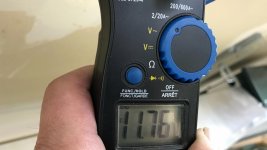
18 T8 fluorescent 32 W Drew about 6 A.
18 T8 LED Phillips Instant fit 17 W Drew about 4.5 A

I concluded, there is not enough money savings to go with Phillips instant fit. As well, (and I might be wrong,) but I prefer not to void the fixtures UL rating.

Maybe a sparky can enlighten us on the removal of the ballast and if it voids UL listing or not?
 
Last edited:
To avoid these ads, REGISTER NOW!

LXCam

ALLIANCE MEMBER
Joined
Apr 23, 2013
Messages
19,103
Location
AZ
Removal of the ballast in its self does not void the UL listing. But modifications to the assembly can. Just removing the ballast and installing lamps with built in drivers would be considered acceptable as that is how the lamp manufacturer attained the UL listing. But let's say you created your own driver and installed it within the fixture, that would. On the other hand if a manufacturer created a retrofit assemble to do the same thing is required to attain the listing.

As for what you discovered, these LED lamps would need to last a hell of a long time before you broke even. I wouldn't waste my money either.
 
OP
M

Matt Matt

Well-known member
Joined
May 11, 2017
Messages
523
Location
Ontario
Removal of the ballast in its self does not void the UL listing. But modifications to the assembly can. Just removing the ballast and installing lamps with built in drivers would be considered acceptable as that is how the lamp manufacturer attained the UL listing. But let's say you created your own driver and installed it within the fixture, that would. On the other hand if a manufacturer created a retrofit assemble to do the same thing is required to attain the listing.

As for what you discovered, these LED lamps would need to last a hell of a long time before you broke even. I wouldn't waste my money either.


Interesting and thank you for you're the response. I do live on both sides of the border, and this totally voids a CSA approval. Any and all modifications to original wiring, require a new approval. The second thing that voids CSA approval, (I'm not sure if it is, UL as well,) the new bulb needs to be CSA approved as well.

If a new LED T8 does not have UL, Should it be used?

My 36 bulbs really push the 15 amp circuit too it's allowable safe run. This is why I asked the question. I am pulling between 12 and 12.4 A for shop lighting on a dedicated line.
 
Last edited:
OP
M

Matt Matt

Well-known member
Joined
May 11, 2017
Messages
523
Location
Ontario
Why does voiding the UL listing matter???

At least in the USA, there is no requirement that products be 'listed',by any NRTL (nationally recognized test lab ...UL isn't the only NRTL, there are others)

And I've yet to see any insurance policy that requires listing.

So just an odd regulatory curiosity?
I was using UL as a blanket certification. There is about 2 dozen NRTL certificate Laboratories, I was just using one is an example.

So if it is only CE rated(bulb or fixture), you consider this permissible? Thank you for chiming in as a Sparky.

Edit; if I buy 36 bulbs that are not specifically certified UL or CSA, and my building Burns down, Because I have tampered with the electrical or I have installed non-certified components, could my insurance company have leeway to void policy?
 
Last edited:

ard

Well-known member
Joined
Feb 16, 2015
Messages
4,391
Location
Sierra Foothills... California
Incorrect on NEC

Insurnace usually does not require you be compliant with the NEC.

Let's leave it at that....


If it did, we'd be reading about it.
 
Last edited:

cybrdyke

Well-known member
Joined
Sep 9, 2014
Messages
3,442
Location
USA
18 T8 fluorescent 32 W Drew about 6 A.
18 T8 LED Phillips Instant fit 17 W Drew about 4.5 A

I concluded, there is not enough money savings to go with Phillips instant fit. As well, (and I might be wrong,) but I prefer not to void the fixtures UL rating.

Maybe a sparky can enlighten us on the removal of the ballast and if it voids UL listing or not?

I'm trying to figure out how you got these figures.
Assuming 2 lamp fixtures, 9 fixtures (18 lamps) with 32 watt T8's consumes 531 watts (59 x 9). At 120v, that's only 4.42 A.
The InstantFit, ballast included, consumes 20w each. 18 of them consumes 360 watts, only 3.0 A.
Still, it's only a 1.5A difference, just curious why your figures are so high?

The Philips lamp is UL listed as a lamp, so replacing a T8 with it is not an issue for the UL certification.
When you bypass the ballast, you void the UL of the fixture. However, these retrofit tubes likely have their own UL listing (1598b, as a retrofit kit, not as a lamp). They are supposed to be installed by a licensed electrician, and a UL warning label is supposed to be installed in the fixture to complete the UL certification.
If you re-install a driver to run Type C tubes, then you are back to the original fixture design and dont have a UL issue.

Good luck,
CD
 

Norcal

Well-known member
Joined
Mar 16, 2008
Messages
13,753
410.6 requires that luminaires, (fixtures), lampholders, & new to the 2014, retrofit kits be listed.
 

markhm

Well-known member
Joined
Mar 4, 2017
Messages
264
Location
NY
Some of the above is incorrect.
1. NEC requires fixtures are certified.
2. UL listing includes the components fixtures were tested with. Lamps are listed only for maximum wattage, but specific ballasts and transformers are listed. Even the manufacturer cannot change a component without UL approval.
3. Any customer modification to a UL approved fixture voids the approval.
4. UL produces the only standards for fixtures in the US. These standards can be certified by any NRTL. UL is the only NRTL that also writes the standards.
 
OP
M

Matt Matt

Well-known member
Joined
May 11, 2017
Messages
523
Location
Ontario
I'm trying to figure out how you got these figures.
Assuming 2 lamp fixtures, 9 fixtures (18 lamps) with 32 watt T8's consumes 531 watts (59 x 9). At 120v, that's only 4.42 A.
The InstantFit, ballast included, consumes 20w each. 18 of them consumes 360 watts, only 3.0 A.
Still, it's only a 1.5A difference, just curious why your figures are so high?

The Philips lamp is UL listed as a lamp, so replacing a T8 with it is not an issue for the UL certification.
When you bypass the ballast, you void the UL of the fixture. However, these retrofit tubes likely have their own UL listing (1598b, as a retrofit kit, not as a lamp). They are supposed to be installed by a licensed electrician, and a UL warning label is supposed to be installed in the fixture to complete the UL certification.
If you re-install a driver to run Type C tubes, then you are back to the original fixture design and dont have a UL issue.

Good luck,
CD
I have six fixtures with six bulbs per fixture. Each fixture has two ballasts. In both situations all the ballasts were functional. I tested the amps just with a clamp on metre in both situations. I'm sure the ballast consume something. Is it possible that six ballast use 1.5 A?


But wow, I didn't realize the electrical rules varied so much in the US based on posts prior. Some guys are saying you can and some guys are saying you can't.
 

yeldogt

Well-known member
Joined
Jan 2, 2012
Messages
18,184
You can not modify anything -- even a screw and keep the certification. You can modify a screw if the replacement is "certified" as a replacement. It's that specific.

Also: T8's with all the varieties available IMO are superior to most of the LED fixtures in the consumer market. It's not just savings -- it's the quality of the light.
 
OP
M

Matt Matt

Well-known member
Joined
May 11, 2017
Messages
523
Location
Ontario
That's the problem with internet forums. Most of the people that answer technical questions are just guessing.

I'm starting to see this. I thought I was being very very specific with my last question in the original post.
 

BillK

Well-known member
Joined
Aug 24, 2006
Messages
9,312
Location
Beautiful Southern Maryland
I'm starting to see this. I thought I was being very very specific with my last question in the original post.

You were, its just that people choose to answer who really do not know the correct answer :( I find this all the time in automotive forums. Lots of terrible information. I will not answer a question unless I know without a doubt that my answer is correct.

Most of the time you can do just a little bit of research and find the correct answer. In your case I bet if you go to the UL web site you would find the answer.
 

Erampu

Well-known member
Joined
Mar 18, 2012
Messages
862
Location
Waterford NY
Okay, I'll open another can of worms...what does UL certification buy you once the lights are installed? Are there UL inspectors going around and shutting down businesses when a UL certified fixture is altered?

Does all this have to do with liability after a problem occurs?
 
OP
M

Matt Matt

Well-known member
Joined
May 11, 2017
Messages
523
Location
Ontario
More than likely. If the building burns down because of a modified light fixture is your insurance going to tell you "sorry about that" ?? Its not worth taking the chance in my opinion.
I think it would be more of the reactive situation. Business Burns down, people were hurt (or fatalities), Then the fire marshal is called in for investigation on culprit/cause to ignition. Then he writes a report. I guess some insurance companies are friendly and don't value a fire Marshal inspection reports.
 

Showkey

"MEMBER EMERITUS"
Joined
Aug 9, 2014
Messages
8,638
Location
Wausau WI
More than likely. If the building burns down because of a modified light fixture is your insurance going to tell you "sorry about that" ?? Its not worth taking the chance in my opinion.


Well did not take long to get back to bad info or incorrect information........


With that theory, if you constructed a home made light and the dog chewed on the cord, the house burns down............your not covered by insurance. Dont think so.

You are insured for being stupid or errors or mistakes, bad judgement, poor workmanshipor or just an accident .........just not insured for fraud. Like if you connected your generator wrong, or refueled it while it's running, or operated it too close to the house and the house burns down........YOUR COVERED!

Same for working on your car.......home made hack job wiring, fuel line leaks car burns or car burns down the house ........YOUR COVERED. Seen it 100's of times.

Welding in garage.......spark cause a fire in rags on the floor because your a slob. Extension cord under debris shorts out.....fire..........the list goes on and on and on.

Fraud is if you do it on purpose.

Insurance companies do like and often look to subrogate against defective products that cause a loss. Like recalled or defect products.

Spent years in the product inspection business after such incidents.

If your a professional working on cars or homes or other products your responsable for the quality of your work and could be sued for your errors or omissions.
 
Last edited:

Gmonkee

Well-known member
Joined
May 9, 2010
Messages
2,750
I always understood the UL listing just meant it passed specs or some testing procedure to determine it is safe for the consumer.

Kinda like tags on a mattress.
They are by law on when new but a consumer may remove them.

If your installation is commercial or public access rather than private residence does that affect what you cannot or should not do?
And if a federal or gov installation there may be more limits on what is acceptable?

What I do in my cement wall home in Mexico obviously can be different than a stick built home in Kansas to a certain extent from a safety standpoint. The walls here will never ignite and there is no airspace or insulation to consider. Just a tube in the solid wall.
In case of problem the breaker pops and only wires are damaged.

Just using the correct modern materials and accepted methods should make for a safe installation despite any legality issues.
 

56Mark

Well-known member
Joined
Oct 26, 2014
Messages
359
Location
Fall Branch, TN
I have rewired a couple of my T8s to LEDs and removed the ballast. Does it still meet UL? I doubt it and I could care less. I did the work and know it is done correctly and safely. It is probably safer now without the ballast that can fail. I have seen some cheap Chinese lights that had the UL listing and I was not impressed; minimum gauge wire, wire going over sharp edges, etc. I think UL is minimum standard and I don't put a lot of stock in it. Where I used to work, I was involved in certifying a product (safety glass) to a safety standard and had to travel to the certification lab where we tested our product samples and then all production for the next 3 years is certified. I think it is a money making racket that started out with good intentions. I have also been involved in achieving a UL certification on a modified piece of industrial equipment and we skipped the meg test (shorts to ground) since the technician's test equipment was broken. I am not saying UL rating is worthless and we need things like this to keep manufacturers honest, but it certainly does not mean that something not approved is unsafe. Then again, I am a bit of a rebel when it comes to rules and regulations I see no purpose in, but will NOT do anything that is unsafe when it comes to electrical wiring.
 
To avoid these ads, REGISTER NOW!

ard

Well-known member
Joined
Feb 16, 2015
Messages
4,391
Location
Sierra Foothills... California
Disclaimer: I was responsible for some of the confusion. Admittedly.

However- lets break this down since there are actually TWO QUESTIONS being asked.

1. Does NEC require listed fixtures?

2. Will not using listed fixtures jeopardize my insurance cover. And by extension, if I do ANYTHING that violates the NEC, will THAT jeopardize my insurance?

So I guess it is clear since the 2008, NEC requires 'listed' fixtures. Fine. That is pretty straightforward.


The much more complex, and frankly important question is how much risk does a homeowner take when they do not comply with the NEC, or their AHJ?

(Note that if a licensed contractor does something wrong, resulting in a loss, they MIGHT be held liable- because of their position as a 'professional'.)

It is my view that either "Insurance requires 100% compliance with all codes, irrespective of who does the work" or "as long as you dont willfully cause a loss you are covered".

We cannot think there is some 'fantasy land' of "I do all the work to the code, but I am not a licensed electrician and I am doing work without a permit which in and of itself is a violation of my local ordinances, but at least I did it to code so that protects me"

Most important thing: WHAT DOES YOUR POLICY SAY?

I am, in fact, perusing homeowner policies over the last few weeks. I have seen nothing in any of these that address how I must do work.


Lets posit some examples:

I remodel the bathroom, install a 100W bulb in a fixture rated for 60W. The label in the fixture dried up and fell off. Am I liable if the house burns down due to this wattage change?

I replace all my lights with LEDs, since the commercials on TV said it is better for my wallet and the environment. Unfortunately several bulbs are not listed. Am I liable if the house burns down due to one of these bulbs/fixtures overheating?

I replace a fixture I bought at home depot. It is listed, however I am not an electrician. I did not pull a permit ether. Am I liable if the house burns down due to a mistake wiring the box OR a failure of the fixture?


Has ANYONE found an insurance claim where they did not pay a loss due to a homeowner messing up wiring? (and not in a case where the insurance established willful. obvious and reckless disregard for safety.)

So, any inputs? Im ready to eat the remaining half of my arguments!

:lol_hitti
 

cybrdyke

Well-known member
Joined
Sep 9, 2014
Messages
3,442
Location
USA
I have six fixtures with six bulbs per fixture. Each fixture has two ballasts. In both situations all the ballasts were functional. I tested the amps just with a clamp on metre in both situations. I'm sure the ballast consume something. Is it possible that six ballast use 1.5 A?


But wow, I didn't realize the electrical rules varied so much in the US based on posts prior. Some guys are saying you can and some guys are saying you can't.

So 3 x 32w T8's + ballast consume 88 watts. Each of your 6 lamp fixtures consumes 176 watts. 3 of those fixtures (18 lamps) is 528 watts total, or 4.4 A. The 17w LED consumes 20w each, so 120 per fixture and 360 total for 18 lamps. That totals 3A.

I'll try to say the UL rule again...
You are allowed to replace components in a fixture as part of routine maintenance on those fixtures as long as you use components that are direct replacements. So, if a ballast dies, you can replace it with a new one and not use the UL. Same for lamps. The Philips LED lamp is UL listed as a replacement lamp, so you can swap it out with the fluorescent and keep the UL. Heck you could even run 2 LED lamps and 1 fluorescent in your fixture if you wanted to.
When you bypass the ballast, you have modified the fixture and given up the UL. However, your bypass tubes are UL listed (1598b) as a retrofit kit, to be used with the appropriate sockets and luminaire. So, you have a UL with the retrofit kit, but not the fixture. (assuming the bypass tubes carry the UL label, there are plenty that dont)
CD
 
Last edited:
OP
M

Matt Matt

Well-known member
Joined
May 11, 2017
Messages
523
Location
Ontario
So 3 x 32w T8's + ballast consume 88 watts. Each of your 6 lamp fixtures consumes 176 watts. 3 of those fixtures (18 lamps) is 528 watts total, or 4.4 A. The 17w LED consumes 20w each, so 120 per fixture and 360 total for 18 lamps. That totals 3A.
I get what you're saying, but.. I am saying what I'm getting with a clamp on metre for all 36 bulbs and 12 ballasts using 32 W T8's, is 12 amp draw. So, with your statement again, I just did this check, two minutes ago. And I was a little bit mistaken. I did check the half load, and it is about half. There is nothing else on that line.
 

Attachments

  • IMG_7029.jpg
    IMG_7029.jpg
    135.6 KB · Views: 12
  • IMG_7030.jpg
    IMG_7030.jpg
    141.7 KB · Views: 18

Gmonkee

Well-known member
Joined
May 9, 2010
Messages
2,750
I have installed fixtures from HD that are clearly bare minimum to passing any code or listing. And they are listed in both US and Mex standards. A couple I replaced hair thin alu wire with good copper to make them trustworthy.

Two were outright flimsy plates with an LED plate and glass clipped to the bottom. The good is once installed they stiffened up a bit.

They work as promised and do not overheat so passing the norms seems correct. But sparing any effort in making them stronger... No.
 

Showkey

"MEMBER EMERITUS"
Joined
Aug 9, 2014
Messages
8,638
Location
Wausau WI
As far UL or other certifications or listing. Take a look at many fixtures like several SAMS LED fixtures. Just looked a the Honeywell LED work light, could not find any labels on the fixture and nothing on the box indicating any testing, certification or listing. There are few if any labels or certifcations or listing on any of the fixtures ??????

The work light has Energy-Star certified, ETL rated.
The Honeywell LED hanging shop light said Energy Star 2.0.
The sams web sight makes no mention of UL.

As another comparison a recent toaster purchase says ETL on the box.
On the toaster say conforms to UL std 1026 but mention of UL listed.
Cert. to CSA STD C22.2

As a Comparison The Costco LED shop light has a UL listed label printers on the box.
 
Last edited:

markhm

Well-known member
Joined
Mar 4, 2017
Messages
264
Location
NY
ETL and UL are NRTLs. The labels mean that a Nationally Recognized Testing Laboratory has tested and certified the item as meeting the UL (only USA lighting Standard) Standard. Either certification is considered equivalent. Both labels require the same testing for certification.

Manufacturers often choose ETL over UL because ETL often charges lower fees for certification than UL.

Besides ETL, there are other testing labs that are even cheaper to use than ETL but UL and ETL are the main labs that most manufacturers use.

Most people assume that UL is better but they are all legally required to be the same and test and certify to the same UL Standards.
 

Platonic Solid

Well-known member
Joined
Nov 29, 2014
Messages
3,587
Location
CT-USA
UL, ETL and CSA are all testing to the same UL controlled standard, so any one of these labels on the fixture are acceptable.
Inspectors from these NRTLs make unannounced visits several times a year to verify conformance to applicable standards.

CE is European and is the equivalent of having no rating at all as there is no testing or oversight involved.

You cannot achieve an Energy Star rating without EPA recognized NRTL certification.
There is no Energy Star program available for the following:

Commercial outdoor lighting (e.g. street and area, wall packs, canopy)
High or low bay luminaires
Recessed troffers and other linear fluorescent fixtures
Luminaire types typically employed for general office illumination such as linear pendants and panel lighting
HID sources or their SSL replacements
Socket adapters or converters
LED lamps intended to replace linear fluorescent, pin-based compact fluorescent or high-intensity discharge lamps.

Contrary to statements made in this thread, a luminaire manufacturer can change anything they want as long as it is in compliance with the applicable standard. It's called "General Coverage" as opposed to "Procedure Described".
There is no such thing as a "certified screw". :)
You do not lose UL fixture certification by installing a UL1598C Listed Retrofit Kit.
Please read this (link) before posting an opinion on above.
 

ard

Well-known member
Joined
Feb 16, 2015
Messages
4,391
Location
Sierra Foothills... California
Inspectors from these NRTLs make unannounced visits several times a year to verify conformance to applicable standards.

Huh. I had executive responsibility for worldwide regulatory compliance for several medical device manufacturers. Not lamps, but pacemakers, circulation pumps, stuff like that.

No "several times a year" inspections. None unannounced.

But, I will admit, might be much more strict for light fixtures.

CE is European and is the equivalent of having no rating at all as there is no testing or oversight involved.

Actually false.

There are some CE marks that rely on the company achieving a Quality System to ensure the products made under that quality system are 'compliant'. So the company doesnt send the product off for testing, but the results of their testing are reviewed either for a specific product approval or as part of the annual re-certification process. The narrow assertion- that a company could do testing, falsify it, submit it- and get a CE mark based on false data- is then twisted into your assertion "there is no testing or oversight".

But there are other ways to get a CE mark, so called type certifications- where the notified body (like an NRTL) will actually test products samples from production.

UL inspections are an utter joke. Its a make work job, when you are running a company with a functioning quality system. When UL shows up, it is a paperwork audit. Ive never had them do a test on site.

CE inspections are typically WAY more intrusive, since they focus on the processes you use to control production, testing, changes, faults, complaints, etc.

Get a product approved and CE marked under ISO9001 or 13485. Compare that to a UL listing- not even close. CE is a far and away much more effort
 
OP
M

Matt Matt

Well-known member
Joined
May 11, 2017
Messages
523
Location
Ontario
Huh. I had executive responsibility for worldwide regulatory compliance for several medical device manufacturers. Not lamps, but pacemakers, circulation pumps, stuff like that.

No "several times a year" inspections. None unannounced.

But, I will admit, might be much more strict for light fixtures.


Actually false.

There are some CE marks that rely on the company achieving a Quality System to ensure the products made under that quality system are 'compliant'. So the company doesnt send the product off for testing, but the results of their testing are reviewed either for a specific product approval or as part of the annual re-certification process. The narrow assertion- that a company could do testing, falsify it, submit it- and get a CE mark based on false data- is then twisted into your assertion "there is no testing or oversight".

But there are other ways to get a CE mark, so called type certifications- where the notified body (like an NRTL) will actually test products samples from production.

UL inspections are an utter joke. Its a make work job, when you are running a company with a functioning quality system. When UL shows up, it is a paperwork audit. Ive never had them do a test on site.

CE inspections are typically WAY more intrusive, since they focus on the processes you use to control production, testing, changes, faults, complaints, etc.

Get a product approved and CE marked under ISO9001 or 13485. Compare that to a UL listing- not even close. CE is a far and away much more effort

So if something is CE certified based on their process and design, this makes it an applicable for all situations in the North American market of a single phase 120/240? I am led to believe that CE does not always have proper grounding which is required under UL. This is why sometimes a certified electrician, a master electrician, or a on site approval(or separate) is required. A CSA approval alone does not qualify for UL. A CSA–UL needs to exist. This is a dual certification acceptable in two countries. Pretty much the only two countries in the world with common single phase voltages of 120/240.
 

Platonic Solid

Well-known member
Joined
Nov 29, 2014
Messages
3,587
Location
CT-USA
ard - With respect to CE we are both right based on our individual perspectives and experience. For me, an active luminaire manufacturer, CE is nothing more than a self certification paper promise that is not recognized by US authorities. For you, dealing with world wide regulatory compliance of medical devices, CE is likely entirely different.

I've been dealing with UL in the lighting industry for over 30 years. I have no need or use for CE as my products are sold mostly in the US and Canada, thus your CE experience is likely more in depth than mine. If I dropped UL and only had CE, I would instantly lose all US commercial customers.
 
Last edited:

Infinia

Banned
Joined
Oct 2, 2016
Messages
845
Location
SoCal
Huh. I had executive responsibility for worldwide regulatory compliance for several medical device manufacturers. Not lamps, but pacemakers, circulation pumps, stuff like that.

No "several times a year" inspections. None unannounced.

But, I will admit, might be much more strict for light fixtures.

UL inspections are an utter joke. Its a make work job, when you are running a company with a functioning quality system. When UL shows up, it is a paperwork audit. Ive never had them do a test on site.
All above statements informs me you have never been involved in getting an actual product UL listed or approved! I think you are naïvely uniformed as to what UL does or what "inspections" if any, constitute. Im sure its simply a case of your POV here. No disrespect meant.
CE inspections are typically WAY more intrusive, since they focus on the processes you use to control production, testing, changes, faults, complaints, etc.

Get a product approved and CE marked under ISO9001 or 13485. Compare that to a UL listing- not even close. CE is a far and away much more effort
Sadly more "effort" running a company or product line does not make a product safe. Sure CE is more intrusive, to the managers and paper pushers!! .
UL checks and assures every 'submitted' product is actually SAFE for fire and shock safety. After a product submittal to UL, usually the inspections or testing /checks begins on the products prototypes mostly in parallel in the products design phase. 90% of ULs work is done at their labs not yours. If any problems are found in the submittal phase they can be easily changed by the product engineer before they hit the factory floor. Believe me ULs review process is exhaustive, they've been working on it for over a hundred years. After 'approval or 'listing is granted, UL rarely does audit comebacks or "inspections" at your location, unless there are problems.
CE in theory checks the corporations or factories processes for that particular segment of industry. CE only allows trust that the manufacturer will do the right thing, or as best as your engineers and product designers are able to or "declare to in accordance to". No 3rd party design checks on products are done, unless the damage has already been done. Sadly people make mistakes, most of them honest, does that make a product safe? far from it!* CE is all paper work! Its a process and standard check for corporations /lawyers, not for any individual product for safety. Once a 'CE product' is in production, changes for safety are really expensive, so mostly lawyers will try to make it right before the engineers get involved. IF CE deems your processes are in line with a particular industry standard, then you are trusted that any product you produce hence force can carry the CE symbol. UL listed' means a 3rd party checks and tests every individual product design so that it is SAFE in accordance to ULs directives. Only after 'UL listing' is granted an unique identifying number is issued/.. this can be verified all over the world. UL is proven safe! AFAIK CE is relatively new to the safety scene and actually most pirated product marking for many/ most Chinese Export CE goods. haha CE trust is worthless w/o verification.
* "The road to hell is paved with good intentions"

At a time when the European Parliament is endeavouring to broaden the scope and increase the effectiveness of the CE mark (which was not originally aimed at consumers, although it now provides assurance concerning product safety and enables goods from non-EU countries to be identified), a visually identical mark has come to light.
1.*@#$Is the Commission aware of the existence of the China Export (CE) mark, which just happens to take the form of a symbol consisting of the stylised letters CE and is thus identical to the European Conformité européenne (CE) mark (except for the fact that in the case of the Chinese mark the letters are closer together)?
2.*@#$Is the Commission also aware that products bearing the Chinese mark are to be found within the EU, which means that the Chinese mark is feeding off the European CE mark's reputation?
3.*@#$What action can the Commission take in order to prevent the European CE mark from being misused in such a way?
4.*@#$What sanctions will the Commission bring to bear in this matter?
5.*@#$Will the Commission embark forthwith on negotiations with China over the cessation of such practices, i.e.*@#$an immediate halt to the use of the China Export mark, which is identical to the Conformité européenne mark?
The European CE mark is not registered for the protection of intellectual property.
6.*@#$Will the Commission consider carefully whether registration of the European CE mark as the Community's trademark would not make it easier for counterfeiting to be detected?
Conformit Européenne: China Export:

https://en.wikipedia.org/wiki/CE_marking#China_Export
 
Last edited:

Platonic Solid

Well-known member
Joined
Nov 29, 2014
Messages
3,587
Location
CT-USA
Infinia - Your startement: "After 'approval or 'listing is granted, UL rarely does audit comebacks or "inspections" at your location, unless there are problems." is not correct. UL representatives perform regular inspections of Listed manufacturers products. Every company has a UL Follow-Up Service Procedure (aka: FUS) that is used for this inspection. We are on a quarterly inspection basis. It used to be monthly, but they figured out a way to consolidate our numerous files to reduce inspection frequency. If there was an actual problem we would be issued a variation notice that requires corrective action.
 

Infinia

Banned
Joined
Oct 2, 2016
Messages
845
Location
SoCal
Infinia - Your startement: "After 'approval or 'listing is granted, UL rarely does audit comebacks or "inspections" at your location, unless there are problems." is not correct. UL representatives perform regular inspections of Listed manufacturers products. Every company has a UL Follow-Up Service Procedure (aka: FUS) that is used for this inspection. We are on a quarterly inspection basis. It used to be monthly, but they figured out a way to consolidate our numerous files to reduce inspection frequency. If there was an actual problem we would be issued a variation notice that requires corrective action.
yer right it's at their discretion or it depends on the actual processes. I did some work as a OEM vendor for Tektronix they practically had UL carte blanche. E.g. if your product is composed of mostly UL approved / listed components, or SELV only, shouldnt hurt here too.
I'm sure building stuff from scratch / raw materials is whole new ballgame.
 
Last edited:

Platonic Solid

Well-known member
Joined
Nov 29, 2014
Messages
3,587
Location
CT-USA
For luminaires, UL inspection frequency is partially determined by production volume. Production volume is tracked by how many UL labels we purchase.

You have to credit the Chinese for creativity in using the CE marking to mean "Chinese Export". Amazingly unethical and underhanded, but brilliant.
 
Last edited:

ard

Well-known member
Joined
Feb 16, 2015
Messages
4,391
Location
Sierra Foothills... California
Good conversation guys.

Depends on where you stand.

You do realize that we are effectively arguing the effectiveness of the product regulatory schemes of USA versus Europe?

Like an 'oil thread'...

Except far far less interesting to 99% of the forum!

;)
 

Platonic Solid

Well-known member
Joined
Nov 29, 2014
Messages
3,587
Location
CT-USA
Knowing that the Chinese are using the CE marking to indicate "Chinese Export" should be of interest to everyone. (Though I concede that your average Joe likely only cares that the bulb lights and doesn't burn down the house).
 

Infinia

Banned
Joined
Oct 2, 2016
Messages
845
Location
SoCal
The problem is most consumers mistakenly assume a product with a CE mark is some assurance the product is deemed safe, it was never meant for that.
There are still 3rd party safety testing organizations in Europe. I would trust any of them over a lonely CE mark! Self certifications for electrical fire and shock safety protections will always be problematical in my thinking. IMO its only a legal (paper) thing easily outmaneuvered /misused and its got no teeth, except against large corporations deep pockets and only after the fact. Mom-n-pop shops in Shenzhen can change names overnite and keep on trucking. https://en.wikipedia.org/wiki/CE_marking

The European Commission is aware that CE marking, like other certifications marks, is misused. CE marking is sometimes affixed to products that do not fulfill the legal requirements and conditions, or it is affixed to products for which it is not required. In one case it was reported that "Chinese manufacturers were submitting well-engineered electrical products to obtain conformity testing reports, but then removing non-essential components in production to reduce costs".[13] A test of 27 electrical chargers found that all the eight legitimately branded ones with a reputable name met safety standards, but none of those unbranded or with minor names did, despite bearing the mark;[13] non-compliant devices were actually potentially unreliable and dangerous, presenting electrical and fire hazards.
 
Last edited:

Gmonkee

Well-known member
Joined
May 9, 2010
Messages
2,750
Ok, the CE mark is no guarantee but if the same item was purchased at a big chain and carries both the US and Mexican NOM rating is that any reassurance that somebody looked at said item and declared it is safe by the norms?

I brand and flashy packaging mean little as the Hampton Bay product compared to a non prestige brand I purchased at HD were basically the same construction and materials once the packaging was gone. Both work and illuminate a room but the price only carried the brand, not a quality difference.
 
To avoid these ads, REGISTER NOW!
Top Bottom