To avoid these ads, REGISTER NOW!

Does Radiant Floor heat make sense

Doubled33

Well-known member
Joined
Dec 29, 2021
Messages
207
Location
CA/HI
A few key notes
building is for profit and not a hobby shop
16’ from slab to underside of metal deck
about 10,000 SF 70x135
4.5k sf bays with lifts, 1k sf break room/parts/ equipment storage/office 2.5k sf tool/lathe/milling area 1.5k sf storage/indoor overflow parking
building located in central MS
natural gas is at the site
building will have AC As well.

I have read a lot of posts here that discuss the amount of time needed to bring it up to temperature and the fact that it is better off to leave it running all the time which brings up the cost issue of natural gas. most of these comments come from people in habitually colder climates. The temperatures at this location very seldom get into the 20s. so I am thinking the Delta T I am trying to achieve would not be that bad as related to the natural gas cost. am I correct in this thought or is that just not how this system works?

The other question I have relates to the insulation below slab which it seems 2 inches is what is recommended. in this climate in this location, would the 2 inches still be a recommendation or would 1 inch suffice?

The slab will be around 6 to 8 inches at most locations. Does this play into the viability of radiant heat?

The exterior walls will be metal studs have at least 6 inches of insulation and the roof will also be insulated with polyiso.

how quickly does this system dissipate the heat once it is turned off. The reason I ask there are times where the temperature may be 30 in the morning and warm up to the 60s during the day. Basically, I am worried about the system, making the building too hot.

since I am planning on putting in AC, am I better off using gas heat and a ducted system?
 
To avoid these ads, REGISTER NOW!

HoosierBuddy

Well-known member
Joined
May 9, 2006
Messages
2,956
Location
Southern Indiana
I have radiant heat in my garage and part of my house. Have had for over 20 years now. Put it in myself and feel qualified to answer your questions.

The only advantage of radiant floor heat in your situation (and your situation is perfect for it BTW) is comfort. It's more comfortable than forced air heat in three ways. It's essentially noise free. It's not drafty. It's even heat with no swings in temperature and basically no issues of "now I'm hot because I'm standing under the vent."

It's more expensive to install especially if you are putting in AC anyway.

We used forced air heat at work, and I would urge you to at least consider the noise issue. We are using NG hanging unit heaters (Modine Effinity) and those suckers are loud. Monday morning safety talk? You have to have someone go over and turn off the heat so the speaker can be heard. However, a ducted system running from an actual NG furnace would be significantly quieter than that.

I really like my in floor radiant, and I'd do the same thing again maybe. In your situation, where everthing has to payback? I would look hard at insulating the slab and the hell out of the walls and ceiling and going with mini splits (ductless). If you are wanting to do a major turn down on temp nights and weekends, also put in a NG heat source (unit heaters or furnace) to allow the heat to recover as the mini splits are going to **** at that.

But to answer your actual questions.

2" insulation can't be much more expensive than 1" and it's twice the R value. Why not go 2"?

Thicker floors would work even better with radiant.

I've never had a situation where my in floor radiant has overrun my temp setting due to outside temperature swings. Your winter weather is similar to our shoulder seasons in November early December, and Late March April. No issues. You will not have a problem.

Radiant would work great, and if having a super quiet system makes sense for your business.....maybe you should go that route. But, it's going to cost more and will not generate a direct payback to put those $ back into your bottom line. Also? If you have to put any tapcons into the floor in the future, or similar....remember that those heat loops are subject to damage in those types of jobs and difficult to repair.
 

theoldwizard1

Well-known member
Joined
Feb 22, 2011
Messages
43,529
Location
SE MI
building is for profit and not a hobby shop
For profit, meaning you are going to sell it, or are you going to run a business from it ? If you are selling the building, just go with gas forced air.

I am thinking the Delta T I am trying to achieve would not be that bad as related to the natural gas cost. am I correct in this thought or is that just not how this system works?
Recovery time has a lot to do with how cold the interior got ! Use a set back thermostat and don't go below 55°F.

The other question I have relates to the insulation below slab which it seems 2 inches is what is recommended. in this climate in this location, would the 2 inches still be a recommendation or would 1 inch suffice?
2" will slow down heat loss when the system is set back. Probably worth the investment.

The slab will be around 6 to 8 inches at most locations. Does this play into the viability of radiant heat?
Only in cool down/recovery time. You will need to "tune" the set back temperature so that it is not to cold when you come in. Or get one of those fancy thermostats that change set temp at a given time.

since I am planning on putting in AC, am I better off using gas heat and a ducted system?
This is ALWAYS the big debate ! The big win for radiant floor is COMFORT ! If your feet are warm, you are warm !

In other parts of the world, there are heat pumps that can supply cool air (with appropriate air handlers) AND hot water. I am not certain if any of those are sold in the US.
 
OP
D

Doubled33

Well-known member
Joined
Dec 29, 2021
Messages
207
Location
CA/HI
I have radiant heat in my garage and part of my house. Have had for over 20 years now. Put it in myself and feel qualified to answer your questions.

The only advantage of radiant floor heat in your situation (and your situation is perfect for it BTW) is comfort. It's more comfortable than forced air heat in three ways. It's essentially noise free. It's not drafty. It's even heat with no swings in temperature and basically no issues of "now I'm hot because I'm standing under the vent."

It's more expensive to install especially if you are putting in AC anyway.

We used forced air heat at work, and I would urge you to at least consider the noise issue. We are using NG hanging unit heaters (Modine Effinity) and those suckers are loud. Monday morning safety talk? You have to have someone go over and turn off the heat so the speaker can be heard. However, a ducted system running from an actual NG furnace would be significantly quieter than that.

I really like my in floor radiant, and I'd do the same thing again maybe. In your situation, where everthing has to payback? I would look hard at insulating the slab and the hell out of the walls and ceiling and going with mini splits (ductless). If you are wanting to do a major turn down on temp nights and weekends, also put in a NG heat source (unit heaters or furnace) to allow the heat to recover as the mini splits are going to **** at that.

But to answer your actual questions.

2" insulation can't be much more expensive than 1" and it's twice the R value. Why not go 2"?

Thicker floors would work even better with radiant.

I've never had a situation where my in floor radiant has overrun my temp setting due to outside temperature swings. Your winter weather is similar to our shoulder seasons in November early December, and Late March April. No issues. You will not have a problem.

Radiant would work great, and if having a super quiet system makes sense for your business.....maybe you should go that route. But, it's going to cost more and will not generate a direct payback to put those $ back into your bottom line. Also? If you have to put any tapcons into the floor in the future, or similar....remember that those heat loops are subject to damage in those types of jobs and difficult to repair.

Thanks. I should have added a few things. I had radiant in my bathroom in my CA house And yeah it was amazing. That’s what is driving this thought but this shop is 100x larger.
I forgot about the noise of those old Modine heaters as I worked under those many many years ago.
insulation such as formulae has gotten expensive and the 1” is close to half the cost of 2” at about 1.50 a sf.
 
OP
D

Doubled33

Well-known member
Joined
Dec 29, 2021
Messages
207
Location
CA/HI
For profit, meaning you are going to sell it, or are you going to run a business from it ? If you are selling the building, just go with gas forced air.


Recovery time has a lot to do with how cold the interior got ! Use a set back thermostat and don't go below 55°F.


2" will slow down heat loss when the system is set back. Probably worth the investment.


Only in cool down/recovery time. You will need to "tune" the set back temperature so that it is not to cold when you come in. Or get one of those fancy thermostats that change set temp at a given time.


This is ALWAYS the big debate ! The big win for radiant floor is COMFORT ! If your feet are warm, you are warm !

In other parts of the world, there are heat pumps that can supply cool air (with appropriate air handlers) AND hot water. I am not certain if any of those are sold in the US.
Do you have the name of a manufacture of the above mentioned units. A google keeps showing me heat pump residential water heaters.
I will own And run the business.
 

Stuart in MN

Well-known member
Joined
Sep 8, 2005
Messages
23,371
Location
Minneapolis
If it's a business that's occupied every day I think radiant is a good choice. Where it can fall flat for many people here on the board, is they have a home shop they'll be in a few evenings during the week and maybe on Saturday, and they want to turn off the heat other times.
 

fitter30

Well-known member
Joined
Jun 23, 2019
Messages
3,026
Location
Peace Valley,mo
Mass is harder to heat than air. Mass- concrete slab and all the stuff in the building. Radiate heat in floor is the best heat. A big draw back is if there is machinery or shelving anchored to the floor there is a chance of hitting the tubing.
 

Boogerman

Well-known member
Joined
Jan 28, 2021
Messages
836
Location
aspen cove hill
If you're in a warmer climate (your location would help) the average soil temperature will be high enough under a large building that the under slab insulation won't matter. I'd omit it, and put in 2 to 4 inches of foam perimeter insulation INSIDE the stem walls to at least 3, and preferably 4 feet below the slab grade. Run that all the way up to the bottom of the walls. You can put sheet metal flashing over it to protect it once you have placed the concrete floors.

As others have said, on a large commercial slab, radiant heat will be quiet, consistent, and relatively efficient. It will not overrun on warm days, and will make the building more comfortable. I think you'll find you can keep the temperature 2 or 3 degrees cooler, and still feel good.

The heat loss down into soil under a building is slow, and where the slab is large, the soil temperature rises and approaches the floor temperature, but it doesn't conduct the heat away if you have the edges insulated well. It just acts like a huge heat reservoir to even out the temprature on cold days.

I'd zone the radiant tubing, with higher density under the office/breakroom/machine shop. Low density in the parking areas and storage. That way, they will stay a few degrees cooler, and save you heating costs.
 

manwithtools

ALLIANCE MEMBER
Joined
Aug 24, 2015
Messages
14,705
Location
Lebanon, TN
The heat loss down into soil under a building is slow, and where the slab is large, the soil temperature rises and approaches the floor temperature, but it doesn't conduct the heat away if you have the edges insulated well. It just acts like a huge heat reservoir to even out the temprature on cold days.
Do you happen to have any data to support this approach? I'm not disputing you and it seems logical enough, I'd just like to see some study related data. In my next shop I'd like to have radiant heat and there could be a significant cost savings if insulation was omitted.
 
OP
D

Doubled33

Well-known member
Joined
Dec 29, 2021
Messages
207
Location
CA/HI
If you're in a warmer climate (your location would help) the average soil temperature will be high enough under a large building that the under slab insulation won't matter. I'd omit it, and put in 2 to 4 inches of foam perimeter insulation INSIDE the stem walls to at least 3, and preferably 4 feet below the slab grade. Run that all the way up to the bottom of the walls. You can put sheet metal flashing over it to protect it once you have placed the concrete floors.

As others have said, on a large commercial slab, radiant heat will be quiet, consistent, and relatively efficient. It will not overrun on warm days, and will make the building more comfortable. I think you'll find you can keep the temperature 2 or 3 degrees cooler, and still feel good.

The heat loss down into soil under a building is slow, and where the slab is large, the soil temperature rises and approaches the floor temperature, but it doesn't conduct the heat away if you have the edges insulated well. It just acts like a huge heat reservoir to even out the temprature on cold days.

I'd zone the radiant tubing, with higher density under the office/breakroom/machine shop. Low density in the parking areas and storage. That way, they will stay a few degrees cooler, and save you heating costs.
Central MS. Was noted in post 1 albeit easily missed.

Your comments mirror my thoughts on already having a warmer ground and no freezing ground in the area thus the question.

Thanks for your insight.
 
OP
D

Doubled33

Well-known member
Joined
Dec 29, 2021
Messages
207
Location
CA/HI
Mass is harder to heat than air. Mass- concrete slab and all the stuff in the building. Radiate heat in floor is the best heat. A big draw back is if there is machinery or shelving anchored to the floor there is a chance of hitting the tubing.
Yeah I can block out clear space for what I know now but if things get moved in the future perhaps it anchors to a pad or I have to be careful of loop location.

Don’t want to jack hammer every time to fix a loop.
 

PoorUB

Well-known member
Joined
Mar 29, 2021
Messages
11,899
Location
Fargo, ND
If running floor heat you can run the heat in the building 5-10 degrees colder and still be comfortable. We ran the room temp on a sheet metal shop at 65F and the guys would work in t-shirts. If overheard doors are open it recovers extremely fast. You don't have drafts from forced air or the noise. Costs more to install, and probably a bit more to operate, but the comfort issues make it very popular.
 
To avoid these ads, REGISTER NOW!

dscheidt

Well-known member
Joined
Apr 26, 2017
Messages
2,947
Yeah I can block out clear space for what I know now but if things get moved in the future perhaps it anchors to a pad or I have to be careful of loop location.

Don’t want to jack hammer every time to fix a loop.

Set the loops low, an inch or so off the bottom. Very little requires anchors more than 2” into a slab, so even in a 4" slab, as long as the person drillling the holes isn’t an idiot, anchors can go wherever you want them.

You haven’t provided your location well enough to know what your climate zone is, but much of MS is climate zone 3, where the IECC requires R10 under slab insulation, at least for the edges. The material cost of going from 1" foam to 2 is double, but the installed cost isn't, because the labor to do the insulation is the same. Remember that insulation keeps heat out, as well as in, so you benefit from proper insulation and air sealing in the summer as well.

The big win with radiant heating is comfort. The temperature is uniform throughout the space, and it recovers quickly from having a door open to move a vehicle in or out. There are also no blasts of hot (or only sort of warm) air, and it's dead quiet.
 

larry_g

Well-known member
Joined
Apr 28, 2007
Messages
16,925
Location
oregon
A few key notes
building is for profit and not a hobby shop
16’ from slab to underside of metal deck
about 10,000 SF 70x135
4.5k sf bays with lifts, 1k sf break room/parts/ equipment storage/office 2.5k sf tool/lathe/milling area 1.5k sf storage/indoor overflow parking
building located in central MS
natural gas is at the site
building will have AC As well.
Precision machines like highlighted in red above will keep there calibration and work better if maintained at a constant temp which floorheat provides. It is also much more comfortable for the people who have to work on it. I don't know the accuracy that you intend to produce with your machines but if you are temp cycling them they will move and accuracy goes out the window. I have worked in two different shops as well as my own and can say that floor heat is the best. Like someone said above you can keep the ambient temp much lower and still have a pleasant temp to work in.

lg
no neat sig line
 
OP
D

Doubled33

Well-known member
Joined
Dec 29, 2021
Messages
207
Location
CA/HI
Set the loops low, an inch or so off the bottom. Very little requires anchors more than 2” into a slab, so even in a 4" slab, as long as the person drillling the holes isn’t an idiot, anchors can go wherever you want them.

You haven’t provided your location well enough to know what your climate zone is, but much of MS is climate zone 3, where the IECC requires R10 under slab insulation, at least for the edges. The material cost of going from 1" foam to 2 is double, but the installed cost isn't, because the labor to do the insulation is the same. Remember that insulation keeps heat out, as well as in, so you benefit from proper insulation and air sealing in the summer as well.

The big win with radiant heating is comfort. The temperature is uniform throughout the space, and it recovers quickly from having a door open to move a vehicle in or out. There are also no blasts of hot (or only sort of warm) air, and it's dead quiet.
I looked and am in zone 3. I have an arch on board and we are working to onboard the Mechanical Engineer. Trying to decide if I want this system or not as the building owner.

If tubes are at the bottom and that still works then I would like to peruse that design. Most of the reading did shows at the top but if heating the mass I would think location my not matter that much.

Looks like 2” of foamular gives me the R-10.
I played the game of average and minimum R values in CA with title 24 over the years. Mostly came into play at roof drains and such areas. Looks you are noting above that perimeter insulation may satisfy in lieu of whole under slab.

I am a heavy commercial GC but never built in a cold climate and never did a Radiant system.

Thanks for the input.
 

dscheidt

Well-known member
Joined
Apr 26, 2017
Messages
2,947
If tubes are at the bottom and that still works then I would like to peruse that design. Most of the reading did shows at the top but if heating the mass I would think location my not matter that much.
Tubes should be in the slab, encased in concrete, not at the bottom. But putting it so there is 3” cover is common practice for commercial and industrial use in the frozen north, so stuff can be anchored freely. Depth in the slab does change performance, too shallow and you get banding of the tubes heat, deeper slows the response time for increasing temperature. I’ve seen claims that it requires a higher water temperature, but I haven’t seen data to support that for steady state, especially with proper under slab insulation.

Also I checked the iecc for zone 3, it requires r10 at slab edge, and R5 under the whole slab if it is heated. You would need to verify local requirements.
 

Dagny

Well-known member
Joined
Jul 25, 2014
Messages
3,055
Location
Northern Wi.
If I lived in MS I wouldn't need heat. But I would have AC. It gets very cold here and homes on frost protected foundations are more and more popular. In floor is a no brainer for these. I would think your main concern would be cooling in which case you need an air handler. a condensing furnace is only a little more money and has a blower which is quieter than a the fan of a unit heater.

I always price all three and let the customers decide.
 

Boogerman

Well-known member
Joined
Jan 28, 2021
Messages
836
Location
aspen cove hill
Do you happen to have any data to support this approach? I'm not disputing you and it seems logical enough, I'd just like to see some study related data. In my next shop I'd like to have radiant heat and there could be a significant cost savings if insulation was omitted.
No data as such, what I have is experience running heat loss calculations on several commercial buildings to evaluate the payback of underfloor insulation vs perimeter insulation. In most temperate climates, the under slab insulation was not cost effective.

There is no such thing as a study or data or rule that says floor insulation is needed or not. Each installation should have a heat loss calculation done, and the energy savings compared to the installation costs.

For data for your situation, build a thermal loss model and run it with and without ground/soil insulation. Then, do a cost analysis and see if the energy saved by the insulation pays for the insulation cost.

In every case I have ever evaluated, adding an equivalent cost of insulation to the ceiling has a bigger payback than putting that money into under slab insulation. Especially in hot summer climates, where the ceiling insulation reduces cooling costs, and the lack of floor insulation also reduces cooling costs. However, in some cases, adding floor insulation may still have a positive payback.
 

Mr onetwo

Well-known member
Joined
Apr 6, 2011
Messages
2,023
Location
Coastal Maine
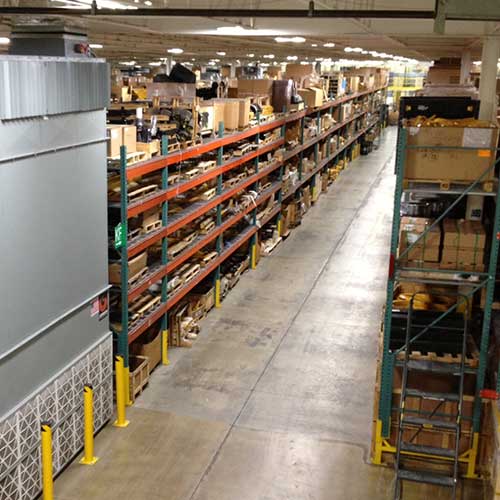
You should consider a "air rotation" system....very efficient and cost effective for tall open buildings. I have installed a couple...1 in an airplane hanger and 1 in a large warehouse.These systems work really well and are relatively quiet.


Capture.JPG
 

jblnut

ALLIANCE MEMBER
Joined
Jan 17, 2015
Messages
7,270
Location
In the Middle of MN
I have in floor heat in my farm shop. Tubes are 1” (at most) off the bottom of a 6-1/2” slab. They’re spaced 8” apart for the outside 8 runs, 12” apart for the next 8 runs and 16” apart for the rest of the building. The office is spaced the same around the outside. 3’ of 2” foam vertical around the exterior. 4” of foam under the slab around the outside 8’ and 2” under the rest.

I run 90f water through the pipes and it’ll easily keep the 54x72x18 building any temp I want it to be at. I have a slab stat in each zone and set the main zone to 58f and the office to 65f. Air temp stays within a couple degrees of the floor temp at all times even when it’s -30f outside. I’d highly recommend running your thermostats off of slab temp so they don’t run at night and heat the slab up too far.

If you’re going to spend the money to lay foam at all go with 2”. The guy that said you don’t need it is not going to pay your gas bill lol. Insulating under the slab is a good idea even without in floor heat and it’s an even better idea with it. No reason to pay to heat the ground. Your system will be way more efficient and responsive if you insulate the slab. You will be needing to evaluate all costs associated with the entire project but do not cut out insulation in any climate. I wish I’d have done 4” everywhere as that area stays cooler in the summer than the center of the shop which boggles my mind.

I can raise my air temp from 56f to 72f overnight in my shop when it’s North Pole cold outside. I have a 120k btu IBC modulating boiler and only runs full blast when I’m raising the temp. The heat is currently supplied by an outdoor wood stove running through an 80k btu plate exchanger and it does great.

Having a warm floor is very nice on a comfort level for you and your machines as has been pointed out before.

If you’re going to have doors opening stick an air curtain by them or a couple large forced air units near them to help temper the air coming in.

Bottom line, I’m not spending your money but I spent my own already and do not regret one bit of it.
 
OP
D

Doubled33

Well-known member
Joined
Dec 29, 2021
Messages
207
Location
CA/HI
You should consider a "air rotation" system....very efficient and cost effective for tall open buildings. I have installed a couple...1 in an airplane hanger and 1 in a large warehouse.These systems work really well and are relatively quiet.


Capture.JPG

This is interesting. Looks like a giant CRAC unit.

Do these work ducted or have to be non ducted. I ask as I have partition walls between spaces. I suppose the top of wall could be open or partial height framing at some locations but not sure if that works non ducted.

Do you have a feel for the cost? Price per SF or similar? Not much online for them just call Trane for a quote.
 
OP
D

Doubled33

Well-known member
Joined
Dec 29, 2021
Messages
207
Location
CA/HI
No data as such, what I have is experience running heat loss calculations on several commercial buildings to evaluate the payback of underfloor insulation vs perimeter insulation. In most temperate climates, the under slab insulation was not cost effective.

There is no such thing as a study or data or rule that says floor insulation is needed or not. Each installation should have a heat loss calculation done, and the energy savings compared to the installation costs.

For data for your situation, build a thermal loss model and run it with and without ground/soil insulation. Then, do a cost analysis and see if the energy saved by the insulation pays for the insulation cost.

In every case I have ever evaluated, adding an equivalent cost of insulation to the ceiling has a bigger payback than putting that money into under slab insulation. Especially in hot summer climates, where the ceiling insulation reduces cooling costs, and the lack of floor insulation also reduces cooling costs. However, in some cases, adding floor insulation may still have a positive payback.
This is some food for thought for me seeing the comments on where to put the insulation in warmer climates and thinking about AC cost.

Thanks
 
OP
D

Doubled33

Well-known member
Joined
Dec 29, 2021
Messages
207
Location
CA/HI
I have never seen them set near the bottom. Either they are on small standoffs or on top of wire mesh also spaced off the bottom. With wire mesh you may be able to use less concrete.

This slab will have a mat of #5’s 12” OC EW (on center each way). Mesh is not an option on slab that will have vehicle traffic.
 
OP
D

Doubled33

Well-known member
Joined
Dec 29, 2021
Messages
207
Location
CA/HI
I have in floor heat in my farm shop. Tubes are 1” (at most) off the bottom of a 6-1/2” slab. They’re spaced 8” apart for the outside 8 runs, 12” apart for the next 8 runs and 16” apart for the rest of the building. The office is spaced the same around the outside. 3’ of 2” foam vertical around the exterior. 4” of foam under the slab around the outside 8’ and 2” under the rest.

I run 90f water through the pipes and it’ll easily keep the 54x72x18 building any temp I want it to be at. I have a slab stat in each zone and set the main zone to 58f and the office to 65f. Air temp stays within a couple degrees of the floor temp at all times even when it’s -30f outside. I’d highly recommend running your thermostats off of slab temp so they don’t run at night and heat the slab up too far.

If you’re going to spend the money to lay foam at all go with 2”. The guy that said you don’t need it is not going to pay your gas bill lol. Insulating under the slab is a good idea even without in floor heat and it’s an even better idea with it. No reason to pay to heat the ground. Your system will be way more efficient and responsive if you insulate the slab. You will be needing to evaluate all costs associated with the entire project but do not cut out insulation in any climate. I wish I’d have done 4” everywhere as that area stays cooler in the summer than the center of the shop which boggles my mind.

I can raise my air temp from 56f to 72f overnight in my shop when it’s North Pole cold outside. I have a 120k btu IBC modulating boiler and only runs full blast when I’m raising the temp. The heat is currently supplied by an outdoor wood stove running through an 80k btu plate exchanger and it does great.

Having a warm floor is very nice on a comfort level for you and your machines as has been pointed out before.

If you’re going to have doors opening stick an air curtain by them or a couple large forced air units near them to help temper the air coming in.

Bottom line, I’m not spending your money but I spent my own already and do not regret one bit of it.
Good to see a real life comment from an owner. I never thought of the reduced insulation thickness. At 2” all the way and perimeter I am at 20k for material.

I also thought your boiler would have been bigger so I am surprised there.

The lowest I will probably see is plus 20 F but on the 30 to 50 degrees days and morning I want warmth. Hard to justify non climate controlled buildings these days.

Do you have AC and what did you do for that?
 

jblnut

ALLIANCE MEMBER
Joined
Jan 17, 2015
Messages
7,270
Location
In the Middle of MN
Good to see a real life comment from an owner. I never thought of the reduced insulation thickness. At 2” all the way and perimeter I am at 20k for material.

I also thought your boiler would have been bigger so I am surprised there.
When I was running LP before the wood stove was installed it would rarely kick above the minimum which I think is 40k btus.

Do you have AC and what did you do for that?
I have a 2-ton mini split with a single head in the big part and a 1/2-ton single head with a diy ducted setup to circulate air from the office to the rooms upstairs.

I explored a furnace type setup but it was a lot more expensive. Major plus of a ducted system is the ability to clean the filters and coils a lot easier.

The mini splits will keep their areas as cool as I’d ever want. I set it to 58f for funsies when it was in the 90’s a few weeks back and it was 58ish in the shop. Quite impressive.
 
To avoid these ads, REGISTER NOW!
Top Bottom