

You are using an out of date browser. It may not display this or other websites correctly.
You should upgrade or use an alternative browser.
You should upgrade or use an alternative browser.
Does this bolt need a washer? Or is that built-in ?
- Thread starter Jacobson
- Start date

bob15
Well-known member
If you are referring to a flat washer, then no washer is typically needed, but there might be times where you might use that bolt with a fender washer or other large OD washer. Unless it serrated on the underside, you would still need a lock washer (though it looks like that bolt had either loctite or vibra-tite on it)
2ndGearRubber
Well-known member
Built in to the bolt. Brake caliper guide pin bolt for your VW product, 13mm head?
matt_i
Well-known member
Imo the flange-head has its own washer-bearing surface. So you are all-set. If automotive I would put it back in as it came out....iow unless a crusty washer fell out of there as rusty dust I'd just go back with the bolt.
PugetDude
ALLIANCE MEMBER
It's a washer-head bolt. No additional washer needed.
bob15
Well-known member
No lock washers. Split LWs are useless on metal to metal joints and extremely rare on vehicles today
Useless? They are still used on farm equipment......
acer66
Well-known member
Imo the flange-head has its own washer-bearing surface. So you are all-set. If automotive I would put it back in as it came out....iow unless a crusty washer fell out of there as rusty dust I'd just go back with the bolt.
Looks like it is car, skoda which is owned by vw, related.
https://en.wikipedia.org/wiki/Škoda_Auto
Wamsutta
Well-known member
A real automotive flange bolt will have a thick head on it so that you can utilize the full depth of your socket for maximum grip.

Useless? They are still used on farm equipment......
Go to boltscience.com and look at the Junkers test videos. Joints with a LW perform worse than without.
Try and find a split LW on a Honda car made since the 1990s. Some engineers got the test data from the 1960s. Others still haven't

I own two Skodas...... but they ain't cars.

Attachments
acer66
Well-known member

Useless? They are still used on farm equipment......
They proved awhile back they are. I think even aVe touched on em
Go to boltscience.com and look at the Junkers test videos. Joints with a LW perform worse than without.
Try and find a split LW on a Honda car made since the 1990s. Some engineers got the test data from the 1960s. Others still haven't ��

NASA wrote a paper on fastener tech back in the early 90's; in it, they showed that the split ring washers were worse for loosening fasteners. One result was that those washers were banned for use on Space Station Freedom/International Space Station hardware.
Last edited:
Wouldn't an aluminum lock washer deform under torque and thus provide more grip/hold? Unless the deformed aluminum will eventually work itself loose. I guess you can also look at the lock washer as preventing a tight mating of the 2 surfaces.
bob15
Well-known member
NASA wrote a paper on fastener tech back in the early 90's; in it, they showed that the split ring washers were worse for loosening fasteners. One result was that those washers were banned for use on Space Station Freedom/International Space Station hardware.
That is also the same NASA that had people believing an O-ring couldn't fail in cold temps and cause a fuel leak.
When you remove a bolt and you see where the washer dug into both surfaces, my guess is that lock washer is working.
With that said, to each your own in what you think works best (besides safety wire)

Last edited:
dennis49
Member
LOCK WASHERS
Helical Spring Lock Washers. Spring-type lock washers
have been in existence for so long that many mechanics will use
these on everything. These are OBSOLETE and DANGEROUS.
The SAE J489 states that "It should be noted that the word 'lock'
appearing in the name of the products in this standard is a generic
term historically associated with their identification and is not
intended to imply an indefinite permanency of fixity in attachments
where they are used."
These, are made from carbon steel heat treated to a
hardness of Rockwell C45-51. When electroplated, they are very
susceptible to embrittlement; i.e. they may crack easily during
assembly or shortly after installation. These devices do not
improve a fastener's lockability or prevent loss of preload.
When a lockwasher is assembled, the open ends are
compressed forming a hard flat washer. The only time it is
effective is when preload is lost; either initially, in service from part
movement or imbedment, or if the bolt becomes longer due to
yielding. Thus, when sprung open, the shai p ends can dig into the
work and the nut's bearing surface or the bolt head's washer face
to prevent counter rotation. If under the head of the bolt, contact
with the fillet can cause fatigue damage to the bolt itself.
A slightly sprung lockwasher may go undetected because it
is only opened by a few thousands-of-an-inch. The opening may
also be obscured to visual inspection due to position or grease.
When the cyclic service loads continue to impact on the sprung
lockwasher, it compresses and relaxes with each additional load.
Because of this cyclic motion, fatigue stress develops. The nut,
which is usually a standard free-spinning nut, is then free to vibrate
off the bolt.
Due to the potential dangers of helical spring lockwashers,
the SAE recommended in 1969 that they not be used in any
critical application on vehicles, other than sheet metal or inspection
plates. Instead, through-hardened heat treated flat washers used
with all-metal prevailing-torque-type locking nuts are now the
standard of the industry.
Excerpted from Bowman Fastener Facts K-133 © 1990
A lockwasher is not a substitute for a properly
torqued nut.
Helical Spring Lock Washers. Spring-type lock washers
have been in existence for so long that many mechanics will use
these on everything. These are OBSOLETE and DANGEROUS.
The SAE J489 states that "It should be noted that the word 'lock'
appearing in the name of the products in this standard is a generic
term historically associated with their identification and is not
intended to imply an indefinite permanency of fixity in attachments
where they are used."
These, are made from carbon steel heat treated to a
hardness of Rockwell C45-51. When electroplated, they are very
susceptible to embrittlement; i.e. they may crack easily during
assembly or shortly after installation. These devices do not
improve a fastener's lockability or prevent loss of preload.
When a lockwasher is assembled, the open ends are
compressed forming a hard flat washer. The only time it is
effective is when preload is lost; either initially, in service from part
movement or imbedment, or if the bolt becomes longer due to
yielding. Thus, when sprung open, the shai p ends can dig into the
work and the nut's bearing surface or the bolt head's washer face
to prevent counter rotation. If under the head of the bolt, contact
with the fillet can cause fatigue damage to the bolt itself.
A slightly sprung lockwasher may go undetected because it
is only opened by a few thousands-of-an-inch. The opening may
also be obscured to visual inspection due to position or grease.
When the cyclic service loads continue to impact on the sprung
lockwasher, it compresses and relaxes with each additional load.
Because of this cyclic motion, fatigue stress develops. The nut,
which is usually a standard free-spinning nut, is then free to vibrate
off the bolt.
Due to the potential dangers of helical spring lockwashers,
the SAE recommended in 1969 that they not be used in any
critical application on vehicles, other than sheet metal or inspection
plates. Instead, through-hardened heat treated flat washers used
with all-metal prevailing-torque-type locking nuts are now the
standard of the industry.
Excerpted from Bowman Fastener Facts K-133 © 1990
A lockwasher is not a substitute for a properly
torqued nut.
Yes I'm sure you are much more qualified on the matter than NASA. What do they knowThat is also the same NASA that had people believing an O-ring couldn't fail in cold temps and cause a fuel leak.
When you remove a bolt and you see where the washer dug into both surfaces, my guess is that lock washer is working.
With that said, to each your own in what you think works best (besides safety wire)
bob15
Well-known member
Yes I'm sure you are much more qualified on the matter than NASA. What do they know
Never said I was more qualified. I said I've seen split lock washers work just fine where as the fasteners that didn't have washers or had flattened/junk washers loosened up. Why was that then?
As for NASA, I just don't take them for 100%. Like I said before, how smart were they when they failed to believe cold temps, O-rings and a fuel leak wouldn't happen together at the same time? Their smartness or their being more qualified, cost 7 people their lives......
American Locomotive
Well-known member
I've seen plenty on instances where split washers have loosened up too. There have been countless upon countless tests that have shown that locking split ring washers are actually worse than no washers at all except in very limited applications. Anyone still using them in new products is only using them out of tradition.
NASA has many excellent engineers. The Challenger disaster didn't have anything to do with a fuel leak or "engineers not believing it would be used in the cold". It was the result of a lot of small errors, manufacturing tolerance problems and bad management that did not understand the data being presented by the engineers.
NASA has many excellent engineers. The Challenger disaster didn't have anything to do with a fuel leak or "engineers not believing it would be used in the cold". It was the result of a lot of small errors, manufacturing tolerance problems and bad management that did not understand the data being presented by the engineers.
Robbie B
Well-known member
They proved awhile back they are. I think even aVe touched on em
Yeah, he said the only one that worked we’re some kind of double serrated ones but the name of them escapes me at the moment.
Sent from my iPhone using Tapatalk
Yeah, he said the only one that worked we’re some kind of double serrated ones but the name of them escapes me at the moment.
Sent from my iPhone using Tapatalk
nord-lock washers. they work but they certainly arent "the only" one that works. although I have seen them fail just recently. I'd call it an "extreme duty" application though. They were holding the plows on a rock crusher at a cement plant. 30mm bolts.
Last edited:
Old Man Roger
Well-known member
Mind Blown!
Robbie B
Well-known member
nord-lock washers. they work but they certainly arent "the only" one that works. although I have seen them fail just recently. I'd call it an "extreme duty" application though. They were holding the plows on a rock crusher at a cement plant. 30mm bolts.
Yeah that’s them and that would probably qualify as an extreme application.
Sent from my iPhone using Tapatalk
Yeah that’s them and that would probably qualify as an extreme application.
Sent from my iPhone using Tapatalk
When it came time to reintstall them the plant said "we don't have any of those... so just reuse them" They are a one use item fyi...
Ended up welding keystock beside one flat of the bolt to keep it from backing out.
WittHay
Well-known member
Does this bolt need a washer? Or is that built-in
Flange bolts and nuts have the washers built in. Some have serrations and some dont. The locking part on your bolt is the Loctite on the threads.
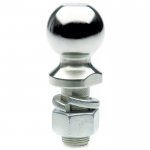
Split lock washers are used all the time. On farm equipment for example, most rototiller blades are held on with a grade 8 or 12.9 bolt, lock washer and nut. The most common critical use that most people use a lock washer on is a trailer ball hitch
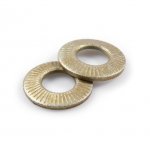
The Nord lock is not commonly used because it a one time use thing that has to be precisely torqued. Whats common on a lot of German stuff is a curved serrated flat washer
Attachments

Last edited:
My buddy works for Heico-lock, same principal as Nord lock at half the price. He carries a portable junker test stand around and can prove your std spilt lock washer is useless in front of your very eyes in about 5 seconds.
He's been running around the US for the past 10 years getting these spec'd in all sorts of applications. Lots of automotive and aerospace.
Sent from my SM-G950U using Tapatalk
He's been running around the US for the past 10 years getting these spec'd in all sorts of applications. Lots of automotive and aerospace.
Sent from my SM-G950U using Tapatalk
Robbie B
Well-known member
When it came time to reintstall them the plant said "we don't have any of those... so just reuse them" They are a one use item fyi...
Ended up welding keystock beside one flat of the bolt to keep it from backing out.
Sounds like some **** my boss would pull. He likes to just reuse old rotted bolts.
Sent from my iPhone using Tapatalk
seber
Well-known member
The split washer has a very specific use. That is where the bolt or screw is too large to properly preload. The split washer then applies tension that the shank cannot. Trailer hitch balls are one example. Proper torque for a 3/4 hex nut on a trailer ball is on the order of 365 foot pounds. How many do you think are tightened to that spec? The same thing happens on farm equipment. Farmers do not carry a torque wrench around on the tractor.
As an aside, all the photos in this series have been screws not bolts. A bolt is not designed to be turned. That is the definition of a screw.
As an aside, all the photos in this series have been screws not bolts. A bolt is not designed to be turned. That is the definition of a screw.
If you are referring to a flat washer, then no washer is typically needed, but there might be times where you might use that bolt with a fender washer or other large OD washer. Unless it serrated on the underside, you would still need a lock washer (though it looks like that bolt had either loctite or vibra-tite on it)
I am told that lock washers are obsolete devices, that they never did what they were intended to do ??
Bill
American Locomotive
Well-known member
The problem with that idea is split washers do not provide any meaningful amount of preload.The split washer has a very specific use. That is where the bolt or screw is too large to properly preload. The split washer then applies tension that the shank cannot. Trailer hitch balls are one example. Proper torque for a 3/4 hex nut on a trailer ball is on the order of 365 foot pounds. How many do you think are tightened to that spec? The same thing happens on farm equipment. Farmers do not carry a torque wrench around on the tractor.
A 3/4" bolt torqued to 365 lb-ft is exerting 29,000 pounds of clamping force. It would take 300, maybe 400 pounds of force to crush a 3/4" lock washer completely flat. Once the split washer is flat, it is no longer doing anything. It's not providing any meaningful preload to the joint because the actual desired clamping force is nearly 100x higher.
Once the nut has backed off enough to where the split washer starts do something, the joint is only going to be under 300-400 pounds of preload (if that). At that point, the joint has failed. 300 pounds of preload in an application that demands 30,000 is not going to do anything.
Not really. In general: a screw is always threaded directly into something, and a bolt is always threaded into nut. However a bolt can be turned, or the nut can be turned. Even then, there is no real true agreed upon definition.As an aside, all the photos in this series have been screws not bolts. A bolt is not designed to be turned. That is the definition of a screw.
SeisMec
Well-known member
Go to boltscience.com and look at the Junkers test videos. Joints with a LW perform worse than without.
Try and find a split LW on a Honda car made since the 1990s. Some engineers got the test data from the 1960s. Others still haven't
Thanks. Awesome site.
Scientific confirmation of what I've believed for years about split ring lock washers.
Here is a direct link to the Junkers test video you mentioned.
Their page titled Self-Loosening of Bolts and Nuts is also worth a read.
toplessHO
Well-known member

SeisMec
Well-known member
I dont think I've ever seen a 3/4 shank on a trailer hitch ball...
???
Shank size ain't nut size.
https://www.boltdepot.com/fastener-information/Bolts/US-Bolt-Head-Size.aspx
https://www.curtmfg.com/towing-accessories/trailer-balls/learn-more
Not really. In general: a screw is always threaded directly into something, and a bolt is always threaded into nut. However a bolt can be turned, or the nut can be turned. Even then, there is no real true agreed upon definition.
A true bolt can only be torqued by a nut. Think plow bolt or carriage bolt or other fastener that has no provision for a tool to turn it by the head. If you can torque the fastener by its head then it is a screw. Adding a nut to a screw does not change it into a bolt.
Now the above is changed by local opinion, culture, and industry. The above is what I follow.
lg
no neat sig line
DGersic
Well-known member
Never said I was more qualified. I said I've seen split lock washers work just fine where as the fasteners that didn't have washers or had flattened/junk washers loosened up. Why was that then?
As for NASA, I just don't take them for 100%. Like I said before, how smart were they when they failed to believe cold temps, O-rings and a fuel leak wouldn't happen together at the same time? Their smartness or their being more qualified, cost 7 people their lives......
The engineers involved predicted exactly what happened. They were overruled by management.
Sent from my iPad using The Garage Journal mobile app
TigerDude
Well-known member
Crush washers are for maintaining a liquid seal, not for holding the fastener.Wouldn't an aluminum lock washer deform under torque and thus provide more grip/hold? Unless the deformed aluminum will eventually work itself loose. I guess you can also look at the lock washer as preventing a tight mating of the 2 surfaces.