Hi,
I have a new 1,600sft garage/shop that's getting a Versatile Polyaspartic floor in charcoal gray. My brother who does concrete polishing/epoxy flooring for a living, is kind enough to drive all the way up the mountain (300+ miles) do my floors for me. Our question relates to how much of the non-skid agent to add to the floor. My brother lives/works at the beach and has never had a client ask for it, so therefore has no experience with it. Since it snows where i live, I'd like some non slip attributes, but I don't want 80grit either. I mess around with cars a lot and don't want grit holding dirt and oil. Nor do want it hurting my knees etc. I'm not doing flakes, because I like the look of a shinny perfect floor and would like to retain as much of the shine as possible. Not to mention, if drop a nut, I'd like at least a chance of finding it.
So... do you guys have experience with products like aluminum oxide? Do you have any ideas on what percentage of the recommended amount to use to not have an ice skating rink, but still retain as much of my above stated desires as possible. For example, if the product states "add 1-3lbs to every gallon of topcoat" could i get away with the lower amount? Also, can I assume the grits are like sandpaper, the higher the number the finer the particle? I see grits in the 30's, 60's and 320 for one brand. That's quite the jump, can anyone describe the relative differences? Would a direct comparison with sandpaper be appropriate?
Please let me know what you think. Thanks in advance.
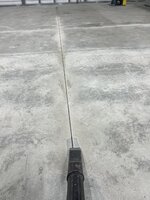
First pic is the color I'm doing.
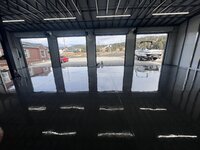
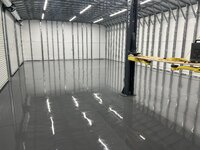
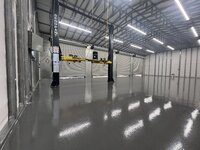
Second and third and my garage the day it was finished. Lights, electrical and 2 post lift will be done prior to floor.
I have a new 1,600sft garage/shop that's getting a Versatile Polyaspartic floor in charcoal gray. My brother who does concrete polishing/epoxy flooring for a living, is kind enough to drive all the way up the mountain (300+ miles) do my floors for me. Our question relates to how much of the non-skid agent to add to the floor. My brother lives/works at the beach and has never had a client ask for it, so therefore has no experience with it. Since it snows where i live, I'd like some non slip attributes, but I don't want 80grit either. I mess around with cars a lot and don't want grit holding dirt and oil. Nor do want it hurting my knees etc. I'm not doing flakes, because I like the look of a shinny perfect floor and would like to retain as much of the shine as possible. Not to mention, if drop a nut, I'd like at least a chance of finding it.
So... do you guys have experience with products like aluminum oxide? Do you have any ideas on what percentage of the recommended amount to use to not have an ice skating rink, but still retain as much of my above stated desires as possible. For example, if the product states "add 1-3lbs to every gallon of topcoat" could i get away with the lower amount? Also, can I assume the grits are like sandpaper, the higher the number the finer the particle? I see grits in the 30's, 60's and 320 for one brand. That's quite the jump, can anyone describe the relative differences? Would a direct comparison with sandpaper be appropriate?
Please let me know what you think. Thanks in advance.
First pic is the color I'm doing.
Second and third and my garage the day it was finished. Lights, electrical and 2 post lift will be done prior to floor.


 ). Now, for the cons. It is non-abrasive so it will not add the same level of added traction that Aluminum Oxide will. It is very dense so you need to pay attention when applying it, making sure to agitate the roller pan when loading the roller AND applying the topcoat correctly.