To avoid these ads, REGISTER NOW!

Double Trouble Vapor Barrier?

SpiderDave

Well-known member
Joined
Feb 17, 2018
Messages
207
I know this has been talked about, but I haven't found anything exactly the same as I'm doing yet. And I'm running out of time and serious really need help on this from the willing or experienced.

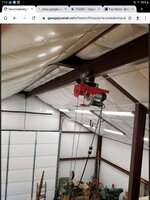
I'm in the NW and looking to to insulate my pole shed ceiling with bats of paper faced fiberglass insulation. There's already the usual fiberglass roll insulation with white plastic vapor barrier between the metal roofing and 2X6 purlins - see in pics. Would adding insulation under that complicate matters if not done correctly? And what is the correct way exactly?
Will I need a vapor barrier on the ceiling once the insulation's up? I've been trying to find this exact situation and haven't come across anything absolute yet. Or I find two different sources of info saying the opposite, it leaves me confused. There are no soffit vents or roof over hang as the purlins run parallel to the ridge, rather than peak to eaves. Think cathedral style ceiling - should I be concerned about closing up the cavity? Should I use a vapor barrier,.. or something that breathes? I'd like to finish some areas with tin roofing over it too, will that affect anything? I do have styrofoam sheets I'd considered using over the insulation, but again it might trap moisture.
Has anyone done this before and what did you end up doing? Or just some advice would be great too! I know how condensation works. I'm just not sure about the mechanics of it entering or escaping properly. Getting a little desperate here... any ideas?

Thanks for reading and have a good one!
 

Attachments

  • IMG_5449 (3).JPG
    IMG_5449 (3).JPG
    178.6 KB · Views: 63
To avoid these ads, REGISTER NOW!

rustyjames

Well-known member
Joined
Dec 28, 2008
Messages
1,077
Location
central nj
I think if it were my installation I'd put some slices in the existing vapor barrier and then go with Polyiso sheets, as thick as you can afford, given your location.
 

BillK

Well-known member
Joined
Aug 24, 2006
Messages
9,305
Location
Beautiful Southern Maryland
Dave,
Is the present insulation not enough ? Personally I would be leery of putting more insulation under it with another vapor barrier but thats just me and I have seen what happens when things cant breath.

I think this would be one time to reach out to a couple of insulation manufacturers and see what they say and heed their advice. I have found manufacturers to be very willing to share the correct way to do things.

It would be a shame to do all that work and then have to rip it out because you have moisture issues.

Just my opinion,
 

CraigStu

Well-known member
Joined
May 22, 2014
Messages
4,014
Location
Blacksburg, Va
The more I am on this forum the less I am likely to use any vapor barrier. Usually the recommendation is to put the barrier on the "?" side of the insulation because that will keep vapor from forming when it's colder outside than inside. In my mind the question that forms is, Ok, so what about when it's warmer inside than outside? To me it's kind of like should a roof be a dark or a light color. No matter which you chose it won't be right for some part of the year. The possible problem of moisture forming somewhere is a lot more important to me then roof color though since it can cause actual damage vs just increasing heat or cooling bills. I like BillK's advice.
 
OP
S

SpiderDave

Well-known member
Joined
Feb 17, 2018
Messages
207
Rusty - If I had a standing seam type roofing over it, I might try that. But I'd still worry the metal roofing could condensate when warm air travels through it and hits the metal. It's corrugated too, so air will be traveling along that as well most likely. When we first bought the place, that roof leaked all over and the only thing keeping the water back was that barrier. I've seen replaced the cheap washer screw combo's with top hat one piece screws - the absolute BEST and only way to go on a roof - and havent' had a leak since. If it were a shed or carport, I wouldn't worry. But I have too many tools and stuff that can't risk a leak. It makes sense to slit it here and there, I've read people advising that. But without something shielding the cold metal, seems like I'd be inviting another potential issue? I thought Polysio Sheet is a closed cell foam and very vapor & water retardant. I have to agree with dfller on the condensation thing. Not sure I understand slicing it before placing a water proof material over it. I'm int he mountains, we get high and low temps out here. Had 3ft snow on it a while back. 2' laying on it last year. So we do get some weather now and then to think about. When I'm working, it's heated a bit.
 
OP
S

SpiderDave

Well-known member
Joined
Feb 17, 2018
Messages
207
You have a good vapor barrier there now, I don't see any point in slashing it. That would just allow in moisture to condnse on the back side of th e metal. Just do your insulating and do a good job on the new barrier and you should be fine, IMO.

And the kraft paper backing, is that enough then? maybe the light weight tin roofing over that to support it too?
 
OP
S

SpiderDave

Well-known member
Joined
Feb 17, 2018
Messages
207
Dave,
Is the present insulation not enough ? Personally I would be leery of putting more insulation under it with another vapor barrier but thats just me and I have seen what happens when things cant breath.

I think this would be one time to reach out to a couple of insulation manufacturers and see what they say and heed their advice. I have found manufacturers to be very willing to share the correct way to do things.

It would be a shame to do all that work and then have to rip it out because you have moisture issues.

Just my opinion,

Ya, I agree totally. But to answer. no it's not enough for a few reasons. It would be cheaper to heat, a small heater would keep pipes from freezing and save some 4's/heat. Plus it would absorb sound better, my roof is like a audio transparent diaphragm. My walls are insulated and OSB sheeted, you hear very little, but you can hear obvious noise from above. It's a huge leak of heat and the only areas it's truly effective as insulation is in the center where it pillows out with some thickness. That's only about 20-30% of each row between purlins. The center of the vapor barrier in winter is warm to touch and outside of that is colder the closer you get to the 2x6 purlins - where the insulation has been compressed between the roofing and purlins. One serious issue is that the close contact of the roofing and purlins, conducts a lot of cold temperatures (as well as heat in summer) into the 2x6's and they are very cold during the winter, so they grow black mold sometimes. I keep up on it and treat it as I go, but that's not enough and I'm getting too old and too much stuff to move around to crawl up there every year.

My thought was to insulate for efficiency but also to wrap those purlins up - like a vaulted ceiling and maybe that would help? I was thinkin' perhaps the facing on the fiberglass wouldn't be a mild vapor barrier at best. but it would slow things down and allow things to dry out too. IDK? I have walls with no vapor barrier at all, been that way for 30 yrs. I took a peek inside and there were very little issues,... in most places. Others were from old leaks. But to be fair, those walls are down low where heat the doesn't pool up to escape or hit the cold purlins either, so that may not be a fair comparison.

Feel like I'm damned if I do and damned if I don't on this one - out of my element here. I've tried tirelessly before this to contact installer and manufacturers with nothing definite and mostly no reply back at all if you're not purchasing anything. Others will ask if I bought it from them? Etc. When I say no I was just inquiring, I get stone walled or ghosted. I even went as far as talking to contractors on jobsites and came back with nothing useful but dead end leads. Maybe I'm asking the wrong questions...

Can I put the tin roofing over the bats too? Will that help some or cause issues? Wish I could do a drop ceiling or spray foam, but that's a no go. Sorry if I sound difficult here folks,.. it's really NOT like that at all. I'm just trying to run it through the grinder and hash it out. Mostly thinkin out loud hoping to inspire more ideas or leads here. Thanks everybody for the patience and help so far, really appreciate it!!!
 
OP
S

SpiderDave

Well-known member
Joined
Feb 17, 2018
Messages
207
The more I am on this forum the less I am likely to use any vapor barrier. Usually the recommendation is to put the barrier on the "?" side of the insulation because that will keep vapor from forming when it's colder outside than inside. In my mind the question that forms is, Ok, so what about when it's warmer inside than outside? To me it's kind of like should a roof be a dark or a light color. No matter which you chose it won't be right for some part of the year. The possible problem of moisture forming somewhere is a lot more important to me then roof color though since it can cause actual damage vs just increasing heat or cooling bills. I like BillK's advice.

Craig, I can't tell you how many times that has crossed my mind as well! Everything single thing you wrote took the words right out of my mouth. Gr8 minds, eh? Ha!
 

rustyjames

Well-known member
Joined
Dec 28, 2008
Messages
1,077
Location
central nj
A lot of moisture issues occur in houses where there's cooking, showers, etc. Shops are quite different, unless you're washing cars/equipment, even then it's not like cooking big pots of spaghetti, or whatever. This topic is frequently discussed on green building/building science forums, it'll make your head spin.
 

jkuro

Well-known member
Joined
Apr 28, 2009
Messages
552
I think your best answer would be to call Owens Corning or one of the other insulation manufactures with your concern. I know two vapor barriers is a no no. I also know a tin pole barn is not easy to deal with. Good luck.
 
OP
S

SpiderDave

Well-known member
Joined
Feb 17, 2018
Messages
207
I think your best answer would be to call Owens Corning or one of the other insulation manufactures with your concern. I know two vapor barriers is a no no. I also know a tin pole barn is not easy to deal with. Good luck.
Thanks, I will give that a try! Worst part is the ceiling is the last part of my project. I need to get back to work soon as it's done, like yesterday. And I don't dare seal it up until it's right. This shops been such a money pit, you wouldn't believe it! I fixed more issues than you could shake a stick at and I'm broke and out of patience doing it. I figured the ceiling would be the easiest thing I could possibly do, what could possibly go wrong, right? Ha ha! Thanks guys! Will letchuh know if I find anything out.
 

dfiler2

Well-known member
Joined
Dec 15, 2014
Messages
2,858
Location
NW Minnesota
Sorry, I missed your question. We always felt the kraft paper did a good job of holding the insulation in place but always went with a 6 mil poly over it for a vapor barrier. The moisture in a shop/garage can be really high if you are bringing in wet or snowy vehicles.
 
OP
S

SpiderDave

Well-known member
Joined
Feb 17, 2018
Messages
207
Sorry, I missed your question. We always felt the kraft paper did a good job of holding the insulation in place but always went with a 6 mil poly over it for a vapor barrier. The moisture in a shop/garage can be really high if you are bringing in wet or snowy vehicles.
That makes lot of sense, puddles of melted snow gotta go somewhere right? Even rain on a car will add to it.

In my case I'd already have a vapor barrier above that one in place, if i put one over the insulation. Not sure double's the way to go and curious of anybody who had the same issue or how they handled it. My shops pretty tight for a pole barn. But the roof loses a ton of heat in winter. Be nice to do something about that with fiberglass since I already have a ton of it.
 
To avoid these ads, REGISTER NOW!

dfiler2

Well-known member
Joined
Dec 15, 2014
Messages
2,858
Location
NW Minnesota
The issue I would have with not doing a second vapor barrier would be that the moisture will be stopped at the original barrier and then collect in your second layer of fiberglass, would be better to seal it so nothing gets in there, IMO.
 
OP
S

SpiderDave

Well-known member
Joined
Feb 17, 2018
Messages
207
The issue I would have with not doing a second vapor barrier would be that the moisture will be stopped at the original barrier and then collect in your second layer of fiberglass, would be better to seal it so nothing gets in there, IMO.
That was my original logic too when I started this project, for the same reasons you said. But what I've learned since also makes me think otherwise, so I'm confused more than usual. LOL!

I meant to Friday but things got in the way. I found Owens Corning close enough that I'm going to call them Monday and if they don't answer or call me back, I'm going down there in person. Ha HA! Will let ya'll know how that turns out.

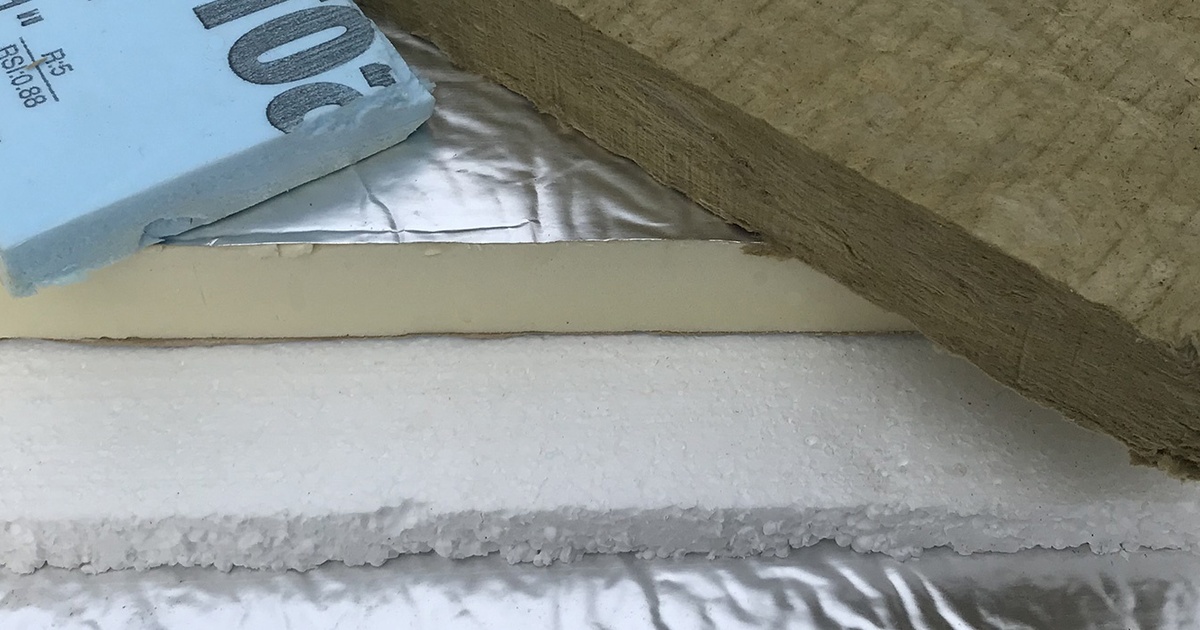
I've read where so many people using poly styrene sheets (that are closed cell which makes it a vapor barrier, right?) up against the metal siding with a snug fit and seal around it with caulking or spray foam. Then placing fiberglass over that and then OSB or sheetrock to finsih with a vapor barrier beneath it. I know the polystyrene would reduce heat and cold greatly, so that's probably a game changer in the case of warm or cold air hitting its opposite. But in my mind, that's still a double vapor barrier isn't it? Maybe it's only used in certain regions. To be fair I didn't check on that or see any info otherwise. It's advertise as 'how you do it'. Most demo's even show how to box in the post and anything else that's exposed for creating more of the same. Here's a video that demonstrates all this:

How to Insulate a Pole Barn - Insulating the Workshop With Foam and Fiberglass​


He did do a thermal break too, that's where I'm at loss since I can't this time around.

I don't think I can ever seal anything up tight enough that moisture doesn't get into it, but maybe I can slow temps down enough there's far less chance it condensates? IDK

Still got my ears on if there're more opinion, ideas or experiences to share....Thanks as always everybody!
 
Last edited:

ratfink65

Member
Joined
Nov 16, 2009
Messages
21
I am pretty excited to hear what Owens says about their product in this situation.

Here is a study I have found about the different kinds of foam board. Pretty interesting.


I am getting ready to insulate my barn as well. I do not have any type of hourse wrap and I thought putting foam board (EPS) between the purlins would help to seal my building up. I am worried about the double vapor barrier as well because I plan on using fiberglass insulation blankets too.

Do normal people obsess over details like this? lol
 
OP
S

SpiderDave

Well-known member
Joined
Feb 17, 2018
Messages
207
I am pretty excited to hear what Owens says about their product in this situation.

Here is a study I have found about the different kinds of foam board. Pretty interesting.


I am getting ready to insulate my barn as well. I do not have any type of hourse wrap and I thought putting foam board (EPS) between the purlins would help to seal my building up. I am worried about the double vapor barrier as well because I plan on using fiberglass insulation blankets too.

Do normal people obsess over details like this? lol
ratfink, prbably not! LOL! But I'm not so sure what normal is anymore. Or that we'd know the difference if we were a bit off,.. would we? Do truly crazy people actually think they're crazy? Harr harr!

This is the article that started it for me doubting and wondering if I was doing it right or not. I decided to wait and do it right but it's taking a while. I'd like to be able to sleep at night not wondering when it's gona come back on me. Pole Barns are a different animal than what I'm used to working on. Also, I wanted to show this article to someone but couldn't find it - thank you. Great info in there.

I've seen a lot of roofs with Polyiso as they mentioned, that had leaks. The pieces we replaced weighed a lot, having taking up moisture. And I've seen ice on commercial building ceilings with that stuff,.. then drip on the machinery when the heat came on. Some human error using it in the wrong place I'm sure. But I have seen it rot out in it's own way too.

We ran into issues with Polystyrene in Bldg Maint. Through years being up against hot metal, it does become brittle, shrink and the R value lowers over time, noticeably in some places. We replaced walls that it just fell out of and crumbled in your hands. To be fair, those were hot walls. I've read that the tiny balls of expanded poly also allow moisture to move between them in the sheet, so it's not as much a vapor barrier as the plastic or foil film covering it. I skimmed through that article real quick to make sure it was what I thought it was, so I'm not sure if it says this or not. But I read interestingly enough that Foam Board is a double vapor barrier in itself,... mind blown! It an air space with a vapor barrier insulation on both sides. I've seen that stuff saturated with water and full of mold. People say that's the double vapor barrier doing its thing building up water between over time. IDK

When I was working on our well, a Styrofoam cup of coffee fell in and we were like 'Oh well' and left it. This spring when I finally did some maintenance and expected to see it, but that cup was gone. It'd sank, but hooked itself on the pump screen when I brought it up to check it. And it was about 1/4 its regular size (barely bigger than a shot glass) - without the air in it. So it has it's limits for sure.

There's no perfect solution or insulation, they all have a downside and be chosen by your location & weather. But I'd like know it lasts, or is easily replaced if damaged. So fiberglass and rockwool are my favs! In the tests I've researched, fiberglass has the best sound deadening than all others not specific to the task. It's easily replaced, you don't have to caulk or foam around it. Sure it settles and does its own thing too, but I like what I've seen when opening up really old walls. Rockwood, the mice don't like and it hydrophobic so it repels water, a huge plus in my book. If it stays dry, I don't think it sags over time either. They definitely have the longest life and sound absorption, so I prefer them for that reason.

One thing I did do in my walls, the bottom row of insulation nearest the concrete where moisture acna draw, is Rockwool and it has performed like a champ - Highly recommend that idea. Gotta run, brother in law's wedding's in 2 hrs + Freee BBQ awaits!! To be continued....
 
OP
S

SpiderDave

Well-known member
Joined
Feb 17, 2018
Messages
207
I'm at a loss here so I'm trying to get my thick head around this to see what it is I might be missing for options.

Since the vapor barrier doesn't have issues with mold, it's just the purlins. Why would a layer of un-faced fiberglass change that for the vapor barrier so much? I know it wouldn't have the same advantages as open air provides for evaporation. But wouldn't un-faced fiberglass shield it from the extremes or quick changes by creating more normalcy or consistent temperatures to the materials within the cavity? Fiberglass is fairly good at wicking moisture, has lots of air space inside of it and no more or less moisture would be moving through than it is now. It wouldn't dry as fast as open air, but it also wouldn't have the temps to contend with, would it?

I stuck on fiberglass though really like Rockwool,.. the material is hydrophobic too. But it's still vapor permeable and can retain moisture (stagnates) as it doesn't have the wicking qualities that others do.

There's the cold bottle of drinking water example to explain condensation. I always wrap a towel around a bottle of ice cold water and it stays cold a long time in my very hot car when I'm out on a hot humid job all day. The cold temperature of that water bottle seeps into that towel as the warmer air temps come from the opposing side to level out. But it doesn't sweat like it would exposed to the open air, usually not even at all - depending on the thickness of the towel and the temperatures involved.

I'm not saying it's correct, but if I slowed the rate of condensation so much that the building could allow the moisture to pass or be disturbed faster than or equal to the rate it's being distributed, I'd surely be within the realm of how walls work, right? Maybe I have it wrong.

One side of my shop's exposed to the sun almost as much as the roof. It's closed up tight, no soffits, and heat pools to the top of a wall as it rises with no where to go. In winter, heat pools to the top of walls. So why isn't it more common for the top of walls to have the same issues? Especially when they can have sources of moisture a roof wouldn't?

In building maintenance I've seen a lot of VERY old pipes wrapped in fiberglass with a tarp material wrap over that (yes, asbestos too) to prevent sweating. Pipe's that weren't, were often cold and wet to the touch + rusted. But the old covered pipes I've re-routed or repaired were almost always still very nice looking.

I do understand what works on walls doesn't necessarily apply to pipes, vice/versa. I'm more just showing were my heads at. And asking to learn coming at it logically, be it misguided or not for now, I will learn and get it right if I stay with it. That's how we all get where we're goin' right?

Lastly, lets say I give up on holding heat in the winter and insulating the purlins etc. becasue I really need to get to work. I read about air space etc. What if I was to place open or closed cell foam sheet over the purlins for a celling, leaving an air space between and putting my tin over that to protect from welding & grinding sparks? Would that trap moisture, especially since there are no soffit vents or anything?

Thanks everybody...(y)
 

Attachments

  • IMG_5449 (2).JPG
    IMG_5449 (2).JPG
    179.1 KB · Views: 34

My Old Tools

Well-known member
Joined
Jun 4, 2014
Messages
5,427
Location
Hamrick Lake, TX
My roof is double insulated. Wrapped with 4" plastic backed before sheeting, then 6" strapped to the bottom with plastic facing. First couple of years no heat or cooling. Now MrCool year around. No sweating, cut the summer radiant heat by 90%.
 

Attachments

  • Screenshot_20210816-191336_Chrome.jpg
    Screenshot_20210816-191336_Chrome.jpg
    228 KB · Views: 32
OP
S

SpiderDave

Well-known member
Joined
Feb 17, 2018
Messages
207
My roof is double insulated. Wrapped with 4" plastic backed before sheeting, then 6" strapped to the bottom with plastic facing. First couple of years no heat or cooling. Now MrCool year around. No sweating, cut the summer radiant heat by 90%.
Thanks for that Old Tools! Man, that looks good too, did a great job! With 10" I bet that holds heat really well. I wish my shop had a sweet I-beam and hoist like that. (y)
 
OP
S

SpiderDave

Well-known member
Joined
Feb 17, 2018
Messages
207
I am pretty excited to hear what Owens says about their product in this situation.

Here is a study I have found about the different kinds of foam board. Pretty interesting.


I am getting ready to insulate my barn as well. I do not have any type of hourse wrap and I thought putting foam board (EPS) between the purlins would help to seal my building up. I am worried about the double vapor barrier as well because I plan on using fiberglass insulation blankets too.

Do normal people obsess over details like this? lol
I received this today from JM, they've been very nice and seem genuinely concerned about helping, so a big thank you to them. They sent me their own links on installation and performance of unvented attic space. Not sure if my ceiling would be a similar enough comparison to a un-vented attic space or not, but it does have similarities over all. Anyway, here's what I got so far for whoever's interested...


78jeep02

Member
Joined
Mar 20, 2016
Messages
6
@SpiderDave Did you ever come up with a decent solution? I’ve got a very similar situation and would like to use rockwool under the existing fiberglass roll insulation and install minisplits for heating/cooling however I’m unsure of the need for a second vapor barrier on the underside of the rockwool and am concerned about trapping moisture.
 

dcg9381

Well-known member
Joined
Jun 20, 2018
Messages
11,635
Location
Austin, TX
Old thread, but @78jeep02 - I would not add another vapor barrier. We just completed a structure in MI that has a traditional vapor barrier on the exterior sheeting, inside the structure 1-2" of closed cell foam. After that we added traditional bat insulation. It's working fine, no problems. I see no reason to do a "double barrier" and I've never seen it done that way. I think hybrid insulation is a great and cost effective way to do it.

Mini-splits should remove moisture...
 
To avoid these ads, REGISTER NOW!
Top Bottom