To avoid these ads, REGISTER NOW!

Drafting Machines

tymotor

Member
Joined
Jun 18, 2015
Messages
6
I'm seeking advice on drafting machine brands, types, and/or models.

A few decades ago I took a Mechanical Drawing class in high school, and I really enjoyed it. Given it was an introductory course things were kept pretty simple; we used a t-square, triangles, and a compass. My teacher even forbade mechanical pencils (why?).

Now years later I have an itch to get a drafting table and doodle. Yes, I know the world has moved onto CAD, and I dabble with it myself. Still, I'm the kind of person that prefers a manual transmission; I bought a typewriter somewhat recently; there is a mechanical, physical element that I thoroughly enjoy. I do not design, draft, or draw in my day job; this is purely a hobby exercise. Some people find watercoloring cathartic; drawing with straight edges does it for me. 😎

I'm cruising craigslist and FB marketplace for options, and I've discovered drafting machines. I've never used one, but they seem pretty slick to me. The main two types seem to be elbow style and plotter style(?) (straight bars on the x and y axis). I'm sure there are more correct terms. Edit: As someone else referenced below, I'm currently debating between the elbow and 'floating head' style. I'm shying away from the parallel bar with the string system... but maybe I shouldn't?

Between those two styles is one generally preferred? More accurate?

As for brands, I'm seeing Vemco most often. Given their prevalence I assume they must be decent. Any others to search or hold out for?

From what I can tell the main differences between a brand's models are the size and the scale material. Are there any specific features I should be looking for?

Any insight is much appreciated!
 
Last edited:
To avoid these ads, REGISTER NOW!

cvairwerks

Well-known member
Joined
Aug 12, 2016
Messages
7,182
Location
Within hearing distance of Texas Motor Speedway
Depends on the size drawings you want to work on...ANSI D or smaller, then the parallel is nicer. Bigger than a D and the arm is better. The one thing with a parallel one, is be sure that you have the string tensioned correctly and all the pulleys run free. Pay close attention to the edge, as if you damage it, then it reduces it's usefulness as a reference.

Vemco is good. You will most likely have to calibrate it after you move it home, but not a huge problem. You just need a good 30/60 or 45 triangle and a little time to do it.

BTW, with some careful searching, you can find an E size or larger, electric table cheap.
 

brownbagg

Well-known member
Joined
Mar 20, 2006
Messages
5,208
vemco is the brand, i had one, but have not seen it in forty years
 

BillK

Well-known member
Joined
Aug 24, 2006
Messages
9,296
Location
Beautiful Southern Maryland
I just got back my Fathers oak table that I used to do my drafting homework on back in the late 60's in high school. My Sister has had it. I am perfectly happy with a T-square for what little it gets used for. I have used both types of machines and prefer the "elbow" style.
 
OP
T

tymotor

Member
Joined
Jun 18, 2015
Messages
6
Forgot, there is also the sliding head style, which is what I prefer.

This is what I was trying to describe with my "x and y axis bars". I've read a little about the horizontal bars with the string system, and it seems a bit finicky to me, so in my mind I've been favoring either the elbow or floating head style, as you call it. Any meaningful differences between the two in terms of functionality?
 
OP
T

tymotor

Member
Joined
Jun 18, 2015
Messages
6
Depends on the size drawings you want to work on...ANSI D or smaller, then the parallel is nicer. Bigger than a D and the arm is better. The one thing with a parallel one, is be sure that you have the string tensioned correctly and all the pulleys run free. Pay close attention to the edge, as if you damage it, then it reduces it's usefulness as a reference.

Vemco is good. You will most likely have to calibrate it after you move it home, but not a huge problem. You just need a good 30/60 or 45 triangle and a little time to do it.

BTW, with some careful searching, you can find an E size or larger, electric table cheap.
If I'm debating between an elbow vs floating head style, would you go one way or the other?

Good thought on the table. I've found an Arnol Neolt table near me that tilts manually (foot pedal/bar release). Don't know a lot about it, but it seems good and the price is good. 🤷‍♂️
 

Garcky

Well-known member
Joined
Sep 10, 2022
Messages
3,434
Location
Twin Cities Metro Area, Minnesota
Great question. I was just looking at drafting machines on Craigs List the other day. I don't want one, but I used to use a scaled down parallelogram arm machine when I was doing drawings for the projects I was doing for DIY magazines. I did all my drawings on 11"x17" paper, so the one I bought was perfect for that sized drawing.

In college, I took a number of technical drawing classes and we worked on big drafting tables with large versions of that type machine, with L-arms and a head that would let you rotate that to various angles and that locked at common angles. I loved the machines. And even the scaled down one I had worked just find for what were essentially dimensioned sketches for the projects. The final drawings for the magazines were done by graphic artists, and were way beyond what I could do.

Since everyone is using CAD now, it turns out that the old drafting machines have come way, way down in price for used ones. So, if you look around, you might find a drafting table, complete with a drafting machine for not so much money as you might think. It's not so easy to find the scaled arms in different scales as it once was, but for the major brands, I suspect that eBay can turn up just about anything you might need.

Here's an affordable small Kohinoor drafting machine and board for doing drawings at that size:


cvairwerks

Well-known member
Joined
Aug 12, 2016
Messages
7,182
Location
Within hearing distance of Texas Motor Speedway
TY: I preferred the sliding head, as much of the work I did was ANSI E and larger. The left side bar gave me a place to rest my left arm without it touching the paper. Much of what I worked on was either Vellum or onionskin, both of which are easy to stain. A couple of things to understand about sliding head units....You lose about 6" at the top of the table and about 8-10" on the left side, as the bars hang over the table and do not go past the edges. Also, when working on a larger table with big drawings, you will need to reposition yourself left and right vs center of the table, as you work towards the various edges. I used to work on 60" and 72" wide tables for the most part.

You also need to consider lighting. Good overhead light hung between the top of the table and the center, along with a task light from the upper right hand corner, assuming you are right hand dominant. For a lefty, then the upper left corner.

Get some good lead holders for 2mm lead, and a couple of the finer mechanical pencils too. I keep with .5mm and smaller. Get appropriate leads, in HB, F, 2H, 4H and 9H for the holder, and HB, F and 2H for the mechanical pencils. I use 9H for layout lines, as it's very light and easy to erase after finishing the true lines out in that area of the drawing. The mechanical pencils, I only used for 3/32' and smaller lettering.

A stainless eraser shield, erasers, cleaning pad, lead pointer and above all, a table brush. Add in some clear 30/60 and 45 triangles in various sizes and a couple circle templates and a good compass and you are almost there. Lastly, get an Ames style lettering guide and learn to use it and master freehand lettering....if sets off a draftsman from a drawing maker;)

Check out Abebooks for any of the older drafting textbooks, generally pre 1970 publication dates for lots of good data.
 

Ashgrove

Well-known member
Joined
Jan 13, 2015
Messages
57
My "drafting" career started in 7th grade shop, 1/3 drawing, 1/3 wood, and 1/3 metals and continued thru too many years of post secondary. Much to my dear wife's irritation the Vemco 3300 and wood table I purchased used in 9th grade still resides in our home office. I am semi-literate in several CAD packages but still find comfort in doing detail work lead on vellum.
 

imagineer

Well-known member
Joined
Dec 13, 2015
Messages
999
Location
Ohio
Back in the day ('84 to '90) I was a fan of the Vemco parallel arm types. I believe the one I have a home is a model 3500. The places I worked had those types and also the track types. Being a lefty, I could reverse the Vemco, but not the track style.

In the early 90's, I moved onto CAD, but still find myself using my drafting table for preliminary sketches.
 

andyvh1959

Well-known member
Joined
Feb 15, 2020
Messages
2,590
Location
Green Bay WI
I started with a drafting class in 1974 in high school. Tech school came next and my 1st job in an engineering office was June 78, manual drafting on both parallel arms and sliding head style boards. I too still like to manually draw out ideas (like me recent shop build project) as I feel faster at it than on a CAD system. But then, I've not been active on CAD since about 2002. I bought a used Vemco sliding head drafting machine on CL for $175 years ago. Needed a LOT of cleaning as the seller was obviously a heavy smoker. I had to clean and lube the bearings in the arms as they were gummed up with nicotine. Also, watch for issues with the tension cables in the beam and arm. Mine are still good, but a worn/frayed cable may be difficult to replace/repair.

The older style parallel arm style had springs inside plastic adjustment sleeves. If the sleeve breaks the balance spring comes out. These days, anyone with a 3D printer can create a new part easily. But 20 years when one of those sleeves was broken on my old Bruning parallel arm drafting machine I got creative with adhesives and screw clamps to repair it. Also, a parallel arm drafting machine needs "swing" clearance when the drafting head gets near the perimeter of the work. A sliding arm just needs room for the straightedges to clear beyond the drawing surface. In either case, get a good drafting mat for the actual drawing surface, worth the bucks.
 

K'ledgeBldr

Well-known member
Joined
Aug 22, 2011
Messages
1,925
Location
Johns Creek, GA
I had a drafting class in HS
But I gave that up because my interests went elsewhere. Then, when my attention came back to design I went CAD and never, ever, considered a drafting table/paper (until its time to print) again. And there's no pencils or erasers!
 

evildky

Well-known member
Joined
May 1, 2005
Messages
772
Location
Louisville, KY
I also learned largely on board. Later Autocad release 10 and 11. I kinda enjoyed board, and I miss the digitizer when using sketchup.
 
To avoid these ads, REGISTER NOW!

flat350

Well-known member
Joined
Jan 1, 2009
Messages
1,006
Location
illinois
Tables are out there, got this one for $50 a few months ago.
 

Attachments

  • IMG_20220804_140009001.jpg
    IMG_20220804_140009001.jpg
    313.4 KB · Views: 38
  • IMG_20220804_140112080.jpg
    IMG_20220804_140112080.jpg
    422.5 KB · Views: 27
  • IMG_20220804_140338842.jpg
    IMG_20220804_140338842.jpg
    388.4 KB · Views: 40

ptabatcher

Well-known member
Joined
Jun 26, 2021
Messages
181
Location
NE Ohio
Inheritance Machining on Youtube just had a video about designing by hand. Worth a check.

I spend high school and college using these when I went to school for commercial art (vo ed in high school) and graphic design in college.

In high-school, we just had parallel rules with the wire guides. Those plus some triangles and we were good to go. In college, I got one of fancier machines with the sliding head.

The thing I liked about both is that they were easy to get repeatable lines. You can lock in the parallel rule or, lock part of the sliding head and then go to town drawing lines that are in the same directly (either by moving the square left/right or, by moving the sliding head on one axis.

The sliding head definitely makes it easier to get a variety of angles compared to the parallel rule.

All things being equal, I would take either again though would probably prefer the sliding head (again, all things being equal). It you can find a good deal on a table with the parallel guides, then I would be fine with that too.

A couple of things that I liked in both tables I used. First, they were super easy to adjust the angle. Just a lever at the front to tip them up to vertical or lay them flat. Second, an this sort of complements the first, easy height adjustment. I would go from sitting to standing pretty often. One of the tables had an electric motor to raise and lower. The other had, if I recall, a foot pedal that you could press and then just push/pull the top up or down. My memory is a little hazy on that one.

Good luck.

Oh yeah, eraser shields are a must as someone already said. I’m indifferent to eclectic erasers. They are fun but, I think that modern polymer erasers are so good that you don’t really need a machine.
 

Leaflessshadetree

Well-known member
Joined
Aug 1, 2013
Messages
7,144
Location
Don't ask.
I had an elbow type (Bruning) at home (and used some in school), the elbow takes up a lot of room. Every place I worked we had the track type. I never noticed a difference in accuracy between brands. I much prefer the track type.
A few guys in school had the cable type. They seemed cheap, couldn't set the angle and never seemed to stay quite parallel.
If using ink get triangles, straight edges, templates and scales that have an inking edges. Plastic template can be dimpled. I also used to thin the ink with alcohol to speed up the drying time. You will want an ultrasonic cleaner for the pen tips.
 
Last edited:

Ing3018

Well-known member
Joined
Sep 3, 2009
Messages
185
Location
Michigan, USA
I kept two of the large drafting tables in my department along with drafting machines, scales and accessories; just in case. They have stuff piled on them and so rarely get used. I wouldn't want one of those tables in my home, they take up too much space.
If I need to draft something by hand, I use a couple triangles. I should probably stop being nostalgic and let them go.
 

toolmiser

Well-known member
Joined
Sep 1, 2009
Messages
1,653
Location
La Crosse, WI
If you are left handed, and want the "arm style", you can get them for a lefty. You can overcome a right handed one, if you are a lefty like me, you are probably pretty good at this already!
 

no704

Well-known member
Joined
Apr 27, 2016
Messages
5,205
Had one many years ago given to me by an uncle. Very carefully packed in a crate. Moved many times and just threw it in the trunk.
Really depends on your use. Very little demand for perfect on scale pencil drawing these days.
Got a bit irritated today in Solidworks trying to put a hole in tangent to another curve.
 

4 FN 27

ALLIANCE MEMBER
Joined
Oct 19, 2015
Messages
4,635
Location
Minnesnowta
Here's part one of a good series on technical drawing:
The first 3 minutes of this video should be played over and over and over again in every "Cad" users office every hour on the hour. Today's drafting practices absolutely ****!!!

Any how when I was just getting going in the early 80's following my career path I wanted a Drafting Table with a Drafting Head. I ended up making the Table from some Aluminum Tubing and a sheet of Plywood with an overlay of Acrylic Sheet. All free of course because I was flat *** broke after paying for College. I spent 100's of hours designing things or doing sheet metal layout on that table.

I took a strip of 10 Ga Stainless and laid it across the bottom of the Plywood and screwed it down. This gave me a nice X axis and I used a square to get the Y axis. Angles were figured using simple geometry.

In 1990 all that got set aside and Cadkey and a Sheet Metal Unfolding Software called Fabriwin took over. That was something else back in the day. Draw a part in 3D Wireframe and watch it unfold then assign a tool path and punch out a fan fold tape and send it to the floor and watch the machine run.

Today we create a Solid Model and if done correctly the Model drives everything in the shop from beginning to end. No issues for the most part...but then enters the Print made by somebody that has never ever seen a Drafting Table. That is where it all goes haywire. I could type about this subject for hours...

I practice the art of Drafting holding myself accountable to all the people who taught me the art of drafting from my 7th grade teacher Mr Latterel to my mentors throughout my career even using Solidworks.

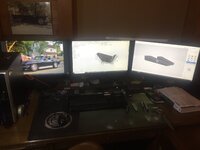
Today my drafting Table looks like this:

IMG_3467.JPG

This thread brings back some great memories!!! I'll have to see if I can find the prints I made to build my first Drag Car. They were all done on the Table I made...wish I had a picture of that table.

Hadn't thought about that in 30+ years. Thank you for the reminder.
 

Old Fart

Well-known member
Joined
Apr 15, 2021
Messages
127
Location
Pacific NorthWET
I've spent years using both types, and my preference is the track-type. These machines can be adjusted to be very accurate in all motions, and as long as the tracks are clean, they are very smooth and trouble free. Be aware that adjusting/setup can be kind of tedious (kind of like tuning up a band saw), but they stay in adjustment quite well. Keep the tracks and rollers clean!
Band-type machines, on the other hand, are subject to accuracy based on the tension of the bands and the condition of the internal wheels. Over tightening the bands can lead to failure at the weld of the band (picture a bandsaw blade and its weld joint), which requires a new band. They ae limited in useable board space, depending how closely the board is located to a wall. Increasing the board's vertical angle for more comfortable seating or reaching the top of a large drawing, usually means attaching a counterweight arm to balance the machine so that it stays put where you need it.
You don't say where you are located, but most large cities should have machines available on the used market at reasonable prices.
 

Graham08

Well-known member
Joined
Dec 10, 2007
Messages
713
Location
Iron Station, NC
I have a Vemco arm type. I do CAD also, but pencil and paper to rough things out gives me a better feel for what I'm making. I'm a lefty making a right-handed arm work. The arm does need a fair amount of space surrounding your table to articulate. About the only thing you need to do to them is make sure the scales are installed square and the band tension is good so the adjustment doesn't creep as you move it around.
 

Attachments

  • 20210424_115503.jpg
    20210424_115503.jpg
    111.8 KB · Views: 30

LeonardY

Well-known member
Joined
Apr 16, 2011
Messages
5,020
Location
Southern California
Between those two styles is one generally preferred? More accurate?
Most companies back in the day used VEMCO brand. The drafting machines, were more accurate. Drafting arms were less expensive. But still plenty accurate. The accuracy of the drawing was really based on how accurate the Draft person was. And after some point we would just change the numbers to correct for a bad drawing. Our machinists built to the numbers not scaling the drawing.

For home use, would get a drafting arm. they take up less space.

This is very much what I used to own.
1665167412334.png
It was huge and took up a lot of space. I gave the table to a friend. The drafting machine is in the rafters of the garage.
It's a left hand Mutoh E size drafting machine.
I mostly work in 3D on the computer now but I still enjoying sketching. I actually solve design problems that way.
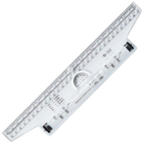
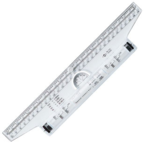
I just use this now.
1665167745377.png

I remember in the 80's working for FMC in San Jose and seeing drafting machines and drafting arms piled on pallets outside.
They were so expensive when I was in college. Seeing them discarded like that was a bit sad.
 

Attachments

  • 1665168066212.png
    1665168066212.png
    63.3 KB · Views: 24
Last edited:

Garcky

Well-known member
Joined
Sep 10, 2022
Messages
3,434
Location
Twin Cities Metro Area, Minnesota
TY: I preferred the sliding head, as much of the work I did was ANSI E and larger. The left side bar gave me a place to rest my left arm without it touching the paper. Much of what I worked on was either Vellum or onionskin, both of which are easy to stain. A couple of things to understand about sliding head units....You lose about 6" at the top of the table and about 8-10" on the left side, as the bars hang over the table and do not go past the edges. Also, when working on a larger table with big drawings, you will need to reposition yourself left and right vs center of the table, as you work towards the various edges. I used to work on 60" and 72" wide tables for the most part.

You also need to consider lighting. Good overhead light hung between the top of the table and the center, along with a task light from the upper right hand corner, assuming you are right hand dominant. For a lefty, then the upper left corner.

Get some good lead holders for 2mm lead, and a couple of the finer mechanical pencils too. I keep with .5mm and smaller. Get appropriate leads, in HB, F, 2H, 4H and 9H for the holder, and HB, F and 2H for the mechanical pencils. I use 9H for layout lines, as it's very light and easy to erase after finishing the true lines out in that area of the drawing. The mechanical pencils, I only used for 3/32' and smaller lettering.

A stainless eraser shield, erasers, cleaning pad, lead pointer and above all, a table brush. Add in some clear 30/60 and 45 triangles in various sizes and a couple circle templates and a good compass and you are almost there. Lastly, get an Ames style lettering guide and learn to use it and master freehand lettering....if sets off a draftsman from a drawing maker;)

Check out Abebooks for any of the older drafting textbooks, generally pre 1970 publication dates for lots of good data.
The only thing on your list I still have is the table brush. My wife spotted it on my desk and grabbed it. It's now a dusting brush. I fooled her, though: I had another one, which is back on my desk. I don't do any drawings any longer, since I'm no longer designing projects. Still, those technical drawing classes I hated so much in school turned out to be very, very useful to me over the years.
 

Garcky

Well-known member
Joined
Sep 10, 2022
Messages
3,434
Location
Twin Cities Metro Area, Minnesota
Just for grins, I looked on the Minneapolist Craigs list. To my surprise, I found a very nice looking drawing table with a Bruning drafting machine on it. The Price? Just $65. You'd need new scales for the machine, but you can find those on eBay or Etsy for not much at all. It looks ready to go to me. I suspect you'll find others like this in almost every metro area for similar prices. Nobody wants them any more.


imagineer

Well-known member
Joined
Dec 13, 2015
Messages
999
Location
Ohio
Just for grins, I looked on the Minneapolist Craigs list. To my surprise, I found a very nice looking drawing table with a Bruning drafting machine on it. The Price? Just $65. You'd need new scales for the machine, but you can find those on eBay or Etsy for not much at all. It looks ready to go to me. I suspect you'll find others like this in almost every metro area for similar prices. Nobody wants them any more.

Just my opinion, but those round tube style drafting table frames are not all that steady and tend to wiggle. I've had a few over the years and was not happy with any of them.
 

BombShelter

Well-known member
Joined
Nov 16, 2015
Messages
541
Location
State of Hockey
I've also used them all but really like the Vemco just above. I got lucky a couple years ago and scored a few arms (the elbow style) and metal rulers, NOS at an estated sale, while the tables don't go for much, the machines go for good money, at least they were two years ago, they look they are worth about 1/2 now, maybe the economy?

I think the V-style (elbow) Vemco will mount on the top of any flat table, the sliding units above are more permanent, both will give good results, I never remember any discussions on which machine was better.

I was also drafting during the computer cross-over, in college we had to program our own 3-D Drafting Program as part of the course, the only ones available were on Silicone Graphics Equipment and big dollars. I think it was in Pascal or C+? We used both AutoCAD and CADkey but CADkey was 10x better and much more intuitive, I never understood how AutoCAD took over, I think they gave it away to the auto industry and they fully imbraced it and made it the industry standard.
 

BombShelter

Well-known member
Joined
Nov 16, 2015
Messages
541
Location
State of Hockey
Garcky, there's another real old-school Wisconson Built Table with a sliding horizontal ruler and heavy duty wood base. It almost looks like a Mitutoyo Micrometer is part of the package, there's just a small photo of it. If I had the room I'd probably go look at it.

It also has the sweet green drafting chair I think is included, those things are built like tanks and last forever.
 

nadogail

Well-known member
Joined
Jan 23, 2009
Messages
31,899
Location
Coronado, CA
Back in my Navy days (1961 - 1981) we had something that was called a Parallel Motion Protractor. Because of my pay grade and occupational specialty I wasn’t allowed to touch it, but I thought it was a “Drafting Machine”. The ship’s Navigator was adamant that it was not a Drafting Machine.

Who was I to attempt to educate an Officer?
 
Last edited:

mikeyr

Well-known member
Joined
Sep 16, 2005
Messages
1,971
Location
Santa Barbara, CA
where does one buy the rulers/scales for these ? I have a nice Vemco machine but the both rulers were broken by the movers about 15 years ago, never tried to replace them at the time and then could not find some. I do find them on Ebay but not many, is there a place that still has them or is it orphaned technology ?
 

cvairwerks

Well-known member
Joined
Aug 12, 2016
Messages
7,182
Location
Within hearing distance of Texas Motor Speedway
Try Hoppers. They bought out all of Vemco's parts a number of years back.

 
To avoid these ads, REGISTER NOW!
Top Bottom