In physics, chemistry, engineering, and thermodynamics, heat is energy produced or transferred from one body, region, set of components, or thermodynamic system to another in any way other than as work.[1]
In ordinary language, as distinct from technical language, heat has a broader meaning.[2] This can lead to confusion if the diversity of usage of words is forgotten.[3][4][5][6]
Thermodynamically, energy can be produced or transferred as heat by thermal conduction[7], by thermal radiation,[8] by friction and viscosity,[9] and by chemical dissipation.[10][11]
The engineering discipline of heat transfer recognizes heat transfer by conduction, by convection, by mass transfer, and by radiation.
Heat transfer by conduction and by radiation from a hotter to a colder body is spontaneous. The second law of thermodynamics requires that the transfer of energy from one body to another with an equal or higher temperature can only occur with the aid of a heat pump by mechanical work, or by some other similar process in which entropy is increased in the universe in a manner that compensates for the decrease of entropy in the cooled body, due to the removal of the heat from it.[12] For example, energy may be removed against a temperature gradient by spontaneous evaporation of a liquid.
In physics, especially in calorimetry, and in meteorology, the concepts of latent heat and of sensible heat are used.
A related and potentially confusing term is thermal energy, loosely defined as the energy of a body that increases with its temperature. Potentially confusingly, thermal energy is sometimes referred to as heat, although the thermodynamic definition of heat requires it to be in transfer between two systems or in production in a dissipative process such as friction, viscosity, or chemical reaction.


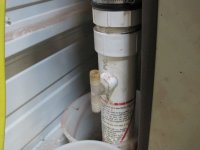
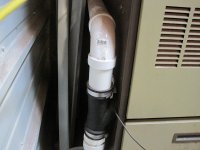
 When the the HVAC company installed it, they used a flexible plastic tube, probably 1/2" id to run it all the way outside. The tube was so small that it would start to freeze at the very end and then freeze solid.
 Use the heat tape (granger, ect.) We use the plug in heat tape all the time on condensate drains for walk-in freezers. And yes you got to wrap it with the foam tape after.