To avoid these ads, REGISTER NOW!

Drill bit poinjt angle?

BUDSVTX

Well-known member
Joined
Feb 5, 2014
Messages
62
Location
Destrehan La.
What is the better drill bits for drilling steel at slow speeds, 115 or 135 degree point. What are jobber bits?, Cobalt or HSS? I need to replace some of the bigger bits in my index, 5/16-1/2".

BUD
 
To avoid these ads, REGISTER NOW!

Ign

Well-known member
Joined
Jul 7, 2006
Messages
12,769
Location
Butte Peak ND
Sooooooo...HONESTLY.....it hardly matters on the point angle. I'd buy quality bits and get whichever is most affordable. 135 is generally found on more "heavy duty" drills and is supposed to walk less, but is also almost always split point.

I buy either angle depending upon what's on sale or where I can find deals. Poking around Amazon can net good results sometimes. I use 118 or 135 in my Bridgeport w very little distinction unless working on a VERY specific project.

Jobber is just "normal" length. Screw machine is shorter, and likely to be 135.

I'd reco HSS for cost savings. Quality HSS is still durable & versatile.
 

hangfirew8

Well-known member
Joined
Jul 14, 2008
Messages
879
Location
Central Maryland
Cobalt bits use an expensive type of steel for drilling in hard metals.

HSS is (or should be) a high quality steel useful for drilling in most anything, but in a hardened steel will dull more quickly than Cobalt.

Jobber is useful for deeper holes, typically carpentry, wood, plastic, sheet metal, or lining up two holes in a larger assembly.

TiN or Titanium Nitrided coating helps prevent galling (bits sticking to the metal), but says nothing of the metal underneath. Gold Oxide is for bit identification and adds nothing to the performance. Black Oxide is actually useful.

Your average cheap import drill bit set is Gold Oxide over mystery metal. I'd much rather have a quality set of HSS Black Oxide (and I have a bunch) than pretty gold mystery metal imports.

135 degree split points start a hole faster with less walking. 118 is fine especially if you are working with wood or start a metal hole with a center drill.

For hard metal work, shorter bits should be used for more accuracy and less bit flex., resulting in a rounder hole. If a deep hole is to be drilled in hard metal, start with a center drill, move up to a mechanic's length, if necessary finish with a jobber length.

Check out Norsemen and Chicago Latrobe for quality drill bits. You will more than get your investment back if you learn how to sharpen them.
 
To avoid these ads, REGISTER NOW!

babylou

Well-known member
Joined
Mar 11, 2010
Messages
71
The shallower the point angle the softer the material being drilled. 135 is better for steel. 118 for aluminum and such. HSS steel is a great all around material. Cobalt is better for stainless drilling.
 

EDGAR

Well-known member
Joined
Aug 21, 2010
Messages
437
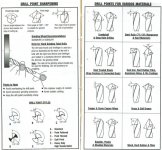
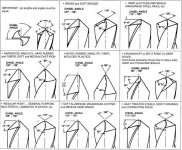
Look below for a drill point chart.
 

Attachments

  • DRILL POINT GEOMETRY 2.JPG
    DRILL POINT GEOMETRY 2.JPG
    118.8 KB · Views: 55
  • DRILL POINT GEOMETRY 3.JPG
    DRILL POINT GEOMETRY 3.JPG
    98.8 KB · Views: 52

uart

Well-known member
Joined
Nov 17, 2011
Messages
1,226
Location
Australia
What is the better drill bits for drilling steel at slow speeds, 115 or 135 degree point. What are jobber bits?, Cobalt or HSS? I need to replace some of the bigger bits in my index, 5/16-1/2".

BUD

Hi Bud. The most common "off the shelf" point angles are 118 and 135 degrees, but as shown in EDGAR's chart you can custom sharpen to a wide range of angles.

118 degrees is more commonly used in drill bits with a conventional sharpening profile, and are consider to be good general purpose drills. 135 degree points are more often "split point" sharpened (though they don't have to be), and are often preferred for harder materials.

The advantage of a broader point angle, like 135, is that it reduces the length of the cutting lip. This means that it's always plowing through less material (for a given sized hole and a given feed rate). So they cut a bit more efficiently and are preferred for harder steels.

The disadvantage of a broader point angle is that if they're sharpened to a conventional profile then they're a bit harder to start and tend to wander more. This is usually mitigated by using a split point sharpening profile.

For drilling larger sizes at slow speed you might be better off with 135 degree split point, however it does depend on whether or not you want to maintain and sharpen them and what equipment you have to do this. Conventional points have the advantage that they are relatively easy to sharpen on a standard bench grinder, but not so for split points.

Given that you need to replace the larger sizes in your index, can we assume that they're just dull? Or are they lost or broken? Knowing whether you want to sharpen or to discard dull bits probably influences what type you should buy.
 
Last edited:
To avoid these ads, REGISTER NOW!
Top Bottom